
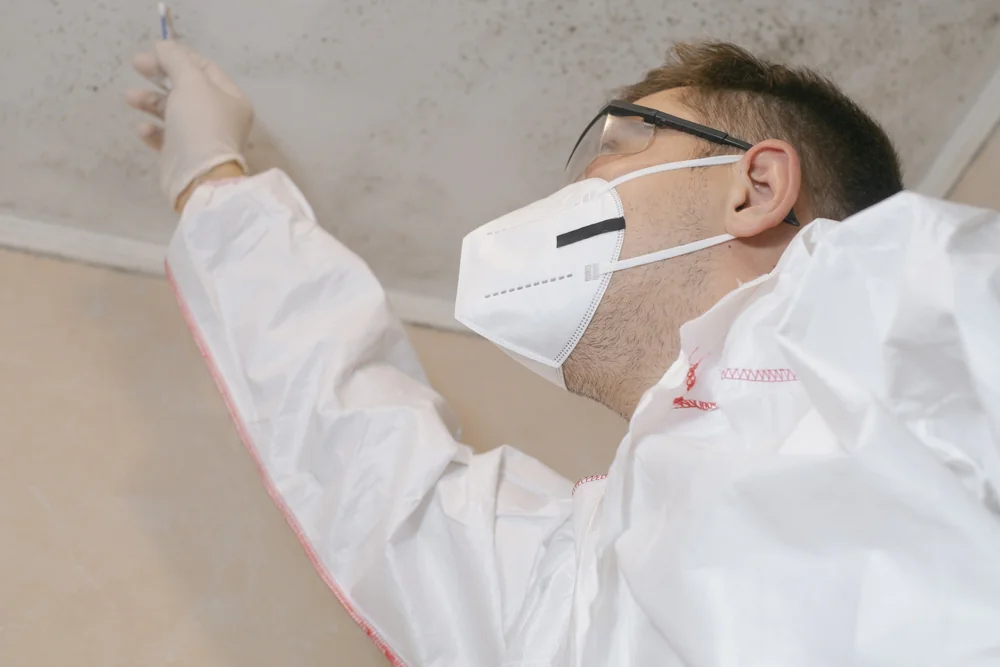
Hear from Our Customers
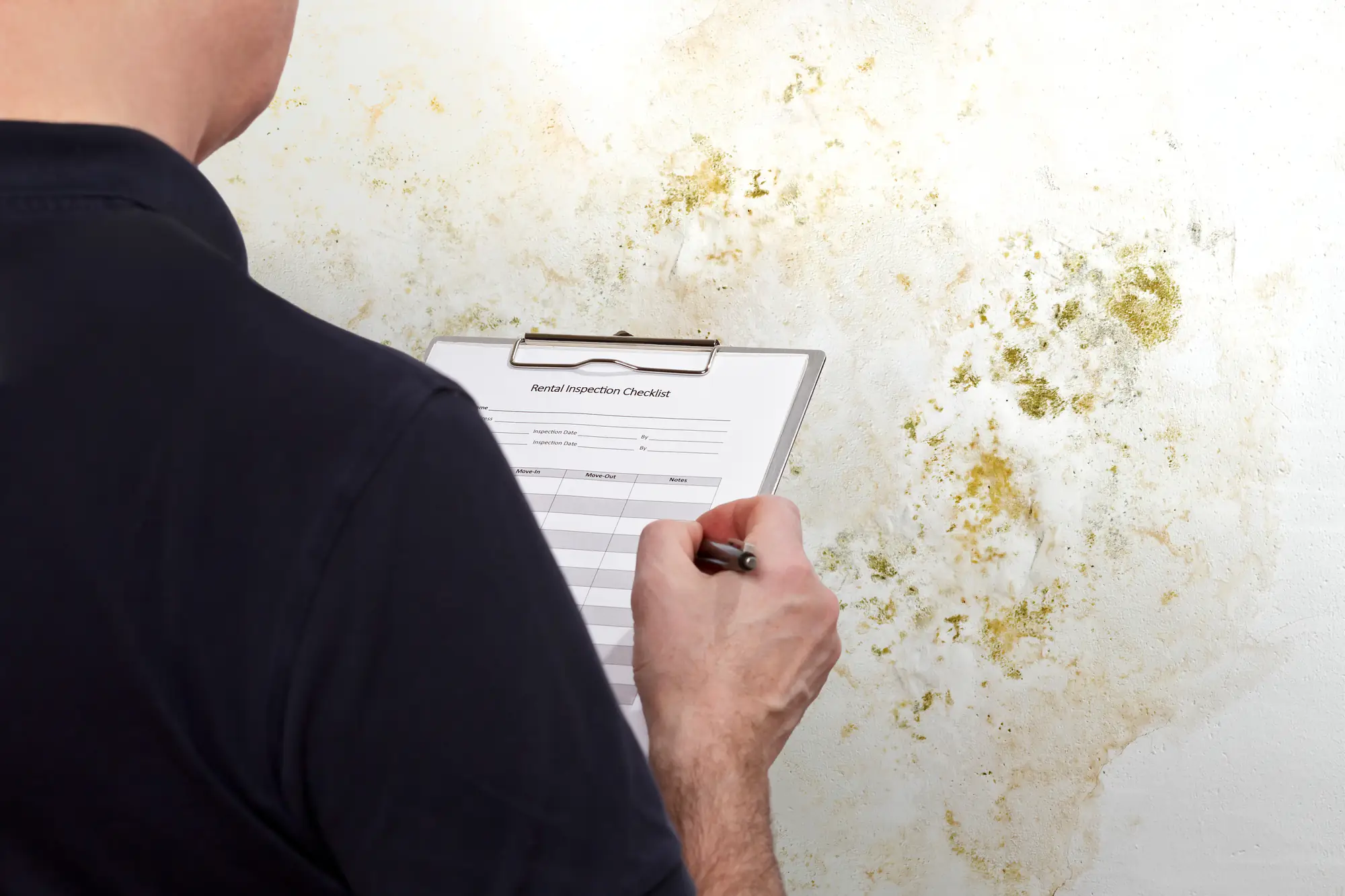
Mold starts growing within 24 to 48 hours after water touches drywall, insulation, or wood. That’s your window. Miss it, and a small leak becomes a remediation project that costs thousands.
A proper home mold inspection doesn’t just look at visible stains. It uses thermal imaging to detect moisture trapped inside walls. It measures humidity levels in your basement and attic. It identifies the conditions that let mold colonies expand at about one square inch per day.
You get a detailed report that tells you exactly where the problem is, how serious it is, and what needs to happen next. No guessing. No waiting until someone in your house starts coughing or until you smell that musty odor that means spores are already airborne.
Early detection means smaller problems. Smaller problems mean lower costs and less disruption to your life.
We serve Mumbauersville and the surrounding Bucks County area with certified mold inspection services. We’re not a national franchise reading from a script. We know how Pennsylvania basements behave in spring. We know what happens to crawl spaces during humid summers.
Our inspectors are IICRC-certified and follow EPA and CDC guidelines for mold assessment. We use calibrated moisture meters and infrared cameras, and we send samples to independent third-party labs when testing is needed.
We’ve been helping homeowners in Montgomery, Bucks, Delaware, and Chester Counties protect their properties and their families. When you call, you’re talking to someone local who can be at your house quickly—not a call center three states away.
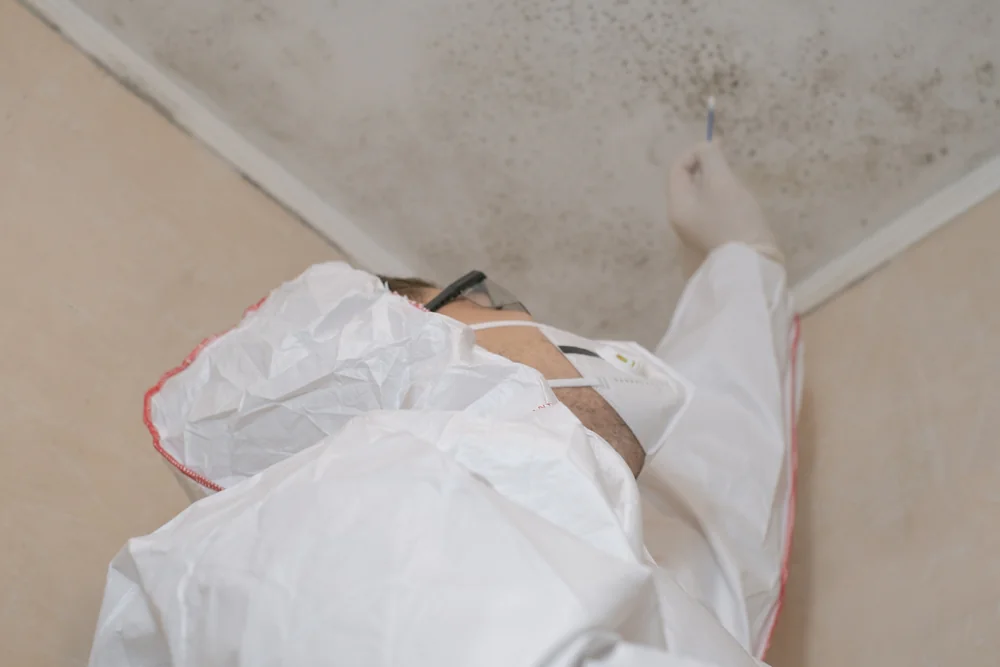
First, we walk through your property and talk about what you’ve noticed—water stains, musty smells, recent leaks, condensation issues. That conversation tells us where to look first.
Then we start the visual inspection. We check common problem areas like basements, bathrooms, kitchens, attics, and crawl spaces. But we don’t stop at what’s visible. We use thermal imaging cameras to detect temperature differences that indicate hidden moisture behind walls or ceilings. We use moisture meters to measure water content in building materials.
If we find conditions that support mold growth or see visible colonies, we document everything with photos and measurements. In some cases, we’ll take air or surface samples and send them to a lab for species identification and spore count analysis.
You get a written report that explains what we found, where the moisture is coming from, and what steps you need to take. If remediation is necessary, we’ll walk you through that process too. If it’s a minor issue you can handle yourself, we’ll tell you that instead of upselling services you don’t need.

Ready to get started?
Every mold inspection from us includes a thorough visual assessment of your entire property, including areas most homeowners never check. We inspect attics, basements, crawl spaces, HVAC systems, and anywhere moisture tends to accumulate.
We bring professional-grade equipment: thermal imaging cameras that reveal hidden moisture, calibrated moisture meters that measure water content in walls and floors, and humidity monitors that assess whether your indoor environment is creating conditions for mold growth. This isn’t a guy with a flashlight—it’s a systematic evaluation using technology that costs thousands of dollars.
In Mumbauersville and throughout Bucks County, we see specific patterns. Older homes with stone foundations often have moisture issues in basements. Properties near creeks or in low-lying areas deal with groundwater intrusion. Homes with poor attic ventilation trap humidity during summer months. We know what to look for because we’ve seen it before.
You’ll receive a detailed written report with photos, moisture readings, and clear recommendations. If lab testing is needed, we coordinate that and explain the results in plain language. And if you need mold removal services after the inspection, we handle that too—but we’ll never push you toward remediation if it’s not actually necessary.
We offer free mold inspections for homeowners in Mumbauersville and the surrounding Bucks County area. That includes the visual assessment, moisture detection with thermal imaging and meters, and a written report of findings.
If lab testing is recommended—meaning we need to identify specific mold species or measure airborne spore counts—there’s a separate cost for the laboratory analysis, typically between $300 and $500 depending on how many samples are needed. But the inspection itself doesn’t cost you anything.
Most companies charge $300 to $600 just to show up. We don’t, because we’d rather remove the barrier that keeps people from getting their homes checked. Mold doesn’t get better on its own, and waiting usually makes the problem more expensive to fix.
You need an inspection if you’ve had any water damage in the last few months—leaking pipes, roof leaks, flooding, sewage backups, or even just persistent condensation on windows. Mold grows within 24 to 48 hours after materials get wet, and it often starts in places you can’t see.
Other signs include musty odors that don’t go away, visible discoloration on walls or ceilings, peeling paint or wallpaper, warped wood, and increased allergy symptoms when you’re inside your home. If anyone in your house is experiencing unexplained respiratory issues, burning eyes, or chronic coughing, mold exposure could be the cause.
Even if you don’t see or smell anything, an inspection makes sense if you’re buying a home, dealing with high humidity levels, or if your property has a history of moisture problems. Mold hides in wall cavities, under flooring, in attic insulation, and inside HVAC ducts. A professional inspection with thermal imaging finds it before it becomes a visible problem.
Small surface mold on non-porous materials—like a little mildew on bathroom tile—you can usually handle with bleach or a mold-killing cleaner. But if the affected area is larger than about 10 square feet, if mold is growing on porous materials like drywall or insulation, or if it’s caused by contaminated water, DIY removal is a bad idea.
Here’s why: disturbing mold colonies releases millions of spores into the air. Without proper containment and air filtration, you’re spreading contamination throughout your house. You’re also breathing in those spores, which can cause serious respiratory problems. And if you don’t fix the underlying moisture issue, the mold just comes back.
Professional mold removal involves containment barriers, negative air pressure, HEPA filtration, proper disposal of contaminated materials, and antimicrobial treatments. It also includes fixing the source of moisture so the problem doesn’t return. We handle all of that, and we follow IICRC standards to make sure the job is done safely and completely.
Most residential mold inspections take between one and two hours, depending on the size of your home and how many areas need detailed assessment. A small single-family house with an obvious moisture issue might take an hour. A larger property with a basement, attic, and crawl space could take closer to two hours.
We’re not rushing through it. We’re checking every area where mold typically grows, using thermal imaging to scan walls and ceilings, taking moisture readings, and documenting everything with photos and notes. If we need to move furniture or access tight spaces, that adds time.
After the inspection, you’ll get a written report within 24 to 48 hours. If we’re sending samples to a lab, those results usually come back in three to five business days. But you’ll know the same day whether there’s a moisture problem that needs immediate attention.
A mold inspection is a visual and technical assessment of your property to find mold growth and identify moisture problems. That’s what we do with thermal imaging, moisture meters, and a thorough walkthrough. An inspection tells you whether you have a mold problem and where it’s located.
Mold testing involves collecting air or surface samples and sending them to a laboratory for analysis. The lab identifies which species of mold are present and measures the concentration of spores. Testing is useful in specific situations—like when someone in your home has serious health symptoms, when you need documentation for a legal or insurance claim, or when you want confirmation after remediation is complete.
Most of the time, you don’t need testing. If we see mold growing in your basement, it doesn’t really matter whether it’s Stachybotrys (black mold) or Aspergillus. It needs to be removed either way. But if testing makes sense for your situation, we’ll recommend it and coordinate the lab work.
It depends on what caused the mold. If mold growth resulted from a sudden, accidental event—like a burst pipe, a roof leak during a storm, or an appliance malfunction—your homeowners insurance will usually cover both the water damage cleanup and the mold remediation.
But if mold developed because of long-term neglect, poor maintenance, or chronic moisture problems you didn’t address, insurance typically won’t cover it. Policies also often have limits on mold coverage, sometimes capping it at $10,000 or less.
The best approach is to call your insurance company as soon as you discover water damage or suspect mold. Document everything with photos. Get a professional inspection so there’s a clear record of what happened and when. We work with insurance companies regularly, and we can provide the documentation and estimates they need to process your claim.
Other Services we provide in Mumbauersville