

Hear from Our Customers
You stop worrying every time someone coughs. The musty smell in your basement finally disappears. Your kids’ allergy symptoms calm down because the air in your home is actually clean again.
That’s what matters. Not the process, not the equipment—the fact that your house feels safe again.
Mold isn’t just ugly. It’s a health problem that gets worse the longer it sits. Studies show that removing mold from a home can reduce asthma symptoms by 25% to 45%. If someone in your family has respiratory issues, you already know how much that would mean.
We don’t just scrub what you can see. We find where it’s growing, why it started, and what needs to change so it doesn’t come back next season. Because surface cleaning doesn’t fix a leaky pipe or a humidity problem—and that’s usually why mold keeps returning.
We work throughout Bucks County, and we’ve been inside enough Glen Ashton Farms homes to know the patterns. Basements that flood during heavy rain. Attics with poor ventilation. Crawl spaces that stay damp all summer because Pennsylvania humidity doesn’t quit.
Your home was built around 1961. That means older ventilation, settling foundations, and materials that weren’t designed for the kind of moisture we deal with now. We’re not guessing—we know what to look for.
We’re certified, we follow EPA standards, and we work with your insurance if you need us to. But more than that, we’re the company you call when you want someone who’ll actually explain what’s happening and why it matters.

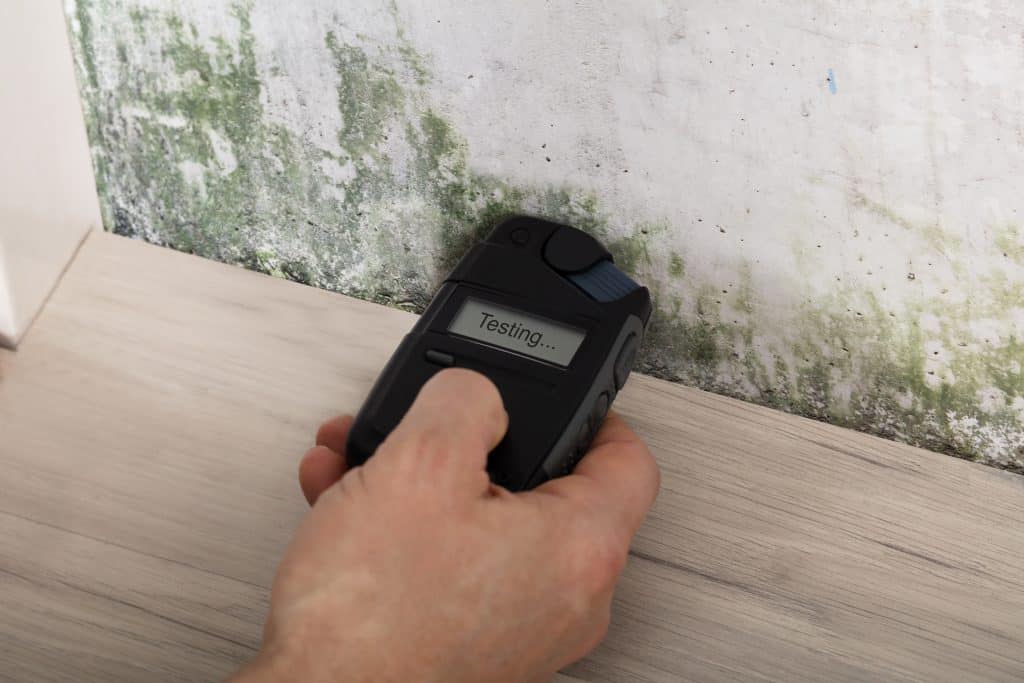
First, we inspect your property. Not just the spot you saw mold—we check the whole house. Basements, attics, behind walls, under sinks. We use moisture meters and infrared cameras to find hidden problems you wouldn’t catch on your own.
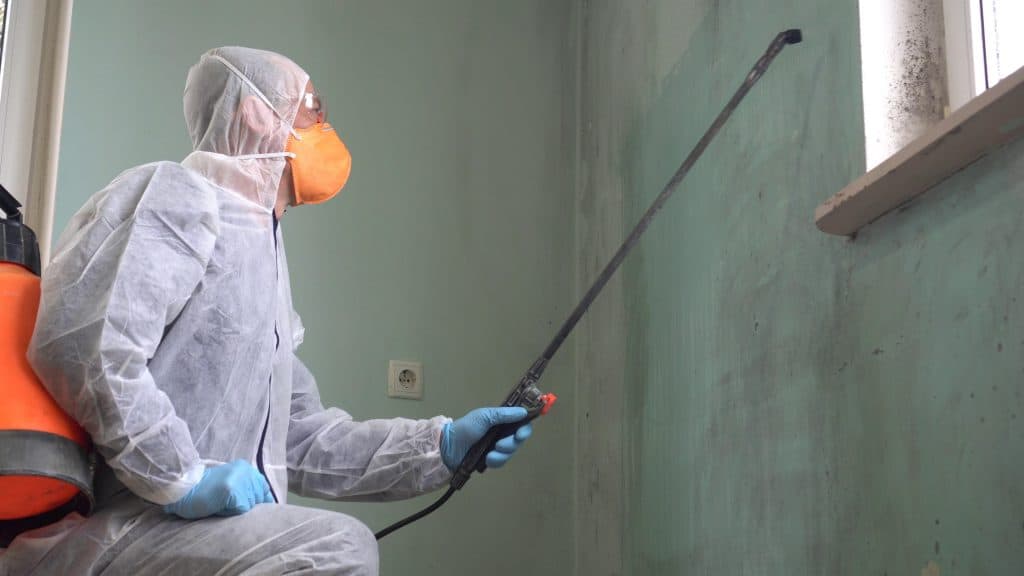
Then we test it. Not all mold is the same, and knowing what type you’re dealing with tells us how to remove it safely. We contain the area so spores don’t spread during cleanup, then we remove contaminated materials and treat surfaces with EPA-approved solutions.
Next, we dry everything out and fix the moisture source. Could be a leaky pipe, poor drainage, or a ventilation issue. If we don’t fix that, the mold will just come back in a few months.
Finally, we clean up and restore the space. That might mean new drywall, repainting, or replacing insulation. You’re not left with a half-finished job. When we’re done, the area looks normal again—and more importantly, it’s safe.
Ready to get started?
You get a free inspection. We’ll come out, assess the situation, and give you a clear estimate before any work starts. No surprises, no pressure.
You get certified professionals using the right equipment. HEPA vacuums that catch microscopic spores. Containment barriers that keep mold from spreading to clean areas. Dehumidifiers and air scrubbers that actually dry things out.
You get the source fixed, not just the symptoms. In Glen Ashton Farms and throughout Bensalem, we see the same issues: sump pumps that fail during storms, gutters that overflow and soak foundations, attic insulation that traps moisture. We’ve dealt with all of it. Pennsylvania’s humid summers push indoor humidity past 70%, and when it stays that high, mold moves in fast. We address that.
You also get help with insurance if you need it. Mold claims can be complicated, and we’ll work with your provider to make the process easier. And if you need financing, we offer flexible payment options so you’re not stuck choosing between your family’s health and your budget.
Most jobs in this area run between $1,200 and $3,700, but it depends on how much mold there is and where it’s growing. A small patch in a bathroom costs a lot less than a flooded basement with mold behind the walls.
We give you an upfront estimate after the inspection, so you’ll know what you’re paying before we start. If your insurance covers it, we’ll work with them directly. If not, we offer financing so you’re not stuck waiting while the problem gets worse.
Severe cases—like mold throughout an attic or multiple rooms—can cost more, sometimes up to $30,000. But that’s rare, and it usually means there’s been water damage sitting untreated for months or years.
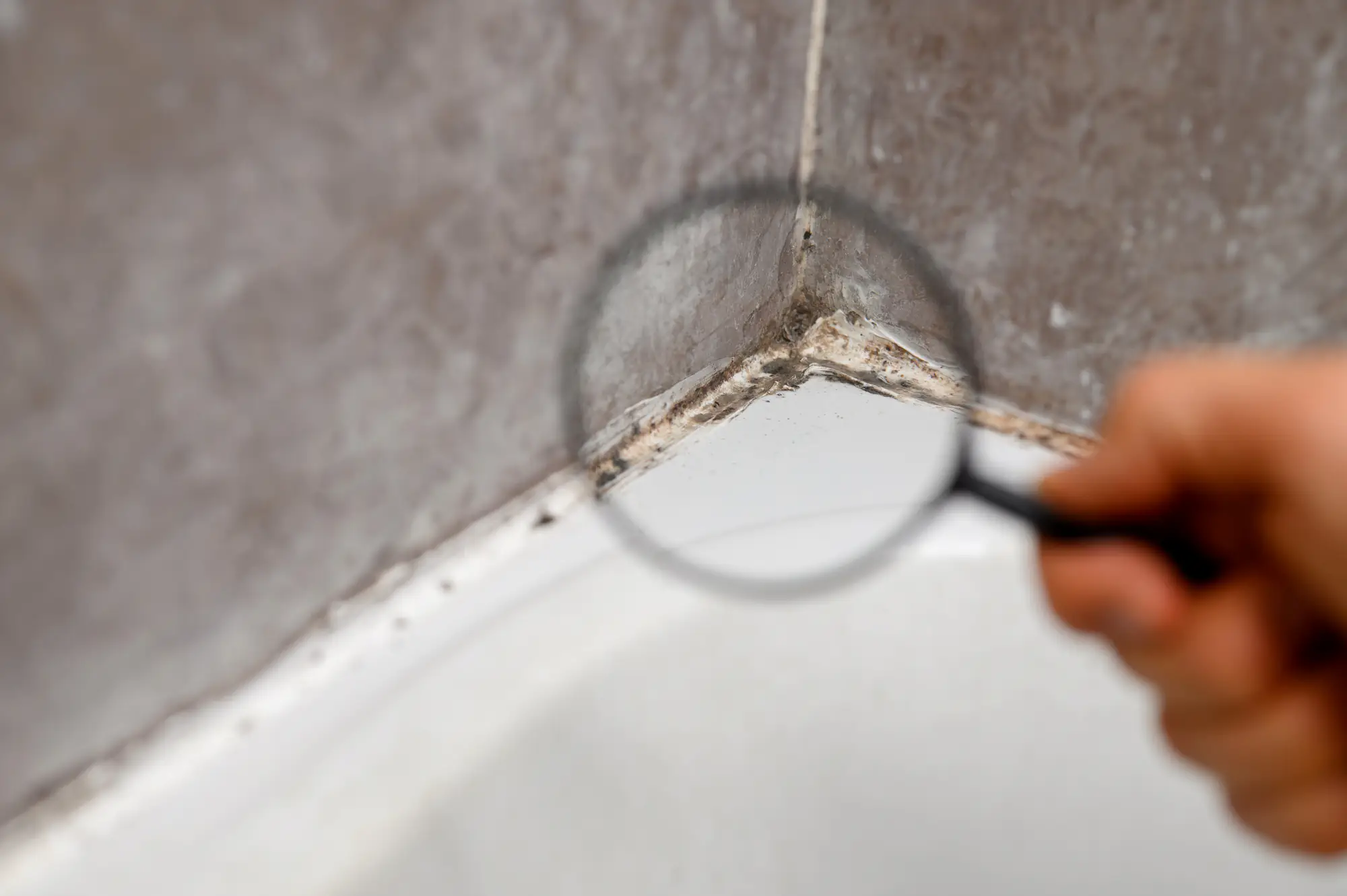
You can’t tell just by looking at it. Black mold (Stachybotrys) is dark and slimy, but so are other types of mold that aren’t as dangerous. The only way to know for sure is to test it.
We take samples during the inspection and send them to a lab. That tells us exactly what we’re dealing with and how to remove it safely. Some molds are more toxic than others, but all mold is a problem if it’s growing in your house.
If you’re seeing dark spots, smelling something musty, or dealing with unexplained respiratory issues, don’t wait to find out what kind it is. The longer any mold sits, the worse it gets—and the more expensive it becomes to fix.
Bleach kills surface mold, but it doesn’t reach into porous materials like drywall or wood. It also doesn’t fix the moisture problem that caused the mold in the first place. So you might scrub it away today, but it’ll be back in a few weeks.
If it’s a tiny spot on a non-porous surface—like a shower tile—and you catch it early, you might be fine handling it yourself. But if it’s larger than a few square feet, or if it’s in your walls, attic, or basement, you need a professional mold removal company.
Disturbing mold releases spores into the air, and if you’re not containing the area properly, you’re just spreading the problem. We use HEPA vacuums, containment barriers, and proper ventilation to keep that from happening. DIY mold cleaning usually makes things worse before it makes them better.
Small jobs—like a bathroom or a section of basement—usually take one to three days. Larger jobs, especially if there’s structural damage or multiple rooms involved, can take a week or more.
The timeline depends on how much mold there is, where it’s located, and how long it takes to dry everything out. Drying is the part that can’t be rushed. If materials aren’t completely dry, mold will just come back.
We’ll give you a timeline during the estimate, and we’ll keep you updated if anything changes. Most people are surprised by how fast we move once we get started, but we’re not cutting corners—we’re just efficient because we’ve done this hundreds of times.
It depends on what caused the mold. If it’s from a sudden event—like a burst pipe or storm damage—insurance usually covers it. If it’s from long-term neglect or a maintenance issue you ignored, probably not.
The best thing to do is call your insurance company as soon as you find mold and ask what’s covered under your policy. Some policies have mold caps, meaning they’ll only pay up to a certain amount. Others exclude mold entirely unless you added special coverage.
We work with insurance companies regularly, and we can help you navigate the claims process. We’ll document everything, provide detailed estimates, and communicate directly with your adjuster if needed. That takes some of the stress off you while we’re fixing the actual problem.
Moisture. That’s it. Mold needs water to grow, and in this area, there are a lot of ways water gets into your home.
Basements flood during heavy rain because Bucks County gets its share of storms. Gutters overflow and soak the foundation. Sump pumps fail. Roofs develop leaks that drip into attics. Pipes sweat in the summer when humidity spikes above 70%. Bathrooms and kitchens don’t ventilate properly, so steam just sits there.
Homes in Glen Ashton Farms were built in the early 1960s, and a lot of them have older ventilation systems that weren’t designed for today’s climate. Crawl spaces stay damp. Attics trap heat and moisture. And once mold starts, it spreads fast—spores can begin growing within 24 to 48 hours if conditions are right. That’s why catching it early and fixing the source matters so much.
Other Services we provide in Glen Ashton Farms