

Hear from Our Customers
You stop wondering if that smell is coming back. You stop worrying about what’s growing behind the walls or whether your kids are breathing something they shouldn’t be. The air feels cleaner because it is.
Mold removal isn’t just about scrubbing visible spots. It’s about finding where the moisture is coming from, removing contaminated materials safely, and making sure spores don’t spread to clean areas of your home during the process. That’s what keeps it from showing up again in three months.
When the job’s done right, you’re not masking a problem. You’re eliminating it. And you’ll have documentation showing exactly what was found, what was removed, and what steps were taken to dry out the space and prevent future growth.
Mack’s Mold Removal has been serving Ellerslie and Bucks County for years. Our team knows how the local climate affects homes here—the humid summers, the damp basements, the older construction that wasn’t built with modern moisture barriers.
We’re certified mold remediation specialists, and we use the same equipment and methods whether it’s a small bathroom issue or a full basement cleanup. You’ll work with local technicians who understand how Bucks County homes are built and where problems typically hide.
When you call, you’re talking to people who’ve seen this before in homes just like yours. We’ll give you a free inspection, a clear estimate, and a realistic timeline before any work starts.

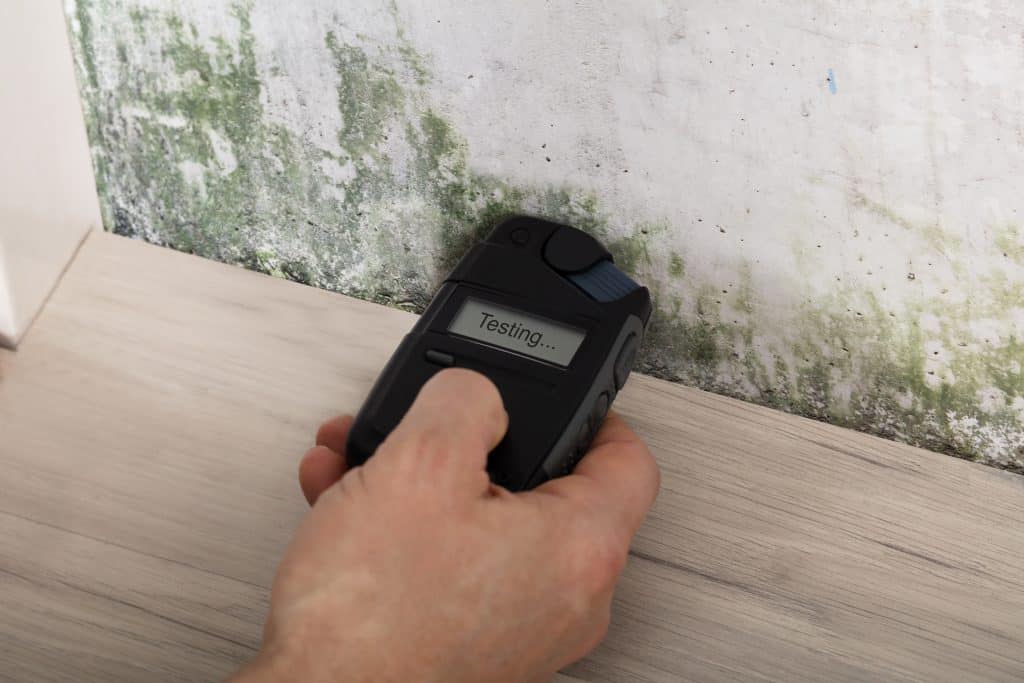
First, we inspect the affected area and use moisture meters and thermal imaging to find hidden problems. Mold you can see is usually just part of it. We’re looking for what’s behind walls, under floors, and in spaces you can’t easily access.
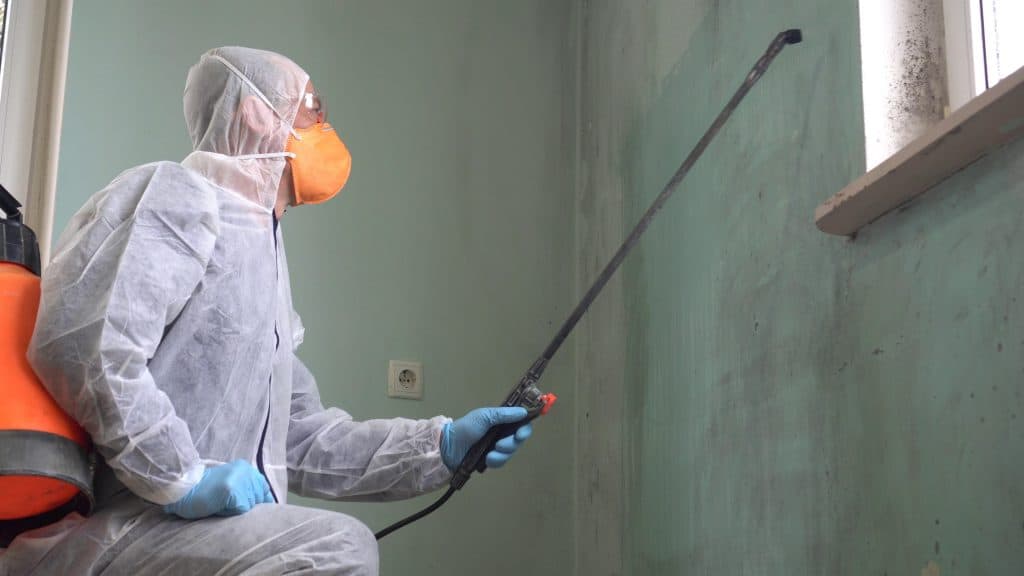
Next, we contain the work area with plastic sheeting and negative air pressure to keep spores from spreading. Then we remove contaminated materials—drywall, insulation, flooring, whatever can’t be properly cleaned. We don’t just treat the surface and hope for the best.
After removal, we treat the area with EPA-approved antimicrobials and dry everything thoroughly using commercial dehumidifiers and air movers. We also identify and explain the moisture source—whether it’s a leak, condensation, poor ventilation, or something else—so you know what needs to be fixed to prevent this from happening again.
You’ll get documentation of the work, photos, moisture readings, and recommendations. If you’re filing an insurance claim, we’ll provide everything your insurer needs.
Ready to get started?
Every mold removal job starts with a free inspection. We assess the extent of contamination, measure moisture levels, and identify the type of mold present. You’ll get a detailed estimate before we start any work.
Our service includes full containment setup, safe removal of affected materials, HEPA filtration during the process, antimicrobial treatment, and thorough drying of the space. We also handle the disposal of contaminated materials according to local regulations.
Bucks County’s climate makes mold a recurring issue if the root cause isn’t addressed. That’s why we don’t just clean up what’s visible—we help you understand what led to the growth in the first place. Older homes in Ellerslie often have foundation issues, inadequate ventilation in attics and crawl spaces, or plumbing leaks that go unnoticed for months. We’ll point out what needs attention.
If you’re dealing with an insurance claim, we’ll work directly with your insurance company. We provide the documentation, photos, and reports they require, and we’re available to answer their questions. We also offer financing options if you’re paying out of pocket.
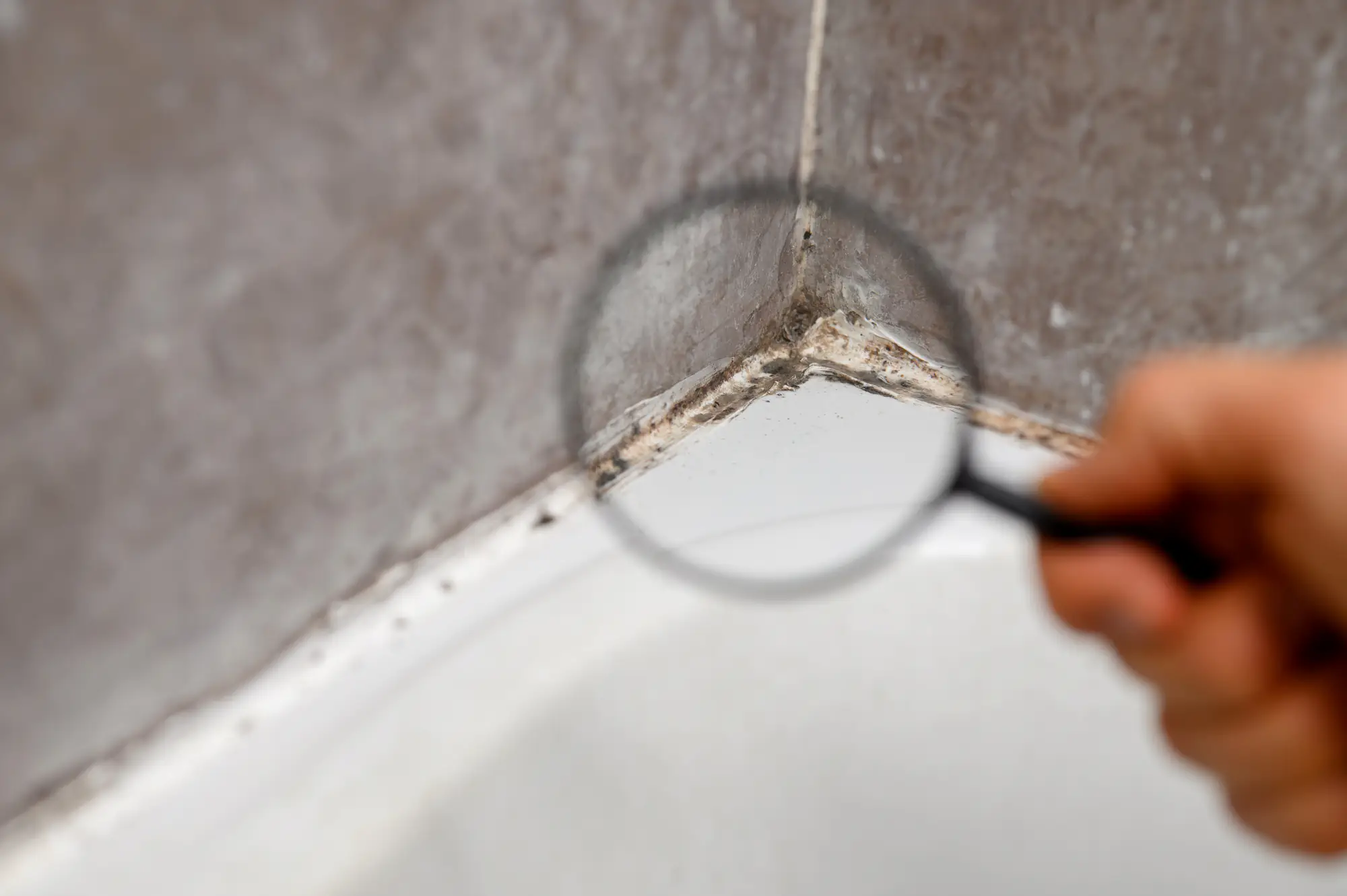
We offer 24/7 emergency response because mold doesn’t wait for business hours. If you’ve just discovered mold or had recent water damage, time matters. Mold can start growing within 24 to 48 hours in Bucks County’s humid conditions.
For non-emergency situations, we can usually schedule a free inspection within a day or two. Once we’ve assessed the problem and you’ve approved the estimate, most jobs start within a few days depending on the scope of work.
The actual removal process depends on the size and severity of the contamination. A small bathroom might take a day or two. A full basement or attic could take a week. We’ll give you a realistic timeline upfront so you can plan accordingly.
Small surface mold on a hard, non-porous surface—like tile or glass—can sometimes be cleaned with the right products if you catch it early. But if it’s on drywall, wood, insulation, or carpet, or if it’s larger than about 10 square feet, you’re looking at a job that requires professional equipment and containment.
Here’s what most people don’t realize: disturbing mold releases spores into the air. Without proper containment and filtration, you can spread the problem to other areas of your home. We use HEPA air scrubbers, negative air machines, and containment barriers to prevent cross-contamination.
We also have the tools to find hidden mold. Thermal imaging and moisture meters let us see what’s happening behind walls and under floors. If you’re just treating what you can see, you’re probably missing the bigger issue. And if you don’t fix the moisture source, it’s coming back.
It depends on what caused the mold. Most homeowners insurance policies cover mold remediation if it’s the result of a covered peril—like a burst pipe, roof leak from storm damage, or appliance malfunction. If the mold is due to long-term neglect, poor maintenance, or flooding, it’s often excluded.
The key is documentation. Insurance companies want to see proof of the damage, the cause, and the scope of remediation needed. We provide detailed reports, photos, moisture readings, and estimates that meet insurance requirements.
We work directly with insurance companies throughout Bucks County and can help you navigate the claims process. We’ll communicate with your adjuster, answer their questions, and provide any additional documentation they request. If your claim is approved, we’ll work within the scope they authorize. If it’s not covered, we offer financing options to make the work manageable.
“Black mold” usually refers to Stachybotrys chartarum, which is dark greenish-black and slimy when wet. But here’s the thing: you can’t identify mold species just by looking at it. Plenty of molds are black or dark in color, and not all of them are Stachybotrys.
What matters more than the species is the extent of contamination and your exposure to it. All mold growth indoors is a problem. Some people are more sensitive than others—especially kids, elderly individuals, and anyone with asthma or respiratory issues. Studies show that 93% of chronic sinus infections are linked to mold, and children exposed to mold in their first year of life have nearly three times the risk of developing asthma.
If you want to know exactly what type of mold you’re dealing with, we can arrange lab testing. But in most cases, the approach is the same: identify the moisture source, contain the area, remove contaminated materials, and treat the space to prevent regrowth. The species doesn’t change the fact that it needs to be removed safely.
Mold comes back when the moisture problem isn’t fixed. You can remove every visible trace of mold, treat the area with antimicrobials, and dry it out completely—but if water is still getting in, you’re just buying time.
Common moisture sources in Ellerslie homes include foundation cracks that let groundwater seep in, poor grading around the home that directs water toward the foundation, leaking plumbing, roof leaks, condensation from poor attic ventilation, and high indoor humidity levels during Bucks County’s humid summers. Older homes are especially vulnerable because they often lack vapor barriers and modern drainage systems.
That’s why our process includes identifying where the moisture is coming from. We’ll tell you if you need to fix a gutter, seal a foundation crack, improve ventilation, or address a plumbing issue. We handle the mold removal, but the long-term solution often involves fixing something outside our scope—and we’ll be upfront about that. Ignoring the source just means you’ll be calling someone again in six months.
Most mold remediation jobs in Bucks County range from $1,200 to $3,700, with an average around $2,400. Small, contained areas like a bathroom or closet might run $500 to $1,500. Larger jobs—like a full basement, attic, or multiple rooms—can reach $6,000 or more depending on the extent of contamination and the materials that need to be removed.
Pricing depends on the size of the affected area, the type of materials involved, how accessible the space is, and whether structural repairs are needed after remediation. Drywall and insulation removal costs more than cleaning hard surfaces. Crawl spaces and attics take longer to work in than open basements.
We provide free inspections and upfront estimates so you know what you’re looking at before any work begins. If you’re filing an insurance claim, we’ll work with your insurer and provide all the documentation they need. If you’re paying out of pocket, we offer financing to make it more manageable. What you don’t want to do is wait—mold damage gets worse over time, and the longer it spreads, the more expensive it becomes to fix.
Other Services we provide in Ellerslie