

Hear from Our Customers
You stop wondering what’s behind the walls. The musty smell disappears. Your family isn’t coughing at night or dealing with unexplained headaches anymore.
That’s what complete mold removal actually looks like. Not a quick wipe-down with bleach. Not a temporary fix that buys you three months before the problem comes back.
We’re talking about air quality you can feel the difference in. Surfaces that stay clean because the moisture problem got handled at the source. And the confidence that comes from knowing a mold specialist actually found the hidden growth—not just the visible stuff.
Most people don’t realize how much mental space mold takes up until it’s gone. The worry about your kids’ health. The embarrassment when guests come over. The stress of not knowing if it’s spreading. Professional mold removal eliminates all of that, not just the spores.
Mack’s Mold Removal has been handling mold issues in Edgeboro, PA for years. We know the basements that flood every spring. We know which neighborhoods have older homes with ventilation issues. We know what happens when Bucks County humidity meets poor attic insulation.
That local knowledge matters because mold problems aren’t generic. The ranch homes near the creek face different issues than the older two-stories closer to town. We’ve worked in both, and everywhere in between.
We’re not a national franchise reading from a script. We’re the mold cleaning services team that shows up, assesses your specific situation, and tells you exactly what needs to happen—without upselling you on services you don’t need.

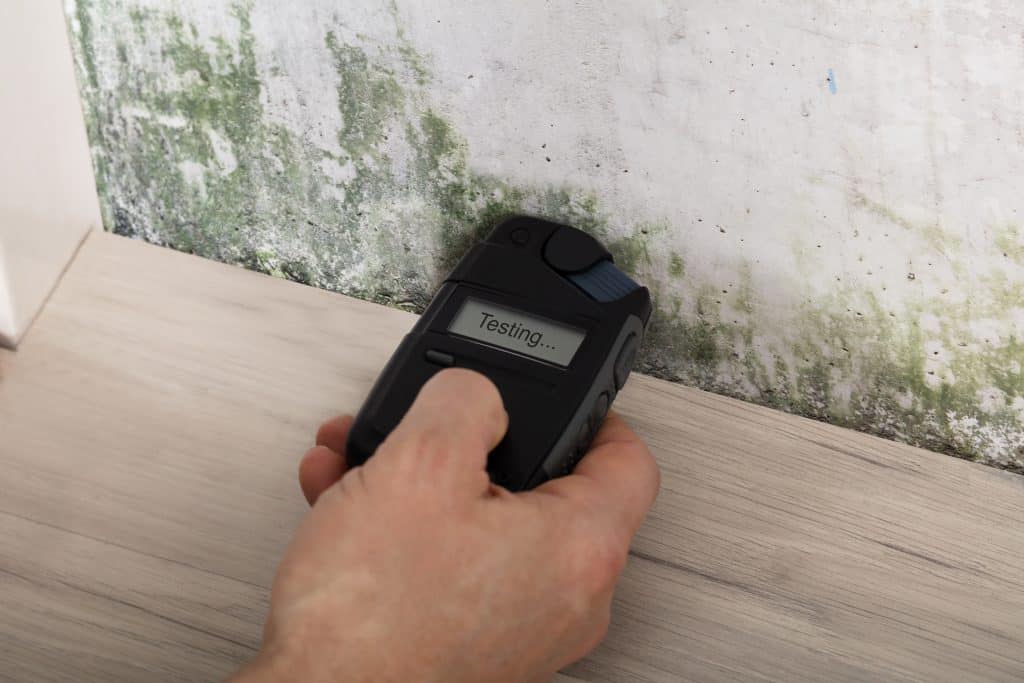
First, we find all of it. Not just the black mold you can see on the bathroom ceiling. We use moisture meters and infrared cameras to locate hidden growth behind drywall, under flooring, and in crawl spaces. Most mold problems are bigger than they look, and guessing doesn’t cut it.
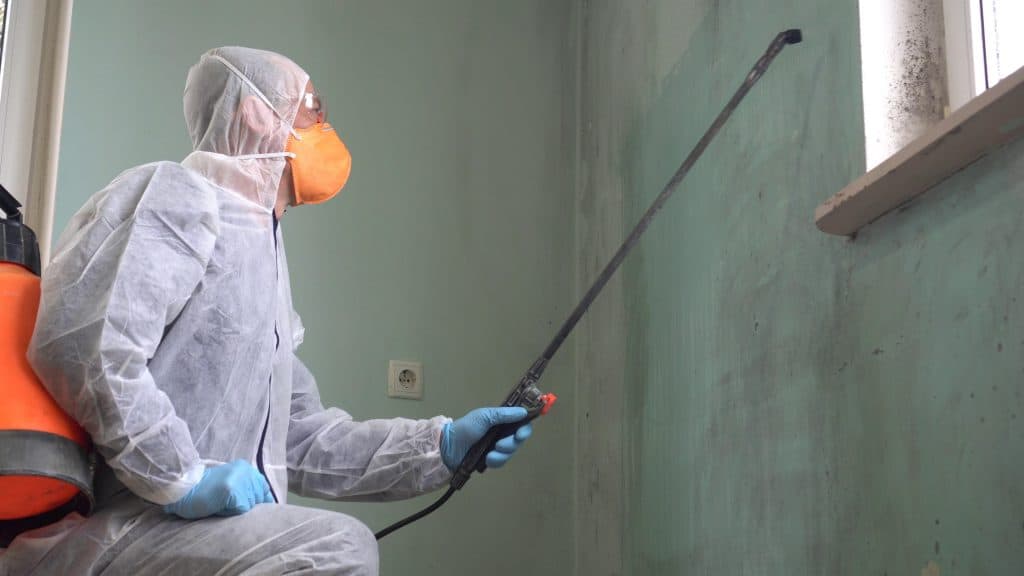
Next, we contain the area. Mold spreads through spores, and disturbing it without proper containment just moves your problem to other rooms. We seal off the work zone with physical barriers and negative air pressure so nothing escapes.
Then comes removal. Depending on what we find, that might mean cleaning and treating surfaces, or it might mean removing contaminated drywall and insulation entirely. We don’t save materials that can’t be properly cleaned—that’s how problems come back.
Finally, we handle the moisture source. Maybe it’s a leaky pipe. Maybe it’s condensation from poor ventilation. Maybe it’s groundwater seeping through your foundation. Whatever it is, we identify it and give you a clear plan to fix it. Otherwise, you’re just waiting for round two.
Ready to get started?
You get a full inspection with moisture mapping. We document everything with photos and readings so you know exactly what you’re dealing with. If you need it for insurance, you’ll have it.
You get containment and air filtration during the entire job. We’re not spreading spores through your HVAC system or into your kids’ bedrooms while we work.
You get complete removal—not surface cleaning. If materials are contaminated beyond cleaning, we remove them. If they can be saved, we treat them with antimicrobial solutions that actually prevent regrowth.
Here’s what matters for Edgeboro homes specifically: we understand Bucks County’s moisture issues. The humidity swings. The aging housing stock. The basement water problems that half the neighborhood deals with. We’ve handled mold in homes just like yours, and we know what works in this area.
You also get a clear explanation of the moisture source and what needs to happen next. We’re not plumbers or roofers, but we’ll tell you exactly what’s feeding the mold so you can get it fixed and stay mold-free.
It depends entirely on how much mold you have and where it’s growing. A small bathroom ceiling issue might run $500 to $1,500. A basement with widespread growth behind finished walls could be $3,000 to $10,000 or more.
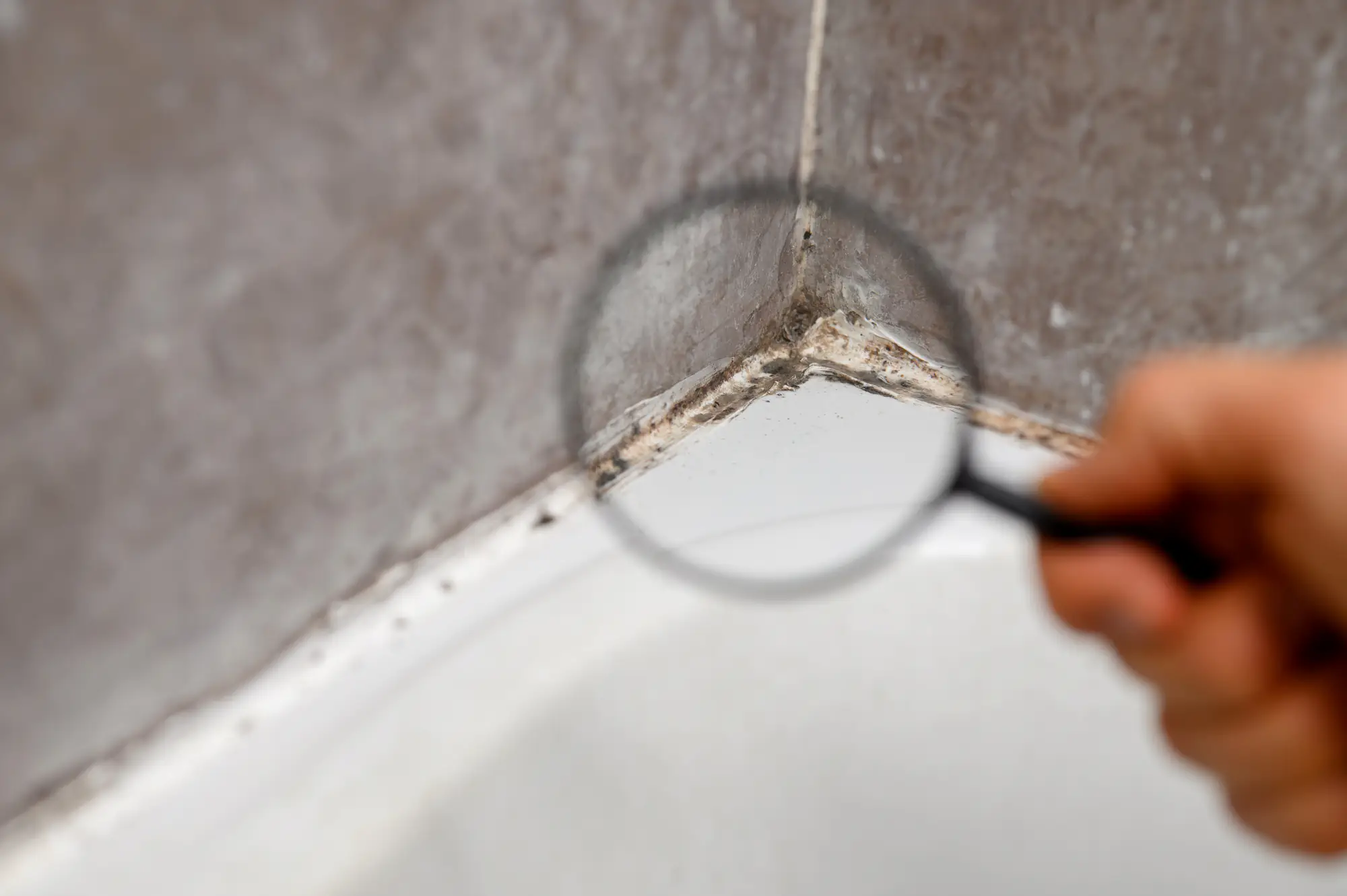
Here’s why the range is so wide: accessibility matters. Mold behind drywall costs more to remove than mold on a concrete floor. Contaminated insulation has to come out entirely. HVAC systems need specialized cleaning. And if the problem has been growing for months or years, it’s usually in multiple areas.
The honest answer is that we can’t give you a real number without seeing it. Anyone who quotes you over the phone is guessing. We’ll come out, assess the full scope, and give you a detailed estimate that breaks down exactly what we’re doing and why. No surprises, no upselling—just the actual cost to fix your actual problem.
If it’s a tiny spot—less than 10 square feet, on a hard surface, and you caught it early—maybe. But most mold problems are bigger than they look, and DIY attempts usually make things worse.
Here’s what happens: you spray bleach on visible mold. It lightens the surface. You think you fixed it. But bleach doesn’t kill mold on porous surfaces like drywall or wood—it just bleaches the color. The roots stay alive. And worse, all that scrubbing releases millions of spores into your air, spreading the problem to new areas.
Professional mold removal means finding all the growth, not just what you can see. It means proper containment so you’re not contaminating your whole house. It means actually removing unsalvageable materials instead of trying to clean them. And it means identifying why the mold grew in the first place so it doesn’t come right back. If you’ve got mold in multiple spots, or if it keeps returning, or if anyone in your house has respiratory issues—call someone who does this for a living.
A small, contained job might take one day. A whole basement or multiple rooms could take three to five days. Complex situations with structural work can take a week or more.
The timeline depends on the size of the affected area, what materials need to be removed, and how long it takes for everything to dry properly. We can’t rush the drying process—moisture is what caused the problem in the first place, and sealing things up before they’re completely dry just traps the problem inside.
Most Edgeboro jobs we handle take two to three days. Day one is assessment, containment, and removal. Day two is treatment, cleaning, and starting the drying process. Day three is final verification and cleanup. If we’re removing a lot of drywall or dealing with a flooded basement situation, add time for that. We’ll give you a realistic timeline upfront so you can plan accordingly.
Black mold—usually Stachybotrys chartarum—can produce mycotoxins that cause health problems, especially with prolonged exposure. But here’s the thing: all mold in your house is a problem, regardless of color.
People fixate on black mold because it sounds scary. But green mold, white mold, and every other color can trigger allergies, asthma attacks, respiratory issues, and other health problems. The EPA is clear: if you have mold growth in your home, it needs to be removed. The specific species matters less than the fact that it’s growing where you live and breathe.
Symptoms vary by person. Some people get headaches, coughing, or sinus issues. Others develop skin irritation or worsening asthma. Kids and elderly family members are usually more sensitive. If anyone in your house is experiencing unexplained respiratory symptoms and you’ve got visible mold or a persistent musty smell, that’s your answer. Get it tested if you want confirmation, but don’t wait around hoping it’s the “safe” kind of mold. There isn’t one.
Sometimes, but it depends on what caused the mold. If it resulted from a sudden, covered event—like a burst pipe or storm damage—insurance usually covers remediation. If it grew over time due to maintenance issues or humidity, probably not.
Insurance companies look at whether the mold resulted from a covered peril and whether you acted quickly to prevent further damage. If your washing machine hose burst and you called us within a few days, that’s typically covered. If you’ve had a slow leak for six months and ignored it, they’ll likely deny the claim.
We document everything with photos and moisture readings, which helps if you’re filing a claim. We can also work directly with your insurance adjuster to make the process easier. But here’s the reality: even if insurance doesn’t cover it, mold doesn’t go away on its own. It gets worse, spreads further, and costs more to fix later. Whether you’re paying out of pocket or through insurance, the problem still needs to be handled now.
Legitimate mold removal companies do post-remediation verification. That means we test the air quality after we’re done to confirm spore counts are back to normal levels. If you want third-party verification, you can hire an independent mold inspector to test after we finish.
Visually, you shouldn’t see any remaining growth or staining. The musty smell should be completely gone—not covered up with air fresheners, actually gone. And the moisture readings in the affected area should be normal and consistent with the rest of your house.
Here’s the practical test: if we did our job right, the problem doesn’t come back. We’re not interested in seeing you again in six months for the same issue. That’s why we focus so much on identifying and explaining the moisture source. Mold needs water to grow. Remove the water source, remove the mold properly, and it stays gone. If a company can’t explain what caused your mold or doesn’t address the moisture problem, you’re just paying for temporary relief.
Other Services we provide in Edgeboro