
Hear from Our Customers
You’re not looking for a maybe. You need to know if there’s mold, where it’s growing, and what type it is.
That’s what a professional mold inspection gives you. Infrared cameras detect temperature differences behind walls. Moisture meters measure exactly how wet your basement corners are. Air samples go to certified labs that identify specific mold species and concentration levels. You get documentation—photos, moisture readings, lab results, and a written report that explains what’s happening in your home.
Most homes in Wissahickon were built between 1900 and 1950. Shared walls, limited ventilation, damp basements—these rowhomes weren’t designed with modern moisture barriers. That means water finds its way in, and mold follows. An inspection catches it early, before remediation costs climb from $3,000 to $20,000 or more.
Mack’s Mold Removal has served Bucks County and the surrounding Philadelphia area for nearly 30 years. We know what mold looks like in a 1920s rowhome versus a 1960s split-level. We know where moisture hides in your neighborhood’s housing stock.
Our team follows EPA and IICRC guidelines. We use the latest moisture detection equipment, and we send samples to independent, EPA-certified labs. That means you get unbiased results—we don’t have a stake in selling you remediation. We just tell you what’s there.
You’ll work with certified inspectors who’ve seen thousands of Philadelphia-area homes. That experience matters when you’re trying to figure out if that musty smell is just old house character or something that needs attention.
First, we walk through your home and talk about what you’ve noticed—smells, visible spots, health symptoms, water damage history. That conversation tells us where to focus.
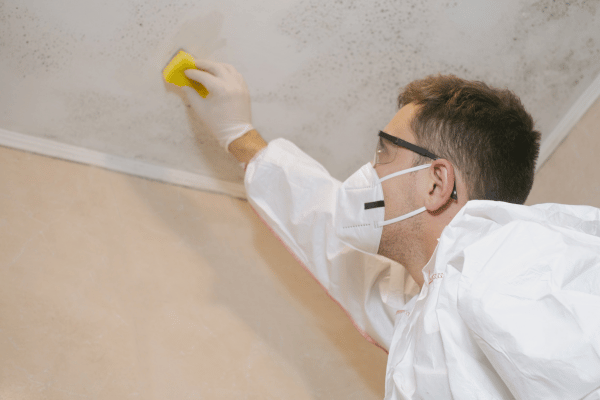
Then we start the physical inspection. We check common problem areas: basements, bathrooms, around windows, near plumbing, HVAC systems. We use infrared cameras to spot temperature differences that indicate moisture behind surfaces. Digital moisture meters give us exact readings in walls, floors, and ceilings.
If we find concerning areas, we collect air samples and surface samples. Those go to a certified laboratory for analysis. The lab identifies mold types and measures concentration levels—this isn’t a pass/fail test, it’s detailed information about what’s growing in your home.
Most inspections take two to three hours. You’ll get lab results within three to seven business days, along with our full report. If remediation is needed, we’ll explain what that looks like and what it typically costs.
Ready to get started?
Every mold inspection we perform covers a visual assessment of your entire home, with special attention to high-risk areas. In Wissahickon’s older housing stock, that means basements where shared walls create moisture problems, bathrooms with aging plumbing, and areas around windows where Philadelphia’s humid summers create condensation.
You get infrared scanning to detect hidden moisture patterns and temperature variations. Digital moisture meters measure water content in building materials. Air quality sampling captures mold spores you can’t see. Surface sampling tests visible growth or suspicious areas.
All samples go to independent, EPA-certified laboratories. You receive detailed lab reports identifying specific mold species—not just “black mold” but the actual type and concentration. Our written report includes photographs, moisture readings, and clear explanations of what we found. If remediation is recommended, we outline the scope and provide guidance on next steps.
This is especially important in a neighborhood where homes average over 60 years old. Moisture problems don’t announce themselves until they’ve already caused damage. Professional detection finds them early.
Most residential mold inspections in the Philadelphia area run between $300 and $600, depending on your home’s size and how many samples need laboratory analysis. A typical Wissahickon rowhome inspection usually falls in the $400 to $500 range.
That cost covers the on-site inspection, moisture detection equipment, air and surface sampling, certified laboratory analysis, and a detailed written report. Some companies offer free inspections, but they’re often tied to remediation services—meaning the inspector has a financial incentive to find problems. Independent testing gives you unbiased results.
Compare that cost to remediation. If hidden mold spreads, you’re looking at $3,000 to $10,000 for cleanup, with severe cases exceeding $30,000. Early detection saves money. It also protects your home’s value—undetected mold can reduce property value by 20% to 37%.
Musty odors are the most common sign, especially in basements or bathrooms. If you smell something earthy or damp, there’s usually moisture somewhere—and where there’s moisture, mold follows.
Visible spots or discoloration on walls, ceilings, or around windows are obvious indicators. But you might also notice unexplained health symptoms: stuffy nose, sore throat, coughing, wheezing, burning eyes, or skin irritation. People with asthma or mold allergies often have severe reactions. If symptoms improve when you leave the house and return when you’re home, that’s a red flag.
Water damage history matters too. If you’ve had leaks, flooding, or plumbing problems—even if they were fixed—mold may have started growing in hidden areas. Philadelphia’s older homes often have moisture issues in basements or around shared walls. If you’re buying or selling a home, an inspection gives you documentation before the transaction closes.
Plan on two to three hours for a standard residential inspection. Larger homes or properties with multiple problem areas may take longer.
We spend time walking through your home, asking about your concerns, and examining high-risk areas. Infrared scanning and moisture readings happen throughout the property. Collecting air and surface samples adds time, but it’s necessary for accurate lab analysis.
After the on-site work, samples go to a certified laboratory. Results typically come back within three to seven business days. You’ll receive a complete report with lab findings, photographs, moisture readings, and recommendations. We offer rush processing for an additional fee if you’re working against a real estate closing deadline or need faster answers.
Home test kits exist, but they’re limited. Most capture airborne spores on a petri dish or test strip, then you mail it to a lab. The problem is that every home has some mold spores in the air—what matters is the type and concentration. Without professional equipment and training, you won’t know if what you’re seeing is normal or a problem.
We use infrared cameras to detect moisture behind walls and ceilings. We use calibrated moisture meters to get exact readings in building materials. We know where to look in older Philadelphia rowhomes—the corners where shared walls meet, the areas around aging plumbing, the basement spaces where ventilation is poor.
Lab analysis from a professional inspection identifies specific mold species. Some molds are relatively harmless. Others, like Stachybotrys (black mold), produce mycotoxins that cause serious health problems. You need that specificity to make informed decisions about remediation. A DIY kit won’t give you that level of detail.
First, you get information. The lab report tells you what type of mold is present and at what concentration. Our written report explains where it’s growing and what moisture source is feeding it. That’s critical—removing mold without fixing the moisture problem means it’ll just come back.
If remediation is needed, you’ll receive recommendations on scope and next steps. Small areas (less than 10 square feet) can sometimes be cleaned by homeowners following EPA guidelines. Larger contamination requires professional remediation—especially if it’s in HVAC systems or structural materials.
You’ll want to get quotes from licensed remediation companies. Many homeowners insurance policies have limited mold coverage, so check your policy before filing a claim. Some policies only cover mold if it results from a sudden, covered event like a burst pipe—not from long-term moisture problems. Having professional documentation helps if you do file a claim. It also protects your home’s value and gives you leverage if you’re in the middle of a real estate transaction.
Pennsylvania requires separate licensing for mold assessment and mold remediation. That separation exists for a good reason—it prevents conflicts of interest.
If the company inspecting your home also profits from remediation, they have a financial incentive to find problems or recommend more extensive work than necessary. Independent testing removes that bias. You get facts, not a sales pitch.
After remediation is complete, you’ll want post-remediation testing to verify the work was done properly. Again, that should be done by an independent inspector—not the company that did the cleanup. This verification protects you and ensures mold levels have returned to normal. It also provides documentation if you’re selling the home or need proof for insurance purposes.
Other Services we provide in Wissahickon