
Mold Inspection in Hulmeville, PA

Find It Before It Finds Your Family

Free inspections, certified professionals, and detection equipment that catches what your eyes can’t—before mold becomes a health crisis or a money pit.
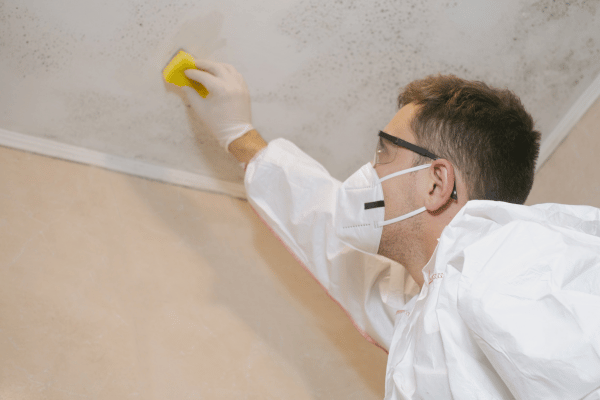
Protective worker in safety suit inspecting or treating mold spots on an indoor ceiling, addressing moisture damage and potential mold growth inside a building.

Hear from Our Customers

Professional Mold Detection Services

What You Get When Mold Gets Found Early

You protect your family from respiratory problems that show up as mystery symptoms. Mold contributes to 4.6 million asthma cases across the country, and catching it early can reduce those symptoms by up to 45%. That’s not a small number when you’re talking about your kids or elderly parents.

You save serious money. Early mold detection through professional inspection can cut your repair costs by 68%. That’s the difference between a $2,000 fix and a $6,000 nightmare that involves tearing out drywall, replacing insulation, and dealing with structural damage.

Your home keeps its value. Properties with known mold problems lose 20% to 37% of their resale value, and half of interested buyers walk away the moment they hear “mold history.” A clean inspection report means you’re not leaving tens of thousands of dollars on the table when it’s time to sell.

You get answers instead of guessing. Professional mold inspection uses moisture meters, air sampling devices, and thermal imaging to find problems hiding in walls, under floors, and in crawl spaces. You’re not wondering anymore—you know exactly what you’re dealing with and what it’ll take to fix it.

Certified Mold Inspectors Serving Hulmeville

We've Been Doing This in Bucks County Long Enough to Know

We’ve been handling mold problems across Hulmeville and Bucks County for years. We know the climate here—the humid summers, the older homes with basement moisture issues, the way water finds its way into places it shouldn’t. That local knowledge matters when you’re trying to find mold before it spreads.

Our inspectors are certified and trained to use professional-grade equipment. We’re not showing up with a flashlight and a hunch. We’re bringing moisture meters, air quality testing devices, and the experience to know where mold hides in homes like yours.

We offer free inspections because we’d rather catch your problem early than get called in later when it’s worse. We work with insurance companies to help with claims, we give you upfront pricing before any work starts, and we’re available 24/7 if you’ve got an emergency situation that can’t wait until Monday.

Protective worker collecting a mold sample from a stained indoor ceiling using a swab, inspecting moisture damage and potential mold growth inside a building.

Our Mold Inspection Process

Here's Exactly What Happens During Your Inspection

We start with a visual assessment of your entire property. That means checking obvious spots like bathrooms and basements, but also looking in places most homeowners never think about—behind appliances, inside HVAC systems, around window frames, and in attic spaces. Mold grows where moisture collects, and moisture collects in surprising places.

Next comes the technical detection. We use moisture meters to measure water content in walls, floors, and ceilings. High moisture readings tell us where mold is likely growing even if we can’t see it yet. We also use thermal imaging to spot temperature differences that indicate water intrusion or poor ventilation—both of which create perfect conditions for mold.

If we find visible mold or high-risk areas, we take air samples and surface samples. Those samples go to a lab that identifies exactly what type of mold you’re dealing with. That matters because different molds require different approaches, and some are more dangerous than others. Black mold gets the headlines, but plenty of other species cause health problems and property damage.

You get a detailed report that explains what we found, where we found it, and what needs to happen next. No jargon, no runaround. Just clear information about the scope of your problem and realistic options for fixing it. If remediation is needed, we handle that too—and we find the moisture source so it doesn’t come back.

Home interior with mold remediation in progress as a worker sprays treatment on a wall using a ladder, while a resident relaxes on a covered sofa in a renovated living room.

Ready to get started?

Explore More Services

About Mack's Mold Removal

Home Mold Inspection in Bucks County

What's Actually Included in Your Free Inspection

You get a complete property assessment that covers every area where mold typically grows. That includes basements and crawl spaces, which are problem areas in about 27% of American homes according to recent data. In Bucks County, with our humidity and older housing stock, that percentage is probably higher.

We test your indoor air quality. Air sampling catches mold spores you can’t see, which is important because airborne mold is what you’re breathing. We also check your HVAC system, since that’s how mold spreads from one room to another. A contaminated air handler can pump spores throughout your entire house.

We measure moisture levels in walls, floors, and ceilings using professional-grade meters. In Hulmeville’s climate, humidity alone can trigger mold growth in rooms without proper ventilation or air conditioning. We identify those high-risk zones before they become full-blown infestations.

You receive documentation that’s detailed enough for insurance claims or real estate transactions. If you’re buying or selling a home, a professional mold inspection protects you from surprises that could kill a deal or cost you thousands after closing. If you’re filing an insurance claim for water damage, our report gives you the evidence you need.

We explain the findings in plain language and give you a clear remediation plan if one is needed. The average mold inspection costs around $670, but catching a problem early can save you thousands in repairs. More importantly, it protects your family from health issues that can take months to connect back to mold exposure.

How do I know if I actually need a mold inspection?

You need an inspection if you’ve had any water damage in the last year—leaky pipes, roof leaks, flooding, or even persistent condensation. Water creates mold within 24 to 48 hours, and once it starts growing, it spreads fast. Even if you cleaned up the water, mold could be growing inside walls or under flooring where you can’t see it.

You also need an inspection if anyone in your house is experiencing unexplained respiratory symptoms, allergies that won’t quit, or persistent headaches. Mold exposure causes real health problems, and people often don’t connect their symptoms to their home environment until someone suggests it. If your symptoms improve when you leave the house and come back when you return, that’s a red flag.

Musty odors are another clear sign. That smell is mold releasing volatile organic compounds as it grows. If you smell it, there’s enough mold present to create odor, which means there’s enough to cause problems. Finally, if you’re buying or selling a home in Hulmeville, get an inspection. It’s cheap insurance against a problem that could cost you the sale or stick you with expensive repairs after closing.

A mold inspection is the full assessment—visual examination, moisture detection, identification of problem areas, and recommendations for next steps. It’s the complete picture of whether you have mold, where it is, and what’s causing it. That’s what you need first, because it tells you if you have a problem worth investigating further.

Mold testing is the lab work that identifies specific mold species. During an inspection, we might take air samples or surface samples and send them to a lab for analysis. The lab tells us exactly what type of mold is growing and in what concentrations. That information helps us determine the health risk and the right remediation approach.

Most homeowners need the inspection first. Testing adds cost, and it’s not always necessary if the inspection clearly shows a mold problem that needs remediation regardless of species. But testing makes sense in a few situations: if someone in your home has serious health symptoms, if you need documentation for insurance or legal purposes, or if you want to verify that remediation was successful. We’ll tell you honestly whether testing will give you useful information or just run up your bill.

Most home mold inspections take two to three hours depending on your property size and how many problem areas we find. Larger homes or properties with basements, crawl spaces, and attics take longer. If we need to take samples for lab testing, that adds time but usually not more than an extra 30 minutes.

You don’t need to do much to prepare. Don’t clean or treat any visible mold before we arrive—we need to see it in its current state to assess the extent of the problem. Make sure we can access all areas of your home, including basements, attics, crawl spaces, and any rooms where you’ve noticed moisture or musty smells. If you have specific concerns about certain areas, make a note so you can point them out.

Close your windows and doors at least two hours before the inspection if we’re doing air quality testing. This gives us a more accurate reading of your indoor air without outside interference. Turn off any air purifiers or fans for the same reason. Other than that, just be ready to walk through the property with us and ask questions. The more you tell us about water issues, humidity problems, or health symptoms, the better we can target our inspection.

Yes, and that’s exactly why professional mold detection matters. Visible mold is easy—you can see it on walls, ceilings, or around windows. The dangerous stuff is what’s growing inside your walls, under your floors, in your HVAC system, or in your crawl space. By the time mold becomes visible, you’ve already got a significant problem that’s been growing for weeks or months.

We use moisture meters that detect water content inside building materials. High moisture readings tell us where conditions are right for mold growth even if we can’t see it yet. We use thermal imaging cameras that show temperature differences indicating water intrusion, poor insulation, or ventilation problems. These tools let us find hidden mold without tearing into your walls.

Air sampling is another way we detect hidden mold. If your indoor air has elevated mold spore counts compared to outdoor air, mold is growing somewhere in your house even if we haven’t found the source yet. That tells us to keep looking and helps us narrow down which areas to investigate more closely. The main concern with mold is that once you realize it’s there, it’s already causing problems. Our job is to find it before you see it.

Remediation costs depend entirely on how much mold we find and where it’s growing. Small areas—like mold on a bathroom ceiling or around a window—might cost $500 to $1,500 to remediate. Larger problems involving multiple rooms, HVAC contamination, or structural materials like drywall and insulation can run $2,000 to $6,000 or more.

Here’s what drives the cost: the size of the affected area, the type of materials involved, and whether we need to remove and replace building materials. Surface mold on tile is easy to clean. Mold inside walls requires cutting out drywall, treating the framing, and replacing everything. Mold in your HVAC system means cleaning or replacing ductwork so we’re not just spreading spores every time your heat or AC runs.

We give you upfront pricing before any work starts. No surprises, no hidden fees. We also work with insurance companies if your mold problem resulted from a covered event like a burst pipe or storm damage. Many homeowners don’t realize their insurance might cover remediation costs. We help you navigate that process and provide the documentation your insurer needs. The key thing to remember: remediation costs go up the longer you wait. Early detection through inspection saves you money.

We do both. The inspection tells you what you’re dealing with, and if we find mold, we can handle the complete remediation process. That means you’re not getting an inspection from one company and then having to find another company to do the actual work. We see the problem firsthand during inspection, so we already know exactly what needs to happen.

Our remediation process includes containment to prevent mold from spreading during removal, HEPA filtration to capture airborne spores, removal of contaminated materials, treatment of affected areas with antimicrobial solutions, and fixing the moisture source so mold doesn’t come back. That last part is critical—removing mold without fixing the water problem means you’ll have mold again in six months.

We also handle the reconstruction if remediation requires removing drywall, flooring, or other building materials. You’re not left with a cleaned-up mess that you now have to repair yourself. We take the project from inspection through final restoration so your home is back to normal. And because we’ve been doing this in Bucks County for years, we know the local building codes and requirements. You get one team, one timeline, and one point of contact from start to finish.

Other Services we provide in Hulmeville