
Mold Inspection in Graduate Hospital, PA

Find the Mold Before It Finds Your Family

Hidden mold doesn’t wait for permission to spread. Get a professional mold inspection that catches problems early, protects your home’s value, and keeps your air clean.
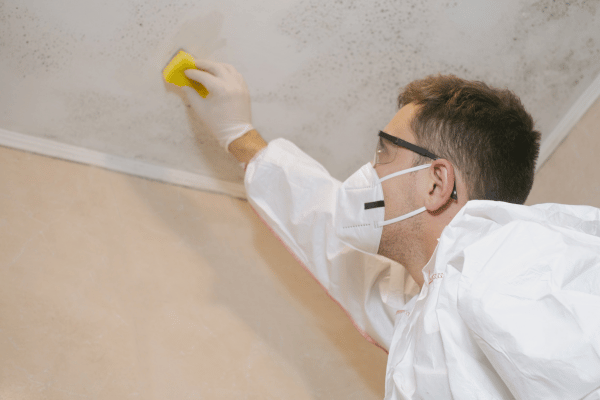
Protective worker in safety suit inspecting or treating mold spots on an indoor ceiling, addressing moisture damage and potential mold growth inside a building.

Hear from Our Customers

Professional Mold Detection in Graduate Hospital

Know Exactly What's Growing in Your Home

Most mold problems start where you can’t see them. Behind walls, under floors, in crawl spaces. By the time you notice the smell or the discoloration, the issue’s already serious.

A proper mold inspection gives you the full picture. We check the obvious spots and the hidden ones. We use moisture meters to find where water’s getting in. We take air samples to measure spore levels. We document everything so you know what you’re dealing with and what it’ll take to fix it.

You’re not guessing anymore. You’re not wondering if that musty smell means trouble or if your kid’s cough is related to something in the house. You get clear answers, a written report, and a plan that makes sense for your situation and your budget.

Mold Inspection Company Serving Graduate Hospital

We Know Philadelphia Homes and Their Mold Problems

We’ve been inspecting and remediating mold throughout Philadelphia and the surrounding counties for years. We understand how Graduate Hospital’s mix of renovated row homes and older construction creates perfect conditions for moisture problems.

The neighborhood’s attached homes mean shared walls and shared moisture issues. When your neighbor has a leak or poor ventilation, it can affect your property too. We’ve seen it dozens of times in this area.

We’re not the company that shows up, takes a quick look, and tries to sell you the most expensive fix. We inspect thoroughly, explain what we find in plain language, and give you options that actually fit your situation.

Protective worker collecting a mold sample from a stained indoor ceiling using a swab, inspecting moisture damage and potential mold growth inside a building.

Our Mold Inspection Process in Graduate Hospital

Here's What Happens During Your Inspection

We start with a visual assessment of your entire property. That means checking basements, bathrooms, kitchens, attics, crawl spaces, and anywhere else moisture tends to accumulate. We’re looking for visible mold growth, water stains, condensation patterns, and structural damage.

Next, we use moisture meters and infrared cameras to detect problems you can’t see. These tools show us where water’s hiding in walls, ceilings, and floors. High moisture readings tell us where mold is likely growing even if it’s not visible yet.

When we find areas of concern, we take samples. Air samples measure the concentration of mold spores in your indoor environment. Surface samples identify the specific types of mold present. These samples go to an independent lab for analysis, and you get a detailed report within a few days.

After we get the lab results back, we walk you through what we found. We explain which areas need attention, what’s causing the moisture problem, and what your options are for remediation. No pressure, no upselling. Just straight information so you can make the right call for your home and family.

Home interior with mold remediation in progress as a worker sprays treatment on a wall using a ladder, while a resident relaxes on a covered sofa in a renovated living room.

Ready to get started?

Explore More Services

About Mack's Mold Removal

Home Mold Inspection Services in Graduate Hospital

What's Included in Your Mold Inspection

Your inspection covers every area of your home where mold typically grows. We check basements for foundation leaks and poor drainage. We inspect bathrooms for ventilation issues and grout failures. We examine kitchens for plumbing leaks and appliance condensation. We look at HVAC systems for ductwork moisture and filter contamination.

Graduate Hospital homes face specific challenges. The area’s older row houses often have outdated plumbing, minimal crawl space ventilation, and shared walls that trap moisture. Newer renovations sometimes create problems too, especially when contractors seal homes tight without addressing humidity control. We’ve inspected hundreds of properties in Philadelphia, and we know what to look for in this neighborhood’s housing stock.

Your inspection includes moisture mapping, infrared thermal imaging, air quality sampling, surface sampling where needed, and a written report with photos and lab results. We also identify the moisture source causing your mold problem, because treating mold without fixing the underlying water issue just means it’ll come back in a few months.

How long does a mold inspection take in Graduate Hospital homes?

Most home mold inspections take between one and three hours, depending on your property size and the extent of the problem. A typical Graduate Hospital row home usually takes about 90 minutes to inspect thoroughly.

We’re not rushing through your property. We’re checking every room, every potential moisture source, and every area where mold commonly hides. Basements and attics take extra time because those spaces typically have the most issues.

If we’re taking air samples and surface samples, that adds some time to the process. The actual sample collection is quick, but we need to set up equipment properly and document everything carefully. You’ll get more accurate results when the job’s done right, and that’s worth an extra 30 minutes.

A mold inspection is the full assessment of your property. We’re looking at the entire home, identifying moisture problems, finding visible and hidden mold growth, and determining what’s causing the issue. It’s the complete picture.

Mold testing is one part of that inspection. Testing means we’re taking air samples or surface samples and sending them to a lab for analysis. The lab tells us what types of mold are present and at what concentration levels. That information helps us understand the severity of your problem and the best approach for remediation.

Some companies offer testing without a proper inspection, which is like getting bloodwork without seeing a doctor. The numbers don’t mean much without context. We do both because you need to know what’s growing in your home and why it’s growing there in the first place.

You can check for obvious mold problems yourself, and you should. Look for discoloration on walls and ceilings. Smell for musty odors. Check for water stains and condensation. If you find visible mold or signs of moisture problems, that’s your signal to call someone.

What you can’t do yourself is find hidden mold, measure spore concentrations, identify specific mold types, or determine the full extent of contamination. That requires specialized equipment like moisture meters, infrared cameras, and air sampling pumps. It also requires knowing where to look and what you’re looking at.

Professional mold detection matters most when you’re buying or selling a home, when someone in your house has unexplained respiratory issues, when you’ve had water damage, or when you smell mold but can’t find the source. Those situations need accurate information, not guesswork. The cost of a professional inspection is a lot less than the cost of missing a serious problem or doing unnecessary remediation work.

We offer free initial mold inspections for residential properties in Graduate Hospital. That includes the visual assessment, moisture detection, and our professional opinion on what’s happening in your home.

If we need to take air samples or surface samples for lab testing, there’s a cost for that. Lab analysis typically runs between $50 and $150 per sample, depending on the type of test. Most inspections need two to four samples to get accurate results.

The total cost depends on your property size and the scope of the problem. A straightforward inspection with a couple of samples might cost $200 to $400. A larger home with multiple problem areas might run $500 to $800. We’ll tell you upfront what we recommend and why, and you decide what makes sense. No surprise charges, no pressure to add services you don’t need.

The most common mold we find in Philadelphia homes is Cladosporium, which grows on damp surfaces and in HVAC systems. It’s usually not dangerous, but it can trigger allergies and asthma in sensitive people.

Aspergillus is also common here, especially in homes with poor ventilation or water damage. Some Aspergillus species produce mycotoxins and can cause serious respiratory problems, particularly in children and people with compromised immune systems. This is the mold that often shows up in basement corners and behind bathroom tiles.

Black mold, or Stachybotrys chartarum, is less common but we do find it in Graduate Hospital properties, usually after significant water damage or chronic leaks. It needs very wet conditions to grow, so when we see it, we know there’s a serious moisture problem that needs immediate attention. The specific type of mold matters because it tells us how aggressive we need to be with remediation and what health precautions your family should take.

Insurance coverage for mold depends on what caused the problem. If mold resulted from a sudden, accidental event like a burst pipe or storm damage, most homeowners policies will cover both the inspection and the remediation. If mold developed because of long-term neglect, poor maintenance, or chronic moisture issues, insurance typically won’t pay.

The key is documentation. Insurance companies want proof of what happened, when it happened, and how extensive the damage is. That’s why a professional mold inspection with lab results and detailed reporting matters. We work directly with insurance companies and can provide the documentation they need to process your claim.

We’ve helped dozens of Graduate Hospital homeowners navigate the insurance process. We know what adjusters look for and how to present information that supports your claim. Even if insurance doesn’t cover everything, having a clear inspection report gives you leverage to negotiate and ensures you’re only paying for work that actually needs to be done.

Other Services we provide in Graduate Hospital