
Mold Inspection in Emilie, PA

Find the Mold Before It Finds You

We use infrared cameras and moisture meters to detect mold hiding in your walls, attic, and crawl spaces before it threatens your family’s health.
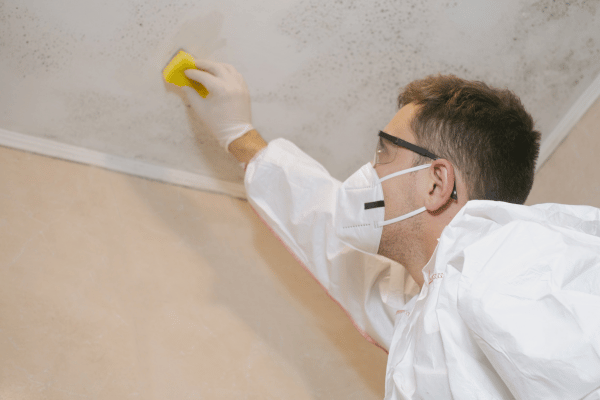
Protective worker in safety suit inspecting or treating mold spots on an indoor ceiling, addressing moisture damage and potential mold growth inside a building.

Hear from Our Customers

Home Mold Inspection Services

Know Exactly What You're Dealing With

You’re not imagining that musty smell. You’re not overreacting to the dark spots near your bathroom ceiling. And you’re definitely not wrong to worry about what’s growing behind your walls.

Mold doesn’t announce itself until it’s already a problem. By the time you see it, it’s been spreading for weeks or months. The EPA estimates that 4.6 million asthma cases in the U.S. are caused directly by mold exposure. In Pennsylvania, where dampness is common and homes age quickly, that risk is even higher.

A proper mold inspection gives you clarity. You’ll know where the mold is, how bad it is, and what’s causing it. You’ll have documentation if you’re buying a home, selling one, or filing an insurance claim. And you’ll have a plan that actually addresses the source instead of just covering up the symptoms.

We don’t guess. We measure moisture levels, take samples, and use thermal imaging to see what’s happening inside your walls. You get a full report with photos, findings, and next steps. No surprises. No runaround.

Certified Mold Detection Company

We've Been Doing This in Bucks County for Years

Mack’s Mold Removal serves Emilie, PA and the surrounding Bucks County area. Our inspectors are certified, experienced, and equipped with the tools that matter: infrared cameras, moisture meters, and air quality testing equipment.

We’re local. We know how Pennsylvania homes are built, where water gets in, and what basements in this area tend to look like after a wet spring. We’ve inspected hundreds of homes across Bucks County, and we’ve seen what happens when mold gets ignored.

We’re not here to upsell you. If you don’t have mold, we’ll tell you. If you do, we’ll show you exactly where it is and what caused it. Then we’ll walk you through your options without the pressure.

Protective worker collecting a mold sample from a stained indoor ceiling using a swab, inspecting moisture damage and potential mold growth inside a building.

Our Mold Detection Process

Here's What Happens During Your Inspection

First, we walk through your property with you. You show us the areas you’re concerned about. We ask questions about water damage, leaks, humidity issues, or health symptoms you’ve noticed.

Then we start the inspection. We use moisture meters to check walls, ceilings, and floors for hidden water. We use infrared cameras to spot temperature differences that indicate moisture buildup. We inspect attics, crawl spaces, HVAC systems, and anywhere else mold likes to hide.

If we find visible mold or suspect hidden growth, we take samples. Those samples go to a lab for analysis so you know exactly what type of mold you’re dealing with. We also test your indoor air quality to measure spore levels.

After the inspection, you get a detailed report. It includes photos, moisture readings, lab results, and our assessment of what’s happening. We explain what needs to be done, what’s causing the mold, and how to prevent it from coming back. If remediation is needed, we handle that too. If it’s not, we’ll tell you that as well.

Home interior with mold remediation in progress as a worker sprays treatment on a wall using a ladder, while a resident relaxes on a covered sofa in a renovated living room.

Ready to get started?

Explore More Services

About Mack's Mold Removal

Black Mold Inspection Emilie, PA

What's Included in Every Inspection

Every mold inspection we do includes a visual assessment of your entire property, moisture mapping with professional-grade meters, and infrared thermal imaging to detect hidden water intrusion. We inspect all the common problem areas: basements, bathrooms, kitchens, attics, crawl spaces, and HVAC systems.

You also get air quality testing and surface sampling when needed. Those samples are analyzed by an independent lab, and the results come back within a few days. We provide a written report with photos, findings, moisture readings, and lab results. Everything is documented so you can use it for insurance claims, real estate transactions, or your own peace of mind.

In Bucks County, we see mold most often in basements after heavy rain, in attics with poor ventilation, and around windows or doors where water seeps in. Pennsylvania’s humidity and older housing stock make mold a recurring issue here. That’s why we don’t just find the mold. We find what’s feeding it. A leaky pipe. A roof issue. Poor grading. Condensation from an uninsulated duct. Fixing the mold without fixing the cause just means it’ll come back.

We also support real estate transactions. If you’re buying a home in Emilie, PA, a mold inspection protects you from inheriting someone else’s problem. If you’re selling, it gives buyers confidence and keeps deals from falling apart at the last minute.

How much does a mold inspection cost in Emilie, PA?

Most mold inspections in the Emilie and Bucks County area range from $300 to $600, depending on the size of your home and how many samples need to be tested. A typical single-family home inspection with air and surface sampling usually falls in the $400 to $500 range.

That includes the on-site inspection, moisture testing, thermal imaging, sample collection, and lab analysis. You’ll also get a full written report with photos and recommendations. If your home is larger, has multiple levels, or requires more extensive testing, the cost may be higher.

Some companies offer free inspections, but they’re often tied to remediation services. We’re upfront about pricing because we want you to make an informed decision, not feel pressured into a sale.

Most inspections take between one and two hours, depending on the size of your home and the areas we need to check. If your home is smaller or the problem area is isolated, it might take less time. If we’re inspecting a larger property or multiple levels, it could take longer.

We don’t rush. We check every area that could have mold, including places you might not think to look. Attics, crawl spaces, behind appliances, inside HVAC ducts. We also take time to explain what we’re finding as we go, so you’re not left in the dark.

After the inspection, lab results usually come back within three to five business days. Once we have those results, we’ll walk you through the report and answer any questions you have.

A mold inspection is the full process. It includes a visual assessment, moisture testing, thermal imaging, and a detailed walkthrough of your property. The goal is to find mold, identify moisture sources, and assess the extent of the problem.

Mold testing refers specifically to collecting samples and sending them to a lab for analysis. Testing tells you what type of mold is present and how much of it is in the air or on surfaces. Testing is usually part of an inspection, but not all inspections require testing.

If we can see mold and identify the moisture source, testing might not be necessary. But if you’re buying a home, dealing with health symptoms, or need documentation for insurance or legal reasons, testing is worth it. We’ll recommend testing only when it adds value to your situation.

If it’s a small area—less than 10 square feet—and it’s on a non-porous surface like tile or glass, you can usually clean it yourself with the right precautions. But if the mold is on drywall, wood, insulation, or carpet, DIY removal often makes things worse.

Mold spreads through spores. When you disturb it without proper containment, those spores go airborne and settle in other parts of your home. You might clean what you can see, but the problem continues behind the walls or in your HVAC system.

Black mold and other toxic varieties also pose health risks, especially if you’re not wearing respiratory protection. And if you don’t fix the moisture problem that caused the mold in the first place, it’ll come back. A professional inspection identifies the root cause so you’re not just treating symptoms. We handle containment, removal, air filtration, and prevention the right way.

The most obvious sign is visible mold—dark spots on walls, ceilings, or around windows. But mold often grows in places you can’t see. A musty odor is a strong indicator, especially in basements, bathrooms, or closets.

Health symptoms are another red flag. If you or your family are experiencing unexplained respiratory issues, allergies, headaches, or fatigue that improve when you leave the house, mold could be the cause. In Pennsylvania, where 15 to 50 percent of people are genetically prone to mold allergies, those symptoms are common.

Water damage is a major trigger. If you’ve had a leak, flooding, roof damage, or plumbing issues in the past year, there’s a good chance mold is growing somewhere. Even high humidity or condensation on windows can create the conditions mold needs. If you’re buying or selling a home in Emilie, PA, a mold inspection is also a smart move to avoid surprises during closing.

Yes. A standard home inspection doesn’t always include mold testing, and sellers aren’t always required to disclose mold issues in Pennsylvania. That means you could buy a home with hidden mold and not know until after closing.

Mold inspections are especially important in older homes, homes with basements, and properties in areas with high humidity or past water damage. In Bucks County, where many homes were built decades ago and sit on damp soil, mold is a common issue.

An inspection gives you leverage. If mold is found, you can negotiate repairs, a price reduction, or ask the seller to handle remediation before closing. It also protects your health and your investment. Mold remediation can cost thousands of dollars if it’s widespread. Spending a few hundred on an inspection now can save you a lot more later.

Other Services we provide in Emilie