

Hear from Our Customers

Most Winder Village homes were built between 1938 and 1957. The ductwork running through those walls was never designed to handle decades of Lower Bucks County humidity, and in a lot of cases, it hasn’t been seriously looked at since it was installed. That’s not a knock on the homeowner it’s just the reality of living in a neighborhood where the housing stock is older than most people realize and the ground itself holds moisture year-round.
When mold gets into an HVAC system, it doesn’t stay in one place. Every time your heat or AC kicks on, air moves through the entire duct network and carries whatever’s living in it into every room of your home. In a compact 1,100-square-foot house, that’s a problem that spreads fast and quietly. You might notice a musty smell when the system first runs, or your allergies may have gotten worse and you can’t figure out why. Both are worth taking seriously.
Getting your ducts properly cleaned by someone who understands the difference between dust and biological contamination means you’re not just moving air around. You’re moving clean air. For families in Winder Village with kids in the house, that distinction matters more than any other home maintenance item you’ll cross off your list this year.
We’re based in Bensalem, PA which puts us right on the doorstep of Winder Village and Bristol Township. We already serve Winder Village for indoor air quality testing, and the air duct cleaning work we do here is a natural extension of that. We know this corridor. We know what the homes look like, what the basements deal with, and what happens to aging ductwork in a low-elevation neighborhood that sits close to the Delaware River.
With over 15 years of certified mold remediation experience, we’ve worked through enough post-flood situations, moisture-damaged crawl spaces, and contaminated HVAC systems in Lower Bucks County to know that every job has its own story. We don’t send a crew and disappear the same people who inspect your system are accountable for the results. Reviews from real customers consistently mention one thing: we show up, we do the work, and we prove it’s done.
We also work directly with insurance companies when a claim is involved, which matters in a neighborhood where water intrusion events aren’t hypothetical.
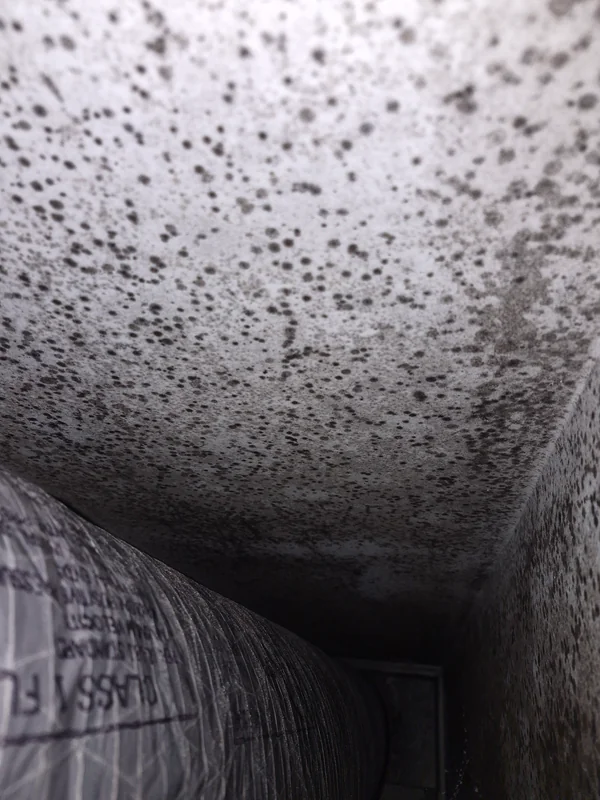
It starts with a free inspection. Before anything gets touched, we take a real look at your system the duct runs, the registers, the areas you can’t see from the outside. In Winder Village homes, where ductwork often follows original 1950s routing through tight interior walls and near slab-level floors, that inspection phase tells us a lot. We’re looking for signs of mold, moisture damage, debris buildup, and anything that points to a contamination source, not just surface dust.
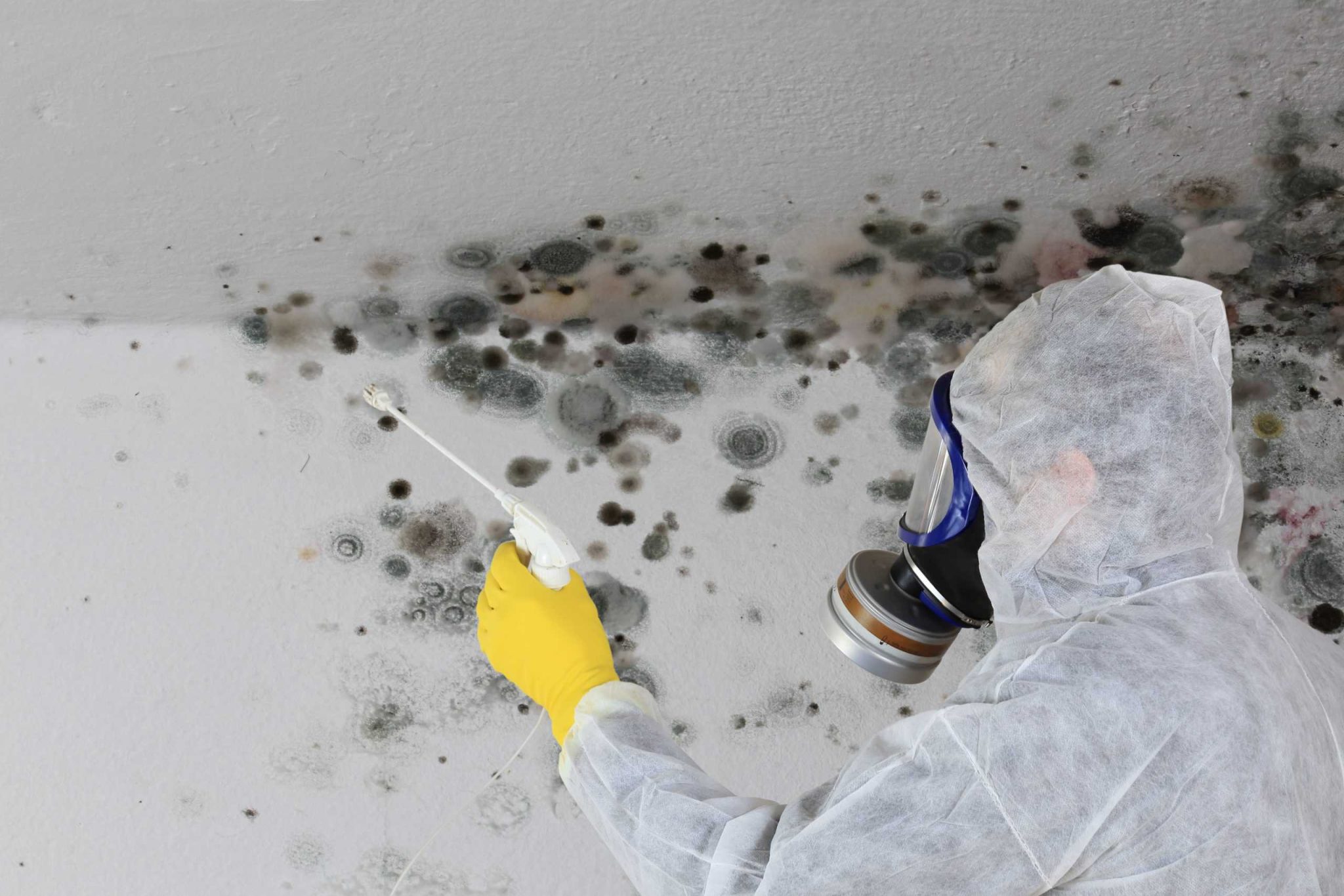
If mold is present, we contain it before we clean. This is the step most general duct cleaners skip, and it’s the step that matters most. Disturbing mold in an uncontained system pushes spores into rooms that weren’t affected yet. We use proper containment protocols because we’re mold specialists first that’s the training and certification behind the work.
Once the system is cleaned, we don’t just call it done and hand you an invoice. We test the affected areas after the job to confirm the mold is actually gone. That post-cleaning verification step is something customers consistently mention in our reviews, and it’s not something you’ll get from a company that treats duct cleaning as a side service. After everything checks out, we walk you through what we found, what we did, and what you can do to reduce the risk going forward especially relevant in a high-humidity zone like Lower Bucks County, where the conditions that created the problem don’t disappear on their own.
Ready to get started?
Air duct cleaning is the core of what we do here, but it’s rarely the only thing a Winder Village home needs. Older construction in this neighborhood means original or near-original duct runs, early HVAC systems that weren’t built with today’s moisture conditions in mind, and in many cases, dryer vent paths that haven’t been professionally cleared in years or ever. The NFPA reports roughly 15,970 dryer-related house fires per year, and the leading cause is failure to clean the vent. In a home where the dryer vent follows a long interior path through original 1950s walls, lint accumulates faster and the risk compounds over time. Dryer vent cleaning is part of what we offer, and in this neighborhood, it’s worth doing alongside the duct work.
We also offer air duct sanitizing as a follow-up step after mechanical cleaning. Cleaning removes the physical debris and mold colonies; sanitizing applies an antimicrobial treatment to the interior duct surfaces to address what cleaning alone can’t fully eliminate. For homes dealing with confirmed mold contamination which is common in the Delaware River corridor where ambient humidity stays elevated sanitizing is the step that makes the results last.
No permits are required in Bristol Township for air duct cleaning, dryer vent cleaning, or air duct sanitizing, so there’s no bureaucratic delay between scheduling and getting the work done. We offer flexible financing for homeowners who need it, and if your situation involves an insurance claim from a past water event, we handle that communication directly so you’re not stuck in the middle.
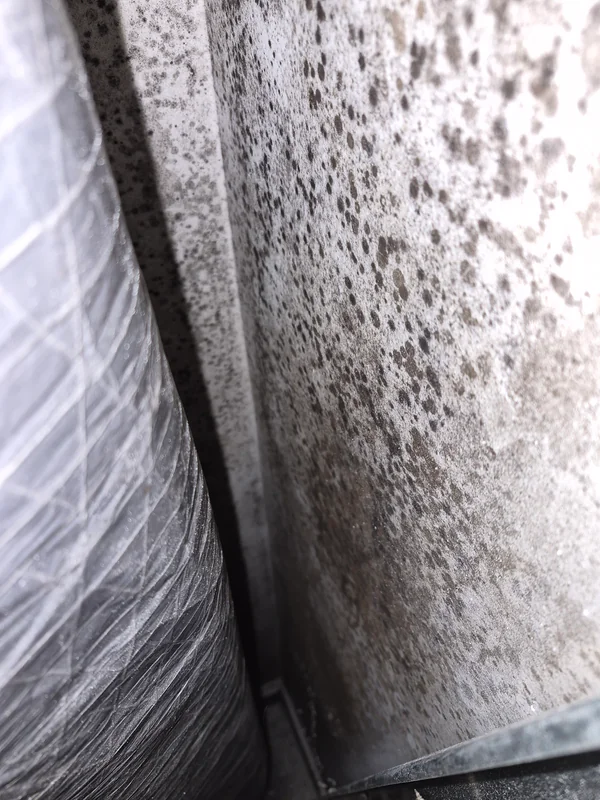
The most common sign is a musty smell that shows up specifically when your HVAC system kicks on and disappears when it’s off. That smell is the system moving air through contaminated ductwork and distributing it through your registers. You might also notice that your allergy or asthma symptoms are worse indoors than outside, or that certain rooms feel stuffy regardless of how often you clean them.
In Winder Village, where homes were built in the 1940s and 1950s and sit in a low-elevation zone near the Delaware River, the conditions for mold growth inside ductwork are consistently present high ambient humidity, aging duct materials, and slab-level duct runs that are close to moisture-prone floors. You can’t diagnose this by looking at your registers. The contamination lives in the interior sections of the system that aren’t visible from the outside. A free inspection is the only way to know what’s actually there, and it costs you nothing to find out.
This is one of the most important questions you can ask before hiring anyone. A standard duct cleaning company the kind that advertises a low flat rate and moves from house to house quickly is set up to remove dust and debris. They’re not trained in mold containment, and they typically don’t carry the equipment or protocols needed to handle biological contamination safely. When mold is disturbed inside a duct system without proper containment, the cleaning process itself can spread spores to rooms that weren’t affected before the work started.
We approach air duct cleaning from a mold remediation background. That means containment before cleaning, proper handling of contaminated materials, and post-job testing to verify the mold is actually gone not just moved around. If your home has confirmed mold in the ductwork, or if you have reason to suspect it based on symptoms or past water events, a mold specialist is what the situation calls for, not a generalist with a vacuum truck.
Yes, and sooner rather than later. Bristol Township sits in one of the more flood-prone corridors in Bucks County, with documented events where the Delaware River has broken its banks and affected homes throughout the township. Even a basement flood that was cleaned up and dried out can leave moisture behind in wall cavities, crawl spaces, and ductwork especially in a home built on a slab-on-grade foundation without modern below-slab moisture barriers, which describes most of Winder Village’s housing stock.
Mold can establish itself in a duct system within 24 to 48 hours of a moisture event, and it doesn’t always produce visible signs right away. By the time you notice a smell or worsening air quality, the colony has had time to grow. Getting a professional inspection after any water intrusion event even one that seemed minor is the most reliable way to catch the problem before it spreads through the entire HVAC system. We already serve Winder Village for this exact scenario, and the inspection is free.
A thorough air duct cleaning for a typical home takes somewhere between four and six hours. That’s the industry standard for doing the job correctly using negative air pressure equipment, cleaning both supply and return ducts, and not cutting corners on the sections that are harder to access. If you’ve seen companies advertising a two-hour job at a very low price, that’s worth being skeptical about. A job that fast almost certainly means sections of your system weren’t touched.
You don’t need to leave the house during the cleaning, but you should plan for some disruption technicians will be moving through different rooms to access registers, and the equipment does generate some noise. If mold is present and containment is required, we’ll walk you through what that looks like before we start so there are no surprises. For Winder Village homes in the 1,100-square-foot range, the job typically falls toward the lower end of the time estimate, but older duct configurations from the 1950s can occasionally add time if access points are limited or the routing is unusual.
It’s a legitimate fire safety service, not a sales add-on. The National Fire Protection Association tracks roughly 15,970 dryer-related house fires every year in the United States, and the leading cause across nearly all of them is failure to clean the dryer vent. Lint is highly flammable, and it accumulates in the vent path whether you clean the lint trap after every load or not because some lint always makes it past the trap and into the duct itself.
In older homes like those in Winder Village, the dryer vent path often follows original 1950s routing through interior walls, which can mean longer duct runs with more bends and turns. Longer paths accumulate lint faster and are harder to clear with a basic brush kit. A professional cleaning uses equipment designed to reach the full length of the run and confirm it’s clear all the way to the exterior vent cap. If you’ve never had it done or if it’s been more than a year or two it’s worth doing alongside your air duct cleaning while the technician is already there.
Yes. We offer flexible financing options for homeowners who need them. Air duct cleaning, mold remediation, and related services aren’t always costs people can plan for in advance especially when the trigger is a water event, a sudden mold discovery, or a health concern that can’t wait. Financing means you can move forward with the work without having to delay it while you save up, which matters when the problem is actively affecting the air your family is breathing.
Winder Village is a working-class neighborhood where a lot of homeowners are managing real budgets, and we understand that. The goal is to make it easy to do the right thing for your home without the financial decision getting in the way. We also work directly with insurance companies when a claim is involved which applies to more Winder Village homeowners than you might expect, given the area’s history with Delaware River flooding and water intrusion. If you’re not sure whether your situation qualifies for a claim, we can help you figure that out during the inspection.
Other Services we provide in Winder Village