
Hear from Our Customers

Most homeowners in Village Shires and along the Saint Leonards Road corridor have lived in their homes for decades. The ductwork running through those walls was installed in the late 1970s or 1980s and for many residents, it has never been professionally cleaned. That’s not a criticism. It’s just a reality that catches up with you, usually when allergy symptoms start creeping up or you notice a musty smell the moment the AC kicks on in spring.
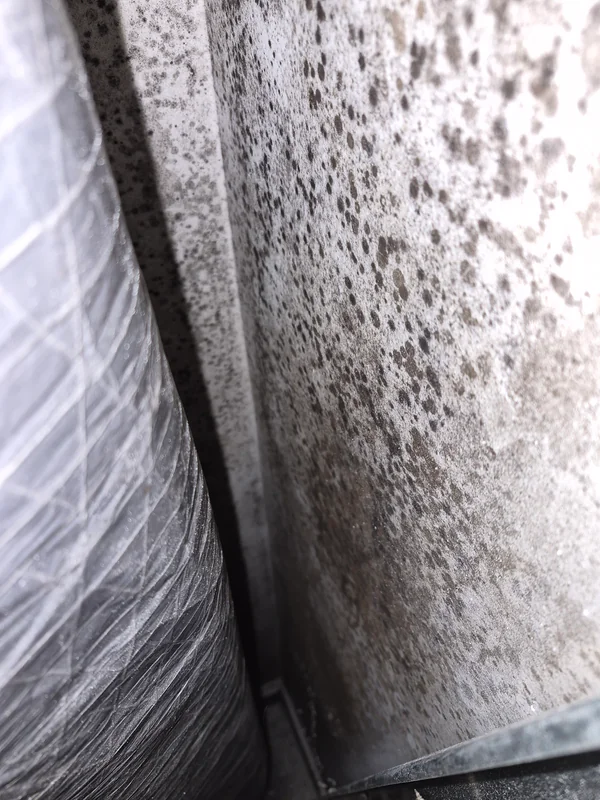
When we clean your air ducts, you’re not just getting dust removed. You’re getting a certified mold remediation specialist looking at every section of your system the parts you can’t see and wouldn’t think to check. Bucks County receives nearly a foot more rainfall per year than the national average, and homes near Tyler State Park and the Neshaminy Creek corridor deal with consistently higher ambient humidity. That moisture finds its way into older HVAC systems, and mold doesn’t need much of an invitation.
After the job is done, we test to confirm the mold is actually gone. Not just cleaned around gone. That’s the difference between a promise and a proof, and it’s why families throughout Northampton Township call us when they want to know their air is genuinely safe, not just assumed to be.
We’re based in Bensalem, PA a straight shot down Route 532 from Saint Leonard. For over 15 years, we’ve been serving Bucks County homeowners with the kind of mold expertise that general duct cleaning companies simply don’t carry. Certified inspectors, lab-tested results, and a process built around transparency rather than upselling.
The Saint Leonard area is exactly the kind of market where that distinction matters. The dominant local competitor has documented reviews describing technicians who refused to clean AC vents unless homeowners agreed to thousands of dollars in mold-related upsells after claiming to find a single speck. We operate differently. Free inspections, written upfront quotes, and no pressure. You find out what’s actually in your system before you spend a dollar.
This is a locally owned, owner-operated business. When you call, you’re reaching someone who shows up personally, knows Bucks County’s housing stock, and understands what 40-year-old ductwork in a community like Village Shires actually looks like from the inside.
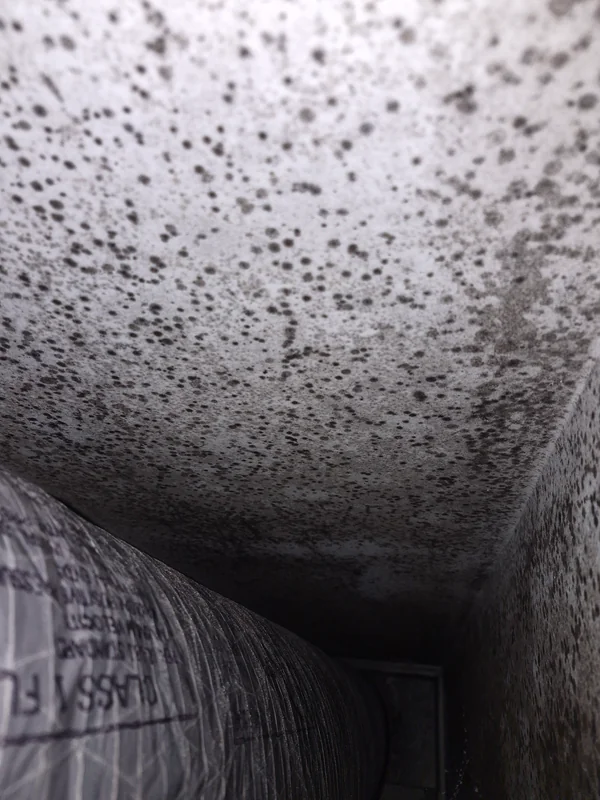
It starts with a free inspection. Before anything is quoted or scheduled, we send a certified specialist to assess your system looking at the ductwork, the air handler, the registers, and anywhere mold is known to establish itself in older HVAC configurations. For homes in the Village Shires area, that often means paying close attention to attic duct runs and compressed wall-cavity sections common in the townhome and condo stock built through the 1980s. These are the areas most prone to moisture accumulation, and the areas most likely to be overlooked by a company that isn’t specifically trained in mold.
Once the inspection is complete, you get a written quote. Our process uses containment protocols not just a vacuum and a brush. When mold is present, disturbing it without proper containment spreads spores through the rest of the system. That’s a problem a general duct cleaner can accidentally make worse. We treat every job with the same containment discipline used in full mold remediation work, because the risk is the same whether the mold is in your basement or your ductwork.
After cleaning, if mold was found and addressed, we conduct post-service testing to confirm the system is clear. You get documentation. Bucks County’s above-average humidity and the seasonal pattern of sealing homes through winter and running AC hard through humid summers means this isn’t a one-and-done concern for many households here and we’ll tell you honestly whether your system warrants follow-up attention or not.
Ready to get started?
Air duct cleaning is our core service, but it’s rarely the full picture for homes in this area. We also offer air duct sanitizing applying antimicrobial treatments after mechanical cleaning to eliminate biological contamination that physical removal alone can’t fully address. In a community where homes are 35 to 45 years old and ambient humidity stays elevated year-round near the Neshaminy Creek watershed, sanitizing is often the step that makes the cleaning last.
Dryer vent cleaning is another service that gets treated as optional maintenance until it isn’t. In Village Shires, where over 850 condominiums and 556 townhomes share walls and compressed duct runs, dryer vents often make more turns and run longer distances than in freestanding homes. The NFPA reports nearly 16,000 dryer-related house fires per year in the U.S., with failure to clean the vent as the leading cause. In attached housing, that risk doesn’t stay contained to one unit.
We also work directly with insurance companies when mold damage is part of a claim handling the back-and-forth so you don’t have to. And for homeowners who need flexibility on timing or cost, financing options are available. No named service tiers, no hidden add-ons. You get a clear scope of work and a price that doesn’t change between the quote and the invoice.
The most common sign is a musty smell that appears specifically when your HVAC system kicks on and then fades once it shuts off. That pattern points directly to the ductwork or air handler as the source, not somewhere else in the home. Other signs include worsening allergy or asthma symptoms that seem worse indoors than out, visible discoloration around registers or vents, or a general sense that the air feels stale even after cleaning the rest of the house.
For homes in Saint Leonard and the broader Village Shires area, the risk is higher than many residents realize. HVAC systems installed in the late 1970s and 1980s have had decades to accumulate moisture, dust, and biological growth especially in attic duct sections and wall-cavity runs that are never exposed to light or airflow changes. We offer free inspections specifically so you don’t have to guess. A certified specialist will assess your system and tell you honestly what’s there no pressure, no manufactured urgency.
The short answer: the $99 price point is almost always the beginning of a sales conversation, not the end of one. The business model behind it involves sending a technician who then identifies “problems” sometimes real, sometimes not and quotes significantly more to actually complete the job. There are documented cases of this happening with providers operating in the Holland and Northampton Township area, where homeowners have been told a single speck of mold requires thousands of dollars in additional treatment before the technician will proceed.
A legitimate air duct cleaning for a typical home, done correctly with proper equipment and containment, runs between $450 and $1,000 according to NADCA industry standards. That’s the realistic range for a thorough job. We charge transparently within the actual cost of the work, provide a written quote before anything starts, and don’t use the inspection as a sales opportunity. If your system is clean, you’ll be told it’s clean.
For most homes, a proper air duct cleaning takes between four and six hours. That’s the industry standard, and it reflects what’s actually required to clean both supply and return ducts thoroughly not just the registers you can see at the surface. Companies that advertise a full cleaning in under two hours are almost certainly not cleaning the full system.
For the townhomes and condominiums that make up the majority of Village Shires’s housing stock, the timeline can vary based on the configuration of the ductwork. Attached units built in the 1980s often have compressed runs and attic sections that take longer to access and clean properly. Single-family homes along Saint Leonards Road with full basements and more accessible duct systems may fall toward the shorter end of that range. We’ll give you a realistic time estimate after the free inspection, based on what your specific system actually looks like not a one-size-fits-all window.
When the issue is mold, dust, or biological contamination inside the duct system, yes cleaning makes a real difference. The EPA notes that indoor air concentrations of some pollutants are two to five times higher than outdoor levels, and Americans spend roughly 90% of their time indoors. If your HVAC system is circulating mold spores, allergens, or accumulated debris through every room every time it runs, that’s a direct contribution to what you’re breathing.
The nuance worth knowing: the EPA’s position is that routine duct cleaning absent a specific problem has unclear benefits. But when mold is confirmed, or when significant debris is present, cleaning is explicitly recommended. For households in Northampton Township where the HVAC system is 35 to 45 years old and has never been serviced, “no known problem” often just means “not yet inspected.” Residents who have children in the Council Rock School District or older family members with asthma or allergy sensitivities tend to find the inspection particularly reassuring because they get a factual answer rather than an assumption.
Cleaning and sanitizing are two separate steps that address two different things. Cleaning is the physical process using specialized equipment to dislodge and remove accumulated dust, debris, and biological matter from inside the ductwork. It’s mechanical work, and when done correctly, it takes several hours and addresses both supply and return ducts throughout the system.
Sanitizing comes after cleaning and involves applying an antimicrobial treatment to the interior surfaces of the ducts. The goal is to eliminate biological contamination mold spores, bacteria, and other microorganisms that physical removal alone may leave behind. For homes in the Saint Leonard area, where Bucks County’s above-average annual rainfall and proximity to the Neshaminy Creek watershed keep ambient humidity elevated, sanitizing is often the step that prevents mold from reestablishing itself in a recently cleaned system. If mold was found during your inspection, we’ll recommend sanitizing as part of the complete treatment and explain clearly why, not just add it to the invoice without context.
It can, and this is one of the more underappreciated risks in attached housing. Village Shires is made up of over 850 condominiums and more than 550 townhomes the majority of the community’s 1,593 homes share walls, floors, ceilings, or building envelope elements with at least one neighboring unit. HVAC duct runs in attached housing are often routed through shared wall cavities and attic spaces, which means the boundary between one unit’s air system and another’s is less defined than in a freestanding home.
When mold establishes itself inside an air handler or duct section in one unit, spores can migrate through the system and in some configurations through shared structural elements into adjacent spaces. This doesn’t mean every mold situation in a condo automatically becomes a multi-unit problem, but it does mean the risk isn’t contained the way it would be in an isolated single-family home. If a neighbor has recently had mold remediation done, or if you’ve noticed symptoms that started around the same time as construction or remediation activity nearby, it’s worth having your own system inspected. We offer free inspections for exactly this kind of situation so you get a factual answer rather than spending time worrying about something that may or may not be there.
Other Services we provide in Saint Leonard