
Hear from Our Customers
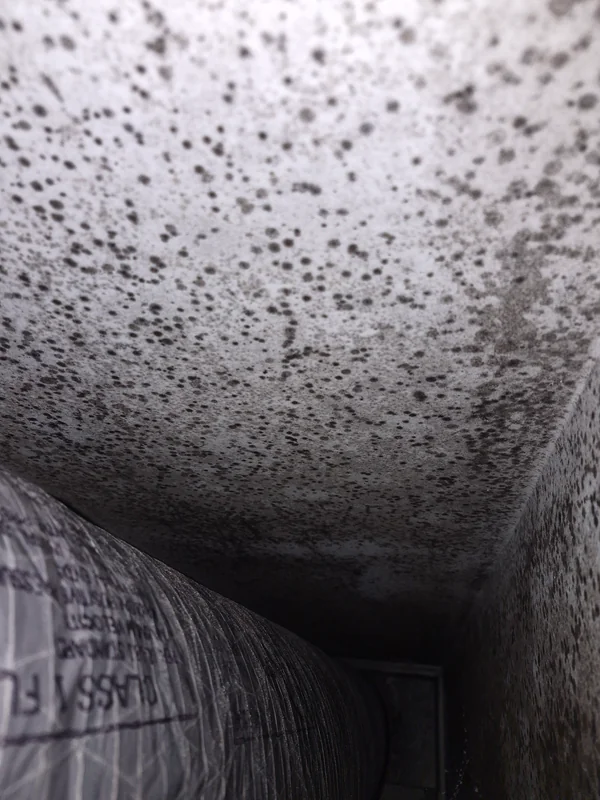
When mold is living inside your ductwork, every cycle of heat or AC moves spores from room to room. You might notice a musty smell when the system starts up, or your allergies have gotten worse and you can’t figure out why. Either way, the air you’re breathing is the problem and cleaning the visible surfaces won’t fix what’s hiding in the system.
For Morrisville homeowners, this isn’t theoretical. The Delaware Canal and River create a baseline humidity level that local HVAC companies have documented directly. It doesn’t dry out the way communities a few miles inland do. When you combine that with homes where more than a third were built before 1940, you get older duct systems running through properties that were never designed for forced-air HVAC, accumulating moisture and biological growth for decades.
After a proper air duct cleaning and mold inspection, the difference is real. The musty smell on first-run mornings goes away. Allergy symptoms that you’d written off as seasonal often improve. If you have kids or anyone with asthma or respiratory sensitivities, you’re not sending contaminated air through their rooms every time the system cycles.
That’s the outcome that actually matters.
We’re based in Bensalem just down US Route 1 from Morrisville and have been working in Bucks County for over 15 years. That means we’ve worked in the Cape Cods and split-levels that line Morrisville’s residential streets, the older colonials near Bridge Street, and the riverfront properties that deal with moisture in ways homes a few miles inland simply don’t.
We’re a certified mold remediation company. When we clean your air ducts, we’re not running a vacuum through the system and calling it done. We assess for mold before we start, contain it properly during the process, and test afterward to confirm it’s gone. That last step post-cleaning verification is something most general duct cleaners skip entirely. We don’t.
We also work directly with insurance companies when mold damage is part of a larger claim, and we offer financing for homeowners who need to address the problem now but aren’t in a position to absorb the full cost at once. No pressure. Just a straightforward path to getting it handled.
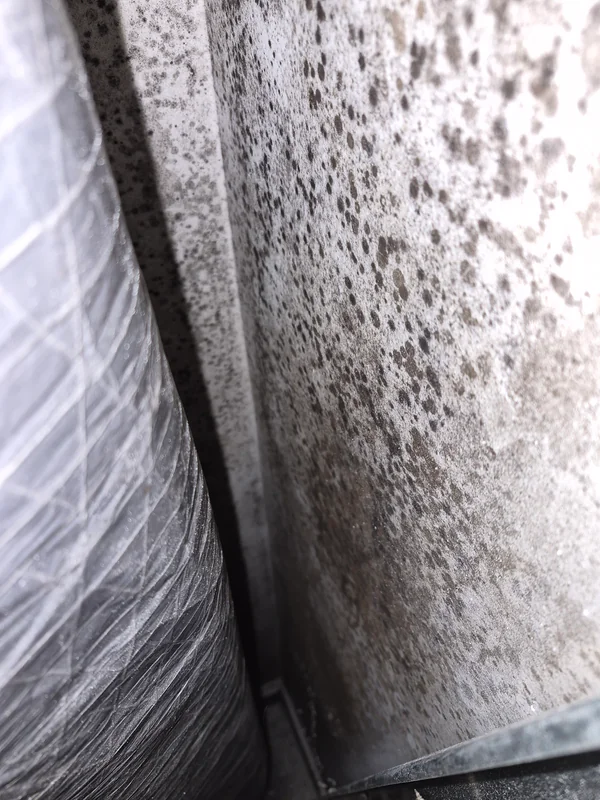
It starts with a free inspection. Before anything gets cleaned, we look at the full system supply ducts, return ducts, registers, and the areas around the air handler where mold most commonly develops.
In Morrisville’s older homes, that inspection often turns up conditions a quick visual check at the vent register would never catch. Ductwork in mid-century Cape Cods and retrofitted colonials tends to run through unconditioned attic or crawl space sections where moisture accumulates exactly where mold thrives.
If we find mold, we contain the affected sections before we start cleaning. This matters more than most people realize. Disturbing mold without containment sends spores through the system and into every room. That’s how a localized problem becomes a whole-house problem. We use the same containment protocols for duct cleaning that we use for full mold remediation jobs, because the risk is the same.
The cleaning itself covering both supply and return ductwork typically takes several hours for a standard home. Once it’s done, we test the area to confirm the mold is gone, not just reduced. You get documentation of what we found, what we did, and what the results showed. For Morrisville homeowners dealing with river-corridor humidity and homes that have been absorbing moisture for decades, that paper trail matters.

Ready to get started?
Air duct cleaning covers the full duct system supply lines, return lines, and the registers throughout the home. We don’t clean one side and leave the other, which is a shortcut some lower-cost services take. For Morrisville homes where the ductwork may not have been touched in decades, cleaning both sides of the system is non-negotiable if you actually want the air quality to improve.
If mold is present, air duct sanitizing is the step that follows mechanical cleaning. Cleaning removes the physical buildup; sanitizing applies an antimicrobial treatment to the interior duct surfaces to address any remaining biological contamination. For properties near the Delaware River corridor where humidity keeps duct interiors damp longer than in drier climates skipping the sanitizing step means the conditions for regrowth are still there even after the visible mold is removed.
We also offer dryer vent cleaning, which is worth mentioning specifically for Morrisville’s housing stock. Mid-century Cape Cods and split-levels often have long or convoluted dryer vent runs, especially in homes where laundry areas were moved during past renovations. Long vent runs accumulate lint faster and are harder to clear with a standard brush kit.
The NFPA reports nearly 16,000 dryer-related house fires per year, with clogged vents as the leading cause. It’s a fire safety issue and it comes up more often than you’d expect in older Bucks County homes. If your dryer is taking longer than one cycle to dry a normal load, or if the exterior vent flap doesn’t open fully when the dryer runs, the vent needs professional attention.

Yes, and it’s not a minor factor. Local HVAC companies that serve Morrisville have documented this directly the proximity of the Delaware Canal and River contributes to higher baseline humidity levels year-round, not just in summer. Unlike communities a few miles inland, Morrisville doesn’t get a true dry season where ambient moisture drops off significantly. That persistent humidity means the interior surfaces of your ductwork stay damp longer after the system runs, which is exactly the condition mold needs to establish itself.
When you add the age of Morrisville’s housing stock to that equation more than a third of homes built before 1940, with ductwork that may be 50 to 80 years old the risk compounds. Older duct systems have more gaps, more irregular joints, and more interior surface degradation than modern ductwork. Moisture gets in and stays in. If you’ve noticed a musty smell when your heat or AC starts up, that’s often the first sign that biological growth has taken hold somewhere in the system.
The clearest signs are a musty or stale smell when the HVAC system runs, visible discoloration around vent registers, or worsening allergy and respiratory symptoms that don’t have another obvious explanation. In Morrisville’s mid-century homes the Cape Cods, colonials, and split-levels that make up most of the borough’s residential streets ductwork was often installed in unconditioned attic or crawl space sections where moisture accumulates. By the time you notice something at the register, the problem inside the duct run is often more significant than it looks.
A free inspection is the most reliable way to know for sure. We look at the full system, not just the visible registers, and we send mold samples to a lab when we find growth so we know exactly what we’re dealing with before we start. That step matters because the cleaning approach for a duct system with active mold is different from routine dust removal.
It can, and it’s more common than most homeowners expect. Return air ducts pull air from the lower levels of the home including basements and crawl spaces and circulate it through the entire system. When a basement takes on water, even a modest amount, the moisture that lingers afterward gets drawn into the return ductwork. From there, every heating or cooling cycle moves that moisture-laden air through the supply ducts and into every room.
Morrisville properties near the Delaware River carry a documented moderate flood risk, and even minor groundwater intrusion events the kind that don’t make the news but leave a damp crawl space for weeks create exactly this pathway. The mold that develops in the ductwork after a water event can keep distributing spores long after the basement itself looks and smells fine. If your home has had any water intrusion, getting the duct system inspected is a logical next step.
Air duct cleaning is the mechanical process removing dust, debris, and biological buildup from inside the ductwork using professional equipment. Air duct sanitizing is a separate step that follows cleaning: an antimicrobial treatment is applied to the interior duct surfaces to address any remaining mold spores or bacteria that the physical cleaning process doesn’t fully eliminate on its own.
Whether you need both depends on what’s in your system. If the inspection finds active mold growth, sanitizing is not optional cleaning alone removes the visible colony, but the spores that remain on interior surfaces can restart growth if the conditions are still favorable. In Morrisville, where river-corridor humidity keeps duct interiors damp longer than in drier environments, those conditions tend to persist. Skipping sanitizing in a mold situation here is a short-term fix. We’ll tell you honestly after the inspection what your system actually needs.
The general industry recommendation is every three to five years for a typical home, but that baseline assumes average conditions. Morrisville is not an average-conditions environment. The elevated humidity from the Delaware River and Canal corridor, combined with the age of most homes in the borough, means the factors that drive mold growth in ductwork are present at a higher baseline than in drier, newer communities.
If your home is near the river, has a history of basement moisture or flooding, has had mold remediated elsewhere in the property, or simply hasn’t had the ducts inspected in several years, a shorter interval makes sense. We’d also recommend an inspection any time you notice a new musty smell from the vents, after any water intrusion event, or when you move into an older home and don’t know the service history. A free inspection gives you a real answer based on what’s actually in your system.
Yes, dryer vent cleaning is part of what we offer, and in Morrisville’s older housing stock it’s genuinely worth paying attention to. The NFPA reports nearly 16,000 dryer-related house fires per year in the U.S., with the leading cause being failure to clean the dryer vent. That’s a documented fire safety issue that affects real homes every year.
In Morrisville specifically, mid-century Cape Cods and split-levels often have dryer vent runs that were modified during the home’s history when laundry areas were relocated, additions were built, or layouts were updated. Longer or more convoluted vent runs accumulate lint faster and are harder to clear with a standard brush kit from the hardware store. If your dryer is taking longer than one cycle to dry a normal load, or if the exterior vent flap doesn’t open fully when the dryer runs, those are signs the vent needs professional attention. We can assess it during the same visit as your duct inspection.
Other Services we provide in Morrisville