
Hear from Our Customers

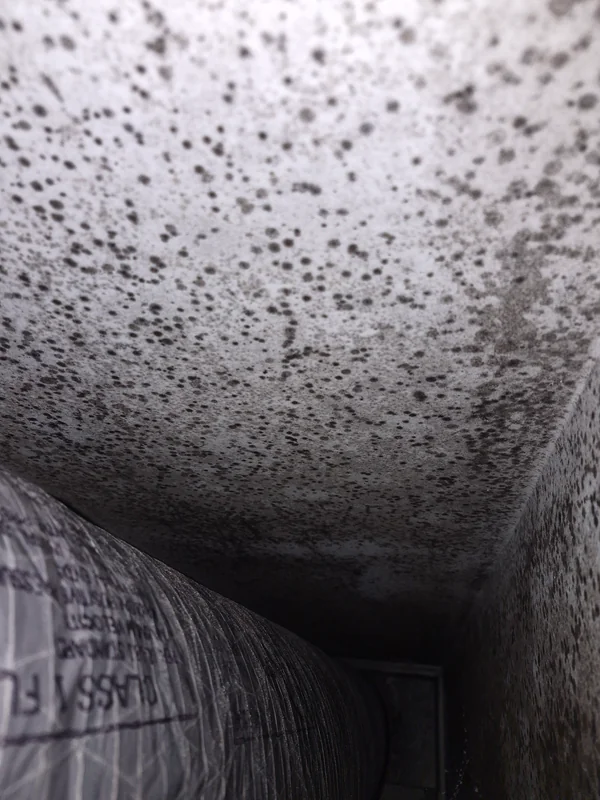
When your HVAC system runs with mold inside it, every room in your Hartsville home gets a dose of whatever’s growing in those ducts. It doesn’t matter how clean your kitchen is or how recently you replaced your air filters if the ductwork is contaminated, the problem follows the air. The musty smell when the heat kicks on in October isn’t a coincidence. It’s a warning.
For Hartsville homeowners, this risk is more concrete than it is in most places. The Little Neshaminy Creek runs through Warwick Township, and local mold specialists have documented that creek flooding leaves active mold in crawl spaces for entire seasons. When a crawl space takes on water from spring flooding, heavy rain, or a slow basement leak your HVAC system pulls that air upward and distributes it through every register in the house. A moisture event in your basement can become a whole-home air quality problem within a few HVAC cycles.
After a proper air duct cleaning from a certified mold remediation specialist, you’re not left wondering if the job was done right. We test the affected areas after the work is complete and document the results. You get proof, not just a handshake and a receipt. For a community that has already learned the hard way that environmental “all clear” claims need to be backed up with data, that matters.
Mack’s Mold Removal & Inspections is based in Bensalem and has been serving Bucks County for over 15 years. The Hartsville and Warwick Township area is part of our core service territory not a stretch of the map we occasionally cover. We already have a mold inspection presence in Warwick Township, and we understand the specific conditions that make this corridor different from other parts of Bucks County.
This isn’t a franchise. There’s no national call center routing your request to whoever is available. When you reach out, you’re reaching a local, owner-operated business where the person who answers actually knows what’s happening on your job. Customers have named our owner Jeff by name in reviews not because it’s a selling point, but because he shows up.
We carry certified mold inspectors and remediation specialists on every job. When we find mold in a duct system near the Neshaminy Creek corridor, we know how to contain it, remove it, and confirm it’s gone not just vacuum around it and hand you paperwork.
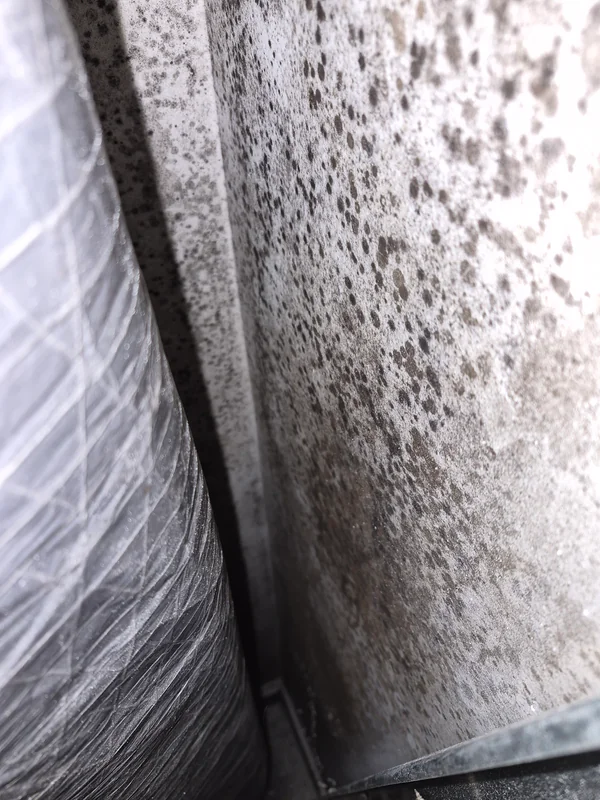
It starts with a free inspection. Before anything is quoted or scheduled, we look at what’s actually going on in your system. For homes in the Hartsville area especially properties near West Bristol Road and Old York Road where housing stock ranges from decades-old colonials to larger multi-system homes built in the 1990s that inspection often turns up conditions the homeowner had no idea existed. Mold doesn’t announce itself until it’s already spread.
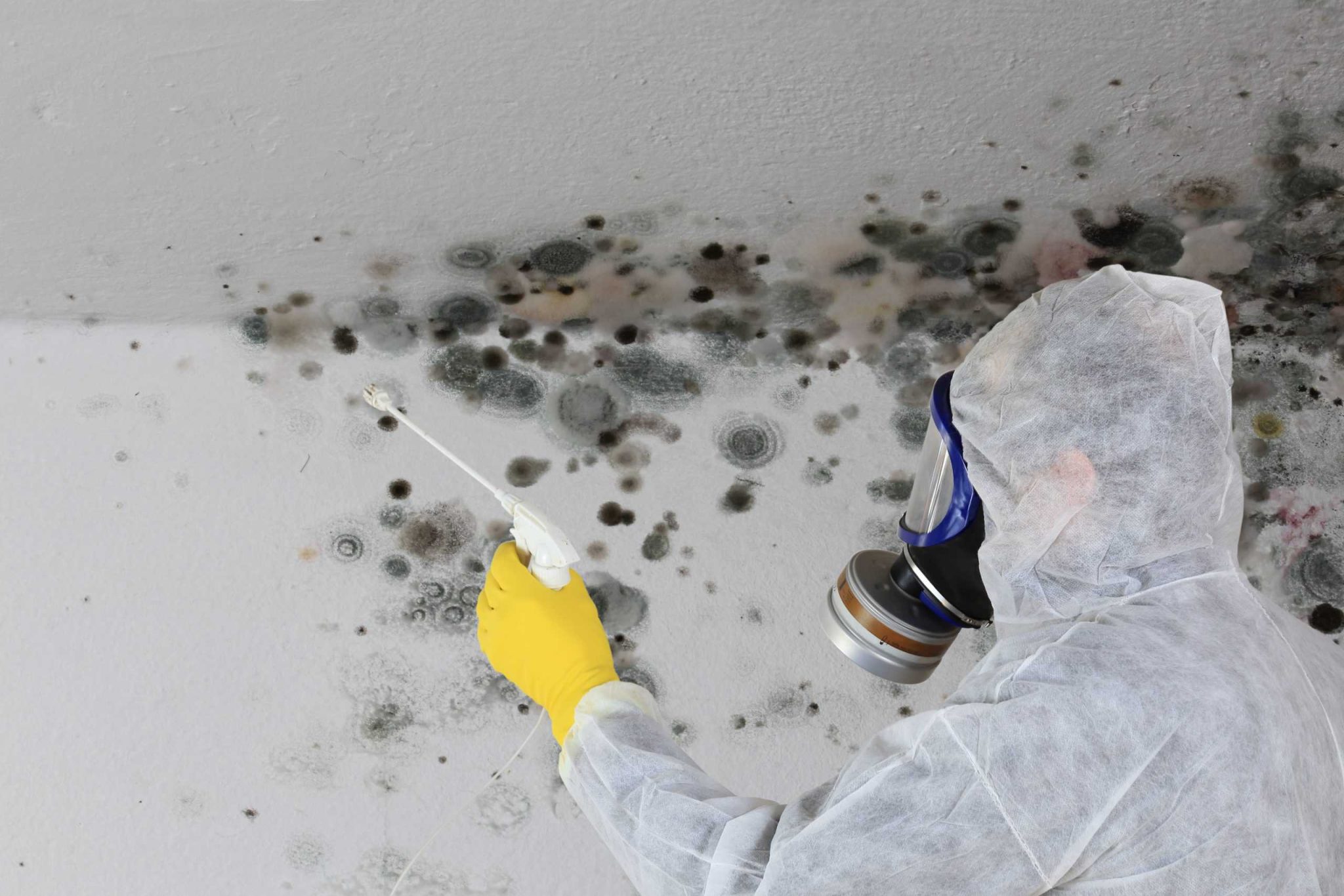
Once we understand what we’re dealing with, we build a plan specific to your system. If mold is present, we set up proper containment before we touch anything. This is where the difference between a certified mold remediation specialist and a general duct cleaner becomes critical. Disturbing mold without containment protocols spreads spores. We don’t skip that step. The cleaning itself addresses both supply and return ducts not just the registers you can see from the hallway.
After the work is done, we test. Samples go to a lab to confirm the mold is gone. You don’t have to take our word for it you get documentation. For Hartsville homeowners who’ve dealt with spring flooding from the Little Neshaminy watershed or who have older HVAC systems that have never been inspected, that final verification step is often the part that brings the most relief. Bucks County gets nearly 49 inches of rain per year. The conditions that create mold problems here are real, and they deserve a real process.
Ready to get started?
Air duct cleaning and air duct sanitizing are not the same thing, and in a place like Hartsville, that distinction is worth understanding. Cleaning removes the physical debris dust, mold colonies, biological buildup that has accumulated in the ductwork. Sanitizing applies an antimicrobial treatment after the mechanical cleaning is complete, targeting what’s left at the microscopic level. When mold is confirmed in a duct system, both steps are typically needed. We’ll tell you which applies to your situation after the inspection, not before.
Dryer vent cleaning is also part of what we do, and it’s worth taking seriously. The NFPA reports that failure to clean dryer vents is the leading cause of dryer-related house fires roughly 15,970 per year nationally. In a community of high-value homes where many residents have lived in the same property for five or more years, dryer vents are statistically overdue for service. It’s not a luxury maintenance item. It’s a fire prevention step.
For Hartsville homes specifically whether you’re in a mid-century property near the Old York Road crossroads, a larger Toll Brothers home from the 1990s with multiple HVAC units, or a newer build in the Warwick Township area we adapt the scope of the work to what your system actually needs. Pennsylvania doesn’t require a state license for air duct cleaning, but NADCA standards and certified mold remediation credentials are what separate a thorough job from one that misses the real problem. We bring both.
Yes, and it’s one of the more common scenarios we see in this part of Bucks County. When the Little Neshaminy Creek overflows or heavy rainfall saturates the ground around a Warwick Township property, the moisture finds its way into crawl spaces and basements. Mold can establish itself in those spaces within 24 to 48 hours under the right conditions and Bucks County’s humidity gives it plenty of help.
The problem doesn’t stay in the crawl space. Your HVAC system draws air from the lowest levels of your home and circulates it through every room. If mold is growing below, the system becomes a distribution network. By the time you notice a musty smell from your vents, the contamination has often already moved beyond the source. A proper inspection after any water event even one that seemed minor is worth doing before you run the system through another full season.
The most common sign is a musty or stale smell that appears specifically when your heating or cooling system runs and disappears when the system is off. That pattern points directly at the ductwork rather than a surface mold issue somewhere in the home. Other indicators include worsening allergy or respiratory symptoms that seem to ease when you’re outside or away from home, visible discoloration around registers or vent covers, and a history of water intrusion anywhere in the house.
What makes this tricky is that most of the ductwork in a home is completely hidden. You can look at the register and see nothing, while a section of duct three feet in is covered in mold growth. That’s why a visual inspection with the right equipment matters it’s not something you can reliably assess with a flashlight and a phone camera. For homes in Hartsville with older ductwork or any history of basement or crawl space moisture, a professional inspection is the only way to know for certain what’s actually in the system.
The skepticism is fair. The industry has a documented problem with low-ball offers the “$99 air duct cleaning” that turns into a high-pressure upsell once a technician is inside your home. The EPA has also noted that routine duct cleaning in the absence of a specific problem has unclear benefits. Both of those things are true, and we’ll say so plainly.
Where air duct cleaning is genuinely worth it and what the EPA specifically recommends is when there’s confirmed or suspected mold in the system, evidence of pest activity, or significant debris blocking airflow. In Hartsville, with above-average annual rainfall, creek flooding risk, and a housing stock that includes many homes from the 1990s and earlier that have never had their ductwork inspected, those conditions are common. The question isn’t whether duct cleaning is a scam in general it’s whether your specific system has a problem that warrants it. That’s what the free inspection is for. You find out before you spend anything.
Yes, and this is one of the most important follow-up steps that often gets skipped. When mold is remediated from a basement, crawl space, or wall cavity, the focus is typically on the visible affected surfaces. But if the HVAC system was running during the period when mold was active which it almost certainly was spores were being pulled into the return air pathway and distributed through the ductwork.
Leaving the ducts unchecked after a remediation job creates a real risk of recontamination. The remediated area gets cleaned, the system runs, and mold spores that settled in the ductwork get circulated back into the living space. For Hartsville homeowners who’ve dealt with basement water issues particularly in properties near the Neshaminy Creek watershed where flooding is a recurring condition pairing a remediation job with a duct inspection is the complete answer, not an optional add-on. We can often schedule the inspection in the same visit or shortly after the remediation work is finished.
The general industry guidance is every three to five years for routine maintenance, but that number shifts based on your specific conditions. If your home has experienced any water intrusion, if you have pets, if anyone in the household has asthma or significant allergies, or if the system has never been cleaned since the home was built those factors all push the timeline forward.
In Bucks County specifically, the combination of above-average annual rainfall and humid summers creates conditions where mold can develop in HVAC systems faster than it might in drier climates. Homes in Hartsville and Warwick Township that were built in the 1990s many of which have never had their ductwork professionally inspected are a particularly common case. A 25- to 30-year-old system with no cleaning history isn’t a question of whether it needs attention. It’s a question of what we’re going to find when we look. Starting with a free inspection gives you an honest answer without committing to anything.
They’re two separate steps that address two different problems. Cleaning is the mechanical process using professional equipment to physically remove dust, debris, and mold colonies from inside the ductwork. Sanitizing is what comes after: applying an antimicrobial treatment to the cleaned surfaces to address biological contamination at the microscopic level that the mechanical cleaning alone doesn’t eliminate.
Whether you need both depends on what the inspection finds. If the issue is primarily accumulated dust and debris with no biological contamination, cleaning alone may be sufficient. If mold is confirmed which is more likely in Hartsville-area homes with older ductwork, crawl space exposure, or any history of moisture sanitizing is the step that makes the cleaning complete rather than just cosmetic. We won’t recommend sanitizing on every job by default. We look at what’s actually in your system and tell you what the situation calls for. That’s the difference between a company that charges for what you need and one that charges for everything regardless.
Other Services we provide in Hartsville