
Hear from Our Customers
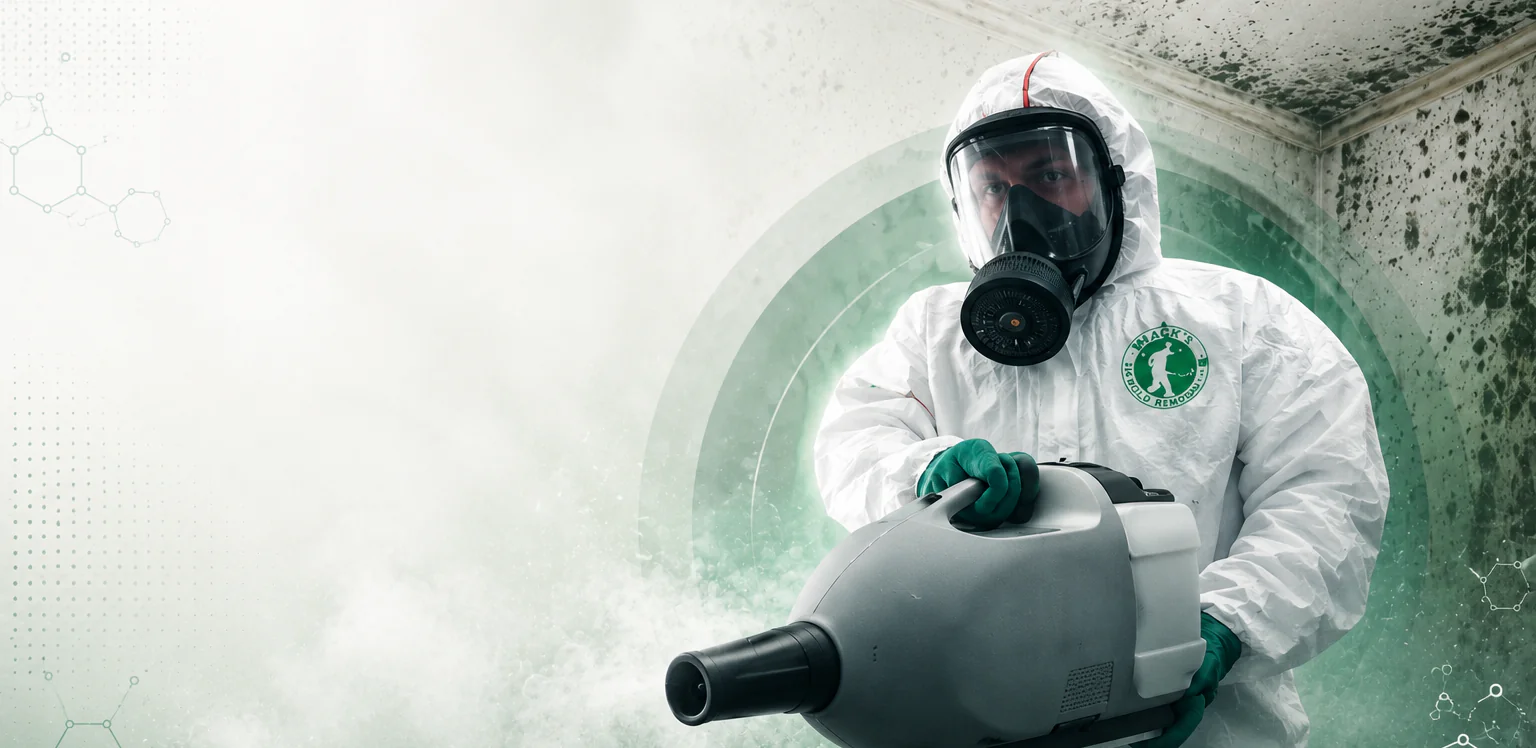
The musty smell that hits when the heat kicks on in October isn’t just unpleasant it’s a signal. In Falls Township, where virtually every home was built between 1952 and 1958, aging ductwork has had decades to accumulate dust, debris, and in many cases, active mold growth. When that system runs, it pushes whatever’s inside it into every room simultaneously. Getting it cleaned properly, by someone who understands what they’re looking at changes what your family breathes every single day.
For Falls Township homeowners specifically, the risk compounds in ways that don’t apply to newer construction. The combination of Bucks County’s above-average rainfall, low-lying geography near Martins Creek and the Delaware River, and post-war foundations with minimal vapor barriers means moisture finds its way into HVAC systems here more readily than most people realize. A basement that took on water after a heavy spring rain doesn’t just dry out and go away that moisture travels, and ductwork is often where it ends up.
After a professional cleaning and inspection, the difference is real: no more seasonal odors when the system starts up, fewer allergy triggers circulating through the house, and the peace of mind that comes from actually knowing what’s in your air not just hoping it’s fine.
We’re based in Bensalem about 15 minutes from Fairless Hills via Route 13 and have been serving Bucks County for over 15 years. We already maintain a dedicated mold inspection service for Levittown specifically, because the 1950s housing stock in Falls Township has its own distinct set of challenges that a general contractor or national franchise simply hasn’t dealt with before. Aging concrete block foundations, early vapor barriers, original galvanized ductwork these aren’t abstract concerns in Falls, they’re what’s actually in the homes.
What separates us from a standard duct cleaning company is the mold remediation certification behind every job. If a technician disturbs mold in a duct system without proper containment, they can spread spores to every room in the house. We use containment protocols, HEPA filtration, and post-cleaning lab verification not just a vacuum truck and a handshake. Upfront pricing, free inspections, and financing options are available for every job, because a problem this important shouldn’t have to wait on a budget.
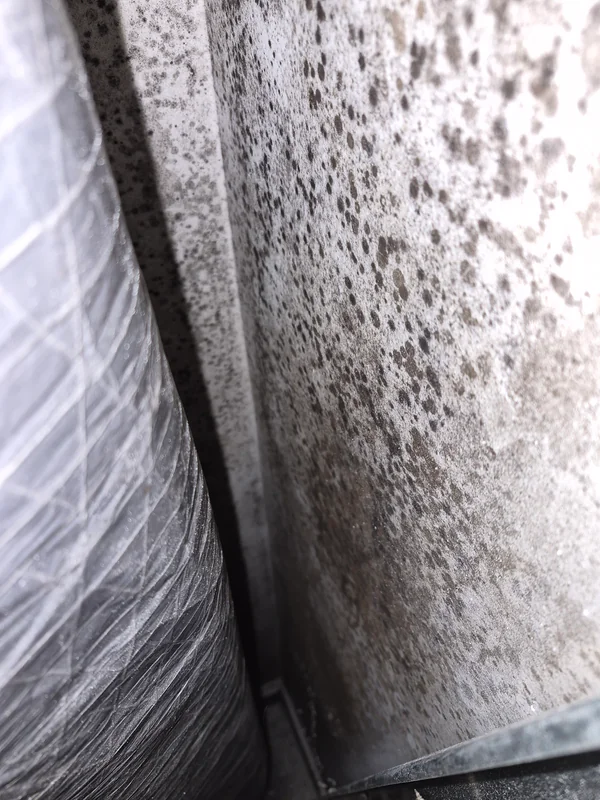
It starts with a free inspection. Before any equipment comes out, a certified inspector walks through the home and assesses the HVAC system looking at the ductwork, the air handler, and any areas where moisture may have entered the system. In Falls Township homes, that inspection pays particular attention to basement-level ductwork and any sections running near the foundation, because these are the areas most likely to show mold growth after groundwater infiltration events.
If the inspection confirms contamination whether mold, significant debris buildup, or both the remediation process begins with containment. Affected sections of the duct system are isolated so that nothing gets pushed further into the living space during cleaning. From there, the mechanical cleaning process removes the physical buildup using professional-grade negative air pressure equipment, and any mold-affected surfaces are treated with environmentally friendly antimicrobial products. This is also where air duct sanitizing comes in it’s a separate step from mechanical cleaning, and it matters when mold is involved.
The job doesn’t end when the equipment leaves. We send samples to a lab after the work is complete to verify that mold levels are within safe ranges. That documentation is yours to keep useful if you’re planning to sell, refinancing, or simply want proof the job was done right.

Ready to get started?
Air duct cleaning is the core service, but it doesn’t exist in isolation especially in a 1950s cape cod or split-level in Fairless Hills or one of Levittown’s named neighborhoods like Stonybrook, Magnolia Hill, or Vermillion Hills. We handle the full scope: HVAC duct cleaning, indoor air quality assessment, air duct sanitizing, and dryer vent cleaning, all under the same certified roof.
The dryer vent piece is worth taking seriously in Falls Township specifically. Homes built in the 1950s often have dryer vents routed through longer, more complex paths than modern construction standards allow which means lint accumulates faster and clears less efficiently. The NFPA reports that failure to clean dryer vents is the leading cause of dryer-related house fires, accounting for roughly 15,970 fires per year nationally. In a home where the vent routing hasn’t been updated since Eisenhower was president, that’s not a routine maintenance item it’s a fire safety issue.
Pennsylvania doesn’t require a state license specifically for air duct cleaning, but that doesn’t mean all providers are equal. We carry mold remediation certification that no general duct cleaning company in the Fairless Hills or Fallsington market can match. And because we work directly with insurance companies, if a flooding event or mold discovery is what brought you here, the claims process doesn’t have to be something you navigate alone.
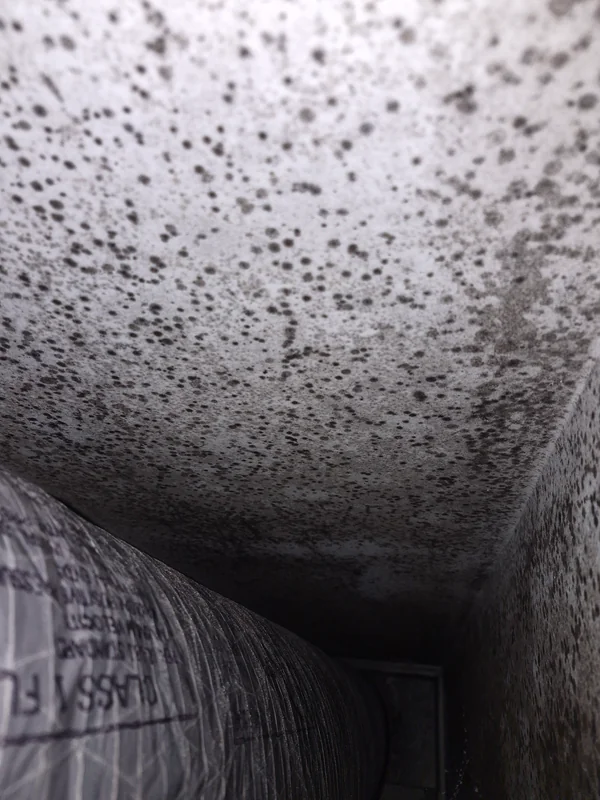
The most common sign is a musty or stale smell that appears specifically when your HVAC system kicks on not a general odor in the house, but one that comes and goes with the system. You might also notice allergy or respiratory symptoms that seem worse indoors than outside, or visible discoloration near the registers or return vents. In Falls Township homes, where the ductwork is often 65 or more years old and the foundations allow moisture to move through concrete block walls, mold in the HVAC system is genuinely more common than most homeowners expect.
The honest answer is that you can’t confirm it without a proper inspection. Mold grows in the interior sections of ductwork that you can’t see from a register, and a flashlight check at the vent opening doesn’t tell you much about what’s happening further in the system. A free inspection from a certified mold remediation specialist not just a duct cleaning technician is the only way to know for certain what you’re dealing with before deciding on next steps.
This is one of the most important questions to ask before booking anyone. A standard duct cleaning company uses vacuum equipment to remove dust and debris and they do that job fine when dust is all that’s present. But when active mold is growing inside the duct system, cleaning it without proper containment protocols can actually make things worse. Disturbing mold without isolating the affected section first allows spores to become airborne and travel to every room in the house through the same system you’re trying to clean.
A certified mold remediation specialist approaches the job differently. Containment is established before any mechanical cleaning begins, HEPA filtration captures what gets dislodged, and antimicrobial treatment is applied after the physical removal. We carry mold remediation certification specifically for this reason it’s not a credential that general duct cleaning companies in the Falls Township area typically hold. If your concern is dust, any reputable duct cleaner can help. If your concern is mold, the certification matters.
Yes, and sooner rather than later. In Falls Township, basement flooding after heavy rain is a recurring reality the township’s low-lying terrain, aging foundations, and proximity to Martins Creek and the Delaware River create conditions where groundwater infiltration happens even when sump pumps are working. The problem is that moisture doesn’t stay in the basement. It wicks upward through subfloor materials, travels through wall cavities, and reaches ductwork particularly in homes where HVAC equipment or duct runs originate in or near the basement level.
Mold can begin growing in a moist duct environment within 24 to 48 hours under the right conditions, and it’s often well-established by the time any visible or olfactory signs appear. If your home took on water even a few inches and you haven’t had the HVAC system inspected since, that inspection is a reasonable and inexpensive first step. We offer free inspections, so there’s no cost to finding out whether the flooding event affected your ductwork.
Industry guidance generally points to every three to five years for a typical home, but that range assumes a relatively modern, well-sealed duct system in a climate-controlled environment. For a 1950s home in Fairless Hills or one of Levittown’s neighborhoods where the ductwork may be original, the vapor barriers are minimal by today’s standards, and the basement is subject to seasonal moisture the honest answer is that the condition of the system matters more than the calendar.
If you’ve never had the ducts professionally cleaned, or if it’s been more than five years, an inspection is the right starting point regardless of the home’s age. Beyond the routine timeline, certain events should trigger an inspection immediately: visible mold near registers, a musty smell when the system runs, a recent basement flooding event, or a renovation that generated significant dust. Any of those situations can push contamination into the duct system faster than a maintenance schedule would account for.
They’re related but not the same, and whether you need both depends on what’s actually in your system. Mechanical cleaning removes the physical buildup dust, debris, and dislodged mold material using negative air pressure equipment. Sanitizing is a separate step where an antimicrobial treatment is applied to the interior duct surfaces after the mechanical cleaning is complete. It’s designed to address biological residue that physical removal alone doesn’t fully eliminate.
When mold is involved, both steps are typically warranted. Mechanical cleaning removes the visible growth and accumulated debris, but mold leaves behind spores and surface contamination that a sanitizing treatment is specifically designed to address. For Falls Township homes where moisture infiltration is a recurring factor not a one-time event sanitizing also provides a degree of residual protection against future biological growth in the duct system. We handle both steps as part of the same service when the inspection confirms mold is present, so you’re not coordinating two separate providers for what should be one complete job.
Yes Falls Township is squarely within our primary Bucks County service area. We’re based in Bensalem, which puts Fairless Hills, Levittown, and Fallsington roughly 15 to 20 minutes away via Route 13 or Route 1. This isn’t a stretch of our service map it’s home territory, and we already maintain dedicated mold inspection services for Levittown specifically because the 1950s housing stock there has its own documented set of challenges.
For Falls Township residents dealing with aging ductwork, recurring basement moisture, or the aftermath of a flooding event, the proximity matters practically: same-day and next-day response is realistic, and the person responding is familiar with what post-war construction in this part of Bucks County actually looks like. If you’re in Fairless Hills, one of Levittown’s neighborhoods along Levittown Parkway, or anywhere else in Falls Township, you can reach us 24 hours a day, seven days a week and the inspection to find out what you’re dealing with won’t cost you anything upfront.
Other Services we provide in Falls