
Hear from Our Customers

When your HVAC system runs, it pulls air from every corner of your home including your basement, crawl space, and the areas closest to the ground. In Brownsburg, where River Road (PA Route 32) floods regularly and groundwater saturates the soil around old stone foundations, that air often carries more than dust.
Moisture works its way into the lower levels of these historic homes and finds its way into the ductwork. Once it’s there, every heating and cooling cycle does the distributing for it. The difference between a clean HVAC system and a contaminated one isn’t always something you can see at the register.
Mold grows in the dark interior sections of ductwork the parts no flashlight reaches. For families in Brownsburg with kids in Council Rock schools who’ve been dealing with unexplained congestion or worsening allergy symptoms, the duct system is often the last place checked. It should be one of the first.
After a proper cleaning and inspection from us, you get documentation not just a handshake. Lab-verified results, a clear picture of what was found, and confirmation that the work actually worked. That’s what peace of mind looks like in a home that’s been standing since 1830.
We’re based in Bensalem and have been serving Bucks County including Brownsburg and Upper Makefield Township for over 15 years. This isn’t a franchise. There’s no call center fielding your questions. When you reach out, you’re talking to the people who actually do the work.
We’ve already completed dedicated work in Brownsburg because we know that humidity is a documented issue in this area, that homes along River Road sit in flood territory, and that a stone farmhouse from the 1820s is a fundamentally different job than a 1990s colonial elsewhere. That local knowledge matters when the problem is inside your walls and your ductwork.
Certified inspectors, lab testing of samples, post-cleaning verification, and direct communication throughout that’s our standard on every job, whether it’s a historic home near the Brownsburg Village Historic District or a newer estate further into Upper Makefield.
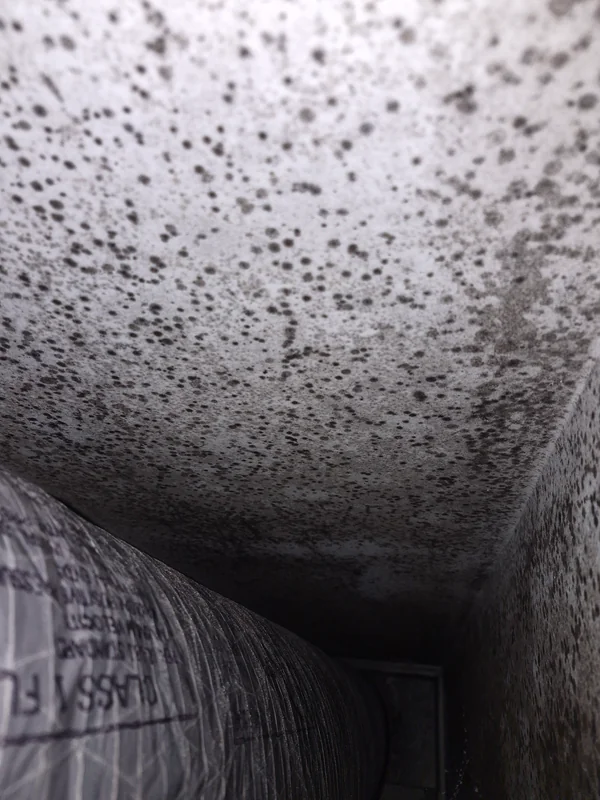
It starts with a free inspection. Before any equipment comes out, a certified inspector looks at your system where the ducts run, what conditions they’re running through, and whether there are signs of mold, moisture intrusion, or debris buildup. In older Brownsburg homes where ductwork was retrofitted into stone walls and uninsulated crawl spaces, that initial assessment often reveals things a standard HVAC technician would miss entirely.
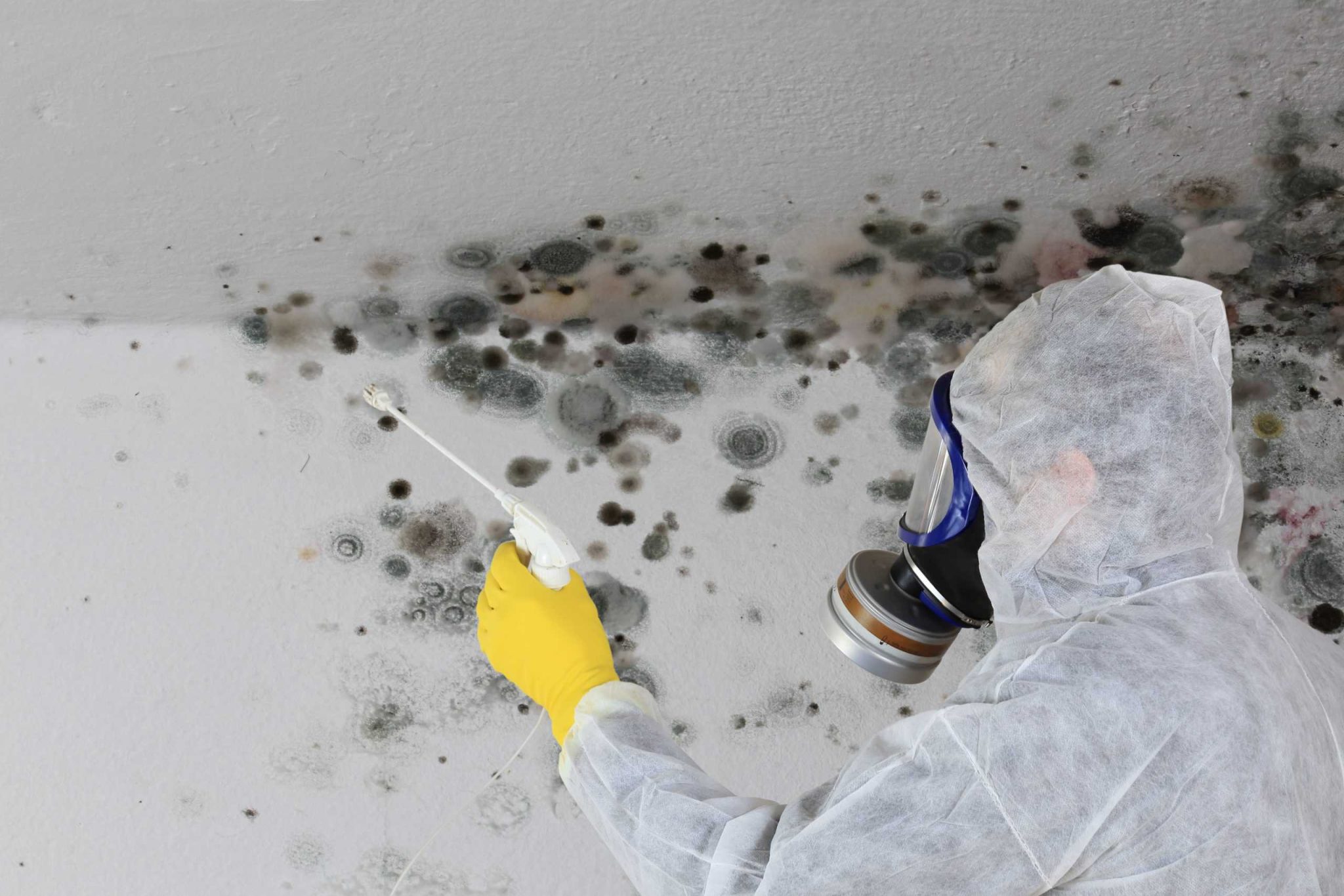
If mold is found, the process shifts into remediation protocol not just cleaning. That means containment first, so spores aren’t disturbed and spread to the rest of the house during the job. We use HEPA air filtration and proper containment barriers before any mechanical cleaning begins. This is the step that separates a mold specialist from a general duct cleaner, and it matters most in homes where the building envelope itself is a moisture source.
After the cleaning is complete, affected areas are tested to confirm the mold is gone. You get documentation of what was found, what was done, and what the post-cleaning results showed. For homeowners in Brownsburg navigating an insurance claim after a flood event which is a real and recurring situation along PA Route 32 that paperwork matters. We work directly with insurance companies, so you’re not left translating between your contractor and your adjuster.

Ready to get started?
Air duct cleaning is the core of what we offer, but it doesn’t stop there. We also handle dryer vent cleaning and air duct sanitizing two services that are easy to overlook and genuinely important, especially in older homes.
Dryer vent cleaning is a fire safety issue, not a maintenance preference. The NFPA documents nearly 16,000 dryer-related house fires per year in the U.S., and failure to clean the vent is the leading cause. In historic Brownsburg homes where dryer vents may be routed through original building materials or run longer distances than a modern home’s layout would require, lint accumulation happens faster and the risk is higher.
Air duct sanitizing is a separate step from mechanical cleaning. Cleaning removes the physical debris and mold growth from inside the ductwork. Sanitizing applies an antimicrobial treatment to address any remaining biological contamination on the duct surfaces. When mold is involved which it frequently is in homes along the Delaware River floodplain skipping the sanitizing step leaves the job half done. We use environmentally friendly products throughout, which matters in homes with original plaster, period millwork, and architectural finishes that can’t be replaced.
We scope each job based on what the inspection actually finds, so you’re not paying for a package that doesn’t fit your home.
Yes, and it’s one of the most direct connections between location and HVAC health that exists in Bucks County. Brownsburg sits directly on the Delaware River floodplain along River Road (PA Route 32), which is documented flood territory. Upper Makefield Township maintains active flood alerts, and River Road closures during high water events are a recurring reality for residents here.
When the river rises and groundwater saturates the soil around these old stone foundations, moisture doesn’t stay outside. It works into basements, crawl spaces, and the air returns that feed your HVAC system. Once humid air is cycling through ductwork that runs through inherently damp spaces which is common in homes built in the 1800s that were retrofitted with modern HVAC mold growth is a matter of when, not if. A certified inspection is the only way to know what’s actually inside the system.
The most common sign is a musty smell that appears specifically when your HVAC system kicks on not all the time, but right when air starts moving through the ducts. That smell is often dismissed as the system “warming up” or “dusty from sitting,” but it’s worth taking seriously, especially in a Brownsburg home with a history of basement moisture or flooding.
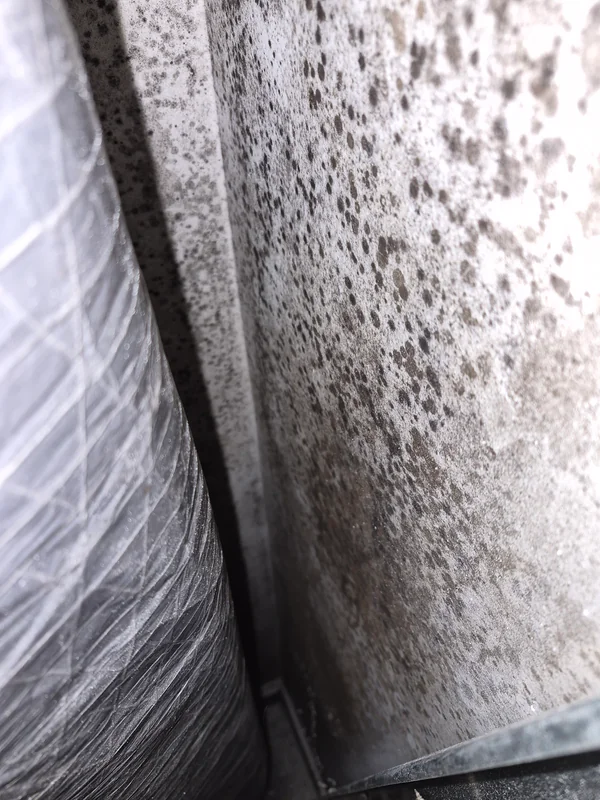
Other signs include worsening allergy or respiratory symptoms that seem to ease when you’re away from home, visible discoloration around vent registers, or a general sense that the air feels stale or heavy when the system is running. None of these are definitive on their own that’s what the inspection is for. We send certified inspectors who use lab testing of samples, not just a visual check, to determine what’s actually present. In Brownsburg homes where the ductwork runs through stone wall cavities and uninsulated spaces, the problem is often deeper in the system than anything visible at the register.
That’s exactly what happens when mold establishes itself in ductwork and the system continues to run. Every time your HVAC cycles on, it pulls air through the contaminated section and distributes it along with mold spores to every room the system serves. What starts as a localized problem in one section of ductwork becomes a whole-house issue over time.
This is why the containment step matters so much during cleaning. Disturbing mold inside ductwork without proper containment protocols in place can make the spread worse, not better which is the risk of hiring a general HVAC technician who doesn’t have mold remediation training. We use containment barriers and HEPA air filtration before any mechanical cleaning begins, so the process doesn’t create a bigger problem than the one it’s solving. In a home where every room connects back to the same duct system, that distinction is not a minor detail.
They’re two separate steps that address two different problems. Mechanical cleaning removes the physical material from inside the ducts dust, debris, mold growth, and buildup that has accumulated on the duct surfaces over time. That’s the part most people picture when they think about duct cleaning.
Sanitizing comes after the cleaning and applies an antimicrobial treatment to the interior duct surfaces. Its purpose is to address any remaining biological contamination mold spores, bacteria, and other microorganisms that can survive on surfaces even after the visible growth is removed. When mold is confirmed in the system, skipping sanitizing leaves the job incomplete. The physical growth is gone, but the conditions that allowed it to thrive may still be present on the duct walls. For homes in Brownsburg where moisture intrusion from the Delaware River floodplain is a recurring factor, sanitizing is a reasonable step to include. We use environmentally friendly products for this treatment, which is relevant for homes with children, pets, or historic architectural finishes that need careful handling.
We don’t publish set prices on our website, and that’s intentional the scope of a job in an older Brownsburg home with retrofitted ductwork and potential mold involvement is genuinely different from a straightforward cleaning in a newer construction home. A free inspection is the starting point, and you’ll receive upfront pricing before any work begins. The price you’re quoted is the price you pay.
What you should be cautious of is the opposite end of the spectrum the $99 air duct cleaning offer that shows up in online ads. That price point is well-documented in the industry as a bait-and-switch entry, where the low number gets someone in the door and aggressive upselling follows once the technician is on site. For a historic home in Brownsburg where the ductwork situation may be more complex than average, starting with a legitimate inspection from a certified mold specialist is the more reliable path. You’ll know exactly what you’re dealing with before any money changes hands.
It’s a real fire safety concern, and older homes in Brownsburg and Upper Makefield have specific characteristics that make it more relevant here than in a newer suburban development. The NFPA reports roughly 16,000 dryer-related house fires annually in the U.S., with failure to clean the vent as the leading cause.
In historic properties along River Road and throughout the Brownsburg area, dryer vents are often routed through original building materials and may run longer or more convoluted paths than a modern home’s layout would allow. Longer vent runs mean lint accumulates faster and airflow restriction builds up more quickly. When a dryer has to work harder to push air through a partially blocked vent, it runs hotter and that’s when the risk increases. If you haven’t had your dryer vent cleaned in the last year or two, or if your dryer is taking longer than one cycle to dry a normal load, that’s a practical sign it’s time to have it looked at.
Other Services we provide in Brownsburg