You’ve spotted mold. Or maybe you haven’t seen it yet, but someone in your house can’t shake a cough that disappears when they leave for the day. Either way, you’re here because you need to understand what actually happens during mold remediation and whether the company you’re considering will do it right.
The truth is, not all mold remediation is equal. Some companies remove what you can see and call it done. Others follow a proven process that addresses the real problem, not just the symptoms. The difference between the two determines whether you’re mold-free in six months or dealing with the same issue all over again.
Here’s what proper mold remediation looks like from start to finish.
Professional Mold Remediation: What It Actually Involves
Professional mold remediation is the complete process of identifying, containing, removing, and preventing mold contamination in your home. It’s not just about scrubbing visible spots with bleach or running a dehumidifier. Real remediation addresses both the mold you can see and the conditions that allowed it to grow in the first place.
The process follows EPA-approved guidelines and industry standards designed to protect your health during cleanup and prevent the problem from returning. When done correctly, it involves specialized equipment, proper containment to prevent spore spread, and independent testing to verify the work was successful. Most importantly, it includes finding and fixing the moisture source, because without that step, you’re just buying time until the mold comes back.
In Bucks County, PA, where annual rainfall exceeds the national average by nearly 30%, moisture problems are common. The area’s groundwater patterns, humid summers, and older housing stock create perfect conditions for mold growth, which is why understanding what proper remediation looks like matters here.
Mold Remediation Cost: What You’ll Actually Pay
The average cost of mold remediation in 2026 ranges from $1,200 to $3,750, with most homeowners paying around $2,300 to $2,400. But that range exists for a reason. The final price depends on how much mold is present, where it’s growing, and whether you need structural repairs after removal.
Most professionals charge between $10 and $25 per square foot for standard work. A small bathroom ceiling issue might cost $800 to $2,000, while a basement mold remediation cost typically runs $500 to $3,000. If the mold is behind finished walls or paneling, expect higher costs because those surfaces need to come down before treatment can start. Crawl space mold removal usually costs $500 to $2,000, while attic work ranges from $1,000 to $4,000 depending on accessibility and extent of damage.
Black mold remediation cost tends to run 10 to 25 percent higher than other types because it requires more rigorous containment and safety protocols. HVAC system contamination is the most expensive scenario, ranging from $3,000 to $10,000, because spores can distribute through every duct in your home.
The mold remediation cost per square foot model works for most projects, but whole-house contamination can push past $30,000 when you factor in repairs and restoration. Here’s what many homeowners don’t realize: the cost of doing it wrong is higher than the cost of doing it right. If a company skips moisture source repair or proper containment, you’ll pay again when the mold returns. And it will return.
Insurance coverage depends on what caused the moisture problem. Sudden events like burst pipes are often covered, while gradual moisture issues typically aren’t. Most policies cap mold coverage at $5,000 to $10,000, so understanding your actual costs upfront matters.
Timeline matters too. Most residential projects take three to five days from start to finish, though extensive contamination can take a week or more. The process includes inspection, containment setup, removal, cleaning, drying, and final testing. Companies that promise to finish in a day are probably skipping steps that matter.
Basement Mold Remediation Cost and Common Challenges
Basements are ground zero for mold problems in Bucks County, PA. The area’s groundwater patterns, moisture-retaining soil, and seasonal water table shifts create persistent dampness that turns basements into mold magnets. Add in aging foundations, inadequate drainage, and HVAC systems that struggle with humidity control, and you have the perfect environment for growth.
Basement mold remediation cost typically ranges from $500 to $3,000, but that assumes the mold is visible and accessible. If it’s growing behind finished drywall, inside wall cavities, or within insulation, costs increase significantly because those materials need removal before remediation can begin. The real expense often isn’t the mold removal itself—it’s addressing the underlying moisture problem that caused it.
Foundation leaks, poor grading, failed sump pumps, and inadequate ventilation all contribute to basement moisture. Fixing these issues adds to the total project cost but prevents recurring problems. Sealing a foundation runs $2,250 to $7,100. Installing or replacing a sump pump costs $600 to $2,500. Basement waterproofing ranges from $6,000 to $18,000 depending on the scope.
The moisture doesn’t just support mold growth. It also affects your indoor air quality throughout the entire house. Air from your basement rises into living spaces through the stack effect, carrying mold spores and musty odors with it. That’s why family members often experience respiratory symptoms that improve when they leave the house. The problem isn’t just in the basement—it’s in the air you’re breathing upstairs.
Proper basement remediation addresses both the mold and the moisture. Surface cleaning without fixing leaks or improving drainage is a temporary solution that fails within weeks. The companies that understand this difference are the ones worth hiring.
Mold Assessment: The Foundation of Effective Remediation
Mold assessment is the detailed inspection and testing process that determines whether you have a mold problem, how extensive it is, and what’s causing it. This step happens before any remediation work begins, and it’s critical because you can’t fix a problem you don’t fully understand.
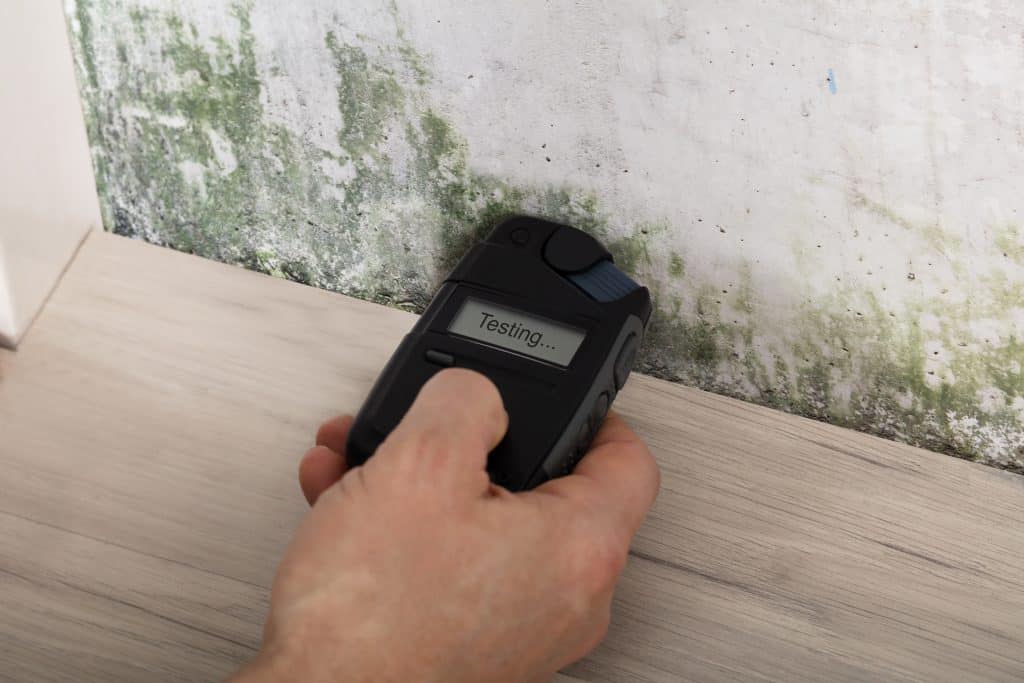
A proper household mold inspection examines every area where mold typically grows: basements, crawl spaces, attics, bathrooms, around windows, near HVAC systems, and inside wall cavities. Inspectors use moisture meters to detect hidden water damage, infrared cameras to identify temperature differences that indicate moisture behind walls, and air quality testing for mold to measure spore levels. They’re looking for both visible growth and the conditions that support it.
The assessment also identifies the moisture source. Mold doesn’t grow without water, so finding where that moisture comes from is non-negotiable. It could be a roof leak, failed plumbing, poor drainage, condensation, or high humidity. Until you fix that source, remediation is just a temporary Band-Aid.
Crawl Space Mold Inspection: Why This Area Demands Attention
Crawl spaces are among the most common locations for mold growth, yet they’re often the last places homeowners check. Dark, damp, and surrounded by wet soil, crawl spaces provide ideal conditions for mold to thrive. Poor ventilation traps moisture, and organic building materials like wood joists and subfloors provide the perfect food source.
A crawl space mold inspection involves more than shining a flashlight through the access door. Professionals physically enter the space to examine floor joists, subfloors, insulation, and foundation walls for signs of mold, wood rot, and moisture damage. They check for standing water, measure humidity levels, and identify ventilation problems that contribute to dampness.
In Pennsylvania, crawl space vents that were once considered beneficial have actually worsened moisture problems. During warm months, humid outdoor air enters the cool crawl space and condenses on surfaces. In cold months, the opposite happens. Either way, moisture accumulates and mold follows.
Mold under house in crawl space doesn’t stay there. Through the stack effect, air from your crawl space rises into your living areas, carrying mold spores, musty odors, and potentially harmful mycotoxins. This is why families often experience unexplained respiratory symptoms, allergies, and headaches that improve when they leave home.
A thorough crawl space inspection also identifies structural damage. Mold growth often leads to wood rot, which can compromise floor joists and cause sagging floors. Catching this early prevents expensive structural repairs down the line.
Proper crawl space treatment addresses both the mold and the moisture source. This typically involves removing contaminated materials, treating remaining surfaces with antimicrobial solutions, improving drainage, installing vapor barriers, and adding dehumidification. Crawl space fungus treatment cost ranges from $500 to $2,000 for remediation, with encapsulation adding $1,500 to $15,000 depending on size and condition.
The key is addressing the problem completely rather than treating symptoms. A moldy crawl space doesn’t resolve on its own, and DIY attempts that ignore moisture control fail quickly. Mildew in crawl space and fungal growth in crawl space are signs of the same underlying issue: too much moisture and not enough ventilation.
Air Quality Testing for Mold and Certified Mold Testing
Air quality testing for mold measures the concentration of mold spores in your indoor air and compares it to outdoor levels. This testing serves two purposes: identifying hidden mold that isn’t visible during inspection and establishing baseline spore counts before remediation begins.
Not all mold testing is necessary. If you can see mold growth, testing to identify the species usually doesn’t change the remediation approach. All mold needs to be removed regardless of type. However, air testing becomes valuable when you’re experiencing health symptoms but can’t locate the source, when you suspect hidden mold behind walls or in HVAC systems, or when you need documentation for insurance claims or property transactions.
Certified mold testing involves collecting air and surface samples that are sent to accredited laboratories for analysis. The lab identifies mold species present and quantifies spore concentrations. This data helps determine the extent of contamination and provides a benchmark for post-remediation clearance testing.
Residential mold testing typically costs $300 to $650 for an average-sized home, with additional charges for multiple sample locations. The investment makes sense when you need definitive answers about hidden contamination or when you’re verifying that remediation was successful.
The most important aspect of mold testing is who performs it. Testing should be done by independent third parties, not the company doing the remediation. This eliminates conflicts of interest and ensures unbiased results. A mold inspection specialist who also offers remediation services has a financial incentive to find problems and recommend expensive solutions. An independent inspector has no stake in the outcome beyond providing accurate information.
Local mold inspectors who understand Bucks County, PA’s specific challenges bring valuable context to their assessments. They know which areas of homes are most vulnerable, what seasonal patterns affect mold growth, and how the area’s rainfall and soil conditions contribute to moisture problems.
Signs of Mold Exposure: Recognizing Health Symptoms
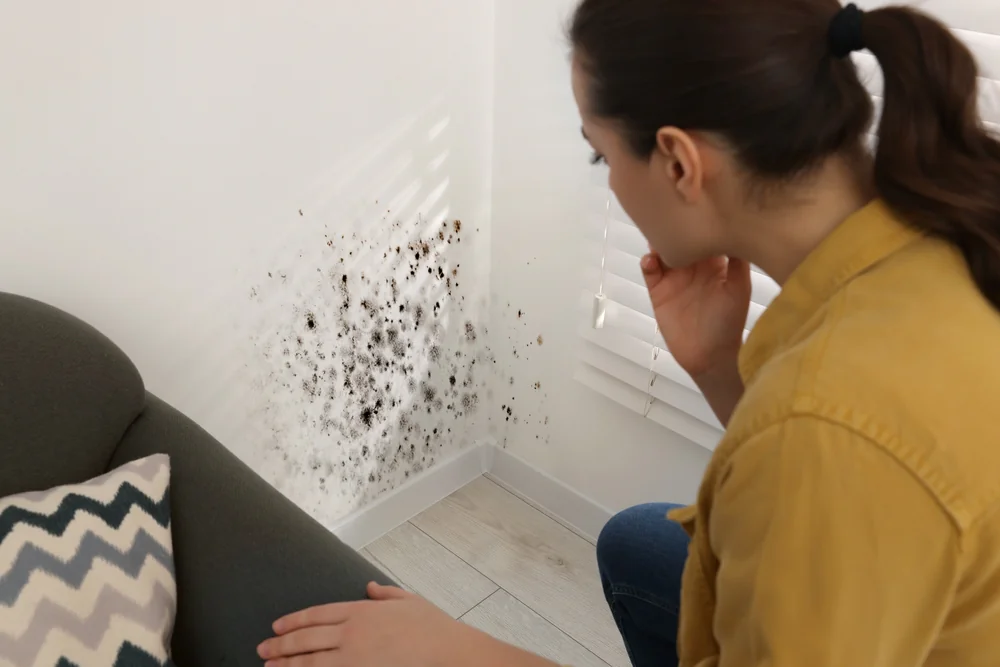
Mold in house symptoms often appear before you ever see visible growth. Your body reacts to mold spores in the air, triggering responses that range from mild irritation to serious respiratory problems. Recognizing these symptoms early can prompt investigation before the problem becomes extensive.
Common symptoms of mold exposure include nasal congestion, runny nose, coughing, wheezing, eye irritation, skin rash, and headaches. For people with asthma, mold exposure can trigger attacks characterized by shortness of breath, chest tightness, and difficulty breathing. Those with mold allergies may experience more severe reactions including persistent sneezing, itchy eyes and throat, and postnasal drip.
The pattern of symptoms matters as much as the symptoms themselves. If you feel better when you leave home and worse when you return, indoor air quality is likely the issue. If multiple family members experience similar symptoms without obvious cause, environmental factors should be investigated. Mold in home symptoms don’t always present dramatically, but they do follow patterns that point to environmental causes.
Long Term Exposure to Black Mold Symptoms
Long term exposure to black mold symptoms can be more serious than short-term reactions. While brief exposure might cause temporary irritation, prolonged contact with mold spores can lead to chronic respiratory issues, persistent fatigue, cognitive difficulties, and mood changes.
Black mold, specifically Stachybotrys chartarum, can produce mycotoxins under certain conditions. While research on the health effects of airborne mycotoxins is still evolving, individuals living in moldy environments report experiencing brain fog, difficulty concentrating, memory problems, and unexplained anxiety or depression. Chronic exposure has also been linked to persistent inflammation markers in the body.
Children, elderly individuals, and those with compromised immune systems face heightened risks from mold exposure. Babies and toddlers who spend time on floors where spores collect are particularly vulnerable. Elderly individuals with declining immune function may experience more severe reactions.
Breathing in mold symptoms can include chronic cough, sinus infections that won’t resolve, persistent sore throat, and respiratory infections that seem to recur without explanation. If you’ve been treating these symptoms medically without improvement, and they correlate with time spent at home, mold exposure should be investigated.
The effects of mold aren’t always dramatic. Sometimes they’re subtle enough that you adapt without realizing your baseline health has declined. Persistent low-grade symptoms become your new normal until you spend time away from the contaminated environment and realize how much better you feel.
This is why signs of mold exposure shouldn’t be ignored or dismissed as seasonal allergies or stress. When symptoms persist, worsen over time, or affect multiple household members, professional mold assessment provides answers.
The Mold Remediation Process: Step by Step
The complete mold remediation process follows a systematic approach designed to remove existing contamination, prevent spore spread during cleanup, and address underlying causes. Each step serves a specific purpose, and skipping any of them compromises the outcome.
The process begins with comprehensive inspection and assessment. We examine all areas where mold typically grows, use specialized equipment to detect hidden moisture, and identify the source of water intrusion. This assessment determines the scope of work and appropriate containment level.
Next comes moisture source repair. Before any mold removal begins, the water problem must be fixed. This might involve repairing leaks, improving drainage, fixing HVAC issues, or addressing ventilation problems. Remediating mold without fixing moisture is pointless because the mold will return within weeks.
Containment and Safety Protocols During Remediation
Containment prevents mold spores from spreading to uncontaminated areas during remediation. When you disturb mold, you release millions of microscopic spores into the air. Without proper containment, those spores settle throughout your home, creating new contamination.
The level of containment depends on the extent of mold growth. For areas between 10 and 100 square feet, limited containment uses a single layer of polyethylene sheeting to enclose the work area. For larger areas exceeding 100 square feet, full containment requires double layers of polyethylene sheeting, a decontamination chamber for workers to enter and exit, and negative air pressure maintained by HEPA-filtered fans exhausting to the outside.
Negative air pressure is critical. It ensures that air flows from clean areas into the contained work zone, not the other way around. If containment is working properly, the polyethylene sheeting should billow inward. If it flutters or billows outward, containment has failed and spores are escaping.
HEPA filtration captures microscopic mold spores from the air during remediation. Air scrubbers equipped with HEPA filters continuously clean the air in the work area, removing spores disturbed during removal. These machines run throughout the remediation process and for a period afterward to ensure airborne spore counts return to normal.
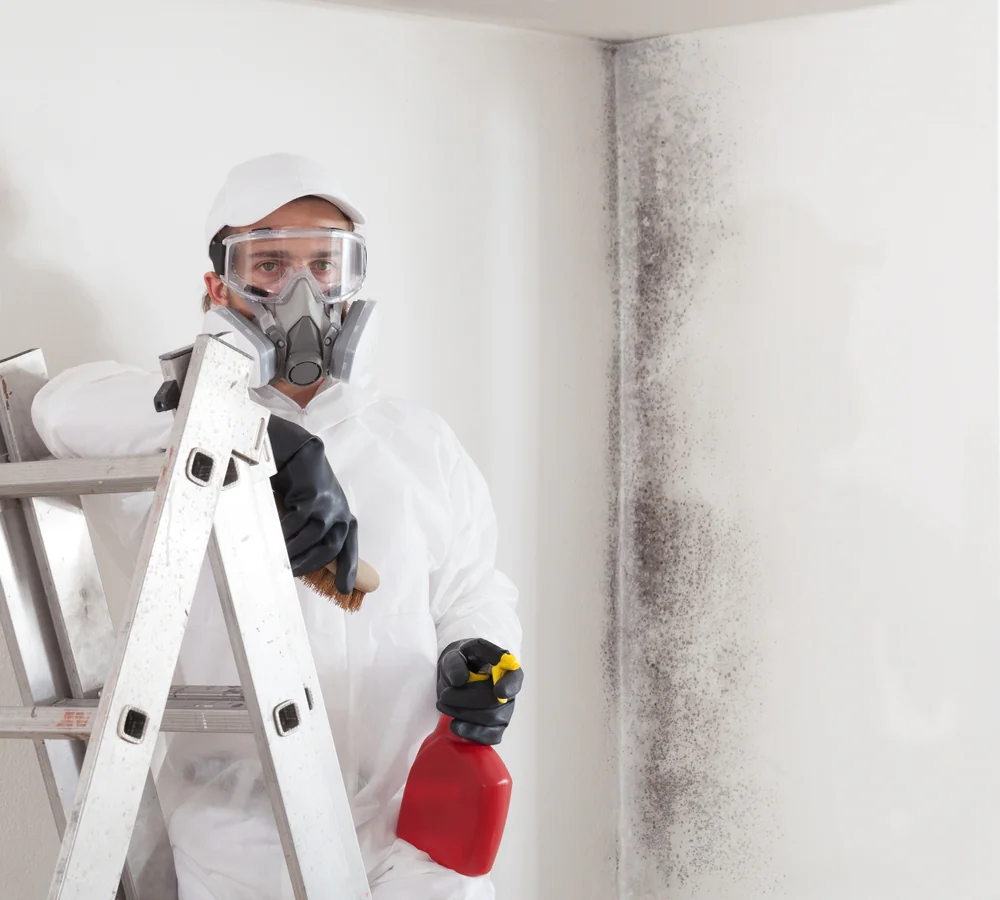
Personal protective equipment protects workers from exposure during remediation. At minimum, this includes N-95 respirators, gloves, goggles, and disposable coveralls. For extensive contamination or black mold, full-face respirators with HEPA filters and complete body coverage are required.
We follow these protocols because we understand the health risks and liability involved. Companies that skip containment, use inadequate filtration, or fail to maintain negative pressure are cutting corners that put your family at risk.
Physical Removal, Cleaning, and Restoration
Physical removal is where the actual remediation happens. Porous materials that cannot be effectively cleaned must be removed and discarded. This includes drywall, insulation, carpeting, ceiling tiles, and any other materials where mold has penetrated beyond the surface. These items are sealed in plastic bags within the containment area before being removed from the property.
Non-porous materials like metal, glass, and hard plastics can be cleaned and salvaged. Wood surfaces present a middle ground. Finished or sealed wood can often be cleaned if the mold hasn’t penetrated deeply. Unfinished wood or wood with extensive growth typically requires removal.
Cleaning involves HEPA vacuuming every surface in the containment area to remove loose spores, followed by damp wiping with EPA-approved antimicrobial solutions. The goal isn’t just to remove visible mold but to eliminate microscopic spores and mycotoxins that aren’t visible to the naked eye.
Drying and dehumidification follow cleaning. The area must be completely dried to prevent mold from returning. Industrial dehumidifiers and air movers are used to remove moisture from building materials and reduce humidity levels below 50 percent, the threshold above which mold can grow.
Restoration returns the affected area to its pre-mold condition. This might involve installing new drywall, replacing insulation, repainting, or reinstalling flooring. We handle restoration in-house to ensure the entire process is completed properly. Restoration shouldn’t begin until clearance testing confirms the mold is gone.
The timeline for this process typically runs three to five days for most residential projects. Small areas might be completed in one to two days, while whole-house contamination can take a week or more. The key is not rushing. Proper drying takes time, and cutting corners to finish faster leads to recurring problems.
Mold Clearance Test: Verifying Successful Remediation
A mold clearance test is the post-remediation inspection and testing that verifies the work was completed successfully and the area is safe for occupancy. This step happens after remediation is finished but before containment is taken down and restoration begins.
Clearance testing should always be performed by an independent third party, not the company that did the remediation. This eliminates conflicts of interest and provides unbiased verification. A remediation company testing their own work has a financial incentive to pass the project even if problems remain. An independent inspector has no stake in the outcome beyond providing accurate results.
The clearance process includes visual inspection to confirm all visible mold has been removed, moisture testing to verify the area is properly dried, and air sampling to measure spore concentrations. The air samples are compared to outdoor baseline levels and to pre-remediation samples if those were collected. If spore counts have returned to normal levels and no moisture or visible growth remains, the project passes clearance.
Why Independent Third-Party Testing Matters
Independent third-party clearance testing is one of the most important quality control measures in mold remediation, yet it’s often skipped to save money or time. Industry experts who perform clearance testing for other companies’ work report finding problems in approximately 50 percent of projects. That’s not a typo. Half of all remediation projects have issues that would have gone undetected without independent verification.
These issues range from small patches of missed growth to major moisture problems and contaminated materials left in place. Sometimes air scrubbers mask elevated spore counts during testing, creating the illusion of success while underlying problems remain. Other times, contractors fail to identify and repair the moisture source, guaranteeing the mold will return.
The conflict of interest is real. Remediation companies make money by completing projects quickly and moving to the next job. They don’t profit from finding problems with their own work. In fact, failed clearance tests cost them time and money to re-remediate. This creates pressure to pass projects that shouldn’t pass.
Some unscrupulous companies actively discourage clearance testing, calling it a waste of money. They might offer to test the work themselves at no charge, which sounds helpful until you realize they’re grading their own work. Others rush through remediation and skip proper drying, knowing that air scrubbers can temporarily reduce spore counts long enough to pass a same-day test.
Independent testing eliminates these problems. A certified mold inspection specialist who doesn’t perform remediation has no financial reason to pass or fail a project. Their reputation depends on accuracy, not on pleasing the remediation contractor. This objectivity protects homeowners from incomplete work and provides documentation that can be shared with insurance companies, real estate buyers, or future property managers.
Certified mold testing by qualified professionals also provides legal protection. If health issues or property damage claims arise later, a clearance certificate from an independent inspector demonstrates due diligence. Without that documentation, proving the work was done correctly becomes difficult.
The cost of clearance testing ranges from $200 to $600 depending on the size of the area and number of samples required. Compared to the total remediation cost, it’s a small investment that provides significant peace of mind. More importantly, it’s the only way to know with certainty that you’re not moving back into a contaminated space.
Mold in Attic Home Inspection and Treatment
Attics are frequent sites of mold growth, yet they’re often overlooked until the problem becomes extensive. Roof leaks, inadequate ventilation, and poor insulation create moisture conditions that support mold. In areas with no air conditioning or poor airflow, high humidity alone can promote growth.
Mold in attic home inspection requires examining roof decking, rafters, insulation, and ventilation systems for signs of water damage, mold growth, and moisture accumulation. Inspectors look for staining, discoloration, musty odors, and actual visible growth. They also check for the sources of moisture: missing or damaged shingles, ice dam damage, improperly vented bathrooms or kitchens, and condensation from temperature differences.
Attic mold often goes undetected because most homeowners rarely access this space. By the time it’s discovered, growth may be extensive. This is why mold in attic home inspection is particularly important during real estate transactions or after major weather events.
Treatment involves removing contaminated insulation, cleaning or replacing affected wood surfaces, repairing the moisture source, and improving ventilation. Costs typically range from $1,000 to $4,000, though extensive damage can reach $7,000. Roof repairs to fix the underlying leak add $350 to $1,250.
Toxic Mold Identification and Health Concerns
Toxic mold identification typically refers to Stachybotrys chartarum, commonly called black mold. This species can produce mycotoxins under certain conditions, leading to its reputation as particularly dangerous. However, the term “toxic mold” is somewhat misleading because many mold species can cause health problems, and the color of mold doesn’t determine how dangerous it is.
Black mold appears dark green or black and grows on materials with high cellulose content like drywall, wood, and paper, especially when those materials remain wet for extended periods. It thrives in areas with persistent moisture and poor ventilation.
While black mold has received significant media attention, all mold should be treated seriously regardless of species. The CDC and EPA emphasize that all molds can trigger allergic reactions and respiratory problems in sensitive individuals. The specific species matters less than the extent of contamination and the health of the people exposed.
That said, black mold does require more rigorous safety protocols during remediation. Black mold mitigation typically costs 10 to 25 percent more to complete because it requires higher-grade respiratory protection, more careful containment, and specialized handling procedures.
If you suspect black mold, professional assessment and testing can identify the species and determine appropriate remediation methods. But don’t let the focus on one particular species distract from the bigger picture: all mold growth in your home needs to be addressed, and all of it requires proper remediation that addresses the moisture source.
Choosing the Right Mold Inspection Pro in Bucks County, PA
Finding a qualified mold inspection pro in Bucks County, PA means looking for professionals who understand local conditions, follow industry standards, and prioritize your health over their profit margin.
Local mold inspectors bring valuable knowledge about the area’s specific challenges. They understand how Bucks County, PA’s above-average rainfall, groundwater patterns, and soil conditions contribute to moisture problems. They know which neighborhoods have chronic drainage issues, which types of foundations are most vulnerable, and how seasonal weather patterns affect mold growth. This local expertise leads to more accurate assessments and better remediation strategies.
Look for inspectors with recognized certifications from organizations like the American Council for Accredited Certification or the American Board of Industrial Hygienists. These certifications demonstrate that the inspector has completed training and meets industry standards for mold assessment.
Ask whether the company performs both inspection and remediation. If they do both, there’s a potential conflict of interest. The best practice is to use separate companies for assessment and remediation to ensure unbiased recommendations.
Industrial Hygienist Mold Testing and Commercial Applications
Industrial hygienist mold testing involves certified professionals who specialize in identifying and assessing environmental health hazards, including mold contamination. Industrial hygienists bring a higher level of expertise to complex or extensive mold problems, particularly in commercial settings.
For commercial mold inspection, industrial hygienists assess not just the mold itself but the overall indoor environmental quality, HVAC system contamination, and potential occupant health impacts. They develop comprehensive remediation protocols, oversee contractor work, and perform clearance testing to verify successful completion.
While industrial hygienist involvement isn’t necessary for every residential mold problem, it becomes valuable when contamination is extensive, when health issues are severe, when litigation is involved, or when standard remediation attempts have failed. Their expertise ensures that complex problems are properly diagnosed and effectively resolved.
Commercial mold inspection requirements often exceed residential standards because of occupant density, liability concerns, and regulatory compliance issues. Businesses dealing with mold contamination need thorough documentation, proper remediation protocols, and independent verification to protect employees and customers.
The cost of industrial hygienist services is higher than standard mold inspection, but the investment makes sense when the stakes are high. Their reports carry more weight with insurance companies, in legal proceedings, and during real estate transactions.
Making Informed Decisions About Mold Remediation
Understanding the complete mold remediation process puts you in control when mold threatens your home. You now know what proper remediation looks like, why certain steps matter, and what questions to ask before hiring a company.
The key takeaways are straightforward. Effective remediation addresses both the mold and the moisture source. Proper containment prevents spore spread during cleanup. Independent clearance testing verifies success without conflicts of interest. And cutting corners to save money or time leads to recurring problems that cost more in the long run.
When you’re ready to address mold in your Bucks County, PA home, look for professionals who follow EPA guidelines, use proper containment and safety protocols, fix moisture sources, and support independent clearance testing. We provide comprehensive mold services throughout Bucks County, PA, combining local expertise with industry-standard practices to ensure your home is truly mold-free.