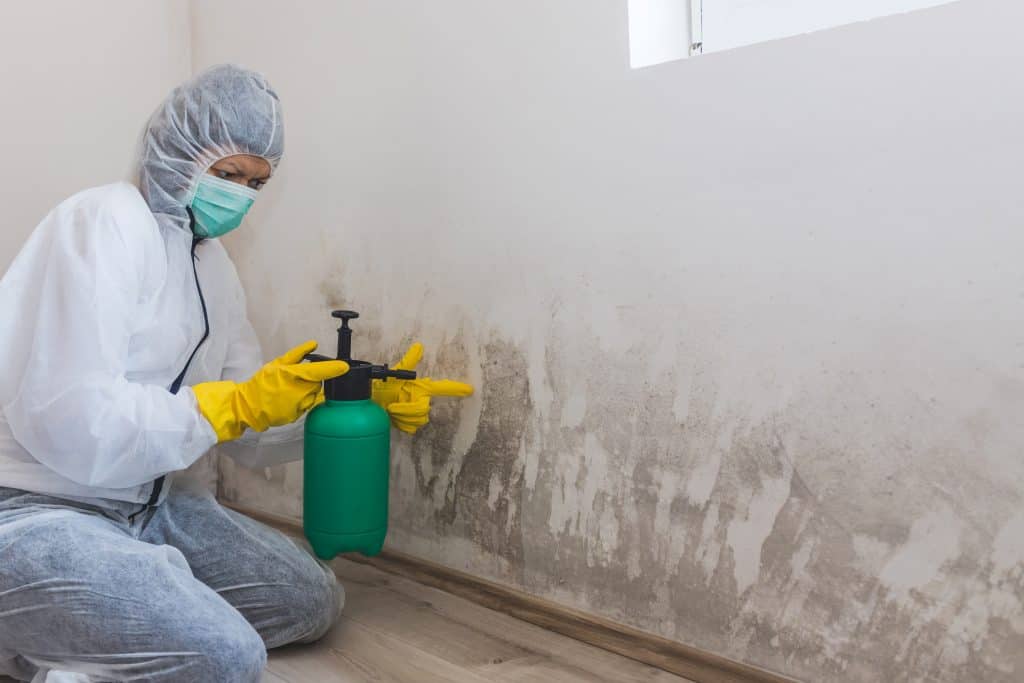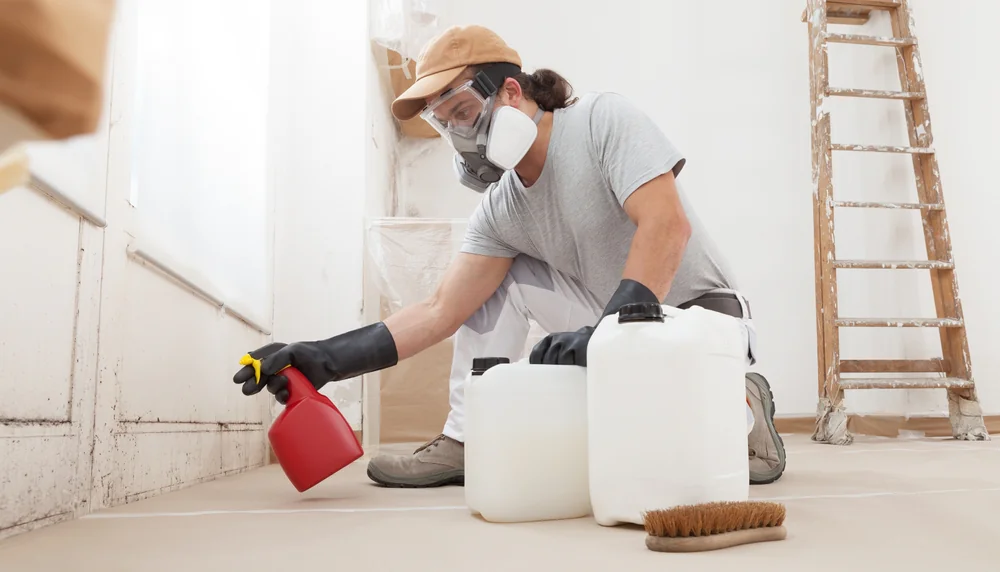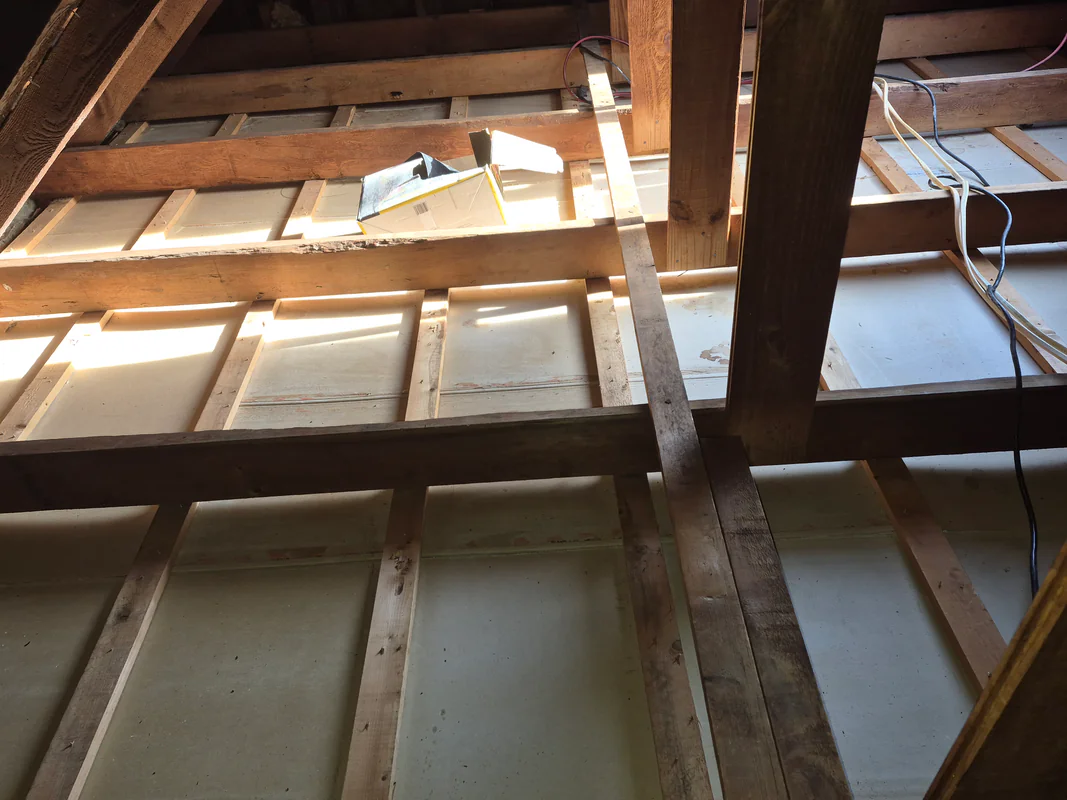
You found mold in your attic. Maybe during a routine check, maybe because of that musty smell that won’t go away, or maybe because a home inspector flagged it during a sale. Either way, you’re now staring at a problem that’s literally over your head.
Attic mold isn’t like mold on a bathroom tile. It’s in a space that’s hot, cramped, poorly lit, and filled with insulation and rafters. The access alone makes it a challenge. Add in ventilation problems, moisture sources you can’t see, and the reality that mold in your attic affects the air quality in your entire home, and you’ve got a situation that needs more than a spray bottle and good intentions.
Here’s what you need to know about attic mold removal in Bucks County, why it happens in homes across the area, and how the right approach fixes it for good.
Why Attic Mold Happens in Bucks County Homes
Bucks County has a mold problem, and it’s not because homeowners aren’t careful. It’s because of how homes here were built and what the weather does to them.
Many properties in this area went up decades ago, long before modern waterproofing and ventilation standards. That means older homes often lack proper vapor barriers, adequate roof ventilation, or the kind of insulation setup that keeps moisture from condensating on cold surfaces. Combine that with Pennsylvania’s humid summers—where humidity regularly climbs above 70%—and you’ve got the perfect recipe for mold growth in attics.
Your home breathes from the bottom up. Humidity from cooking, showering, and damp basements rises through the house and settles in the attic. When that warm, moist air hits cold roof sheathing during the winter, condensation forms. And mold only needs moisture, a food source like wood or drywall, and time.
Ventilation Problems That Cause Attic Mold
Ventilation is supposed to keep your attic dry by moving air in and out. When it doesn’t work right, moisture gets trapped, and mold moves in.
One of the biggest culprits is blocked soffit vents. Insulation gets blown in during an upgrade, and it ends up covering the vents that pull fresh air into the attic. Without that intake, the whole ventilation system fails. Warm, humid air sits stagnant, condensation builds up on the underside of the roof, and mold starts growing on the sheathing and rafters.
Another issue specific to older Bucks County homes is how bathroom exhaust fans were installed. Before building codes changed in the early 2000s, it was common for exhaust fans to vent directly into the attic instead of outside. That means every shower was pumping moisture straight into the space above your ceiling. Even if your roof ventilation is working, it can’t keep up with that kind of constant humidity.
Fixing ventilation isn’t just about adding more vents. It’s about creating a balanced system where cool air comes in through the soffits and warm air exits through ridge or gable vents. Without that balance, you’re just moving moisture around instead of getting rid of it. A professional attic mold removal service will assess your ventilation setup as part of the remediation process, because removing mold without fixing airflow means it’s coming back.
Insulation Issues and Attic Mold Growth
Insulation does more than keep your energy bills down. It also plays a role in preventing mold by controlling how much warm air from your living space reaches the cold surfaces in your attic.
When insulation is missing or installed incorrectly, warm air moves into the attic too quickly. That creates temperature differences that lead to condensation, especially during winter. The moisture collects on roof sheathing, and over time, mold takes hold. You might not see it right away because it’s often hidden under layers of insulation or on the north side of the roof where sunlight never reaches.
Incorrect installation is just as bad as not having enough insulation. If the kraft paper or plastic backing on fiberglass batts is facing the wrong direction—toward the attic instead of the ceiling—it traps moisture instead of blocking it. Some contractors even use the wrong type of insulation for conditioned attics, like standard fiberglass batts on roof sheathing instead of closed-cell spray foam. That allows moisture to migrate through the insulation and cause mold and rot on the wood.
The fix isn’t just tossing more insulation on top of what’s there. It’s about removing damaged material, air-sealing gaps around exhaust fans and light fixtures, and reinstalling insulation properly so it does its job. We handle both the attic mold removal and the insulation corrections needed to keep mold from coming back. That’s the difference between a quick cleanup and a real solution.
Basement Mold Removal Challenges in Older Pennsylvania Homes
Basements in Bucks County weren’t built with mold prevention in mind. Most were constructed before modern waterproofing existed, which means foundation seepage, high water tables, and clay soil all work against you.
Basement mold is different from attic mold because the moisture source is usually coming from outside—through foundation cracks, poor drainage around the house, or groundwater pushing through porous concrete. Add in the fact that basements are below grade and naturally cooler, and you’ve got constant condensation on walls, floors, and anything stored down there.
The challenge with basement mold removal is that you can’t just clean the surface and call it done. You have to address the water intrusion, improve ventilation, and in many cases, remove contaminated materials like drywall, insulation, and carpeting that have absorbed moisture and mold spores.
Foundation and Drainage Issues That Lead to Basement Mold
Your basement is only as dry as your drainage system allows it to be. If water pools around your foundation after rain, it’s going to find a way inside.
Older homes in Bucks County often lack proper grading around the foundation. The ground should slope away from the house so water runs off, but settling over time can reverse that slope and send water toward your basement walls instead. Gutters and downspouts make it worse if they’re clogged or dumping water right next to the foundation.
Once water seeps through foundation cracks or gaps, it creates damp conditions where mold thrives. Basement mold typically shows up on foundation walls, around floor joists, and on any organic materials like wood framing or stored boxes. If you’ve got a finished basement, mold can grow behind drywall where you can’t see it until the damage is extensive.
Basement mold removal has to include fixing the moisture source. That might mean regrading soil around the foundation, extending downspouts, sealing foundation cracks, or installing a sump pump system. We don’t just remove the mold—we identify what’s causing the water intrusion and recommend the fixes needed to keep your basement dry. Because mold removal without moisture control is just temporary.
Carpet Mold Removal After Water Damage
Carpet in a basement is convenient until water shows up. Once carpet gets wet from flooding, leaks, or high humidity, mold can start growing within 24 to 48 hours—often before you even notice the carpet feels damp.
The problem with carpet mold removal is that mold doesn’t just sit on the surface. It grows into the fibers, soaks into the padding underneath, and can even reach the subfloor. By the time you see visible mold or smell that musty odor, the contamination has usually spread deeper than what you can clean yourself.
If the carpet was exposed to clean water from a broken pipe and dried quickly, it might be salvageable with professional cleaning. But if it sat wet for more than a day or two, or if the water came from a sewage backup or flooding, the carpet and padding need to be removed and replaced. Trying to save moldy carpet just means you’re living with mold spores that get released into the air every time someone walks across the room.
We assess carpet damage as part of basement mold removal. We’ll pull back the carpet to check the padding and subfloor, remove contaminated materials, treat the subfloor with antimicrobial solutions, and make sure everything is completely dry before any new flooring goes down. It’s not the answer people want to hear when they’re hoping to save the carpet, but it’s the one that actually solves the problem.
Mold in Crawl Space Removal and Moisture Control
Crawl spaces are out of sight, which means they’re also out of mind until something goes wrong. But crawl space mold is one of the most common issues in Bucks County homes, and it affects your indoor air quality even if you never go down there.
Mold in crawl space areas grows because of ground moisture, poor ventilation, and limited airflow. The dirt floor in many older crawl spaces allows moisture from the soil to evaporate into the air. That moisture condenses on wood framing, insulation, and floor joists, creating the damp environment mold needs to thrive.
The challenge with crawl space mold removal is access. These spaces are tight, dark, and often filled with pipes, ducts, and electrical wiring. You’re working in confined conditions where disturbing mold without proper containment can spread spores throughout the house.
Ground Moisture and Vapor Barrier Solutions
Ground moisture is the primary cause of mold in crawl space areas. If your crawl space has a dirt floor and no vapor barrier, moisture from the soil is constantly evaporating into the air and settling on cooler surfaces like floor joists and insulation.
Over time, that moisture creates the conditions for mold growth. You might notice sagging floors above the crawl space, musty odors coming up through vents, or visible mold on the underside of your floorboards. By the time it’s noticeable, the contamination is usually widespread.
Mold in crawl space removal isn’t just about scrubbing mold off wood. It’s about controlling the moisture source. That means installing a heavy-duty vapor barrier over the dirt floor, sealing foundation vents to prevent humid outside air from entering, and in some cases, adding a dehumidifier to keep humidity levels below 60%. We treat crawl space mold as a moisture control problem first and a cleaning problem second, because without addressing the source, mold removal is pointless.
Insulation and Structural Damage from Crawl Space Mold
Mold doesn’t just sit on surfaces in your crawl space. It feeds on organic materials like wood floor joists, insulation, and subfloor sheathing. Left untreated, it can cause serious structural damage.
Fiberglass insulation in crawl spaces is particularly vulnerable. When it gets damp from condensation or ground moisture, mold grows on the paper backing and spreads into the fiberglass itself. Once insulation is moldy, it needs to be removed. Cleaning it doesn’t work, and leaving it in place just means the mold keeps spreading.
Wood framing is another concern. Mold breaks down wood over time, weakening floor joists and support beams. In severe cases, you might see wood rot or structural sagging that requires more than just mold removal—it requires repairs to the framing itself.
We inspect the full extent of crawl space contamination before starting remediation. We’ll remove moldy insulation, treat wood framing with antimicrobial solutions, and assess whether any structural repairs are needed. Crawl space mold removal is detailed work that requires crawling into tight spaces with proper protective equipment, containment barriers, and HEPA filtration to prevent spores from spreading into your living areas. It’s not a DIY project.
AC Mold Removal and HVAC System Decontamination
Your HVAC system is supposed to keep your home comfortable. But if mold gets into the air conditioning or ductwork, it turns into a distribution system for mold spores, sending contamination into every room.
AC mold removal is different from cleaning mold off a wall. You’re dealing with components like evaporator coils, drain pans, air handlers, and ductwork—all of which require specialized knowledge to clean without spreading the problem. Disturbing mold in an HVAC system without proper containment can make things worse, not better.
The most common place for mold to start is the drain pan under your air handler. If the condensate drain line gets clogged, water sits in the pan and mold grows. From there, it spreads to the evaporator coils, into the ductwork, and eventually throughout your home every time the system runs.
Evaporator Coils and Drain Pan Contamination
The evaporator coil in your air conditioning system is where warm air gets cooled, and that cooling process creates condensation. When everything’s working right, that condensation drips into a drain pan and flows out through a drain line. But when the drain line clogs or the pan doesn’t drain properly, standing water becomes a breeding ground for mold.
Mold on evaporator coils is a health concern because every time your AC runs, air blows across those coils and picks up mold spores. You might notice musty odors when the system kicks on, reduced airflow, or allergy symptoms that worsen when you’re home. Those are signs that your HVAC system needs more than a filter change.
AC mold removal involves turning off the system, accessing the coils and drain pan, and cleaning them with antimicrobial solutions. The drain line needs to be cleared and flushed to prevent future clogs. If mold has spread into the ductwork, that requires additional work—sealing off vents, using HEPA vacuums to remove spores, and treating the interior surfaces of the ducts.
We have the training and equipment to handle HVAC mold contamination. We don’t just clean what’s visible—we inspect the entire system to make sure mold isn’t hiding in places you can’t see. Because if mold is in your HVAC system, surface cleaning doesn’t cut it.
Ductwork Mold and Air Quality Issues
Ductwork is one of the hardest places to inspect for mold, and it’s also one of the most important. If mold is growing inside your ducts, it gets circulated through your home every time the heating or cooling system runs.
Poorly sealed or insulated ductwork in basements or crawl spaces is especially vulnerable. Condensation forms on the outside of ducts, moisture seeps through gaps in the seams, and mold starts growing on the interior surfaces. Once it’s established, mold in ductwork is difficult to remove without professional equipment like HEPA vacuums and antimicrobial fogging systems.
Some HVAC companies will tell you duct cleaning solves the problem. Sometimes it does, if the mold is limited and the moisture source is fixed. But if mold has contaminated porous materials like duct insulation or fiberglass duct board, those sections need to be removed and replaced. You can’t clean mold out of porous materials—you have to get rid of them.
AC mold removal that involves ductwork requires containment to prevent spores from spreading during the cleaning process. Vents get sealed off, negative air pressure is maintained in the work area, and contaminated materials are bagged and removed. It’s a process that takes time and expertise, which is why we treat HVAC mold as a specialized service that goes beyond basic duct cleaning.
Getting Attic, Basement, and Crawl Space Mold Removal Done Right
Mold in hard-to-reach places isn’t something you can ignore or half-fix. Attics, basements, crawl spaces, and HVAC systems all present access challenges, moisture issues, and contamination risks that require professional expertise.
The key to successful mold removal is addressing the root cause—whether that’s failed ventilation, water intrusion, improper insulation, or HVAC system contamination. Surface cleaning doesn’t cut it. You need a comprehensive approach that removes the mold, fixes the moisture problem, and prevents it from coming back.
We handle the complicated stuff. We’ve got the equipment, the training, and the local knowledge to tackle mold problems in Bucks County’s older homes. Free consultations, transparent pricing, EPA-approved methods, and a commitment to getting it done right the first time. If you’re dealing with mold in your attic, basement, crawl space, or HVAC system, reach out to us and get a real solution.