
Hear from Our Customers
You’re not just getting surface cleaning. You’re getting a complete solution that addresses why mold grew in the first place.
That means no more musty smell in your basement. No more worrying about what’s growing behind your walls. No more wondering if your kids’ allergies are getting worse because of something in the air.
When we finish a mold mitigation job in Perkasie, the moisture levels are back to normal, the contaminated materials are removed, and you have documentation showing the air quality passed clearance testing. You’re not covering up a problem or hoping it goes away. You’re eliminating it at the source so it doesn’t show up again in three months.
Perkasie homes deal with humidity that regularly hits 75-80% during summer, plus older construction that traps moisture in ways modern homes don’t. Brick basements, plaster walls, poor ventilation. These aren’t problems you fix with a bottle of bleach. You need someone who understands how moisture moves through your specific type of home and knows how to stop it.
We’re not a national franchise following a script. We’re local professionals who’ve worked in enough Perkasie basements to know exactly what causes mold in this area and how to fix it for good.
Our team carries IICRC certifications and uses EPA-approved methods because mold mitigation isn’t something you guess at. We’ve seen what happens when homeowners try DIY solutions or hire someone who doesn’t understand moisture dynamics. The mold comes back, the problem gets worse, and they end up paying twice.
When you call us, you get someone who actually answers the phone. Someone who shows up when they say they will. Someone who gives you a straight answer about what’s wrong, what it takes to fix it, and what it costs. We’ve built our reputation in Bucks County by doing what we say we’re going to do, and by making sure the homes we work on stay mold-free long after we leave.
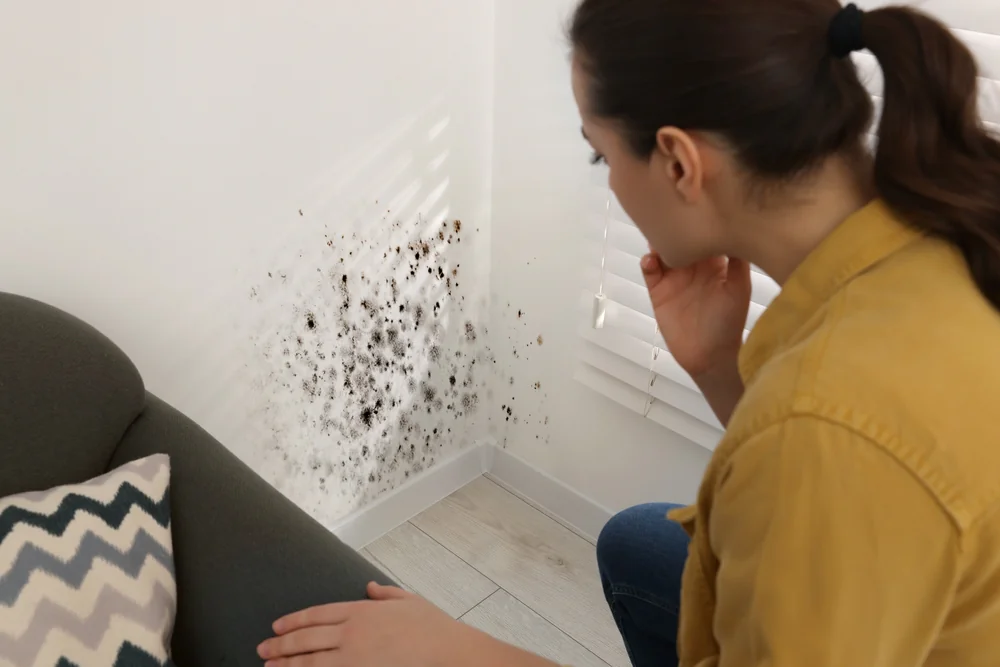
First, we inspect your property with moisture meters and infrared cameras to find exactly where water is getting in and where mold is growing, including spots you can’t see. We’re looking behind walls, under floors, in crawl spaces. Anywhere moisture could be hiding.
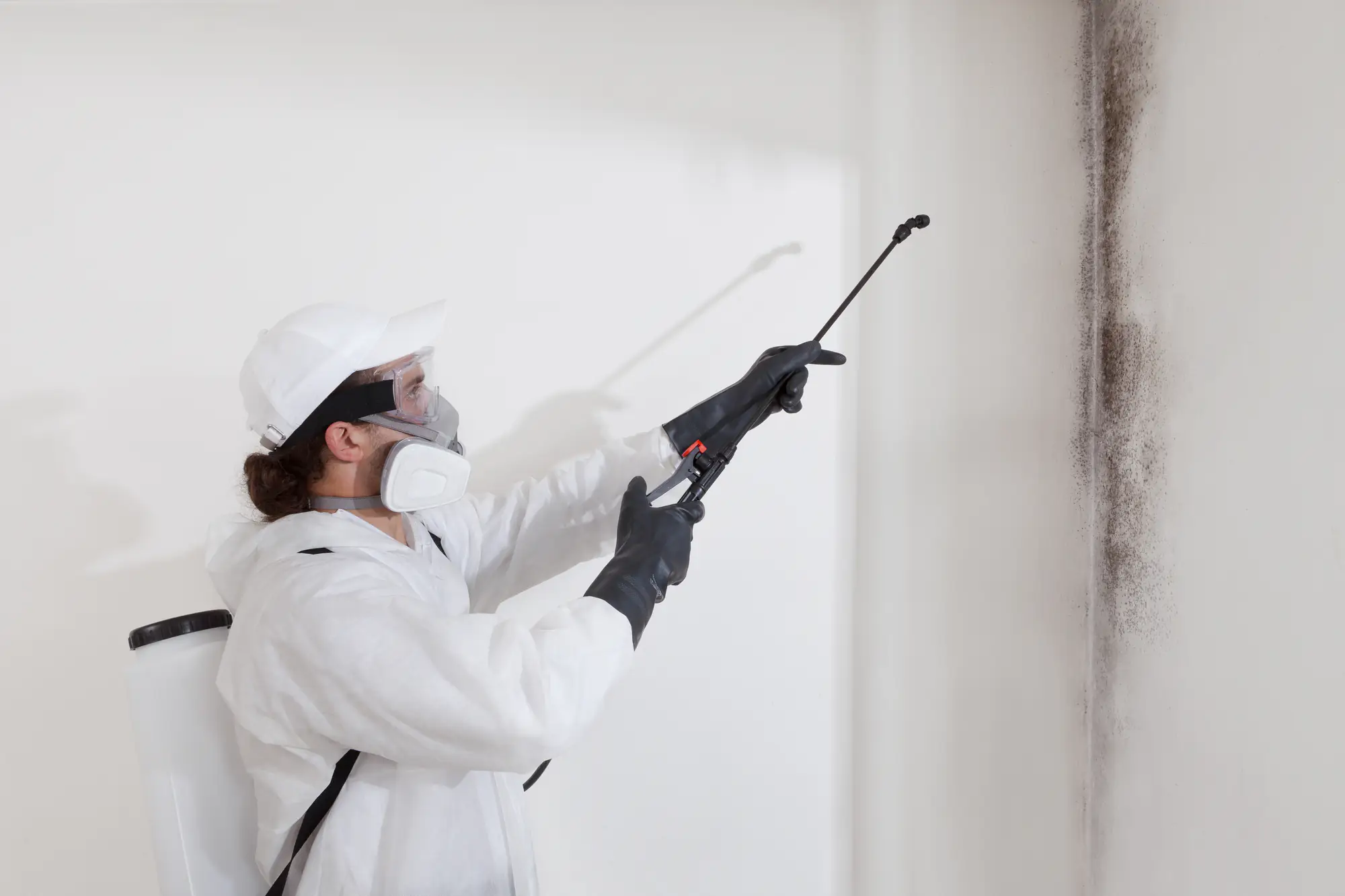
Next, we contain the affected area with physical barriers and negative air pressure so spores don’t spread to clean parts of your home during removal. Then we bring in HEPA vacuums and air scrubbers to capture microscopic particles while we remove contaminated materials.
But here’s the most important part: we fix the moisture source. Whether that’s repairing a leak, improving ventilation, or installing a dehumidifier, we address what caused the mold so it doesn’t return. We’re not just scrubbing surfaces and hoping for the best.
After removal, we verify that moisture levels are back to normal and air quality passes testing. You get a full report with lab results, photos, and documentation of every step. If you need to file an insurance claim, you’ll have everything your adjuster asks for.
Ready to get started?
Every mold mitigation job starts with finding the source. In Perkasie, that usually means basement moisture seepage, bathroom ventilation issues, or attic condensation from temperature differences. We use detection technology to identify exactly where water is coming from, then we stop it.
Containment comes next. We seal off the work area and set up negative air pressure systems so contamination doesn’t spread during removal. This isn’t optional, it’s how you prevent a small problem from becoming a whole-house problem.
Then we remove affected materials, treat surfaces, and clean the air with HEPA filtration. Depending on what we find, that might mean removing drywall, insulation, or flooring. We don’t cut corners by leaving contaminated materials in place.
The final step is verification. We test moisture levels and air quality to confirm the problem is actually solved. You’re not taking our word for it, you’re seeing lab results that prove your home is safe. And because we’ve fixed the moisture source, you’re not dealing with the same issue again next year. That’s the difference between mold removal and mold mitigation: one cleans up what you can see, the other fixes why it grew.
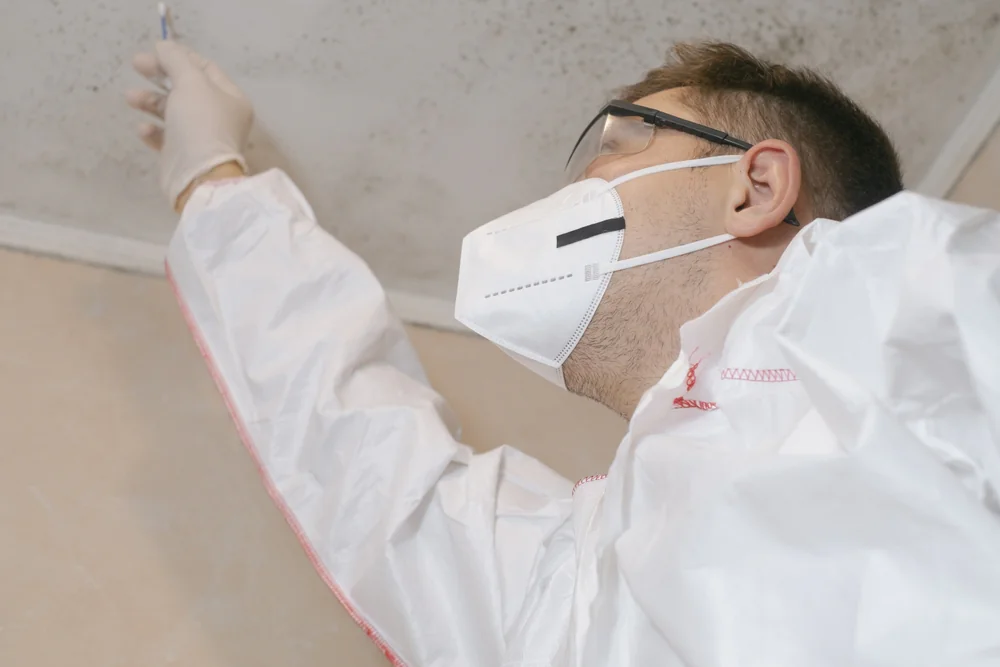
Most residential mold mitigation jobs take between two and five days, depending on how much area is affected and what’s causing the moisture problem. A small bathroom with a ventilation issue might be done in two days. A basement with foundation seepage and contamination in multiple rooms could take a week.
The timeline depends on a few factors. First, how long it takes to dry out the affected materials, which varies based on humidity levels and how saturated things are. Second, how much material needs to be removed. If mold has gotten into insulation, drywall, or subflooring, those materials have to come out, and that takes time to do properly.
We don’t rush jobs to hit an arbitrary deadline. Mold mitigation done right means waiting for moisture levels to drop below 16% before we close up walls. It means running air scrubbers long enough to actually clean the air, not just for show. You’ll know the timeline upfront, and we’ll keep you updated if anything changes.
It depends on what caused the mold. If it resulted from sudden water damage like a burst pipe, roof leak during a storm, or appliance failure, most policies cover mitigation. If it’s from long-term neglect or chronic moisture problems you didn’t address, coverage usually gets denied.
The key is documentation. Insurance adjusters want to see proof of what happened, when it happened, and what you did about it. That’s why we document everything: moisture readings, photos of the damage, detailed reports of what we found and what we did. We’ve worked with enough adjusters in Bucks County to know what they’re looking for.
We can work directly with your insurance company if your claim is approved. If it’s not covered, we’ll give you a clear estimate upfront so you know exactly what you’re paying for. Either way, you’re getting the same thorough job. The difference is just who writes the check.
Mold removal focuses on cleaning visible mold off surfaces. Mold mitigation focuses on eliminating the moisture source so it doesn’t grow back. One is a temporary fix, the other is a permanent solution.
You can scrub mold off a basement wall with bleach and it’ll look clean for a few weeks. But if you haven’t fixed the foundation leak or humidity problem causing it, the mold returns. That’s removal without mitigation. You’re treating the symptom, not the cause.
Professional mold mitigation means we find where water is getting in, stop it, dry out affected materials, remove contamination, and verify that moisture levels are back to normal. We’re not just making it look better, we’re making sure the conditions that allowed mold to grow no longer exist. That’s why our work comes with documentation and post-treatment verification. You’re paying for a solution that lasts, not a band-aid that peels off in a month.
If you can see mold growth larger than a few square feet, smell persistent musty odors, or have had water damage that wasn’t dried within 48 hours, you need professional mitigation. DIY methods don’t address the moisture source, and they often spread spores to clean areas of your home.
Small spots of surface mold on a bathroom tile might be fine to clean yourself. But if you’re seeing growth on drywall, insulation, wood framing, or multiple areas of your home, that’s contamination that’s gotten into porous materials. You can’t just wipe that away. Those materials need to be removed and the space needs to be properly dried and treated.
Health symptoms are another indicator. If people in your home are experiencing unexplained allergies, asthma flare-ups, or respiratory issues that improve when they leave the house, there’s a good chance mold is affecting your indoor air quality. We offer free inspections, so if you’re not sure whether you need mitigation, we can assess the situation and give you an honest answer. No pressure, no upselling. Just a straight evaluation of what’s going on and what it takes to fix it.
It depends on the size and location of the contaminated area. For small, contained jobs like a bathroom or closet, most families stay in the home without issues. For larger jobs involving multiple rooms or your HVAC system, it’s usually better to stay elsewhere for a few days.
We use containment barriers and negative air pressure to prevent spores from spreading during removal, but there’s still dust, noise, and disruption. If we’re working in your basement and you can close off that area from the rest of the house, staying home is usually fine. If we’re removing drywall in your main living area or the contamination has gotten into your ductwork, you’ll be more comfortable somewhere else.
We’ll be upfront about what makes sense for your situation. If you have young kids, elderly family members, or anyone with respiratory issues, we typically recommend staying with family or in a hotel during active removal. Your health and comfort matter more than saving a few nights of lodging. We’ll work as quickly as possible without cutting corners so you can get back to normal life.
Perkasie’s humid summers and older home construction create perfect conditions for mold growth. When indoor humidity regularly hits 75-80% and you’ve got basements built with brick or stone foundations that weren’t designed with modern moisture barriers, water finds its way in.
Basement seepage is the most common issue we see. Groundwater works through foundation walls, especially after heavy rain or snowmelt. Older homes in Perkasie often have inadequate drainage systems or no sump pump, so water just sits there creating damp conditions. Add poor ventilation and you’ve got mold growing on walls, floor joists, and stored belongings.
Bathrooms and attics are the other trouble spots. Bathrooms without proper exhaust fans trap moisture from showers. Attics with insufficient insulation or ventilation develop condensation when warm indoor air meets cold roof surfaces in winter. These aren’t problems you can ignore and hope they improve. They require actual fixes: better ventilation, dehumidification, proper insulation, or foundation waterproofing. That’s what we mean when we talk about eliminating the moisture source. We’re addressing the specific conditions in your home that allow mold to thrive.
Other Services we provide in Perkasie