
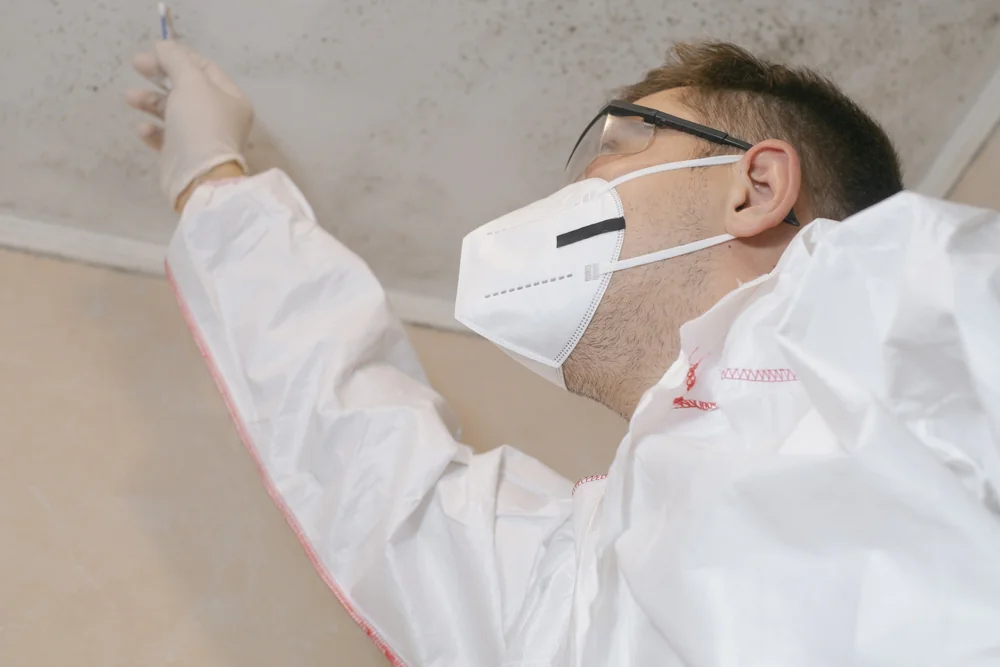
Hear from Our Customers
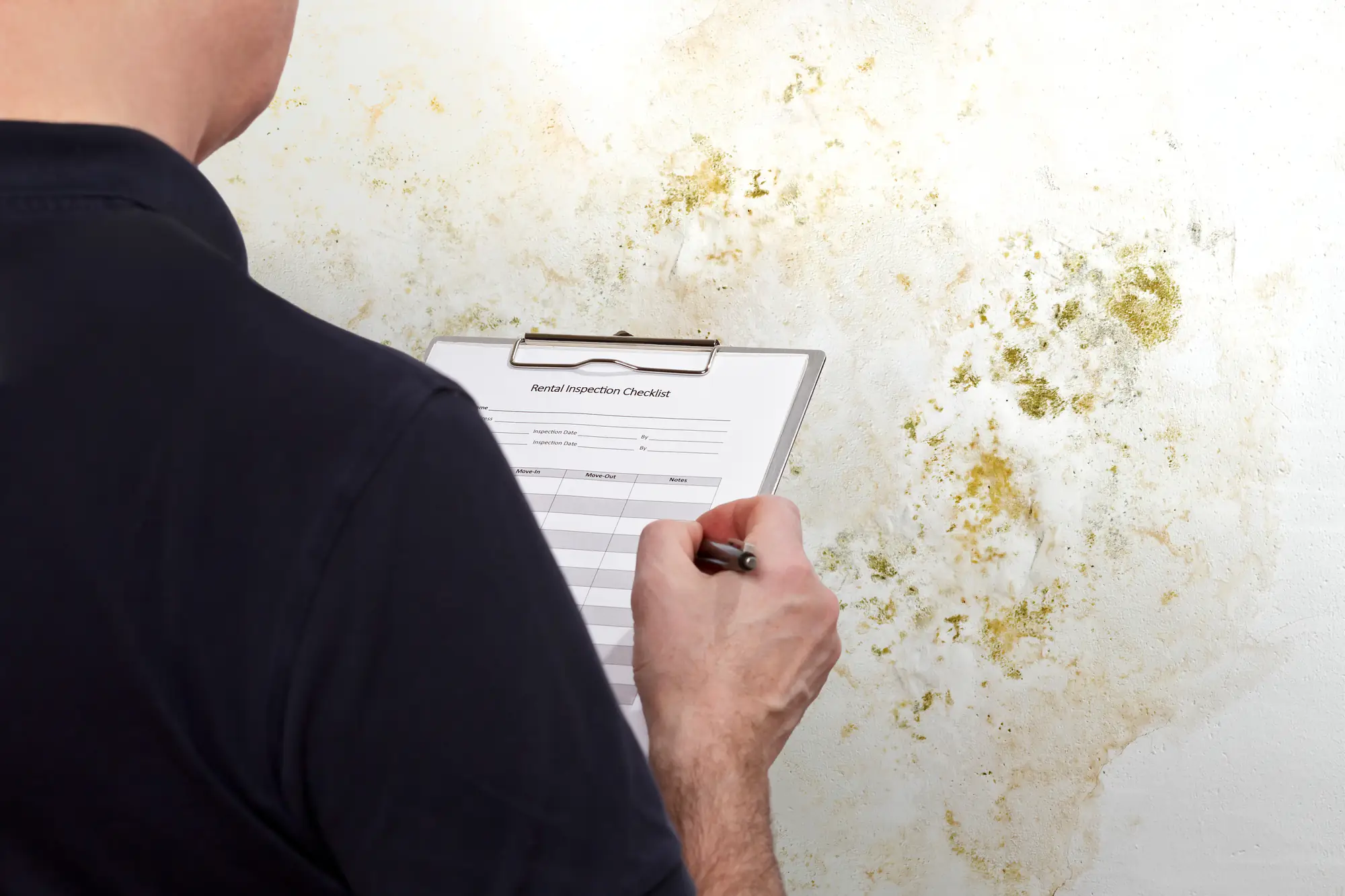
You can’t see mold behind your walls. You can’t smell it in your crawl space until it’s already a problem. And those DIY test kits from the hardware store? They tell you mold exists—which you already knew—but not where it’s coming from or how bad it actually is.
A real mold inspection gives you the full picture. We use thermal imaging to spot moisture you can’t see and moisture meters to measure exactly where water is hiding. Then we take air and surface samples that go to an independent lab, so you get unbiased results that tell you what species of mold you’re dealing with and whether the concentration is actually dangerous.
Most importantly, you’ll know if you need remediation or if you’re overreacting to a small issue. That clarity matters when you’re deciding whether to spend thousands of dollars—or when you’re trying to sell your home and a buyer’s inspector flags something during the sale.
You’re not guessing anymore. You’re working with real data.
We’ve been inspecting and remediating mold in Wynnefield and the surrounding Philadelphia area since 2009. We’ve seen what happens when basements flood during summer storms, when old plaster walls trap moisture for months, and when HVAC systems spread spores through entire rowhomes.
Wynnefield’s housing stock is old. A lot of these homes were built before 1970, and many before 1940. That means brick basements, limited ventilation, and construction materials that weren’t designed to handle the humidity we get here. Mold loves that combination.
We’re not here to scare you into unnecessary work. We’re here to tell you what’s actually happening in your home, give you documentation you can use for insurance or real estate purposes, and help you make an informed decision about what comes next.
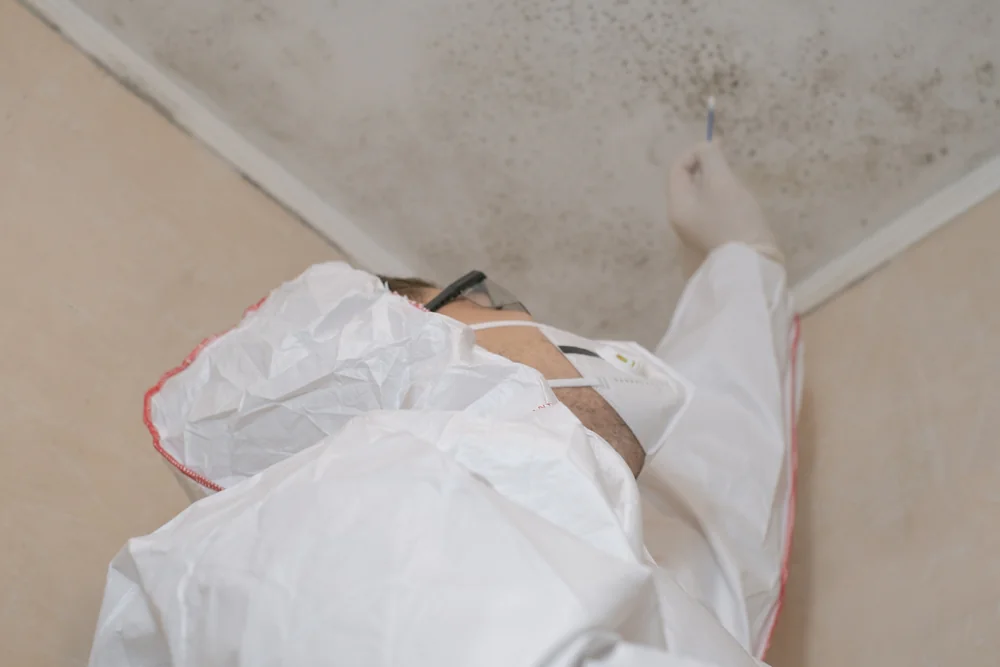
We start with a free initial assessment. You show us the problem areas—maybe it’s a musty basement, a bathroom with recurring spots, or a bedroom that always feels damp. We’ll walk through your home and look at the places most people don’t think to check: behind appliances, inside closets, around windows, in attic spaces.
Then we bring out the tools. Thermal imaging cameras show us temperature differences that indicate moisture behind walls or ceilings. Moisture meters give us exact readings so we know if materials are wet enough to support mold growth. If we find something, we take samples—air samples to measure spore concentration and surface samples from visible growth.
Those samples go to a certified lab. You’ll get a report within a few days that identifies the specific mold species, compares indoor levels to outdoor baseline levels, and tells you whether what you’re dealing with is a health risk or just a cosmetic issue. We’ll walk you through the results in plain language and give you a clear recommendation: remediate, monitor, or do nothing.
No pressure. No upselling. Just the facts and a path forward.

Ready to get started?
Every mold inspection includes a full visual assessment of your property—basement, bathrooms, kitchen, attic, crawl spaces, and any area where you’ve noticed issues. We check for visible growth, water stains, condensation, and ventilation problems that create conditions for mold.
You also get thermal imaging and moisture mapping. This is critical in Wynnefield, where a lot of homes have finished basements or renovated spaces that hide problems behind drywall or paneling. We’re looking for the moisture source, not just the mold you can see.
Air quality testing measures spore levels throughout your home and compares them to outdoor air. Surface testing identifies exactly what’s growing on your walls, ceiling, or belongings. Both samples are analyzed by an independent lab that specializes in mold identification—not by us, so there’s no conflict of interest.
You’ll receive a detailed report with lab results, photos, moisture readings, and our professional assessment. If remediation is needed, we’ll give you a transparent estimate. If it’s not, we’ll tell you that too. And if you’re dealing with an insurance claim or a real estate transaction, we’ll provide the documentation you need to move forward.
Most mold inspections in the Philadelphia area run between $300 and $500, depending on the size of your home and how many samples need to be tested. We offer a free initial assessment where we’ll walk through your property and give you an honest opinion about whether testing is even necessary.
If we do recommend testing, we’ll give you a clear price upfront before any work starts. That includes the visual inspection, moisture detection, sample collection, and lab analysis. No hidden fees or surprise charges after the fact.
Some companies will try to sell you on expensive packages with dozens of samples. In most cases, you don’t need that. A few well-placed air and surface samples will tell you what you need to know without running up a bill for no reason.
The on-site inspection usually takes one to two hours, depending on the size of your home and how many areas we’re checking. We’re thorough, but we’re not going to waste your time looking at things that don’t matter.
Once we collect samples, the lab analysis takes three to five business days. You’ll get a full report with results, photos, and our recommendations shortly after that. If you’re in a time crunch—maybe you’re closing on a sale or dealing with a health issue—let us know. We can often expedite lab processing for urgent situations.
The whole process from inspection to final report typically wraps up within a week. If you need same-day service for an emergency, we can make that happen too.
You can, but those kits won’t tell you much. Most DIY tests just confirm that mold spores exist in your home—which they do in every home. Mold is everywhere. The question isn’t whether it’s present, but whether it’s growing at dangerous levels and where the source is.
DIY kits can’t measure concentration, identify specific species, or locate hidden growth behind walls. They also can’t tell you if your indoor air quality is worse than outdoor levels, which is the real benchmark for whether you have a problem.
If you’re trying to save money, we get it. But if you’re dealing with health symptoms, planning to sell your home, or filing an insurance claim, you need professional testing with lab-certified results. That’s the only way to get documentation that actually means something.
The most common types we find in Wynnefield are Aspergillus, Penicillium, and Cladosporium. These thrive in the humid conditions we get during summer and in damp basements year-round. Aspergillus is especially common in HVAC systems and can trigger allergic reactions and asthma.
Stachybotrys—the “black mold” everyone worries about—does show up, but it’s less common than people think. It needs consistently wet conditions to grow, so you usually find it after serious water damage or long-term leaks. It looks dark and slimy, and yes, it can cause health problems, but it’s not the instant death sentence the internet makes it out to be.
What matters more than the species is the concentration and whether you’re being exposed to it daily. That’s why lab testing is important. It tells you not just what’s there, but whether it’s at levels that require action.
It depends on what caused the mold. If it’s from a sudden, covered event—like a burst pipe or storm damage—most homeowners policies will cover remediation. If it’s from long-term neglect, poor maintenance, or chronic moisture issues, they probably won’t.
Pennsylvania doesn’t have state regulations requiring mold coverage, so every policy is different. You need to read your specific policy or call your agent to know for sure. What we can do is provide the documentation your insurance company will ask for: lab results, photos, moisture readings, and a detailed report.
We work directly with insurance companies all the time. If you’re filing a claim, we’ll give you everything you need to support it. And if your claim gets denied, at least you’ll know exactly what the problem is and what it’ll cost to fix it out of pocket.
We offer same-day service for urgent situations. If you’re dealing with visible growth after a flood, a health emergency, or a real estate deadline, call us and we’ll get someone out as fast as possible.
For non-emergency inspections, we can usually schedule within a day or two. Mold doesn’t grow overnight—it takes 24 to 48 hours after water exposure to start developing—so unless you’re in an active crisis, you have a little time to plan.
That said, don’t wait weeks. The longer moisture sits, the worse the problem gets. And if you’re experiencing respiratory symptoms, itchy eyes, or persistent coughing, you need to figure out what’s going on sooner rather than later.
Other Services we provide in Wynnefield