
Hear from Our Customers
You stop worrying every time your kid coughs. The musty smell in your basement disappears. You can actually breathe easier at night, and you’re not constantly checking behind furniture or under sinks for new spots.
That’s what proper mold remediation does. It removes the visible growth, kills what’s hiding in your HVAC system or behind drywall, and addresses the moisture problem that caused it in the first place. Without that last part, you’re just paying to watch it come back in six months.
Langhorne Terrace homes face specific challenges. The humidity here hits 70% most summers, and many properties were built before modern ventilation became standard. Your crawl space, attic, and basement are vulnerable year-round. When we handle the job correctly, we’re not just scrubbing surfaces—we’re changing the conditions that let mold thrive.
You get documentation for insurance claims or real estate transactions. You get air quality testing that proves the job worked. And you get to stop wondering if that dark spot in the corner is going to make someone sick.
Mack’s Mold Removal has been handling mold problems across Bucks County for years. Our team includes certified mold remediation specialists who understand how Pennsylvania’s climate affects your home. We’re not a national franchise following a script—we’re local mold and mildew experts who know which neighborhoods flood during heavy rain and which older homes have ventilation issues.
When you call, you’re talking to someone who’s seen hundreds of basements, attics, and crawl spaces in Langhorne Terrace. We know the clay soil here holds water. We know how quickly mold spreads in the heat. And we know what actually works to stop it.
We use EPA-approved methods, state-of-the-art detection equipment, and we don’t leave until the air quality tests prove the job is done. You’ll get a detailed report, photos, and straight answers about what caused the problem and how to prevent it next time.
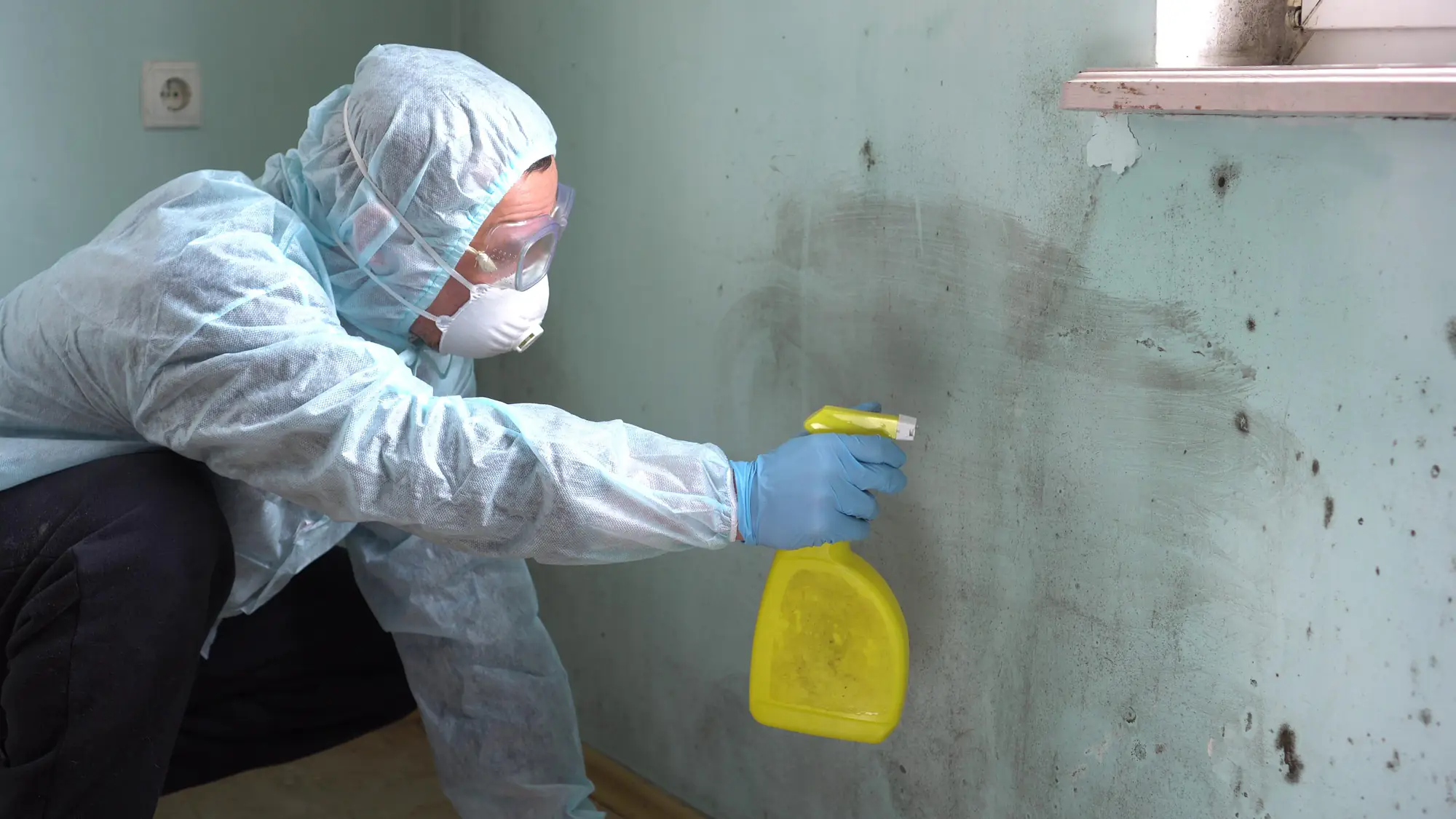
First, we inspect your property for free. That means checking visible areas and using moisture meters and thermal imaging to find hidden growth. You’ll know exactly what type of mold you’re dealing with, where it’s growing, and what’s causing it before we talk about price.
Next, we contain the affected area. Mold spreads through spores, so we seal off the workspace with plastic sheeting and negative air pressure systems. This keeps contamination from reaching the rest of your home while we work.
Then we remove the mold. Porous materials like drywall or insulation usually get removed and disposed of properly. Hard surfaces get treated with antimicrobial solutions. We clean your HVAC system if needed, because that’s often how mold travels through a house.
After removal, we dry and dehumidify everything. Mold needs moisture to grow, so we bring the humidity down and make sure there’s no standing water or dampness left behind. We fix the source—whether that’s a leaky pipe, poor ventilation, or groundwater seeping through your foundation.
Finally, we test the air quality to confirm the mold is gone. You get documentation showing spore counts are back to normal levels. We also walk you through what to watch for and how to maintain the space going forward.
Ready to get started?
You get a thorough inspection using advanced detection technology—not just a visual check. We test air quality, measure moisture levels, and identify the exact type of mold in your home. That matters because different molds require different approaches, and you need to know if you’re dealing with black mold or something less aggressive.
We don’t just clean what you can see. We remove contaminated materials, treat affected surfaces with EPA-approved antimicrobials, and clean your ventilation system to prevent spores from recirculating. If your insulation or drywall is compromised, we handle removal and disposal according to Pennsylvania regulations.
Langhorne Terrace properties often deal with basement moisture from the high water table and clay soil common in Bucks County. We address the root cause—whether that’s improving drainage, sealing foundation cracks, or installing better ventilation. Without fixing what caused the mold, you’re wasting money on temporary solutions.
We also work directly with your insurance company to document everything and simplify the claims process. You’ll receive detailed reports, photos, and air quality test results. And if you need emergency mold removal, we’re available 24/7, because water damage and mold don’t wait for business hours.

Mold starts growing within 24 to 48 hours after water exposure. That’s not a lot of time, especially if you’ve had a pipe burst, roof leak, or flooding from one of the heavy rainstorms we get here in Bucks County.
The speed depends on humidity and temperature. During summer months when indoor humidity climbs above 60%, mold spreads even faster. It doesn’t need standing water—just damp drywall, wet insulation, or moisture trapped in your carpet pad.
If you’ve had any water intrusion, get us out to inspect within the first two days. Waiting a week often means the difference between drying things out and having to remove contaminated materials. The longer mold grows, the more expensive and disruptive the remediation becomes.
Mold removal means getting rid of visible mold growth. Mold remediation means fixing the entire problem—removing growth, addressing the moisture source, and preventing it from coming back.
Here’s why that distinction matters: you can scrub mold off a wall, but if you don’t fix the leak or humidity issue causing it, you’ll see new growth in a few months. Remediation includes containment so spores don’t spread during cleanup, proper disposal of contaminated materials, antimicrobial treatment, and air quality testing to confirm the job worked.
A mold removal expert who only focuses on the visible stuff is giving you a temporary fix. Our professional mold remediation in Langhorne Terrace addresses what’s behind your walls, in your HVAC system, and under your flooring. It also means identifying why moisture built up in the first place—whether that’s poor ventilation in your attic, groundwater seeping through your basement, or a hidden plumbing leak.
Most residential mold remediation projects in Bucks County range from $1,500 to $6,000, depending on the size of the affected area and severity of contamination. Small jobs—like treating mold in a bathroom or closet—typically cost less. Larger projects involving basements, attics, or multiple rooms cost more.
The price includes inspection, containment, removal, antimicrobial treatment, disposal, and air quality testing. If you need drywall replacement, insulation removal, or HVAC cleaning, that adds to the total. Black mold often requires stricter safety protocols, which can affect pricing.
Many homeowners insurance policies cover mold remediation if the growth resulted from a covered event like a burst pipe or storm damage. We work directly with insurance companies to document everything and help with your claim. We also offer flexible payment options, because we know mold removal is rarely a planned expense. The free inspection gives you an accurate quote before any work starts, so there are no surprises.
Small surface mold—less than 10 square feet on non-porous surfaces like tile or glass—can sometimes be cleaned with household solutions. Anything larger, anything inside walls or HVAC systems, or any black mold should be handled by certified mold experts.
Here’s the problem with DIY mold removal: scrubbing releases thousands of spores into the air. Without proper containment and protective equipment, you’re spreading contamination and breathing in mold particles. You also can’t see what’s growing behind drywall or under flooring, so you’re likely missing most of the problem.
We use containment barriers, HEPA filtration, and negative air pressure to prevent cross-contamination. We have moisture meters and thermal imaging to find hidden growth. And we test air quality after the job to prove the mold is actually gone—not just hidden or temporarily suppressed. In Langhorne Terrace, where humidity and older home construction create ideal conditions for mold, trying to handle it yourself usually means paying more later to fix what didn’t work the first time.
You can’t tell by looking at it. Black mold (Stachybotrys chartarum) is dark and slimy, but so are other types of mold that aren’t toxic. The only way to know for sure is through laboratory testing of samples collected during a professional mold inspection.
That said, all mold is a problem. Even non-toxic varieties cause respiratory issues, trigger allergies, and damage your property. Black mold gets more attention because it produces mycotoxins that can cause serious health problems with prolonged exposure—especially for children, elderly family members, or anyone with compromised immune systems.
If you see dark mold in areas with chronic moisture—like your basement, bathroom, or around windows—get it tested. We collect samples, send them to a lab, and give you a detailed report identifying the species and concentration levels. This information matters for remediation planning and for insurance claims. In Langhorne Terrace, we commonly find black mold in basements with poor drainage and attics with inadequate ventilation, both of which are fixable problems once you know what you’re dealing with.
Not if the moisture problem gets fixed. Mold needs three things to grow: moisture, organic material (like wood or drywall), and oxygen. You can’t eliminate oxygen or remove all organic materials from your home, but you can control moisture.
Our professional mold remediation includes identifying and fixing the source—whether that’s a plumbing leak, condensation from poor ventilation, or water seeping through your foundation. If we only remove the mold without addressing why it grew, it will come back. That’s why we focus on long-term prevention, not just surface cleaning.
After remediation, you need to maintain indoor humidity below 60%, fix leaks promptly, and ensure proper ventilation in high-moisture areas like bathrooms and basements. In Langhorne Terrace, where summer humidity regularly exceeds 70%, running a dehumidifier in your basement isn’t optional—it’s necessary. We’ll give you specific recommendations based on your property’s vulnerabilities. When the job is done right and you follow basic maintenance, mold doesn’t return.
Other Services we provide in Langhorne Terrace