

Hear from Our Customers
You’ve noticed the musty smell. Maybe you’ve seen discoloration on a wall or ceiling. Or maybe someone in your house has been dealing with unexplained respiratory issues that seem to improve when they leave.
Whatever brought you here, you’re past the guessing stage. You need to know if there’s mold, where it is, and how bad the situation actually is.
That’s what professional mold testing does. We come in with equipment that goes beyond what you can see—air sampling, surface testing, moisture mapping. We’re looking in wall cavities, behind baseboards, inside HVAC systems. The places mold loves to hide in older Rosewood Park homes.
You get a report that tells you what type of mold is present, where it’s concentrated, and whether the levels in your home are actually a problem. Not a sales pitch. Just data you can use to make an informed decision about what happens next.
We’ve been helping homeowners in Rosewood Park and throughout Bucks County understand what’s happening inside their walls for years. We’re certified mold inspectors who know how homes in this area are built—and where they’re most vulnerable.
Homes here weren’t designed with mold prevention in mind. Many were built between the 1940s and 1960s, before modern moisture barriers and ventilation standards. Basements leak. Crawl spaces stay damp. HVAC systems circulate spores if they’re not maintained.
We’ve tested hundreds of properties in this zip code alone. We know the patterns. And we’re not here to upsell you on services you don’t need—we’re here to give you accurate information so you can protect your home and your family.
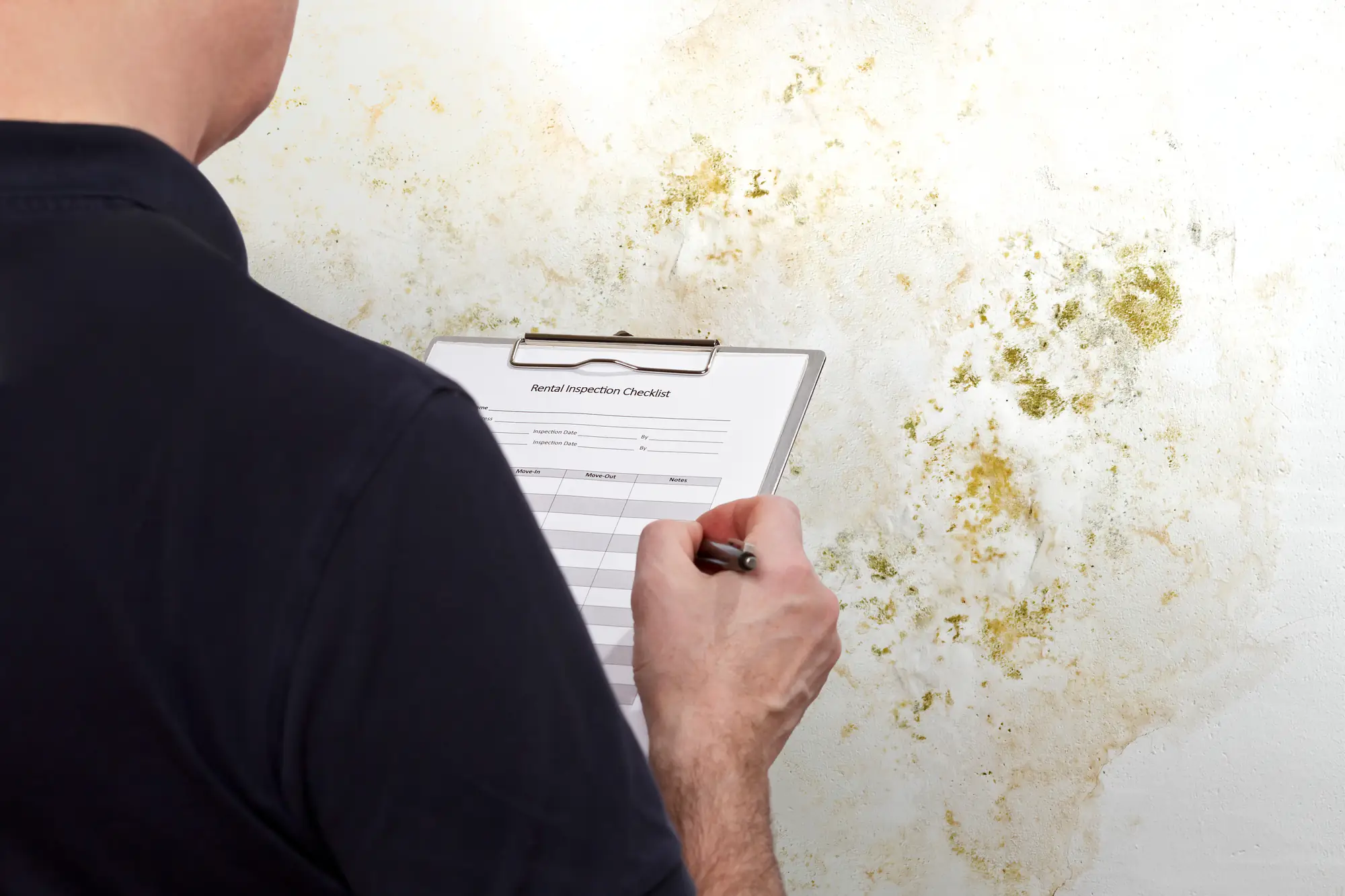
We start with a visual inspection of your property. That means checking every room, but also the places most people don’t look—attic spaces, behind appliances, under sinks, around windows and doors.
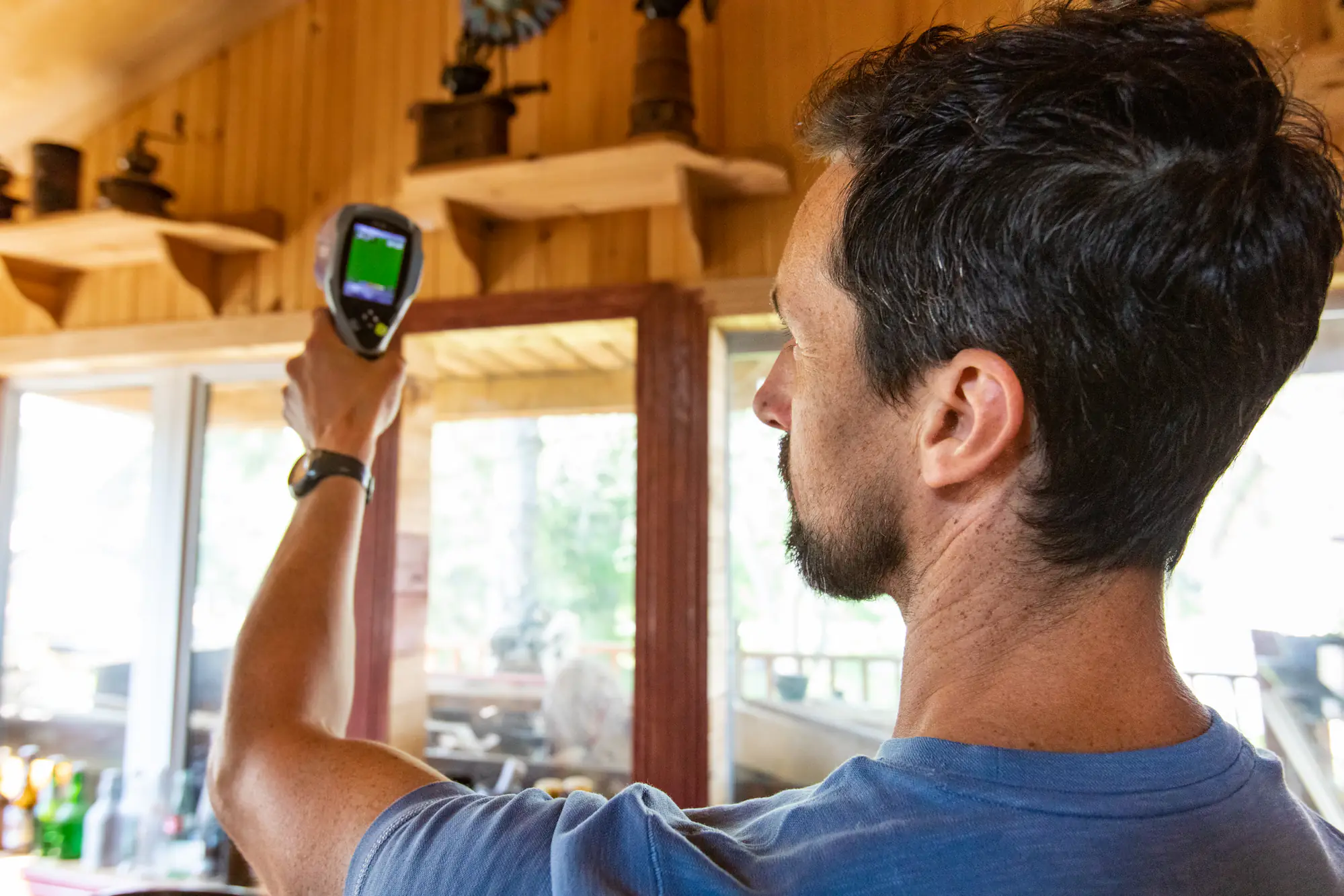
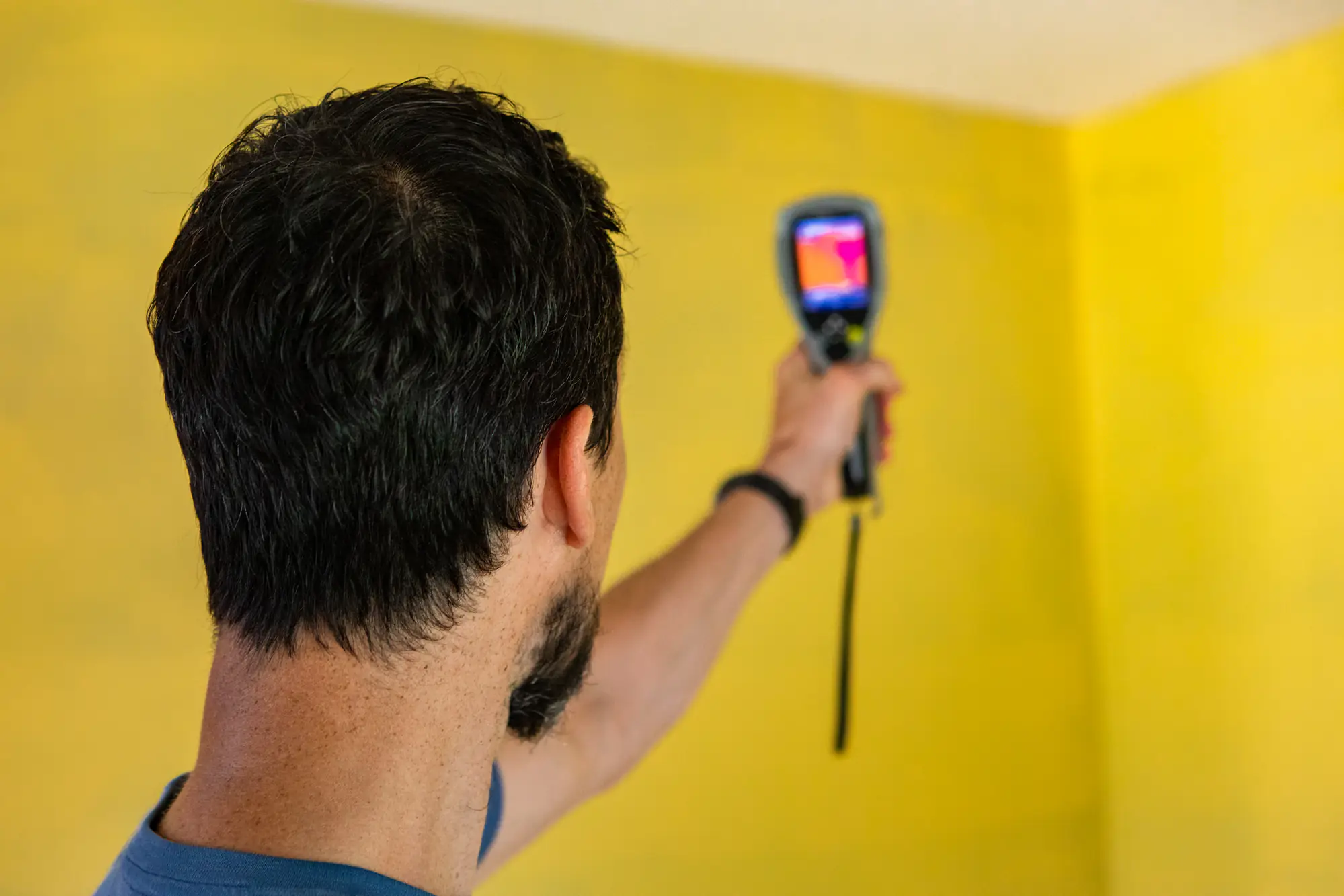
Then we use moisture meters to map out where water is hiding. Mold doesn’t grow without moisture, so if we find elevated readings, that’s where we focus our testing. We take air samples to measure spore concentration in different rooms. We also take surface samples if we see visible growth or staining.
All samples get sent to an independent lab for analysis. You’re not relying on our opinion—you’re getting third-party results that tell you exactly what species of mold is present and at what levels.
Once the lab report comes back, we walk you through it. We explain what the numbers mean, whether your levels are elevated compared to outdoor baselines, and what your options are. If remediation is needed, we’ll tell you. If it’s not, we’ll tell you that too.
Ready to get started?
Every mold testing appointment includes a full property inspection, moisture mapping, air quality sampling, and surface testing where needed. We also inspect your HVAC system, since that’s one of the most common ways mold spreads through a home in Rosewood Park.
You’ll get a detailed report with lab results, photos of problem areas, moisture readings, and our recommendations. If there’s an underlying issue—like a roof leak, poor ventilation, or foundation moisture—we’ll point it out so you can address the root cause, not just the symptom.
This matters more in Rosewood Park than in newer developments. With a median home price near $500,000 and many properties sitting on the market for months, mold can kill a sale or tank your home’s value by 20% or more. A black mold test before listing gives you time to fix issues before they show up in a buyer’s inspection.
We also offer post-remediation testing. If you’ve already had mold removed—whether by us or someone else—we can verify that spore levels are back to normal and the job was done right.
You need testing if you suspect mold but can’t see it, if someone in your home has unexplained health symptoms that improve when they leave, or if you’ve had water damage and want to confirm it didn’t lead to growth.
Testing also makes sense if you’re buying or selling a home in Rosewood Park. Older homes here are more prone to moisture issues, and a mold inspection protects both parties. Buyers get peace of mind. Sellers avoid last-minute deal-killers.
If you can already see mold, you don’t always need testing—you need removal. But if the visible growth is extensive, or if you’re dealing with a landlord or insurance company, testing provides documentation that can be critical for claims or disputes.
An inspection is visual. We walk through your property and look for signs of mold, moisture, or conditions that support growth. A test goes further—we collect samples and send them to a lab for analysis.
Most of the time, you want both. The inspection tells us where to test. The test tells us what’s growing and whether it’s a health risk.
Some companies skip the lab work and just give you a quote based on what they see. That’s fine if there’s obvious growth and you’re ready to move forward. But if you need proof for insurance, or if you’re trying to figure out whether that discoloration is mold or just dirt, lab results give you certainty.
The onsite inspection and sampling usually takes one to two hours, depending on the size of your home and how many areas we’re testing. If it’s a small condo, we might be done in under an hour. A larger single-family home with a basement and attic could take closer to two.
Lab results typically come back within three to five business days. We’ll send you the full report and schedule a call to walk through the findings if you want.
If you’re in a time crunch—say, you’re closing on a home sale or dealing with a tenant complaint—we can sometimes expedite lab processing for an additional fee. Just let us know upfront so we can coordinate.
You can, but those kits have serious limitations. Most of them only tell you that mold is present—which isn’t useful, because mold spores are everywhere. What matters is the type of mold and the concentration levels, and DIY kits don’t measure that accurately.
They also can’t tell you where the mold is coming from or whether you have hidden growth inside walls or ductwork. You might test one room and get a clean result while missing a major problem in another part of the house.
Professional testing uses calibrated equipment, controlled sampling methods, and certified labs. It’s the difference between a rough guess and actual data you can act on. If you’re making decisions about remediation, insurance claims, or a real estate transaction, you need reliable results.
Yes. Lab analysis identifies the species of mold present, including Stachybotrys chartarum—the type most people call black mold. But here’s what most homeowners don’t realize: “black mold” isn’t always black in color, and not all black-colored mold is Stachybotrys.
What matters more than the color is the type and the concentration. Some molds are more likely to cause health issues than others, but any mold growing indoors in high levels is a problem.
A black mold test gives you clarity. If Stachybotrys is present, you’ll know. If it’s a different species, you’ll know that too. Either way, you’ll have the information you need to decide whether remediation is necessary and how aggressive it needs to be.
Yes. Part of our inspection process is identifying where moisture is coming from, because mold doesn’t grow without it. We use moisture meters to check walls, floors, ceilings, and other surfaces for elevated readings.
Common sources in Rosewood Park homes include basement seepage, roof leaks, plumbing issues, poor ventilation in bathrooms, and condensation around windows. Older homes here weren’t built with vapor barriers or proper grading, so water intrusion is common.
Finding the moisture source is just as important as finding the mold. If you remove mold but don’t fix the leak or humidity problem, it’s going to come back. We document moisture issues in your report so you know what needs to be addressed to prevent future growth.
Other Services we provide in Rosewood Park