

Hear from Our Customers
You’ve noticed the musty smell. Maybe someone’s been coughing more at home than anywhere else. Or you’re about to close on a house and need to know what you’re buying into.
Here’s what changes after professional mold testing: you know exactly what type of mold is present, how much of it there is, and whether it’s actually dangerous. No more wondering if that spot on the wall is the whole problem or just the tip of it. No more treating symptoms without knowing the cause.
The testing process captures airborne spores that DIY kits miss entirely. We’re talking about mold hiding in wall cavities, crawl spaces, and HVAC systems—places you can’t see but that affect what you breathe every day. You get a lab report that identifies specific species and compares your indoor air to outdoor baseline levels. That’s the difference between guessing and knowing.
We’ve spent over a decade and a half helping Bucks County homeowners figure out their mold situations. We’re not a national franchise following a script. We’re a local operation that understands how Pennsylvania’s humid summers and damp winters create perfect conditions for mold growth in older homes.
We show up the same day you call, run the tests, and get you lab results within 24 hours. No upselling remediation services you don’t need—we test, report, and let you decide what happens next. That’s how we’ve built a 5-star reputation in this area.
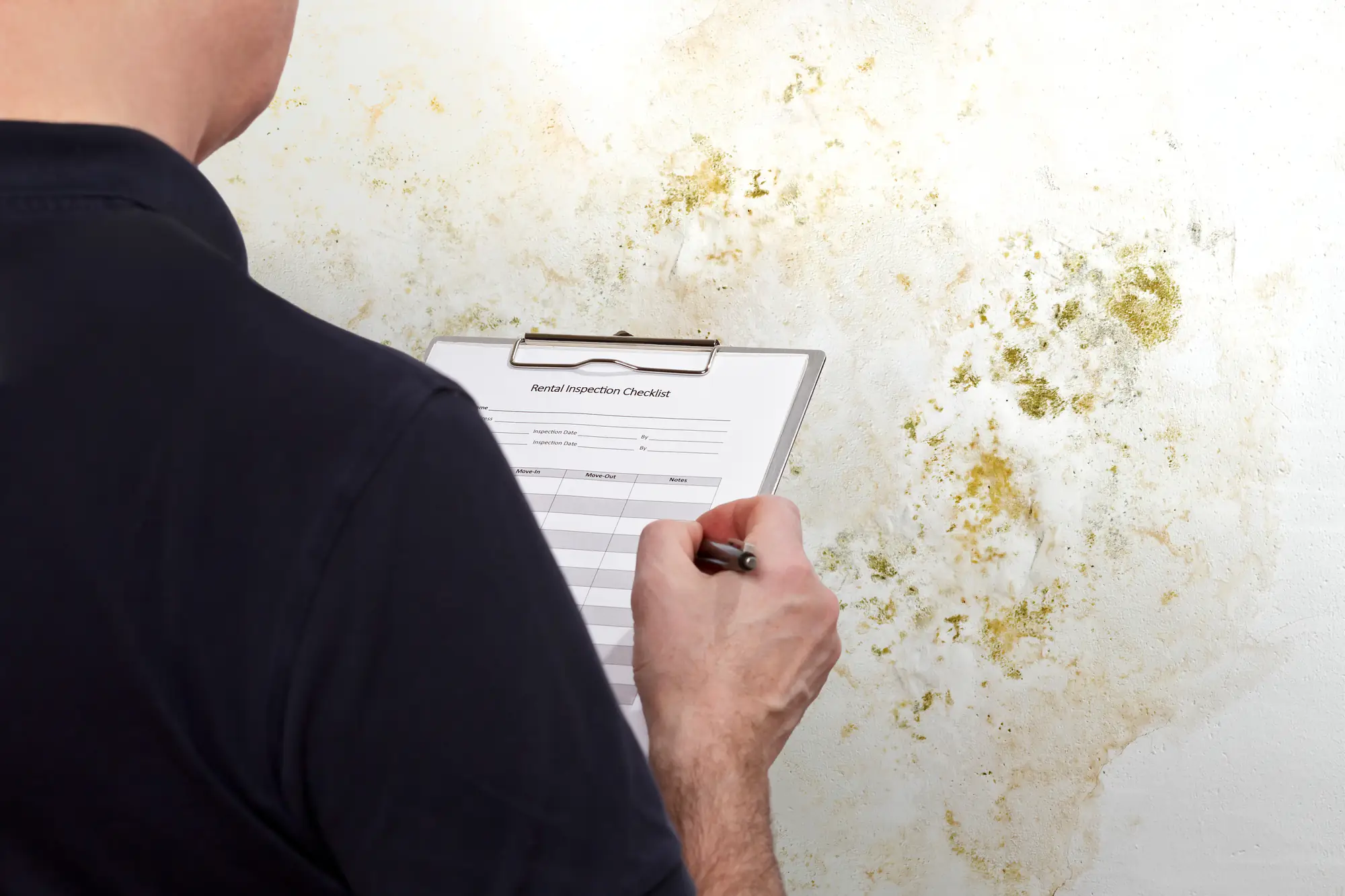
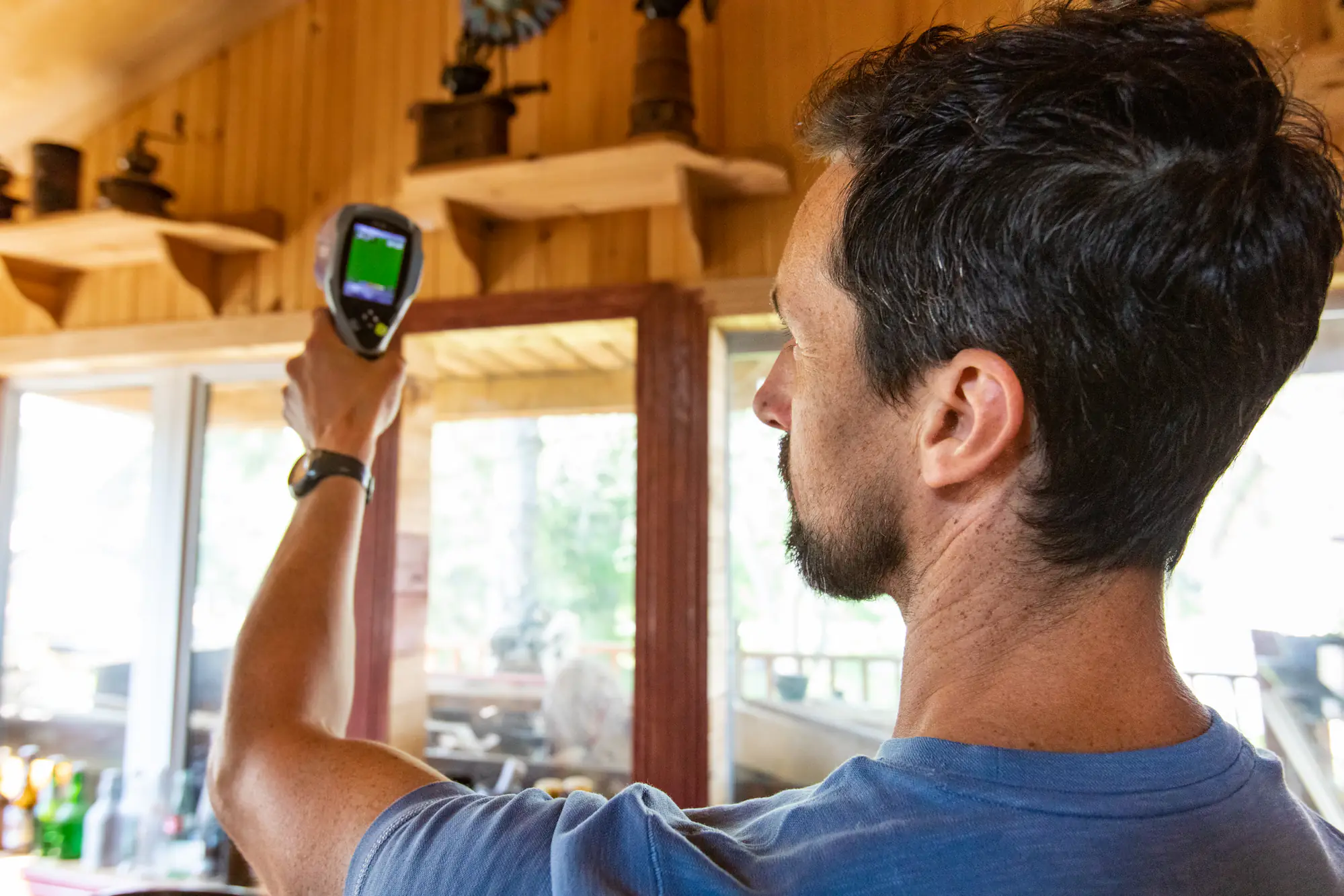
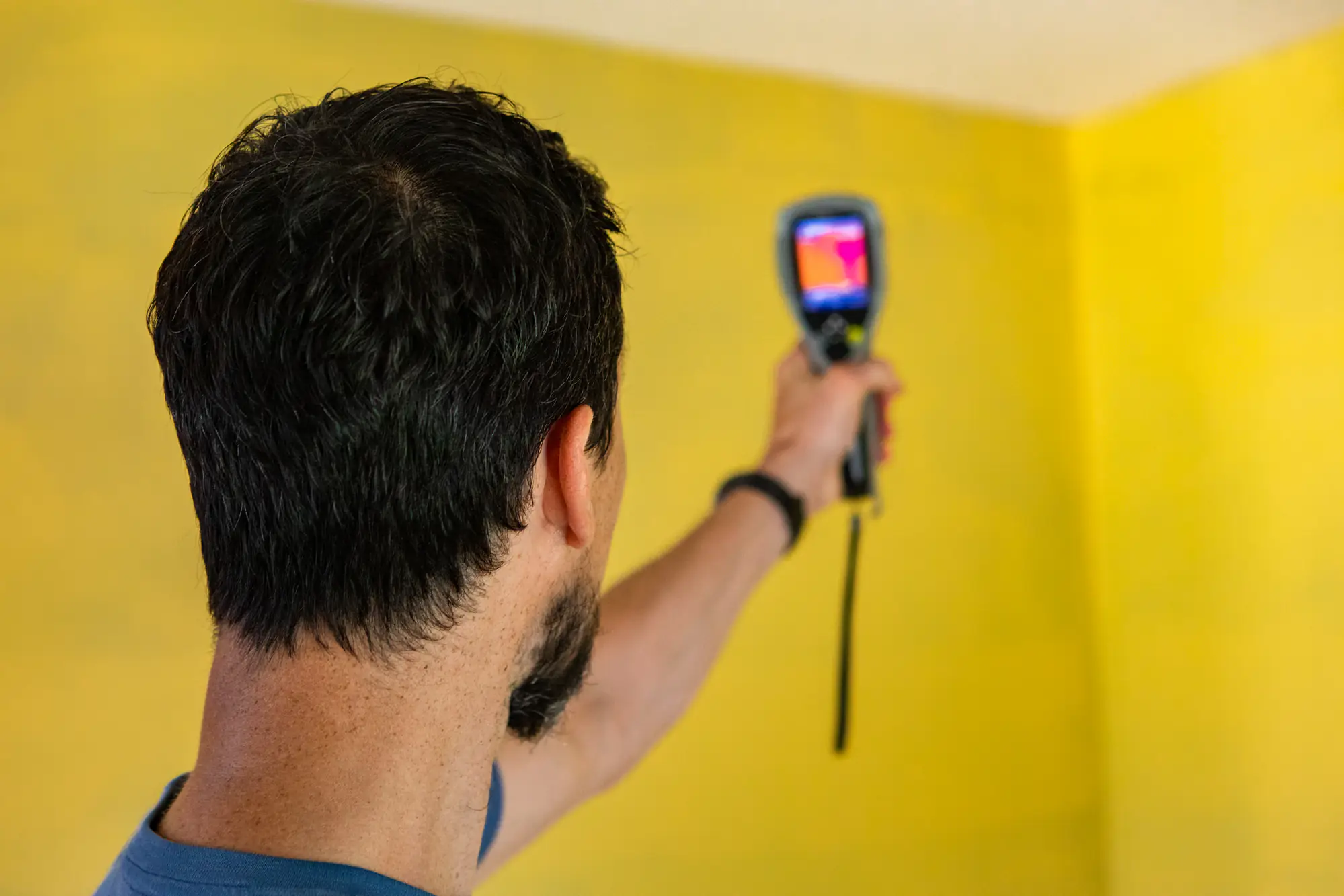
First, we walk through your property with you. We’re looking at basements, bathrooms, crawl spaces, around windows—anywhere moisture tends to collect in Bucks County homes. We use infrared cameras and digital moisture meters to check areas you can’t easily access.
Then we take air samples. This isn’t just pointing a device at a wall. We’re capturing airborne spores from multiple locations in your home and comparing them to outdoor air. Even if mold is hidden behind drywall or under flooring, spores get into the air where our equipment picks them up.
Those samples go to a certified lab for analysis. You get a detailed report that identifies specific mold species, their concentrations, and whether levels are elevated compared to what’s normal outside. We review the results with you and explain what they actually mean for your situation—no jargon, no scare tactics.
Ready to get started?
Every mold inspection includes a complete visual assessment of your property, moisture readings throughout the home, and professional air sampling with certified laboratory analysis. We’re checking humidity levels, looking for water intrusion points, and documenting conditions that support mold growth.
In Perkasie and throughout Bucks County, we pay extra attention to basements and crawl spaces. The local climate makes these areas particularly vulnerable. Older homes in this area often have stone foundations that allow moisture through, and that creates ongoing mold risk most homeowners don’t realize they’re dealing with.
You receive a written report with lab findings, photos of problem areas, moisture readings, and our assessment of what’s happening in your home. This documentation works for insurance claims, real estate transactions, or just your own peace of mind. Most homeowners in Bucks County pay between $288 and $800 for this level of testing, depending on home size. Our basic inspection starts at $350 and includes everything you need to make an informed decision.
You need testing when you can’t see the source but know something’s wrong. That means persistent musty odors with no visible mold, health symptoms that improve when you leave the house, or situations where you’ve had water damage and want to confirm it didn’t create a hidden problem.
Testing is also necessary before buying a home in Bucks County. Mold kills real estate deals here faster than almost anything else, and you don’t want to discover a contamination issue after closing. If someone in your family has respiratory issues or a compromised immune system, testing gives you actual data instead of assumptions about air quality.
Here’s when you don’t need it: if you see a small patch of surface mold on a bathroom tile or window sill, you can usually clean that yourself. But if that same spot keeps coming back, or if you’re seeing growth in multiple locations, that’s when testing tells you whether you’re dealing with a moisture problem that needs a bigger fix.
DIY kits have a major limitation—they only test what you point them at. If you’re not sampling the right location, you’ll miss the problem entirely. They also can’t tell you mold species or concentration levels with any reliability. Most produce false negatives, meaning they say you’re fine when you’re not.
Professional testing uses calibrated equipment that captures airborne spores throughout your home, not just in one spot. We’re comparing your indoor air to outdoor baseline levels, which tells you whether your home has elevated mold compared to what’s naturally present in Pennsylvania’s environment. The samples go to certified laboratories that identify specific species—some are relatively harmless, others are serious health risks.
The difference matters when you’re making decisions about remediation. If you’re going to spend thousands fixing a mold problem, you want to know for certain what you’re dealing with and whether the investment is necessary. Professional testing gives you that certainty. DIY kits give you a maybe.
In Bucks County, we typically find Aspergillus, Penicillium, and Cladosporium in homes with moisture issues. These grow in damp basements, around leaky windows, and in bathrooms with poor ventilation. They’re common but can still cause respiratory problems, especially for kids and anyone with asthma or allergies.
Stachybotrys—that’s the black mold everyone worries about—shows up less frequently but usually indicates serious water damage. It needs constant moisture to grow, so if we find it, there’s typically an ongoing leak or flooding issue that needs immediate attention. It produces mycotoxins that can cause significant health problems.
The specific species matters because it tells us about the moisture conditions in your home and the potential health risks. Some molds are mostly cosmetic problems. Others mean you’ve got water intrusion that’s going to cause structural damage if you don’t address it. Testing identifies which situation you’re in so you can respond appropriately instead of overreacting or underreacting.
We typically get lab results back within 24 to 48 hours after collecting samples. The actual testing appointment takes about an hour for an average-sized home, depending on how many areas we’re sampling and what we find during the visual inspection.
The lab analysis is what takes time—they’re culturing samples and using microscopy to identify species and count spore concentrations. You can’t rush that process without sacrificing accuracy. Some companies offer “instant” results, but those are usually just visual assessments or surface samples that don’t give you the full picture of your air quality.
Once we have the lab report, we review it with you and explain what the findings mean in plain language. You’re not getting a technical document dumped in your email with no context. We walk through the results, answer your questions, and help you understand whether you need remediation or if you’re dealing with something you can manage yourself.
It depends on what caused the mold. If you have mold growth from a covered event—like a burst pipe or storm damage—many policies will cover testing and remediation. But if the mold developed because of long-term maintenance issues like a slow leak you didn’t fix, insurance typically won’t pay.
Pennsylvania insurance policies vary widely on mold coverage. Some exclude it entirely, others cap coverage at $5,000 or $10,000, and a few cover it fully if it results from a covered peril. You need to check your specific policy or call your agent before assuming you’re covered.
Even if insurance won’t pay for testing, most homeowners find it’s worth the $300 to $800 cost to know what they’re dealing with. Undetected mold can reduce your home’s value by 20 to 37 percent and cost $3,000 to $20,000 to remediate if it spreads. Early detection through testing usually saves you thousands compared to discovering a major contamination problem later.
Yes—post-remediation testing is actually one of the most important uses of professional mold testing. After someone removes mold from your home, you want confirmation that spore levels have returned to normal. Without testing, you’re just trusting that the work was done correctly.
We take air samples after remediation is complete and compare them to outdoor baseline levels, just like in the initial testing. If indoor spore counts are similar to or lower than outdoor counts, the remediation was successful. If they’re still elevated, there’s either mold that wasn’t removed or a moisture problem that’s allowing new growth.
This is especially important in Bucks County because our humid climate means mold can come back quickly if the underlying moisture issue wasn’t fixed. Post-remediation testing gives you documentation that the problem is actually solved, which matters for your health, your home’s value, and any future real estate transactions. Most remediation companies should offer this as part of their service, but if they don’t, we can handle it independently.
Other Services we provide in Perkasie