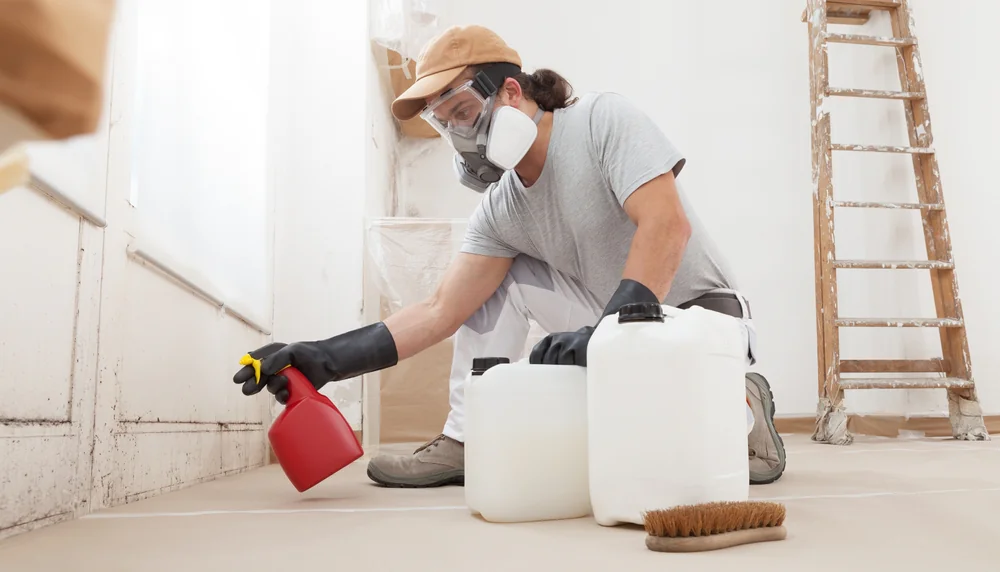
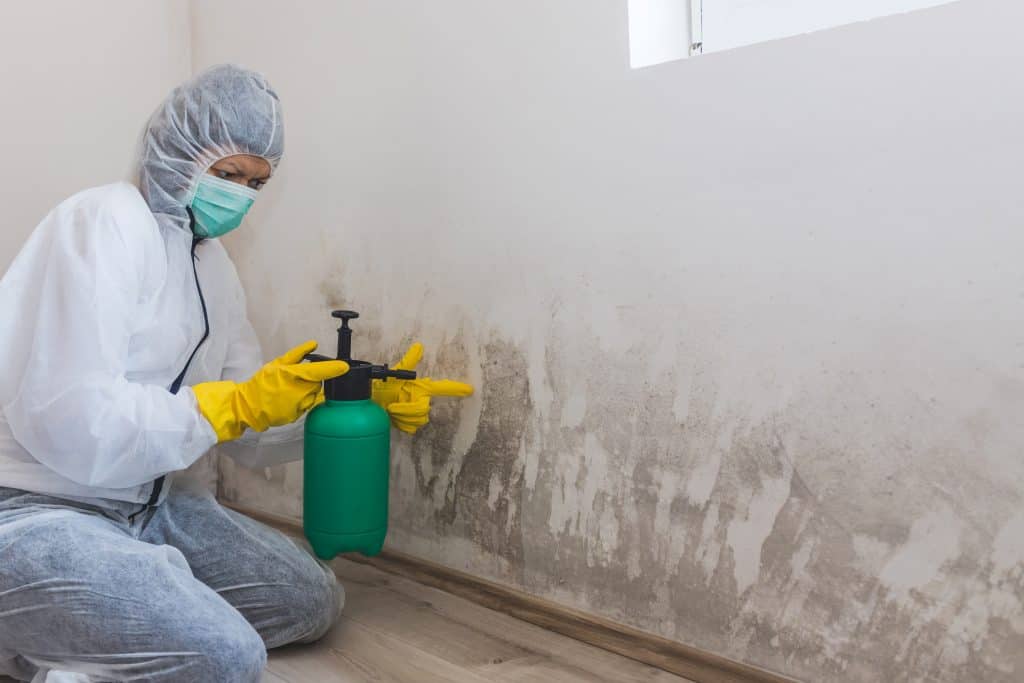
You just spent thousands on mold remediation. The contractor says everything’s fine, the containment’s coming down, and you can move back in.
But how do you actually know the job’s done right?
That’s where mold clearance testing comes in. It’s the independent verification that proves remediation was successful and your Bucks County home is safe again. Think of it as the quality control checkpoint between “work’s finished” and “problem’s solved.”
Here’s what clearance testing does, why it matters more than you might think, and what you need to know before that final invoice gets paid.
What Is Mold Clearance Testing
Mold clearance testing is a post-remediation inspection that verifies whether cleanup was successful. It happens after the physical removal work is done but before containment barriers and air scrubbers are taken down.
An independent inspector checks the treated area through visual examination, air sampling, and surface testing. Lab analysis compares indoor mold spore levels to outdoor baselines. If indoor levels match or fall below outdoor levels, the space passes. If spore counts are elevated or moisture remains, it fails.
The goal is simple: confirm your home has returned to what the industry calls “Condition 1” or normal fungal ecology. That means the environment is back to a healthy state where mold isn’t actively growing and air quality is safe for occupancy.
Why You Need Third-Party Verification
Here’s the uncomfortable truth: about 50% of mold remediation projects miss something. Even reputable companies overlook areas, leave moisture issues unresolved, or don’t run air scrubbers long enough.
That’s why third-party clearance testing matters. When the same company that did your remediation also does the final testing, there’s an obvious conflict of interest. They’re grading their own work. If they cut corners to save time or money, who’s checking?
Independent testing eliminates that problem. A certified inspector with no financial stake in the remediation gives you objective results. They’re not incentivized to pass a failed job or recommend unnecessary work.
Some states legally require this separation between remediation and testing. Even where it’s not mandated, it’s standard practice for a reason. You wouldn’t let a chef grade their own cooking, and you shouldn’t let a remediation company verify their own cleanup.
For Bucks County homeowners, this matters even more. With the area receiving 49 inches of rain annually compared to the national average of 38 inches, mold pressure is constant. Basements in areas like Levittown and Newtown face groundwater issues and moisture-retaining soil that create perfect conditions for mold to return. You need confidence that the problem was actually solved, not just temporarily cleaned up.
Third-party verification gives you that proof. It protects you from having to redo the entire process six months later when mold returns because the root cause wasn’t addressed. Insurance companies know this too. Many require independent clearance testing before they’ll close a claim. Real estate transactions often won’t proceed without a clearance certificate from an unaffiliated inspector.
How the Clearance Test Process Works
The clearance testing process follows a specific sequence designed to catch what visual inspection alone would miss.
First, the inspector does a thorough visual examination of the remediated area. They’re looking for any remaining visible mold, moisture damage, or signs that cleaning wasn’t complete. They check walls, ceilings, HVAC systems, and hidden areas like behind baseboards or inside wall cavities where contractors might have missed spots.
Next comes moisture assessment. Using specialized meters and sometimes thermal imaging, the inspector identifies any remaining dampness. This step is critical because even if all visible mold is gone, moisture means it’ll grow back. The source has to be fixed, not just the symptom.
Then air sampling begins. The inspector uses calibrated pumps to pull air through collection devices, capturing mold spores. They take samples from inside the treated area and from outdoors to establish a baseline for comparison. Indoor levels should match or fall below outdoor levels. If they’re elevated, it signals incomplete remediation or hidden contamination.
Surface sampling may also be collected using swabs or tape lifts from walls, floors, or other materials. This helps detect lingering contamination on cleaned surfaces or confirms whether suspicious staining is actually mold.
All samples go to an accredited laboratory for analysis. Lab technicians identify specific mold species and quantify spore counts. Results typically come back within 24 to 48 hours. The inspector then compiles everything into a detailed clearance report showing whether the space passed or failed, what was found, and what needs to happen next if problems remain.
One important detail: air scrubbers and filtration devices need to be turned off at least one to 24 hours before testing. Otherwise, you’re testing purified air, not the actual conditions you’ll be living in. Some contractors run scrubbers right up until testing to artificially lower spore counts. That’s a red flag.
Mold Clearance Test Results and What They Mean
Understanding your clearance test results comes down to a few key comparisons. The lab report shows indoor spore counts, outdoor baseline counts, and specific mold types identified.
A passing test means indoor levels are similar to or lower than outdoor levels, no visible mold remains, moisture issues are resolved, and the area is safe for occupancy. You get a clearance certificate documenting successful remediation. This goes in your property files for insurance, future sales, or your own peace of mind.
A failed test means elevated spore counts, remaining moisture, visible contamination, or hidden mold sources were detected. It’s frustrating, but it’s actually protecting you from a bigger problem down the road. The report will specify what failed and why, giving the remediation contractor a clear roadmap for corrections.
What Happens When Clearance Testing Fails
A failed clearance test isn’t the end of the world. It’s the checkpoint working exactly as designed, catching problems before you seal everything back up.
When testing fails, the first step is reviewing the report to understand why. Common reasons include incomplete cleaning where contractors missed areas during removal, moisture still present from leaks or humidity that wasn’t addressed, elevated airborne spores from inadequate air scrubbing, or hidden mold in wall cavities, HVAC systems, or crawl spaces that weren’t part of the original scope.
The remediation contractor then returns to address the specific issues identified. This might mean additional HEPA vacuuming of all surfaces, re-treating areas with antimicrobial solutions, running air scrubbers for several more days, or addressing moisture sources that were overlooked. In some cases, it means expanding the scope to areas where hidden mold was discovered during clearance inspection.
Once corrections are made, follow-up clearance testing confirms whether the space is now safe. This second round of testing follows the same protocol: visual inspection, air sampling, surface testing, and lab analysis.
Here’s where proper planning matters. Industry-standard remediation protocols establish upfront who pays for re-remediation and additional testing if clearance fails. Reputable contractors build this into their agreements because they know clearance testing is part of doing the job right. If a contractor pushes back on clearance testing or won’t commit to fixing failed areas, that’s a warning sign.
For Bucks County homeowners, failed clearance often reveals moisture issues specific to our area. Heavy rainfall, groundwater pressure on basement walls in Doylestown and Bensalem, or HVAC condensation during humid summers can all cause mold to return even after thorough cleaning. Clearance testing catches these root causes before you invest in reconstruction.
The bottom line: a failed test costs you some time and maybe additional remediation fees, but it saves you from having to tear everything out again six months later when mold comes back. It’s quality control that protects your investment.
Certified Mold Testing Costs and Value
Mold clearance testing typically costs between $200 and $800 in Bucks County, PA, with most homeowners paying around $300 to $500. That includes the inspector’s site visit, sample collection, accredited lab analysis, and a detailed written report.
Cost factors include the size of the remediated area, number of samples needed, and complexity of access. A single-room bathroom cleanup might need just one or two air samples. A whole-basement remediation might require four to six samples from different zones to ensure thorough verification.
Some homeowners balk at spending a few hundred dollars after already paying $2,000 to $6,000 for remediation. But consider what you’re getting. For about 10% of your total remediation cost, you get independent proof that the work was done correctly. You’re protecting a much larger investment.
If remediation wasn’t complete and mold returns, you’re paying for the entire process again. Demolition, containment, removal, cleaning, disposal, and reconstruction. That’s thousands more. Clearance testing catches incomplete work before you rebuild, potentially saving you from doubling your total costs.
There’s also the documentation value. Insurance companies often require a clearance report to close mold claims. Without it, you might not get reimbursed for remediation costs. Real estate transactions can stall or fall through without clearance certification when mold history is disclosed. Property buyers want proof the problem was actually solved, not just covered up.
For landlords and property managers, clearance testing provides legal protection. If tenants later claim health issues from mold exposure, a clearance certificate shows you took proper steps to ensure safety. That documentation can be critical in disputes.
DIY test kits from hardware stores cost $30 to $50 and seem tempting, but they’re not accepted by insurance companies or real estate professionals. They can’t measure actual spore concentration in air, only whether mold exists (which it does in every home naturally). Professional testing gives you data you can actually use to make decisions and satisfy third-party requirements.
When you’re already committed to solving a mold problem, clearance testing is the final step that confirms your money was well spent. It’s not an optional extra—it’s verification that the job is actually done.
Getting Mold Clearance Testing in Bucks County, PA
Mold clearance testing is the accountability measure that protects your family and your investment. It confirms remediation was successful, catches problems before they become expensive do-overs, and gives you documentation for insurance and property transactions.
The key is using an independent third-party inspector with no financial interest in passing or failing the test. You want objective results from certified professionals who follow industry standards and use accredited labs.
For Bucks County homeowners dealing with the area’s specific mold challenges—heavy rainfall, humid summers, moisture-retaining soil—clearance testing is especially important. It verifies that both the visible mold and the underlying moisture issues were addressed, not just surface symptoms.
If you’ve completed mold remediation or you’re planning a project, we provide comprehensive mold clearance testing throughout Bucks County, PA and surrounding areas. We understand local conditions and follow EPA-approved methods and Pennsylvania regulations to give you reliable, independent verification your home is safe.