
Hear from Our Customers
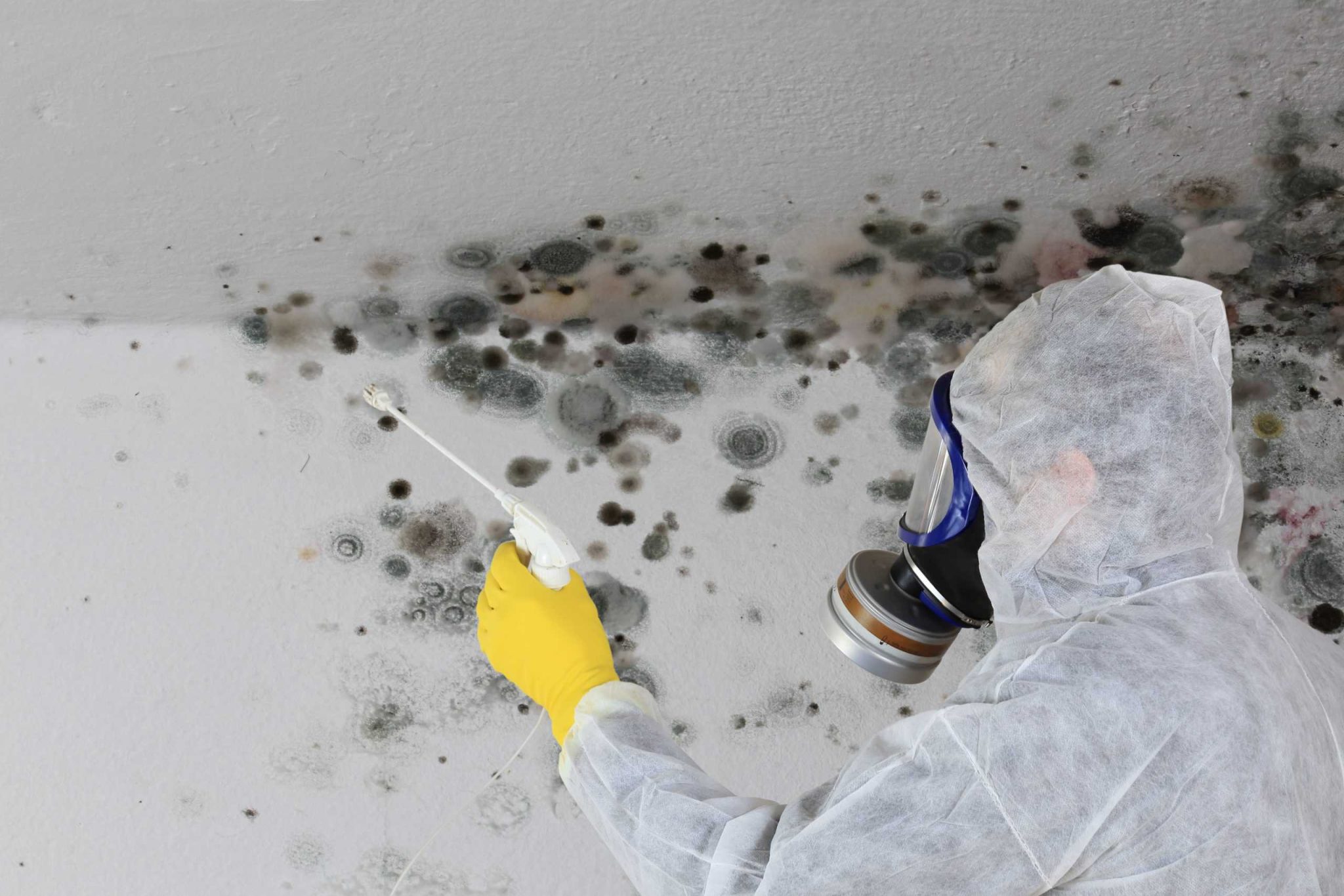
Most Overbrook homes were built before forced-air HVAC systems even existed. When central air and heating were retrofitted into these pre-war rowhouses and stone twins, ductwork got routed through tight masonry cavities, uninsulated wall chases, and spaces that haven’t seen daylight since the system was installed. That’s not a minor detail it’s why mold can grow undetected in your ducts for years while you chalk up the symptoms to allergies or a stuffy house.
Once the ductwork is cleaned and any mold is properly eliminated, you stop redistributing the problem every time your system kicks on. Families with kids or anyone dealing with unexplained respiratory symptoms often notice the difference quickly. Philadelphia summers consistently push outdoor humidity above the EPA’s threshold for mold growth, and Overbrook’s older building stock doesn’t give that moisture anywhere to go except into your HVAC system.
What changes after a proper job isn’t just the air it’s the confidence that your home isn’t working against you. No more musty smell when the heat comes on in October. No more wondering what’s circulating through your vents after a humid August. Just a system that’s been inspected, cleaned, and verified by someone who actually understands mold, not just ductwork.
We’ve been doing this work for over 15 years across Philadelphia County, including Overbrook and the surrounding neighborhoods. We understand what it means to work in dense urban areas with pre-war housing not just the newer suburban builds that most duct cleaners are set up for.
The difference here is our specialization. We’re a certified mold remediation company first. That matters when you’re dealing with ductwork in an Overbrook rowhouse, where aging metal passages run through shared masonry and moisture has had decades to accumulate in places no one has looked. A general duct cleaner with a vacuum and a truck doesn’t approach that the same way a mold specialist does.
Customers consistently mention the same things: we show up, the price quoted is the price paid, and after the job is done, the work gets tested to confirm the mold is actually gone. That last part post-cleaning verification isn’t standard in this industry. For us, it is.
It starts with a free inspection. Before any work is quoted or scheduled, one of our certified inspectors looks at your system not just the registers you can see, but the duct runs, return air pathways, and any areas where moisture or mold activity is likely. In an Overbrook home, that often means paying close attention to how the ductwork interacts with basement conditions and shared wall cavities, since those are the two places where moisture most commonly enters the system in attached rowhouse construction.
From there, if mold is present, the job follows remediation protocols not just cleaning protocols. That means containment before anything is disturbed, so spores aren’t pushed through the rest of the house during the process. It means using the right equipment for the building type, not a one-size approach. And it means treating the source of the moisture problem, not just the symptom in the duct.
After the cleaning is complete, we test the affected areas to confirm the mold is gone. You get documentation, not just a handshake. Given that Philadelphia summers create sustained high-humidity conditions that can re-trigger mold growth if the underlying issue isn’t addressed, that verification step matters more here than it would in a drier climate. The job isn’t done until the results back it up.
Ready to get started?
Our air duct cleaning covers both supply and return ducts not just one side of the system. Cleaning only the supply side is a common shortcut that leaves the return air pathways contaminated, which means your system pulls dirty air right back in. In Overbrook’s older homes, where return air is often drawn from basement-adjacent spaces, that matters even more.
Air duct sanitizing is a separate step that follows mechanical cleaning. Once the physical debris and mold growth are removed, we apply an antimicrobial treatment to the duct surfaces to address any remaining biological contamination. For homes that have had confirmed mold elsewhere in a basement, behind a wall, or in a bathroom sanitizing is the step that keeps the HVAC system from becoming a re-entry point for the same problem.
Dryer vent cleaning is also available, and in Overbrook’s rowhouse stock, it’s not optional maintenance. Dryer vents in attached homes frequently run horizontally through shared wall cavities or take long indirect paths to reach an exterior exit exactly the conditions that cause lint to accumulate and create a fire hazard. The NFPA reports over 15,000 dryer-related house fires annually, with failure to clean the vent as the leading cause. We handle all three services duct cleaning, duct sanitizing, and dryer vent cleaning so you’re not coordinating multiple contractors for what is, in most cases, one connected job.

The most common sign is a musty smell that appears when your HVAC system kicks on especially noticeable at the start of heating season in the fall or when you switch to AC in late spring. If the smell fades after the system has been running for a while, that’s not reassurance it usually means the mold is in the ductwork itself and you’ve just gotten used to it.
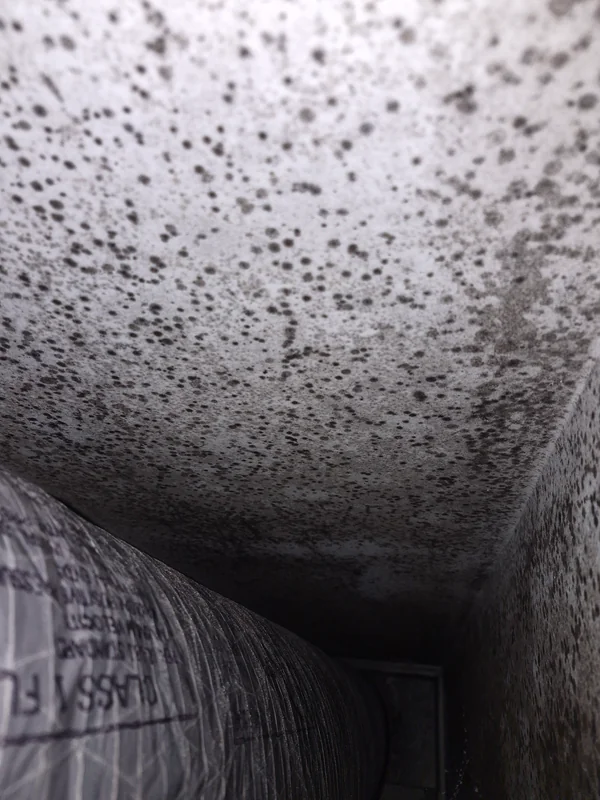
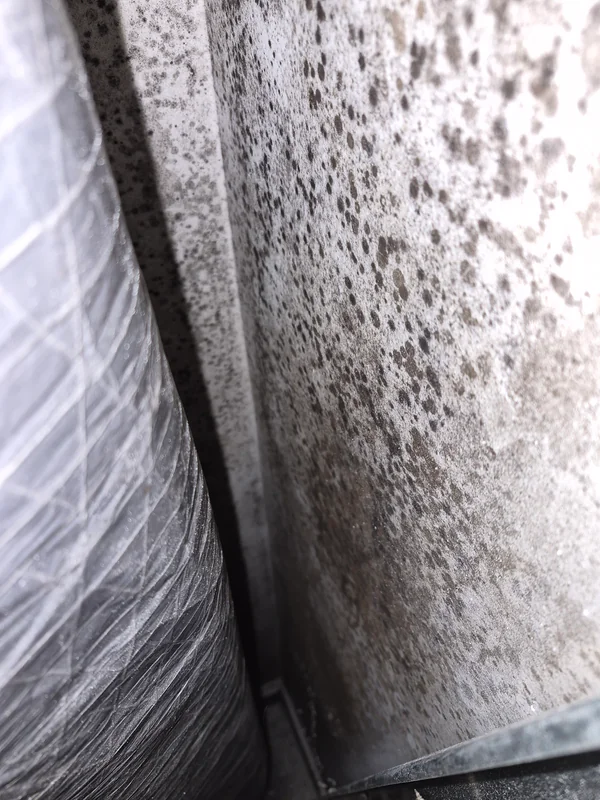
In Overbrook specifically, the combination of pre-war construction and Philadelphia’s humid summers creates conditions where mold can establish in ductwork without any visible signs at the register. The growth happens in the interior sections of the duct runs in the wall cavities and under-floor passages where retrofitted HVAC systems in older rowhouses were routed. Worsening allergy symptoms indoors, visible discoloration near vent covers, or a musty odor that you can’t trace to a specific room are all reasons to have a certified inspection done.
It depends entirely on why you’re having it done and who’s doing it. The EPA is clear that routine duct cleaning absent a specific problem has unclear benefits. But when mold is confirmed or suspected in the ductwork, when there’s been pest activity, or when significant debris is clogging the system, cleaning is the right call. That distinction matters.
The scam version of this service is well-documented: a company offers a $99 whole-house cleaning, shows up, and then pressures you into add-ons that push the bill into the hundreds. We counter that with a free inspection upfront and pricing that’s given to you before any work starts. The price quoted is the price paid. For Overbrook homeowners who have dealt with unreliable contractors before, that transparency is the thing that makes the difference.
Yes and in a forced-air system, it spreads efficiently. Every time your HVAC runs, it pulls air through the return ducts, passes it over the evaporator coil or heat exchanger, and pushes it out through every supply register in the house. If mold is growing anywhere in that pathway, the system is distributing spores to every room simultaneously with every cycle.
This is especially relevant in Overbrook’s rowhouses, where the return air system often draws from basement-adjacent spaces. Basements in Philadelphia’s pre-war rowhouses are notoriously prone to moisture stone or poured concrete foundations without modern waterproofing, combined with the city’s average 40+ inches of annual rainfall, means basement humidity is a persistent condition rather than a seasonal one. When your HVAC pulls from that environment, it brings that moisture and anything growing in it into the duct system and then into every room in the house.
The general industry recommendation is every three to five years for a typical home. But that baseline assumes relatively modern construction with accessible, well-sealed ductwork not the retrofitted systems common in Overbrook’s pre-1940 housing stock.
For an older rowhouse in Overbrook, the more useful question is: what’s actually in your ducts right now? Ductwork that was routed through masonry cavities decades ago may have never been inspected, let alone cleaned. Philadelphia’s humid continental climate with summer dew points regularly exceeding 65°F means HVAC systems in older homes deal with sustained moisture loads every cooling season. If you’ve never had the system inspected, if you’ve recently had mold remediated elsewhere in the home, or if you’ve noticed any of the common warning signs (musty odor, worsening symptoms, visible discoloration near registers), that’s the trigger for an inspection regardless of how much time has passed since the last cleaning.
Cleaning and sanitizing are two separate steps that address two different parts of the same problem. Cleaning is the mechanical process removing the physical debris, dust, and mold growth from the duct surfaces using negative air pressure equipment and HEPA filtration. It gets the material out of the system.
Sanitizing comes after. It involves applying an antimicrobial treatment to the interior duct surfaces to address any remaining biological contamination that mechanical cleaning alone can’t fully eliminate. For homes where mold has been confirmed either in the ducts or elsewhere in the building sanitizing is the step that prevents the duct system from becoming a re-entry point once the visible growth has been removed. In Overbrook, where older homes can have mold in multiple locations simultaneously (basement, bathroom, behind walls), skipping the sanitizing step after a duct cleaning is a common reason the problem comes back within a season or two.
Yes Philadelphia County is one of our explicitly listed service areas, and Overbrook is within that territory. We’re based in Bensalem and serve Bucks, Montgomery, Delaware, Chester, and Philadelphia Counties. City Line Avenue, which runs along Overbrook’s northern border, connects directly into our broader service region, so there’s no extended travel situation for Overbrook residents.
What’s worth knowing is that we’re not a national franchise with a local license we’re an owner-operated company where the person who answers the phone is connected to the people doing the work. That matters in a neighborhood like Overbrook, where the primary alternative is a SERVPRO franchise operation. Multiple customers in reviews specifically mention same-day or next-day responses and the fact that the quoted price didn’t change by the time the job was done. We also offer flexible financing for jobs where the cost is a consideration, and a free inspection so you know what you’re dealing with before committing to anything.
Other Services we provide in Overbrook