
Hear from Our Customers
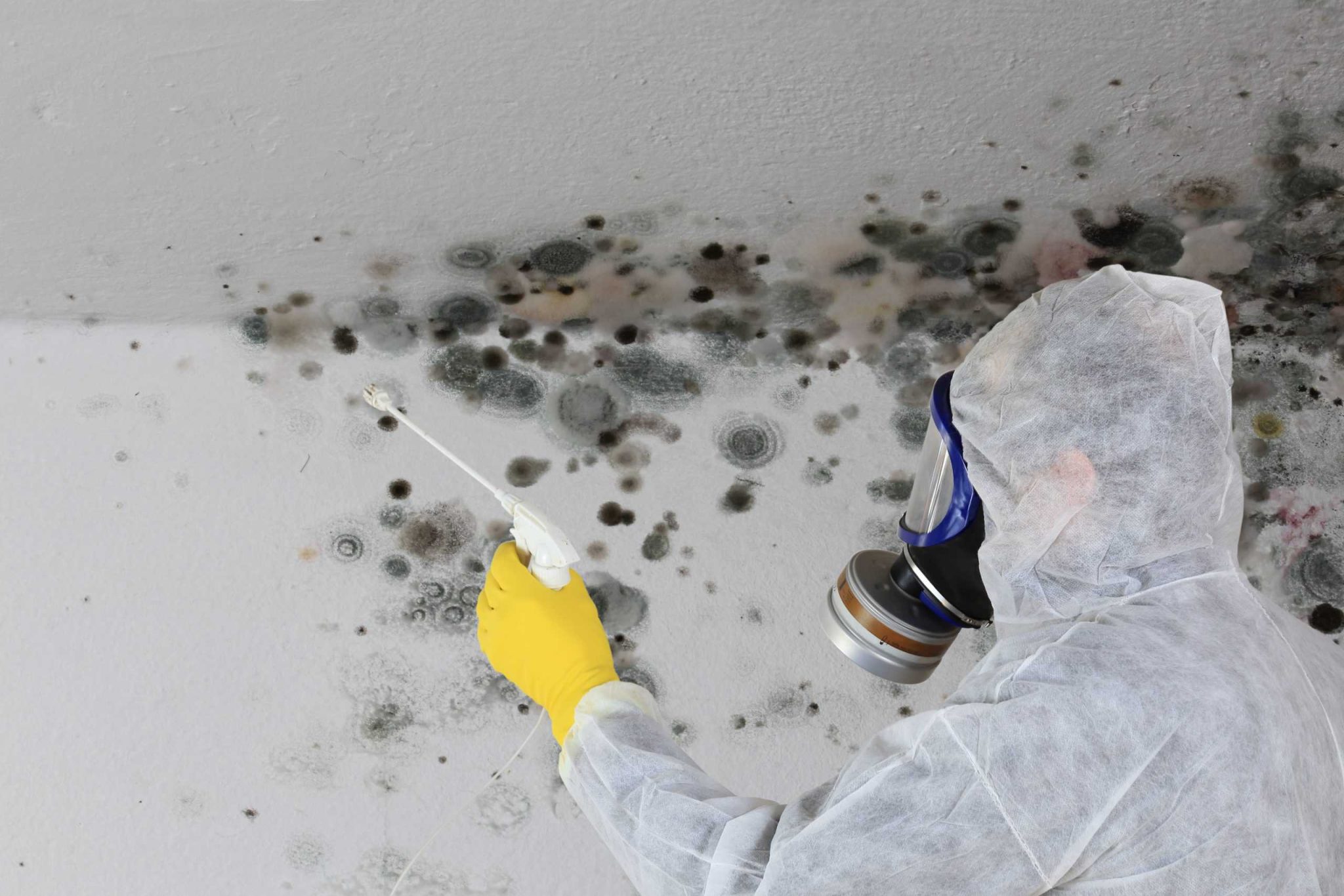
The musty smell that kicks on with your AC isn’t just unpleasant in a Bridge Valley home, it’s often a signal. Buckingham Township’s housing stock includes stone farmhouses dating back to the 1700s, many with ductwork retrofitted into spaces that were never designed for forced air. Crawl spaces, stone basement ceilings, uninsulated attic runs these are exactly the conditions where moisture accumulates and mold takes hold, quietly cycling through your home every time the system kicks on.
When the ducts are clean and clear, that changes. You’re not running a heating or cooling system that’s redistributing biological contamination to every room simultaneously. Families with children attending Bridge Valley schools notice it first the air just feels different. Less stuffy. No more waking up congested when nothing’s blooming outside.
What you get isn’t just cleaner air. It’s confidence that the remediation job is actually complete. Because if mold was found somewhere in your home and the ducts weren’t evaluated, the job isn’t done it’s just paused. Bucks County gets nearly 49 inches of rain per year, and Bridge Valley’s position in the Neshaminy Creek watershed means groundwater pressure and ambient moisture levels that most HVAC systems weren’t built to handle without accumulating biological growth over time. Cleaning the ducts properly, with containment protocols is what closes that loop.
We’ve been serving Bridge Valley and the broader Bucks County area for over 15 years. That’s 15 years of crawl spaces, stone foundations, creek-corridor basements, and HVAC systems in homes that predate modern construction standards. We know what moisture does to Bridge Valley properties because we’ve seen it firsthand, repeatedly, in this specific part of Pennsylvania.
This isn’t a national franchise dispatching a technician from a call center. When you call us, you reach people who are familiar with Bridge Valley’s building stock the same team that has dedicated service pages for mold removal, mold remediation, and indoor air quality testing right here in this community. That familiarity matters when the job involves a 200-year-old stone home near the Neshaminy Creek corridor, not a 2005 colonial in a planned subdivision.
Every job includes a free inspection and upfront pricing before any work begins. What you’re quoted is what you pay.

It starts with a free inspection. Before anything is cleaned, we evaluate the system not just at the registers you can see, but through the interior duct sections where mold actually grows. In Bridge Valley’s older homes, that often means checking runs that pass through stone basement ceilings or uninsulated attic spaces, where temperature differentials and moisture exposure are far more severe than in newer construction. This inspection step is what separates a legitimate job from a $99 bait-and-switch you find out what’s actually there before anyone commits to anything.
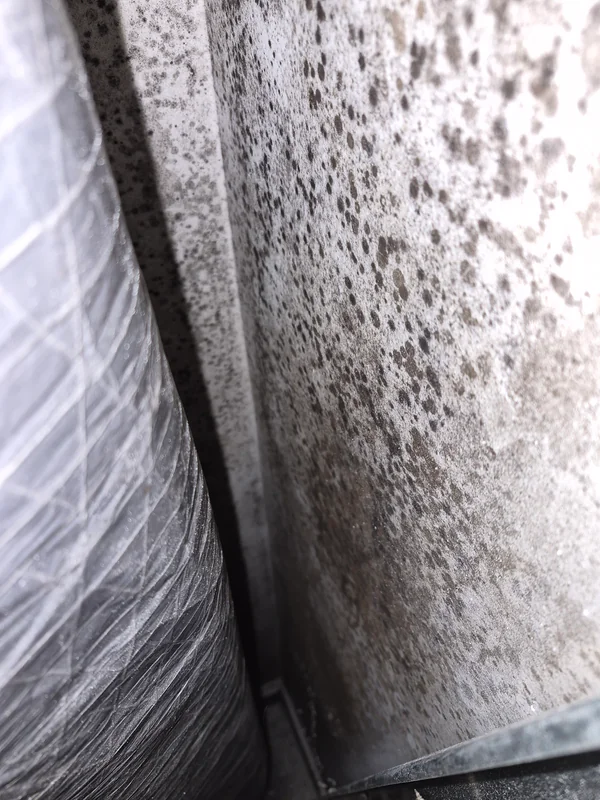
Once the scope is clear, the cleaning process uses professional-grade equipment with negative air pressure systems and HEPA vacuums not the kind of equipment that stirs up debris and redistributes it. If mold is present, containment protocols are in place before anything is disturbed. This is the step that general duct cleaners skip and that matters most in a home where mold has already been found elsewhere on the property. Disturbing mold in ductwork without containment doesn’t clean the problem it spreads it.
After the cleaning is complete, we test affected areas to confirm the mold is gone. You get documentation. Not a handshake and a receipt, but actual verification that the job worked. For a home in Bridge Valley where property values regularly exceed $700,000 and the investment is significant that documentation is part of what you’re paying for.
Ready to get started?
Our air duct cleaning covers both supply and return ducts not just one side of the system. Cleaning only the supply ducts while leaving return ducts untouched is a common shortcut that leaves half the problem in place. The full system gets addressed, including the components most likely to harbor biological growth: evaporator coils, drip pans, and the interior duct sections that most homeowners have never seen and most general cleaners don’t reach.
Air duct sanitizing is available as a follow-up step after mechanical cleaning. Where cleaning removes the physical debris and biological matter, sanitizing applies an antimicrobial treatment to address what remains at the surface level. For Bridge Valley homes that have dealt with basement moisture, crawl space humidity, or prior mold remediation work elsewhere on the property, this additional step closes the gap between “cleaned” and “treated.”
Dryer vent cleaning is also part of our service offering, and it’s worth taking seriously. The NFPA reports nearly 16,000 dryer-related house fires per year in the U.S., with failure to clean vents as the leading cause. In older Bridge Valley homes where laundry configurations were retrofitted and vent runs may be longer or more complex than in modern construction, lint accumulation happens faster and the risk is higher. This isn’t optional upkeep it’s fire prevention for a home worth protecting. We handle the full vent run, not just the accessible section at the dryer connection.
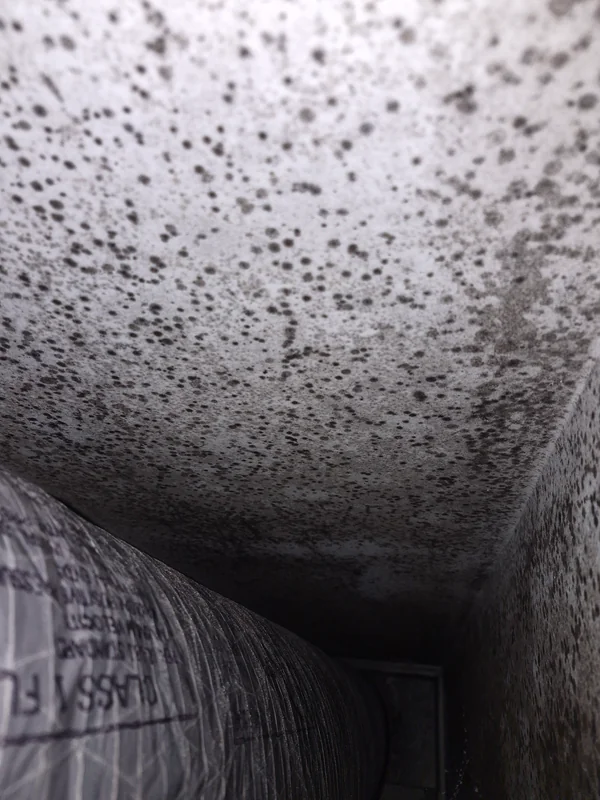
The most common sign is a musty smell that appears specifically when the HVAC system runs not all the time, but when the air kicks on. If the smell fades when the system is off and returns when it starts up again, that’s a strong indicator that something biological is living inside the ductwork rather than elsewhere in the house. Other signs include worsening allergy or respiratory symptoms that don’t correlate with outdoor pollen counts, visible discoloration or dark staining around registers or vent covers, and a general stuffiness that doesn’t improve with ventilation.
In Bridge Valley specifically, the combination of older home construction and the moisture dynamics of the Neshaminy Creek watershed creates conditions where HVAC mold is more common than most homeowners expect. Stone and masonry foundations without modern vapor barriers allow moisture to migrate into basement and crawl space areas where ductwork often runs. A free inspection from us will give you a clear answer not a guess, and not a sales pitch based on what you can’t see yourself.
The honest answer is: it depends on why you’re doing it. The EPA’s position is nuanced routine cleaning of ducts that have no specific problem has unclear benefits. But the EPA explicitly recommends cleaning when mold is confirmed in the ductwork, when there’s been a pest or rodent infestation, or when significant debris is blocking airflow. Those aren’t edge cases they’re exactly the situations that drive most legitimate duct cleaning jobs.
The scam concern is real, and it’s worth taking seriously. The industry’s $99 bait-and-switch offer where a low-ball price gets a technician in the door, followed by aggressive upselling for services you may or may not need is well-documented. The way to avoid it is straightforward: get a written upfront quote before any work begins, confirm that both supply and return ducts will be cleaned, and work with a company that conducts a real inspection first. We offer free inspections and provide pricing before the job starts. If the inspection doesn’t find a problem that warrants cleaning, you’ll be told that directly.
Quite possibly, yes and this is one of the most common gaps in an otherwise complete remediation job. When mold grows in a basement or crawl space, the HVAC system that draws air from that space has almost certainly been pulling mold spores through the ductwork during the same period the mold was active. Those spores don’t disappear when the visible mold is removed from the walls or floor. They settle into the interior surfaces of the ductwork and continue to circulate every time the system runs.
In Bridge Valley and the broader Buckingham Township area, where many homes have stone basement construction and HVAC systems that draw return air from basement-level spaces, this scenario is particularly common. The remediation job addresses the source but if the ducts aren’t evaluated and cleaned, the system can reintroduce contamination to a space that was just cleared. We handle both sides of this: mold remediation and air duct cleaning under one certified team, so there’s no handoff and no gap between the two scopes of work.
A proper air duct cleaning for a typical home takes between four and six hours. That’s the industry standard for a job done correctly covering both supply and return ducts, using negative air pressure equipment, and including the inspection and documentation steps that make the job verifiable. Jobs that take 90 minutes are almost always incomplete by definition. You can’t clean a full HVAC system in under two hours without cutting corners somewhere significant.
Whether you need to leave the house depends on what’s found during the inspection. If the job involves mold remediation protocols containment barriers, HEPA filtration, antimicrobial treatment it’s generally advisable for sensitive household members, particularly young children, to be out of the space during the active cleaning phase. For a straightforward duct cleaning without mold involvement, most homeowners stay home without issue. We’ll walk you through what to expect based on what the inspection reveals, so you’re not making logistical decisions based on a guess.
For most homes, the general guidance from industry organizations is every three to five years under normal conditions. But “normal conditions” doesn’t describe a lot of homes in Bridge Valley. Older stone construction, crawl spaces without modern vapor barriers, ductwork that runs through uninsulated attic sections, and the elevated ambient humidity that comes with living in the Neshaminy Creek watershed these factors accelerate the rate at which biological growth accumulates in ductwork compared to a newer home in a drier environment.
A more practical approach for Bridge Valley homeowners is to use specific trigger points rather than a fixed calendar. After any mold remediation work elsewhere in the home, the ducts should be evaluated. After a flooding event or significant water intrusion which the creek-corridor geography of this area makes more likely than in other parts of Bucks County the system should be inspected. And if the musty-smell-when-the-AC-runs symptom appears at any point, that’s a reason to call for an inspection rather than wait for a scheduled cleaning date. We offer free inspections, so the cost of checking is zero.
Yes dryer vent cleaning is part of our service offering, and it’s a service that tends to get deferred until there’s a problem. The NFPA reports close to 16,000 dryer-related house fires per year in the United States, with failure to clean the vent as the leading cause. That’s not a statistic designed to alarm you it’s the reason the service exists.
For homes in Bridge Valley and the broader Buckingham Township area, the risk is worth taking seriously for a specific reason: older and retrofitted homes frequently have dryer vent runs that are longer, more complex, or routed through less accessible spaces than what you’d find in a newer development. A longer vent run accumulates lint faster, and a vent that turns through multiple angles or runs a significant distance before exiting the building is harder to clear with a basic brush kit from a hardware store. We clean the full vent run not just the accessible section at the dryer connection and confirm airflow is restored before the job is considered done. For a historic Bridge Valley home, that’s not optional maintenance. It’s fire prevention.
Other Services we provide in Bridge Valley