

Hear from Our Customers
You’re not imagining it. That musty smell, the allergies that won’t quit, the weird stain that keeps coming back—something’s off, and you need to know what you’re dealing with.
Professional mold testing tells you exactly what’s growing, where it’s hiding, and how serious the problem is. No more wondering if that dark spot is just dirt or if your kids are breathing in something harmful every night.
We use infrared cameras and moisture meters to find mold you can’t see—behind walls, under floors, inside ductwork. Then we send samples to a certified lab so you get real data, not a sales pitch. You’ll know what type of mold it is, how much exposure you’re facing, and what needs to happen next.
Most importantly, you’ll have documentation. If you need it for insurance, for a real estate transaction, or just for your own peace of mind, you’ll have a report that actually means something.
Mount Airy has some of the most beautiful historic homes in Philadelphia. It also has some of the oldest. Nearly 60% of the housing stock here was built before 1939, which means you’re dealing with construction methods that weren’t designed for today’s moisture problems.
We’ve been serving Mount Airy homeowners who need straight answers about what’s happening inside their walls. We’re not a national franchise running cookie-cutter inspections. We’re local, we understand the flooding risks in this area, and we know what older homes need.
When you call us, you’re getting someone who’s seen it all in Mount Airy—from basement seepage after heavy rain to attic mold from poor ventilation. We don’t oversell, and we don’t skip steps. You get a thorough assessment and a clear explanation of what we found.
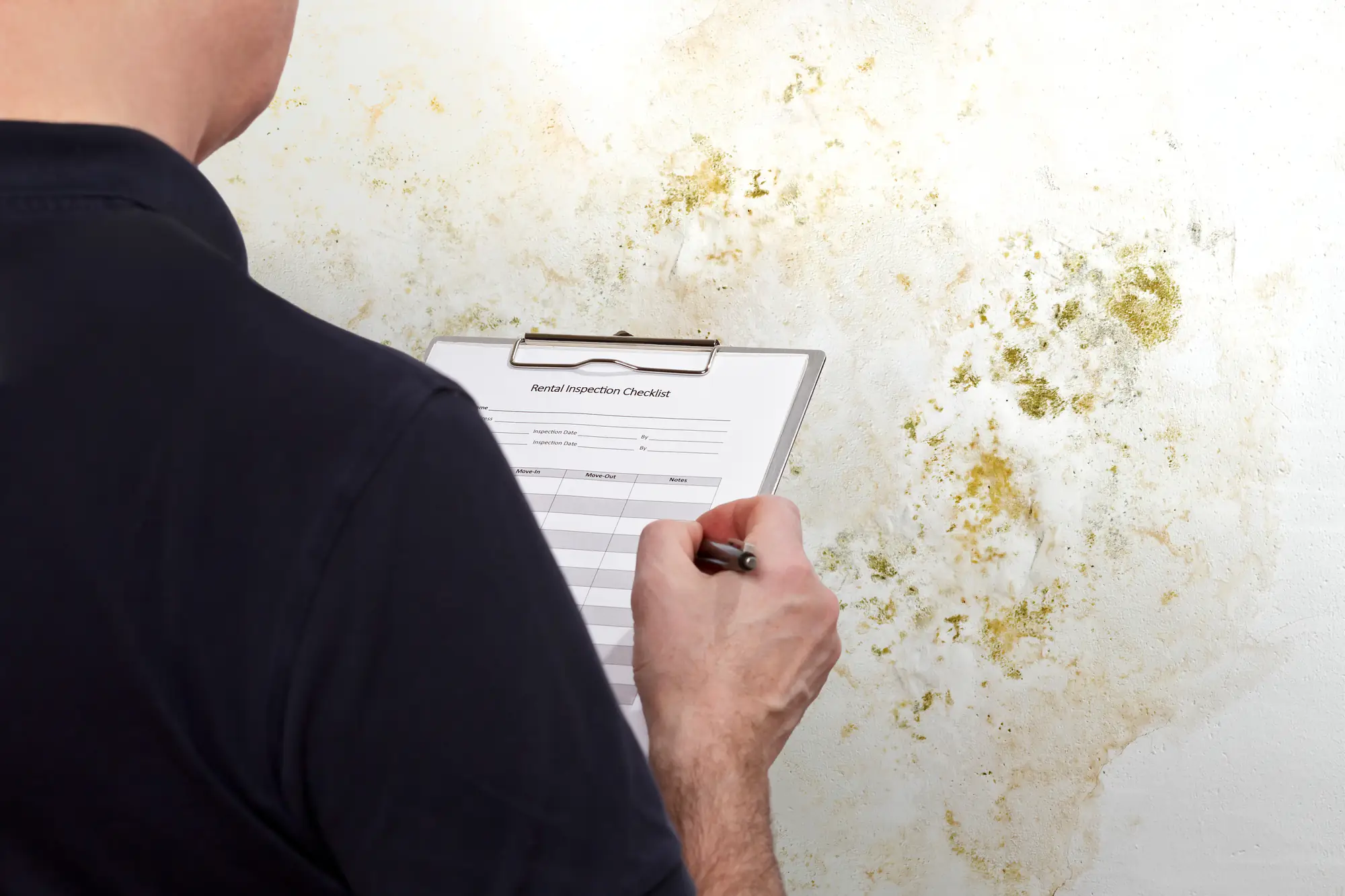
First, we walk through your home and listen. You know your house better than anyone, so if you’ve noticed a smell in the basement or health symptoms that started after a leak, that’s where we focus.
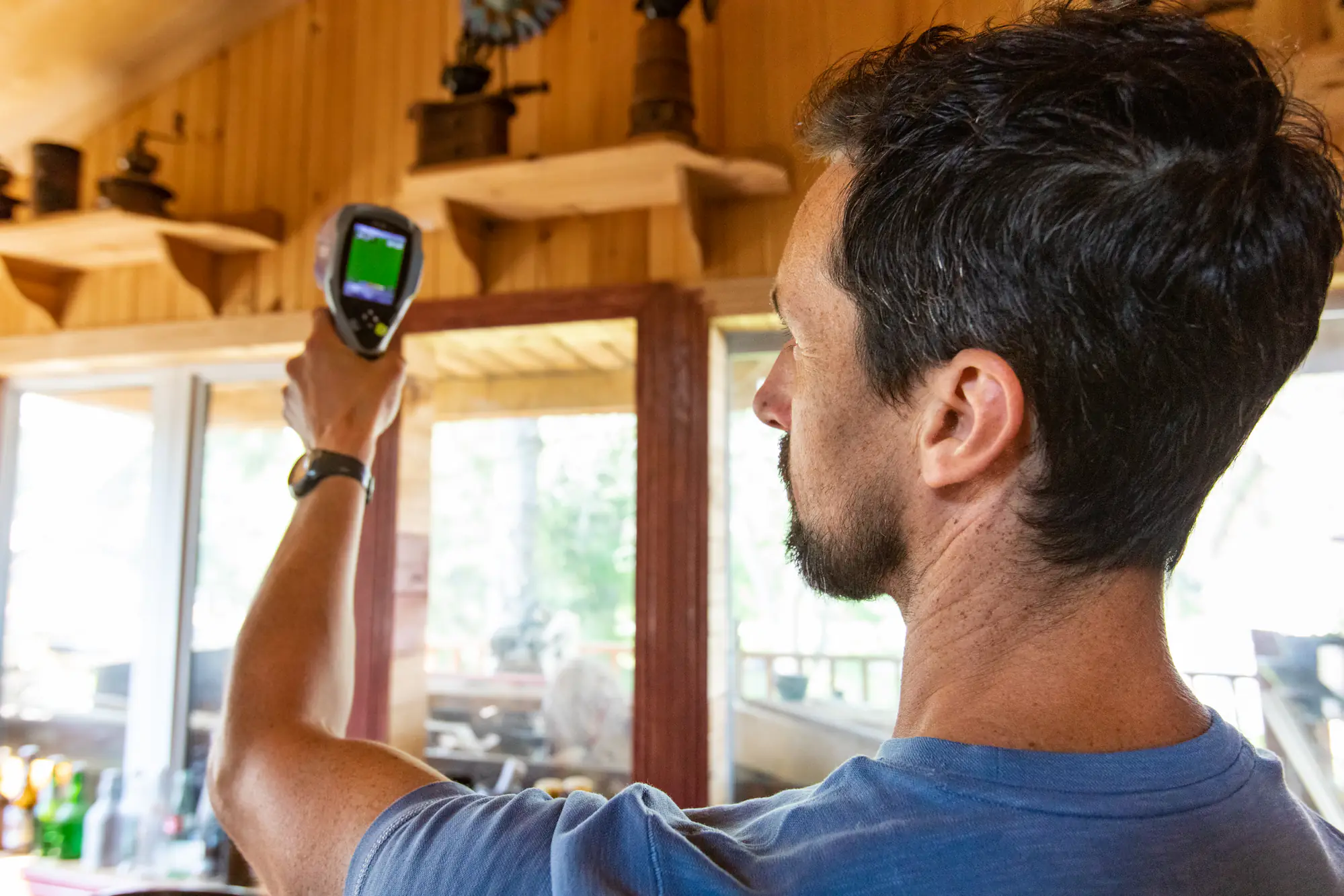
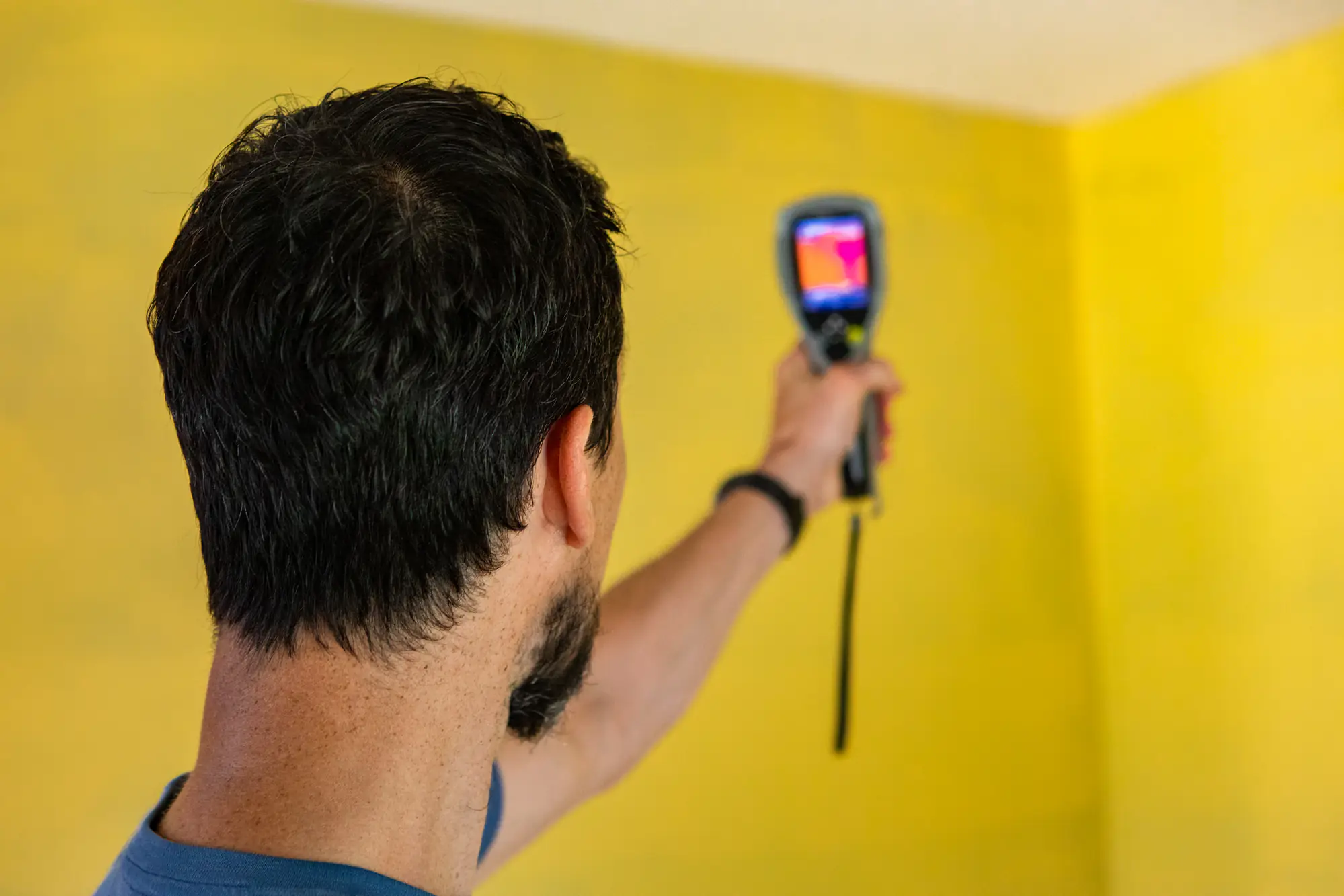
We use moisture meters to check humidity levels in walls, ceilings, and floors. High moisture doesn’t always mean visible mold—it means conditions are right for growth. Our infrared cameras detect temperature differences that indicate trapped water, even if everything looks dry on the surface.
Next, we take air samples and surface samples from suspected areas. These go to a third-party lab for analysis. You’re not relying on our opinion—you’re getting certified results that identify the exact species of mold and the concentration levels in your home.
Within a few days, you’ll receive a detailed report. We’ll walk you through what the lab found, explain what it means for your health and your property, and give you a realistic remediation plan if one is needed. If the results show you’re fine, we’ll tell you that too.
Ready to get started?
You’re getting a complete property assessment—not just a quick look around. We inspect your HVAC system, check your plumbing for leaks, examine your roof and gutters, and assess your basement or crawl space. Mold doesn’t grow in a vacuum. It grows where water goes, and we find the source.
In Mount Airy, flooding is a real concern. Over 20% of properties here face severe flood risk in the next 30 years, which means water intrusion isn’t a matter of if—it’s when. We look at your drainage, your grading, and any signs of past water damage that could be feeding mold growth right now.
You’ll also get guidance on prevention. Once we know where the moisture is coming from, we can tell you what needs to be fixed to keep mold from coming back. That might mean better ventilation, a dehumidifier, gutter repairs, or waterproofing. We’re not here to sell you services you don’t need, but we will tell you what actually works.
Every inspection includes lab-certified results, a written report, and a follow-up conversation. You’re never left guessing what to do next.
Most residential mold inspections in Mount Airy range from $300 to $600, depending on the size of your home and how many samples need to be tested. If you’ve got a small area of concern—like one bathroom or a basement corner—it’ll be on the lower end. Larger homes or properties with multiple problem areas cost more because we’re taking more samples and spending more time on the inspection.
Lab analysis is included in that price. Some companies charge separately for testing, which can add another $40 to $100 per sample. We don’t do that. You get the inspection, the lab work, and the report for one price.
If you’re buying or selling a home, some inspections are more detailed and can run higher. But for most homeowners who just need to know if they have a mold problem, you’re looking at a few hundred dollars for real answers. That’s a lot cheaper than ignoring it and dealing with health problems or structural damage later.
Plan on about two to three hours for a thorough inspection of an average-sized home. We’re not rushing through it. We’re checking your attic, your basement, behind appliances, inside ductwork, around windows—anywhere moisture could be hiding.
If your home is larger or if you’ve had significant water damage, it might take longer. We’d rather spend the extra time and catch everything than miss a problem area because we were watching the clock.
After the inspection, samples go to the lab. You’ll usually have results within three to five business days. We’ll call you as soon as we get them and walk you through what the report says. If it’s urgent—like you’re in the middle of a real estate transaction—we can request expedited lab results, though that sometimes costs a bit more.
The whole process from inspection to final report typically wraps up within a week. You’re not waiting around for answers.
A mold inspection is the visual assessment—we’re walking through your home, using moisture meters and infrared cameras, checking for visible mold and conditions that support mold growth. It’s the detective work.
Mold testing is when we actually collect samples—either from the air or from surfaces—and send them to a lab for analysis. The lab identifies what species of mold is present and measures the concentration levels. That’s the proof.
You usually need both. The inspection tells us where to look and what’s creating the problem. The testing tells us exactly what’s growing and whether it’s a health risk. Some mold is relatively harmless. Some—like black mold—can cause serious respiratory issues, especially in kids or anyone with asthma.
If you’re just curious whether you have mold, an inspection might be enough. But if you’re dealing with health symptoms, preparing for remediation, or need documentation for insurance or a home sale, you want the testing too. It’s the difference between “yeah, something’s probably growing here” and “here’s the lab report showing exactly what it is.”
You can buy a DIY mold test kit for $10 to $50 at most hardware stores. You set out a petri dish or swab a surface, mail it to a lab, and wait for results. It’ll tell you if mold is present.
Here’s the problem: mold is present in almost every home. The question isn’t whether you have mold—it’s whether you have a mold problem. DIY kits can’t tell you that. They don’t measure concentration levels, they don’t identify hidden growth, and they don’t find the moisture source that’s feeding it.
Professional mold testing uses calibrated equipment to measure airborne spore counts and compare them to outdoor levels. If your indoor levels are significantly higher, that’s a red flag. We also use thermal imaging to detect moisture you can’t see, which is where mold grows before it becomes visible.
If you’re dealing with health symptoms, a musty odor, or any history of water damage, a DIY kit isn’t going to give you the full picture. You’ll end up spending money on a test that raises more questions than it answers. A professional inspection costs more upfront, but you actually get actionable information and a plan to fix the problem.
The obvious one is visible mold—black, green, or white patches on walls, ceilings, or around windows. But most people call us because something feels off, even when they can’t see anything.
A persistent musty smell is a big indicator. If your basement, bathroom, or closets smell like mildew and it won’t go away no matter how much you clean, there’s mold growing somewhere. Smells mean spores, and spores mean you’re breathing it in.
Health symptoms are another clue. If you or your kids have allergies that won’t quit, chronic sinus infections, coughing, or asthma that’s gotten worse, mold exposure could be the cause. In Mount Airy, where a lot of homes are older and flood risk is high, this is more common than people think.
Water damage is the biggest risk factor. If you’ve had a roof leak, a burst pipe, flooding, or even just high humidity in your basement, mold can start growing within 24 to 48 hours. Even if you dried everything out, mold could still be growing inside your walls or under your flooring.
If any of that sounds familiar, testing is worth it. You’re not overreacting—you’re protecting your home and your health.
Yes. That’s the whole point. The lab results will show what type of mold is present, how much of it there is, and whether the levels are high enough to be a health concern or cause structural damage.
If the results come back showing elevated mold levels—especially toxic varieties like Stachybotrys (black mold)—you’ll need remediation. We’ll give you a clear scope of work: what needs to be removed, what needs to be cleaned, and what’s causing the moisture problem in the first place.
If the results show low levels of common mold that’s not a health risk, we’ll tell you that too. You might just need better ventilation or a dehumidifier. Not every mold situation requires a full remediation.
The report also helps if you’re filing an insurance claim. Most policies cover mold if it’s the result of a sudden event like a pipe burst, but they won’t cover it if it’s from long-term neglect. Having a professional report with lab results gives you documentation to back up your claim and shows exactly when and how the mold developed.
Other Services we provide in Mount Airy