

Hear from Our Customers
You’ve noticed the musty smell. Maybe someone in your house has been dealing with headaches, a stuffy nose, or breathing issues that won’t quit. Or you had a leak months ago and you’re wondering if it’s still causing problems behind the drywall.
Home test kits don’t tell you much. They can’t measure air volume. They don’t compare indoor levels to outdoor baselines. And they definitely can’t identify specific mold species or give you spore counts that actually mean something.
Professional mold testing uses calibrated air pumps and Air-O-Cell cassettes—the same equipment used by 90% of industrial hygienists. Your samples go to a certified lab where microbiologists identify exactly what’s growing, how much of it there is, and whether it’s something you need to address now. That’s the difference between wondering and knowing.
When you’re looking at a $470,000 home in Bella Vista, or you’re already living in one, you don’t want to guess about mold. You want data. You want to know if that bathroom renovation from last year left moisture trapped somewhere it shouldn’t be. You want to know if your HVAC system is circulating spores every time it kicks on.
Testing gives you a baseline. It tells you what’s normal for your neighborhood and what’s not. And if there is a problem, it tells you exactly where to focus so you’re not ripping out walls that don’t need it.
We serve homeowners and property buyers throughout Bella Vista and the surrounding Philadelphia area. We’re not a national franchise. We’re local, and we understand what matters to people living in historic rowhomes with brick exteriors and older plumbing.
Bella Vista has some of the most beautiful residential architecture in Philadelphia. It also has some of the oldest. That means basements that weren’t built with modern waterproofing, HVAC systems retrofitted into homes that were never designed for them, and plenty of opportunities for moisture to hide.
We’ve worked with buyers doing their due diligence before closing, homeowners dealing with mystery symptoms, and sellers who want to address concerns before listing. Our job is to give you accurate information so you can make the right call for your situation.
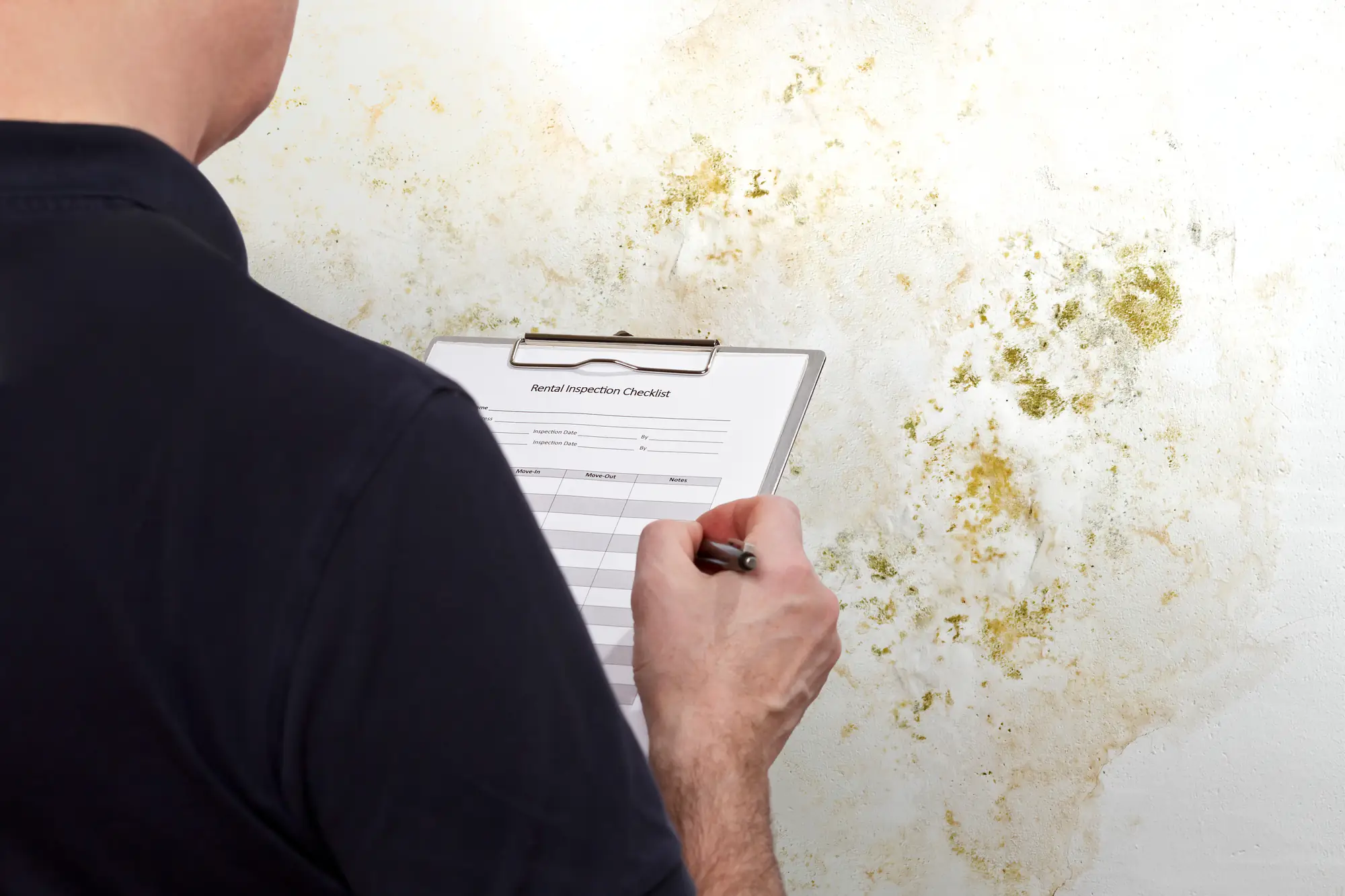
First, we’ll talk. You’ll tell us what you’ve noticed—smells, symptoms, water damage, whatever’s going on. We’ll ask a few questions to understand your situation and schedule a time that works for you.
When we arrive, we’ll do a visual inspection of your property. We’re looking for visible mold, moisture sources, ventilation issues, and areas where conditions are right for growth. We’ll check under sinks, around windows, in basements, near HVAC systems, and anywhere else that raises a flag.
Then we collect air samples using calibrated pumps. These pull a measured volume of air through a cassette that captures mold spores. We’ll take samples from areas of concern and from outdoor air as a control. That comparison is critical—it’s how we know if your indoor levels are actually elevated or just normal for the area.
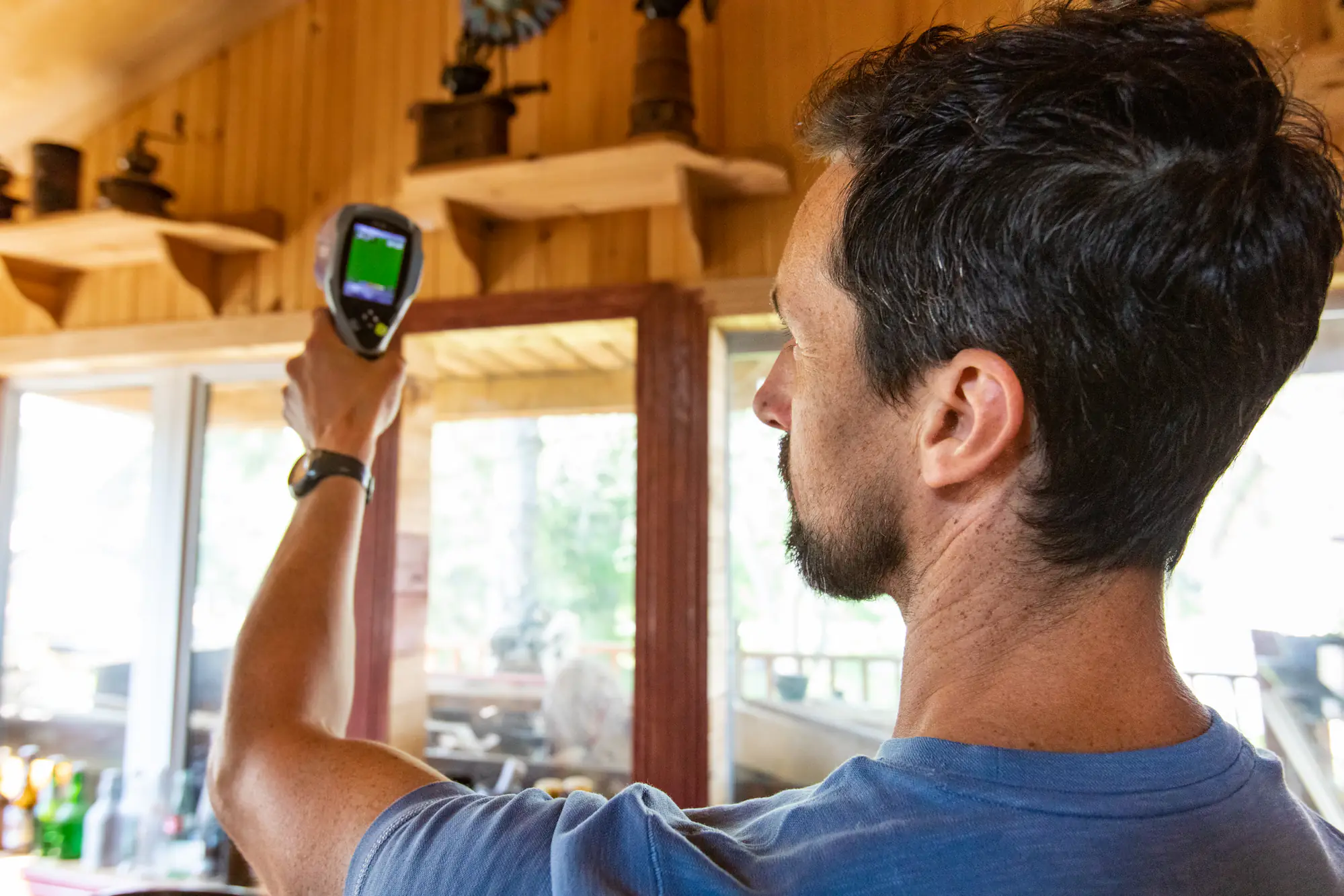
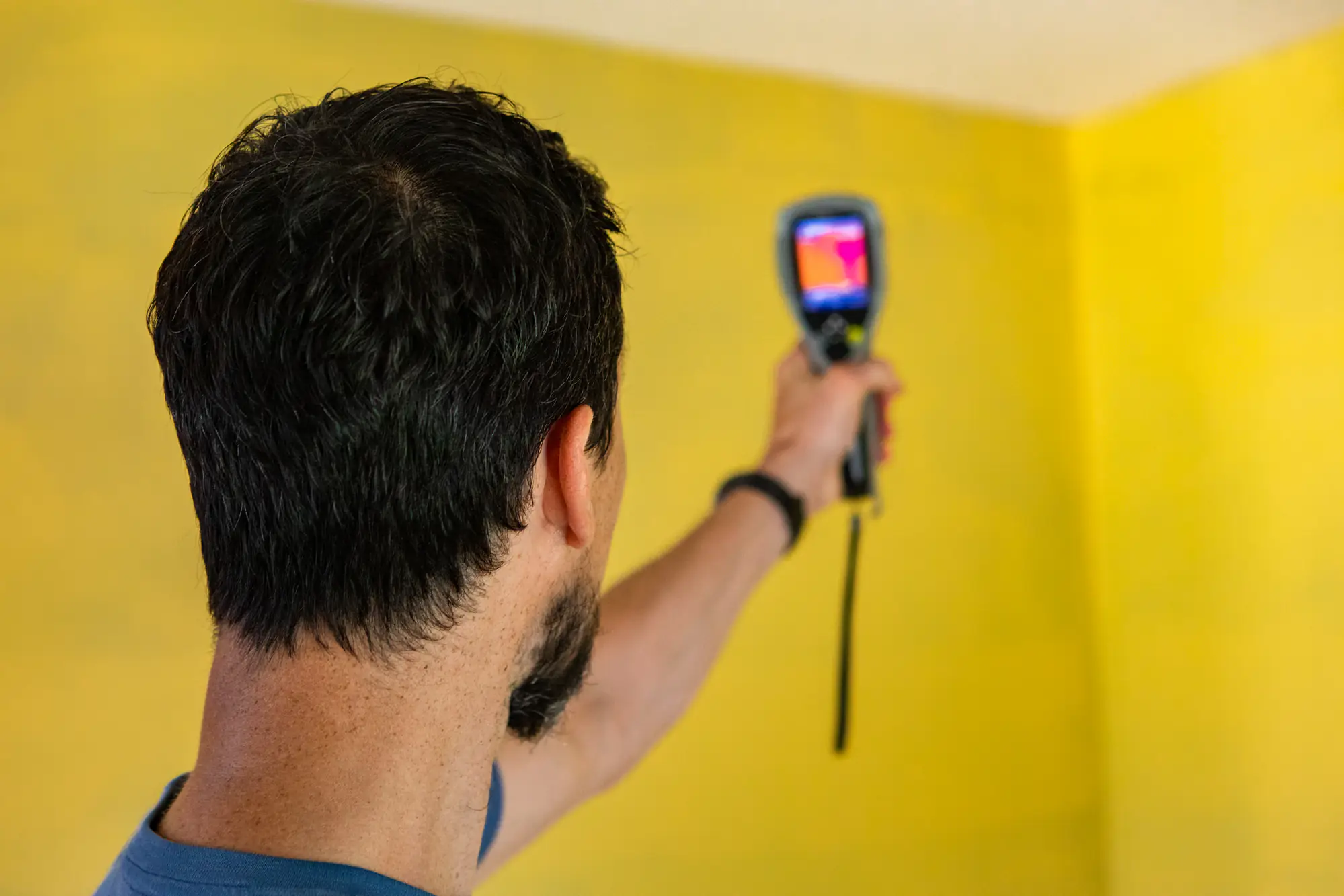
If we see visible growth or suspect hidden mold, we may also take surface samples or recommend moisture testing with thermal imaging. The goal is to get a complete picture, not just check a box.
Your samples go to a certified lab. A microbiologist analyzes them, identifies the species present, and provides spore counts. You’ll get a full report, usually within a few days. We’ll walk you through what it means and what your options are if action is needed.
No pressure. No upselling. Just clear information so you can decide what makes sense for your home and your budget.
Ready to get started?
You get a trained professional who knows how to spot the signs of mold growth and moisture intrusion. You get lab-grade equipment, not a kit from the hardware store. And you get results analyzed by certified microbiologists who do this for a living.
The testing process includes a full visual inspection, air sampling from multiple locations, and outdoor control samples for comparison. If needed, we’ll add surface sampling, moisture readings, or thermal imaging to locate hidden water sources. Everything is documented.
Philadelphia ranks among the moldiest cities in the U.S., and Bella Vista’s dense housing stock and older infrastructure don’t help. Homes here deal with shared walls, limited airflow, and basements that can stay damp year-round. Knowing what’s in your air isn’t paranoia—it’s smart property management.
You’ll receive a detailed lab report that breaks down exactly what was found, where it was found, and how the levels compare to outdoor air. If the results show elevated mold levels, we’ll explain what that means for your health and your property. If remediation is needed, we’ll give you a clear plan. If it’s not, we’ll tell you that too.
Our testing also helps with insurance claims, real estate transactions, and post-remediation verification. If you’ve already had mold removed and want to confirm it’s gone, testing gives you that peace of mind. If you’re buying a home and the inspection raised questions, testing gives you leverage or clarity before you close.
Most homeowners in Bella Vista pay between $300 and $650 for comprehensive mold testing, with the average around $450. That typically includes a visual inspection and two to three air samples sent to a certified lab for analysis.
If you need additional testing—like surface samples, more air samples from different rooms, or moisture mapping with thermal imaging—the cost can go up. Surface samples usually run $50 to $200 each. Extra air samples are around $200 to $500 depending on how many locations you want tested.
The lab analysis itself costs about $50 to $150 per sample, and that’s where you get the real value. A certified microbiologist identifies the specific mold species, counts the spores, and compares your indoor levels to the outdoor control sample. That’s information you can actually use to make decisions, unlike a home test kit that just tells you “mold detected” without any context.
You can, but it won’t give you useful information. Home test kits don’t measure air volume, so there’s no way to know if you’re looking at normal background levels or an actual problem. They also don’t include an outdoor control sample, which means you have no baseline for comparison.
Most home kits work by exposing a petri dish to air for a set amount of time. Mold spores land on the dish and grow. The problem is that mold spores are everywhere—indoors and outdoors—so a positive result doesn’t tell you anything meaningful. It just tells you that mold exists, which you already knew.
Professional testing uses calibrated pumps that pull a specific volume of air through a collection cassette. That cassette goes to a lab where a microbiologist identifies the species and counts the spores per cubic meter of air. Then they compare your indoor levels to outdoor levels. If your indoor counts are significantly higher, or if you’ve got species that shouldn’t be growing indoors, that’s when you know you have a problem. Home kits can’t do any of that.
Persistent musty odors are the most common sign. If you smell something earthy or damp and you can’t find the source, there’s a good chance mold is growing somewhere you can’t see—behind drywall, under flooring, or inside your HVAC system.
Health symptoms are another red flag. If people in your home are dealing with stuffy noses, sore throats, coughing, wheezing, burning eyes, or skin rashes that don’t go away, mold exposure could be the cause. People with asthma or mold allergies tend to have more severe reactions, but even healthy people can develop symptoms with prolonged exposure.
You should also test after any water damage—leaks, floods, burst pipes, roof damage, anything that introduced moisture into your home. Mold can start growing within 24 to 48 hours, and it often takes hold in places you can’t see. Even if you dried everything out and it looks fine, testing confirms whether spores are circulating in your air.
Finally, if you’re buying or selling a home in Bella Vista, testing is smart due diligence. Homes here are expensive, and many are old. A clean test protects buyers. A proactive test protects sellers from surprises during inspection.
Once we collect your samples and send them to the lab, you’ll typically have results within 24 to 48 hours. The lab needs time to analyze the samples under a microscope, identify the mold species, and count the spores. Some labs can turn it around faster if you need rush results, but two days is standard.
After we receive the lab report, we’ll contact you to go over the findings. We’ll explain what was detected, what the spore counts mean, and how your indoor levels compare to the outdoor control sample. If remediation is needed, we’ll walk you through what that looks like and answer any questions you have.
The whole process—from the day we come out to test until the day you get your results—usually takes less than a week. If you’re on a tight timeline because of a real estate transaction or an insurance claim, let us know up front and we’ll do everything we can to expedite it.
Aspergillus and Penicillium are the most common indoor molds we find in Bella Vista. Both thrive in damp environments and can grow on a variety of surfaces including drywall, insulation, carpet, and wood. They’re not always dangerous, but elevated levels can cause respiratory issues, especially for people with allergies or asthma.
Cladosporium is another frequent find. It tends to grow in cooler areas and on porous materials like fabric and wood. It’s usually less concerning than other species, but it can still trigger allergic reactions if concentrations get high enough.
Stachybotrys—commonly called black mold—is less common but more serious. It requires consistent moisture to grow, so you’ll usually find it after long-term water damage or in areas with ongoing leaks. It produces mycotoxins that can cause severe respiratory problems and other health issues. If testing reveals Stachybotrys, you need to address it immediately.
The only way to know what’s actually growing in your home is to test. Visual identification isn’t reliable because many mold species look similar to the naked eye. Lab analysis gives you species-level identification so you know exactly what you’re dealing with and how urgently it needs to be handled.
If you can see mold, you know you have a problem—but testing still helps. It tells you what species you’re dealing with, whether there’s hidden growth in other areas, and how widespread the contamination is. That information shapes your remediation strategy and helps you avoid tearing out more than necessary.
Testing also establishes a baseline before remediation and verifies that the work was done correctly afterward. Post-remediation testing confirms that spore levels have returned to normal and that the mold hasn’t come back. Most reputable mold removal companies recommend it, and some insurance policies require it.
Visible mold is usually just the tip of the iceberg. If you’re seeing growth on a wall, there’s a good chance it’s also growing inside that wall or in connected areas. Air testing picks up spores that are circulating but not visible yet. Surface testing can identify contamination on materials that don’t show obvious signs of growth.
Even if you’re planning to remove the mold yourself, testing gives you a clearer picture of what you’re up against. It’s especially important in Bella Vista’s older homes where mold can spread through shared walls, old ductwork, and interconnected spaces that aren’t easy to inspect.
Other Services we provide in Bella Vista