
Hear from Our Customers
You’re not dealing with surface mold anymore. The air in your home doesn’t smell musty when you walk in the door. Your kids aren’t coughing at night, and you’re not wondering what’s growing behind the walls.
That’s what happens when the moisture problem actually gets fixed. Most mold situations in East Whiteland come from the same handful of issues: basement humidity that never dries out, leaky pipes nobody knew about, or ventilation that can’t keep up with our 46 inches of annual rainfall. When humidity stays above 60% for most of the year like it does here, mold doesn’t need much of an invitation.
Professional mold mitigation means finding where the water is coming from, drying out what’s wet, removing what’s contaminated, and treating what stays. It’s not about scrubbing visible spots and hoping for the best. It’s about making sure the conditions that allowed mold to grow in the first place don’t exist anymore.
You get your property back to a safe, livable condition. The problem stops recurring every few months. And if you’re dealing with insurance, you get documentation that actually supports your claim instead of complicating it.
We’ve been handling mold problems across Bucks County, Montgomery County, Chester County, and the surrounding Philadelphia area for years. We know what causes mold in older Pennsylvania homes, and we know how East Whiteland’s climate makes it worse.
We use EPA-approved methods, moisture detection equipment, and infrared cameras to find problems you can’t see. We’re available 24/7 because mold doesn’t wait for business hours, and neither do the leaks that cause it.
We work directly with insurance companies when needed, and we offer free inspections so you know what you’re dealing with before you commit to anything. You’re hiring people who’ve seen hundreds of mold situations and know how to fix them correctly.
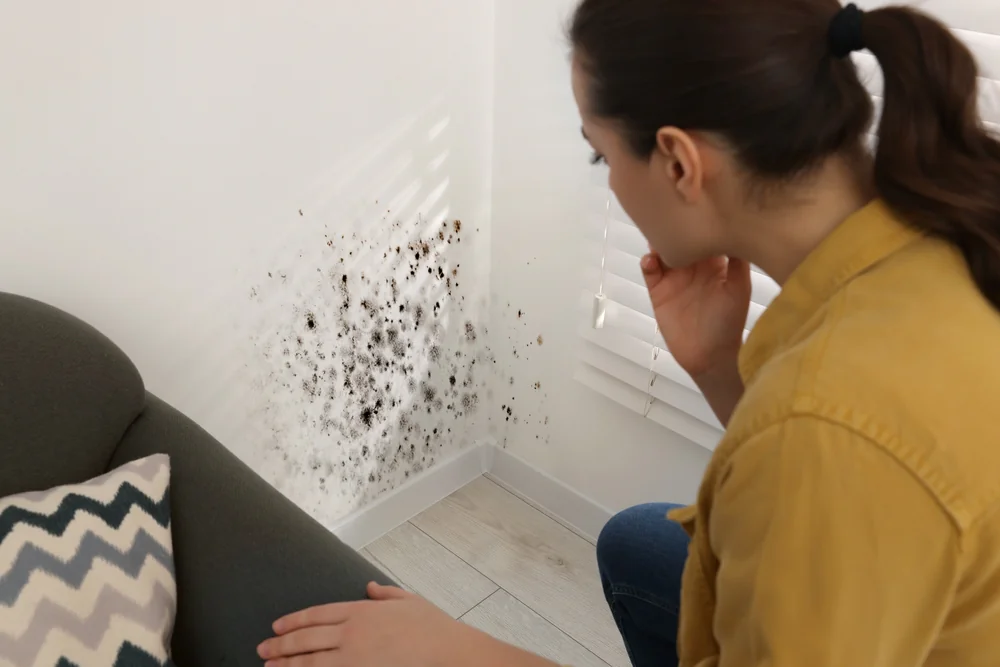
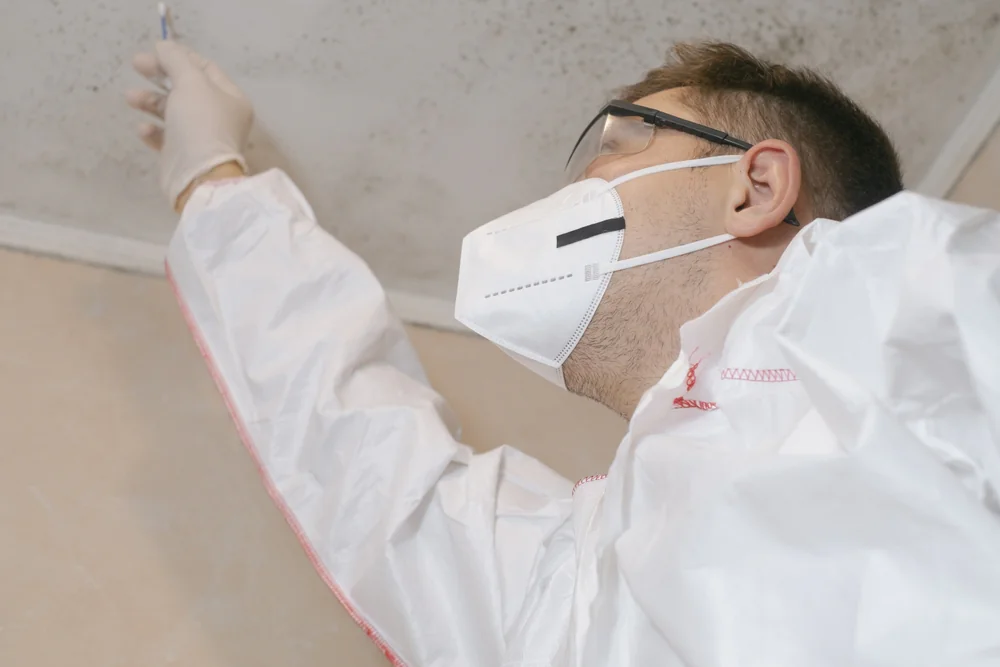
First, we inspect your property to find where the mold is and why it’s there. We use moisture meters and infrared cameras to check behind walls, under floors, and in spaces you wouldn’t think to look. This isn’t a visual-only inspection.
Once we know what we’re dealing with, we contain the affected area to prevent mold spores from spreading during removal. Then we remove contaminated materials that can’t be saved and treat surfaces that can. We use HEPA filtration and antimicrobial treatments that meet EPA standards.
But here’s the part that matters most: we fix the moisture problem. If there’s a leak, it gets addressed. If humidity is too high, we help you understand what needs to change. If ventilation is the issue, we identify it. Removing mold without fixing why it grew means you’ll be calling someone again in a few months.
After everything is dry and treated, we verify the work with testing if needed. You get documentation of what was done, which matters if you’re filing an insurance claim or selling your property later.
Ready to get started?
You get a full property assessment that identifies all affected areas, not just the obvious ones. In East Whiteland, that often means checking basements, crawl spaces, and areas near exterior walls where condensation builds up during our humid summers.
We handle containment and air filtration during the removal process so spores don’t spread to clean areas of your home. All contaminated materials get disposed of properly according to Pennsylvania regulations. Surfaces that can be saved get treated with antimicrobial solutions.
The moisture source gets identified and documented. Whether it’s a plumbing leak, foundation issue, or ventilation problem, you’ll know exactly what caused the mold and what needs to happen to prevent it. We also provide recommendations for humidity control, which is critical in this area where indoor humidity stays high most of the year.
If you’re working with insurance, we provide the documentation and photos they need. If you need repairs after remediation, we can handle that too. You’re not coordinating between multiple companies to get your home back to normal.
Most residential mold mitigation projects take between two to five days, depending on how much area is affected and how severe the moisture problem is. A small bathroom mold issue might be done in a day or two. A basement with significant water damage and mold growth across multiple walls could take a week.
The timeline depends on how long it takes to dry everything out. You can’t just remove mold and call it done if the materials are still wet. Everything has to be completely dry, or you’re just creating the same problem again. In East Whiteland’s humid climate, drying sometimes takes longer than in drier areas, especially during summer months.
We’ll give you a realistic timeline after the inspection. If you’re dealing with an emergency situation, like a burst pipe that caused sudden mold growth, we can start containment and drying immediately and work through the mitigation process as quickly as conditions allow.
Mold removal means getting rid of visible mold. Mold mitigation means reducing the mold to normal, safe levels and fixing the conditions that allowed it to grow. You can’t remove every single mold spore from a property – they’re everywhere in the environment. But you can mitigate the problem so it’s no longer a health risk or a structural issue.
Mitigation focuses on the source. If you have black mold growing on a basement wall because of a foundation leak, removal means scrubbing that wall. Mitigation means addressing the foundation leak, drying out the wall, removing contaminated materials, treating what remains, and making sure the conditions that caused the growth don’t exist anymore.
Insurance companies and EPA guidelines use the term “mitigation” because it’s more accurate. You’re not promising a 100% mold-free environment, which isn’t realistic. You’re promising to bring mold levels back to normal and eliminate the moisture problem that caused the outbreak.
It depends on what caused the mold. If the mold resulted from a sudden, accidental event – like a burst pipe, storm damage, or a failed appliance – most homeowner’s policies will cover mitigation. If the mold grew because of long-term neglect, poor maintenance, or an issue you knew about but didn’t fix, coverage is unlikely.
Insurance companies want to see that you acted quickly once you discovered the problem. Mold that develops within 24 to 48 hours of water damage is usually covered if the water damage itself is a covered event. Mold that’s been growing for months because of a slow leak you ignored typically isn’t.
We work with insurance companies regularly and can help with documentation, photos, and communication. We’ll provide the information your adjuster needs to process the claim. But you should contact your insurance company as soon as you discover mold to understand your specific coverage and start the claims process if applicable.
It depends on where the mold is and how extensive the contamination is. If we’re mitigating a small area like a bathroom or a section of basement, and we can seal it off completely from your living space, you can usually stay in the home. If the mold is widespread or in your HVAC system, you might need to stay elsewhere temporarily.
We use containment barriers and negative air pressure to keep mold spores from spreading during the removal process. But if you have young children, elderly family members, or anyone with respiratory issues or mold allergies, it’s often better to stay somewhere else even if it’s technically safe to remain in the home.
We’ll be honest with you after the inspection about whether staying makes sense. Some situations are fine. Others aren’t worth the risk, especially when you’re dealing with black mold or significant contamination. Your health matters more than convenience, and we’re not going to tell you it’s safe to stay if it isn’t.
If the mold covers more than 10 square feet, you need professional mitigation. That’s the EPA’s guideline, and it exists because larger mold problems usually indicate a bigger moisture issue that cleaning won’t fix. If you’re seeing mold in multiple areas, if it keeps coming back after you clean it, or if you can smell it but can’t find it, you need mitigation.
You also need professional help if the mold is black mold, if it’s in your HVAC system, or if it resulted from contaminated water like sewage backup. These situations require specialized equipment and safety protocols that go beyond what you can do with store-bought cleaners.
Cleaning works for small surface mold on non-porous materials – like a little mold on bathroom tile that appeared recently. But if you’re dealing with mold on drywall, insulation, carpet, or wood, those materials are porous. The mold has roots you can’t see, and cleaning the surface doesn’t eliminate the problem. You need proper mitigation to remove contaminated materials and treat what remains.
East Whiteland gets 46 inches of rain per year, and indoor humidity stays above 60% for over 90% of the year. That’s the main reason. Mold needs moisture, and this area provides it consistently. When you combine that with older homes that weren’t built with modern moisture barriers and ventilation systems, you get frequent mold problems.
Basements are especially vulnerable because they’re naturally cooler than the rest of the house. When warm, humid summer air hits those cool basement surfaces, you get condensation. That moisture seeps into drywall, wood, and insulation, and mold starts growing within 24 to 48 hours.
Poor ventilation makes it worse. Bathrooms without exhaust fans, kitchens where moisture builds up, and crawl spaces that don’t breathe all create environments where humidity can’t escape. Add in the occasional plumbing leak or roof issue, and you’ve got ideal conditions for mold growth. Keeping indoor humidity below 60% year-round is difficult here without dehumidifiers or proper HVAC systems, which is why mold mitigation is such a common need in this area.
Other Services we provide in East Whiteland