
Hear from Our Customers
You’re not just getting rid of visible mold. You’re getting air quality that’s actually safe to breathe. No more musty smell when you walk into your basement. No more wondering if that patch behind the drywall is spreading.
When mold mitigation is done right, the source gets fixed. That means identifying the leak, the ventilation problem, or the humidity issue that caused it in the first place. Without that step, you’re just cleaning the surface while the problem keeps growing underneath.
You’ll also get documentation if you need it for insurance or resale. Post-mitigation testing if you want proof the air is clean. And a plan to keep moisture under control so you’re not back in the same situation next year. That’s what real mold mitigation looks like—not a quick fix, but a solution that holds up.
We work throughout Chester County, Montgomery County, Bucks County, and Philadelphia. We know what basements in Downingtown look like—concrete foundations that wick moisture, older homes with poor ventilation, and humidity levels that sit around 60-70% during summer months.
We’re not new to this. We’ve worked with enough local homeowners and insurance adjusters to know what causes mold problems here and how to fix them the right way. That means using moisture meters and infrared cameras to find hidden contamination, setting up containment so spores don’t spread during removal, and addressing the moisture source so you’re not calling someone back in six months.
You’ll work with technicians who carry IICRC certifications and follow EPA-approved methods. We document everything, respond when you call, and don’t leave until the job’s actually finished.
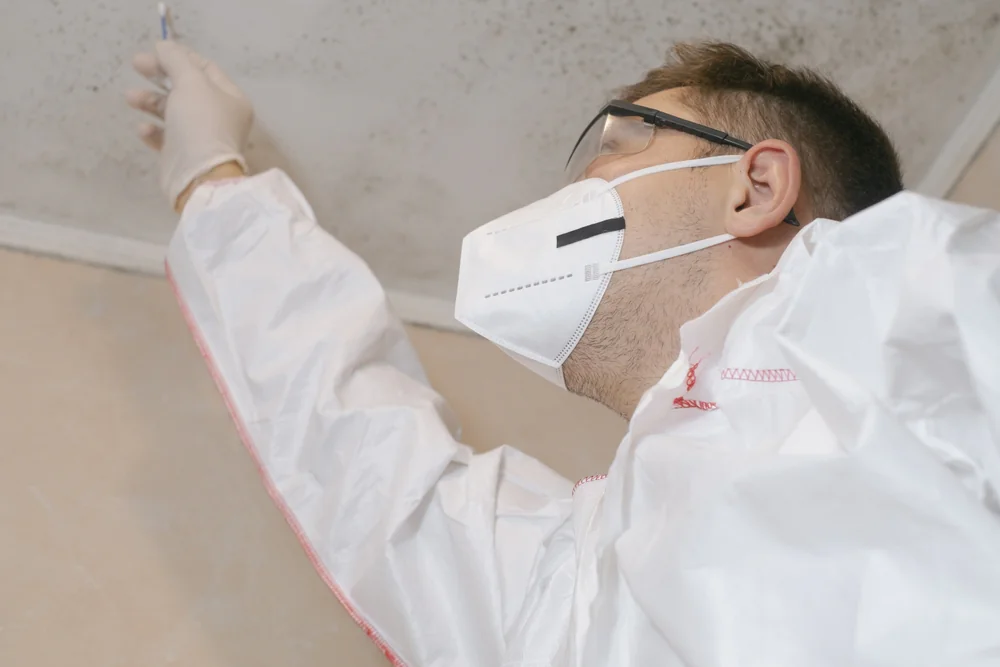
First, we inspect your property to find where the mold is and what’s causing it. That includes using moisture meters and infrared cameras to check behind walls, under floors, and in areas you can’t see. You can’t fix mold if you don’t know where the moisture is coming from.
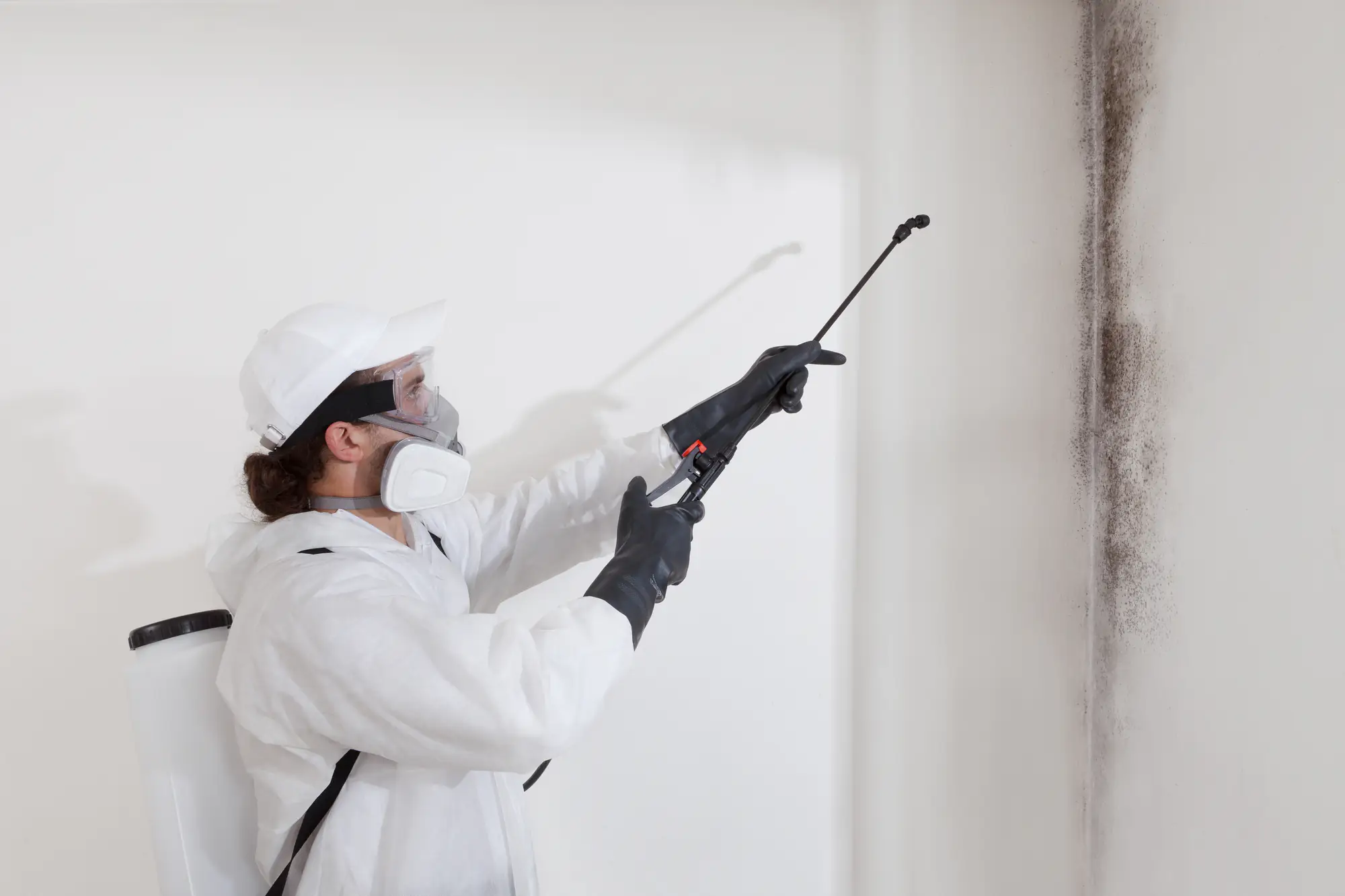
Next, we set up containment. That means sealing off the affected area with physical barriers and negative air pressure systems so spores don’t spread to clean parts of your home while we work. Then we bring in HEPA vacuums and air scrubbers to capture microscopic particles from the air.
We remove contaminated materials—drywall, insulation, flooring, whatever’s affected. Then we clean and treat surfaces with antimicrobial solutions. But here’s the part that matters most: we fix the moisture source. Whether that’s repairing a leak, improving ventilation, or installing a dehumidifier, we address what caused the mold so it doesn’t return. You’ll get a full report with photos, lab results if needed, and documentation for insurance or resale purposes.
Ready to get started?
You’re getting a free inspection to assess the extent of contamination and identify the moisture source. That inspection includes moisture mapping, infrared imaging, and air quality testing if needed. You’ll know exactly what you’re dealing with before any work starts.
The mitigation process includes full containment setup, HEPA air filtration, removal of contaminated materials, antimicrobial treatment, and moisture source elimination. We also handle the disposal of affected materials and provide documentation for insurance claims if necessary.
Downingtown homes face specific challenges. Chester County gets substantial rainfall, and many properties here were built before modern ventilation standards existed. Basements are the most common problem area—below-grade location, concrete foundations, and Pennsylvania’s humid summers create perfect conditions for mold growth. We’ve seen it in crawl spaces, behind shower tiles, in attics with poor ventilation, and around HVAC systems that aren’t draining properly.
You’ll also get post-mitigation verification if you want it. Some companies skip that step. We don’t, because you deserve to know the air quality is safe before we consider the job done. And if there’s a prevention strategy that makes sense—better ventilation, a dehumidifier, gutter repairs—we’ll tell you about it.
It depends on the size of the affected area, the extent of contamination, and what’s causing the moisture problem. A small bathroom mold issue might run a few thousand dollars. A full basement with widespread contamination and structural repairs could be significantly more.
What drives the cost is the scope of work. If we’re just treating surface mold in one room, that’s straightforward. If we’re removing drywall, insulation, and flooring across multiple areas, then fixing a foundation leak or installing a drainage system, the price goes up. Most mold mitigation projects in Chester County fall somewhere in the middle.
We offer free inspections so you know what you’re dealing with before committing to anything. You’ll get an upfront estimate that breaks down what needs to happen and why. No surprises, no hidden fees. And if insurance is involved, we can work with your adjuster to document everything they’ll need for your claim.
It depends on what caused the mold. If it resulted from a sudden, covered event—like a burst pipe, roof leak during a storm, or appliance malfunction—there’s a good chance your policy will cover at least part of the mitigation. If it’s from long-term neglect, poor maintenance, or chronic moisture problems you didn’t address, coverage usually gets denied.
Insurance companies want to see documentation that proves the mold came from a covered peril. That’s why we document everything—photos, moisture readings, lab results, and a detailed report of what caused the contamination. We’ve worked with enough adjusters in Bucks County and Chester County to know what they’re looking for.
We can also work directly with your insurance company if you want us to. Some homeowners prefer to handle the claim themselves. Either way, you’ll get the documentation you need to file. Just don’t wait too long—insurance companies don’t like to see delays between the water damage and the mitigation work.
Most residential mold mitigation projects take anywhere from one to five days, depending on the size of the affected area and the extent of contamination. A single bathroom or small basement section might be done in a day or two. A full basement with structural repairs and moisture control work could take a week.
The timeline also depends on what’s causing the mold. If we need to fix a plumbing leak, repair a foundation crack, or install a drainage system before we can start mitigation, that adds time. Drying out the space after water damage can take a few days on its own.
We’ll give you a realistic timeline during the inspection. And if something changes during the job—like finding additional contamination behind a wall—we’ll let you know right away. You won’t be left guessing when your home will be livable again.
You can try, but it usually doesn’t work. The biggest mistake homeowners make is thinking bleach or surface cleaning will solve the problem. That approach ignores the moisture source—the leak, the ventilation issue, the humidity problem—that caused the mold in the first place. Within weeks or months, it’s back.
Mold spreads through spores. When you start scrubbing or tearing out materials without proper containment, you’re releasing those spores into the air. Without HEPA filtration and negative air pressure, you’re just moving the problem to other parts of your home. You’re also not addressing hidden contamination behind walls, under floors, or in areas you can’t see.
Professional mold mitigation includes moisture source identification, containment, air filtration, proper removal techniques, and verification that the air quality is safe afterward. If you’re dealing with a small surface patch and you’re confident you know what caused it, DIY might work. But if it’s black mold, if it’s widespread, or if you’re not sure where the moisture is coming from, you’re better off calling someone who does this for a living.
Mold removal means getting rid of visible mold. Mold mitigation means eliminating the contamination and fixing what caused it so it doesn’t come back. Removal is surface-level. Mitigation is comprehensive.
You can remove mold with bleach and a scrub brush. But if you don’t address the moisture source, the ventilation problem, or the hidden contamination, you’re just buying yourself a few weeks before it reappears. Mitigation includes identifying where the mold is, what’s feeding it, and how to eliminate both the contamination and the conditions that allowed it to grow.
Real mold mitigation means the air quality in your home improves because the contamination source is eliminated, not just covered up. Your family isn’t exposed to spores that trigger allergies, asthma, or worse. And if you’re selling, you’re not dealing with a failed inspection or a buyer walking away. That’s the difference—removal is temporary, mitigation is permanent.
If you’re seeing visible mold, smelling musty odors, or dealing with recurring moisture problems, you need mitigation. If it’s a tiny surface patch from a one-time spill and you’re confident it hasn’t spread, removal might be enough. But most of the time, if you’re asking the question, you need mitigation.
Mold doesn’t grow without moisture. If you’ve got mold, you’ve got a moisture problem. That could be a plumbing leak, poor ventilation, high humidity, foundation cracks, or a dozen other issues. Mitigation addresses the root cause. Removal just treats the symptom.
We offer free inspections, so you don’t have to guess. We’ll tell you what you’re dealing with, what needs to happen, and what it’ll cost. No pressure, no scare tactics. Just straightforward information so you can make an informed decision about your home and your family’s health.
Other Services we provide in Downingtown