
Mold Inspection in Spring Valley, PA

Find the Mold Before It Finds Your Wallet

Free inspections using thermal imaging and moisture meters that actually find what’s hiding in your walls, crawlspace, or attic.
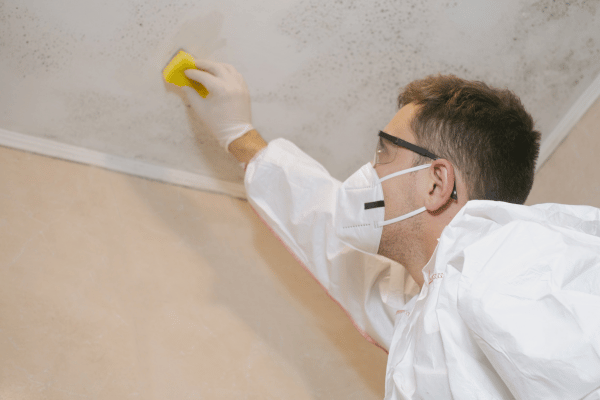
Protective worker in safety suit inspecting or treating mold spots on an indoor ceiling, addressing moisture damage and potential mold growth inside a building.

Hear from Our Customers

Professional Mold Detection in Spring Valley

Know What You're Dealing With—No Guessing

You’re not imagining it. That musty smell when you walk in the basement. The way your allergies flare up inside but calm down when you leave. The dark spots creeping along the bathroom ceiling.

Mold doesn’t announce itself until it’s already a problem. And in Spring Valley, PA, where humid summers and older housing stock create perfect conditions, waiting even a few days can turn a manageable issue into thousands in damage.

A real mold inspection gives you clarity. You’ll know if there’s mold, where it’s growing, what type it is, and what’s feeding it. That means you can make an informed decision about what to do next—not react in a panic when the problem’s already out of control.

Our inspections use moisture meters and thermal imaging to detect problems you can’t see. We check behind walls, under floors, and in crawl spaces. We test your air quality. And we explain everything in plain terms so you actually understand what’s happening in your home.

Mold Inspection Company Serving Spring Valley

Local, Experienced, and Actually on Site

We’ve been serving Spring Valley and Bucks County since 2009. We’re not a franchise with rotating crews. Jeff, the owner, is on-site for every inspection and every job.

That matters because mold problems in this area aren’t one-size-fits-all. Homes built in the ’60s and ’70s have different ventilation issues than newer construction. Basements here flood differently depending on which side of town you’re on. We know what to look for because we’ve been doing this in your neighborhood for over a decade.

We’re not here to upsell you on services you don’t need. We inspect, we report, and we give you options. What you do next is up to you.

Protective worker collecting a mold sample from a stained indoor ceiling using a swab, inspecting moisture damage and potential mold growth inside a building.

How Our Mold Detection Services Work

What Happens During a Mold Inspection

First, we walk through your home and talk. You tell us what you’ve noticed—smells, stains, health symptoms, recent water damage. We listen, because those details matter.

Then we start the visual inspection. We’re looking at obvious spots like bathrooms and basements, but also places most people don’t think to check: behind appliances, inside HVAC systems, around windows, under sinks. We use moisture meters to measure humidity levels in walls, floors, and ceilings. High moisture doesn’t always mean mold yet—but it means mold is coming.

If we find visible growth or suspect hidden contamination, we use thermal imaging to see temperature differences that indicate moisture trapped inside walls or ceilings. Cold spots often mean water. Water means mold.

We also conduct air quality testing when needed. This tells us if mold spores are circulating through your home even if we can’t see the source. It’s especially useful if you’re dealing with health symptoms but no visible mold.

After the inspection, we walk you through what we found. We show you photos, explain the moisture readings, and talk about what’s causing the problem—not just where the mold is, but why it’s there. Then we give you a clear plan for what comes next.

Home interior with mold remediation in progress as a worker sprays treatment on a wall using a ladder, while a resident relaxes on a covered sofa in a renovated living room.

Ready to get started?

Explore More Services

About Mack's Mold Removal

Home Mold Inspection in Bucks County

What's Included in Your Free Inspection

You get a full visual assessment of your property, inside and out. We check basements, crawl spaces, attics, bathrooms, kitchens, and any other areas where moisture tends to accumulate. In Spring Valley, that often means older basements with stone foundations or homes near wooded areas where humidity stays high.

We bring moisture meters and thermal imaging cameras to every inspection. These aren’t extras—they’re standard. Moisture meters tell us if your walls, floors, or ceilings are holding water. Thermal imaging shows us where that moisture is hiding. Both tools help us find problems before they become visible.

If the situation calls for it, we’ll recommend air quality testing. This involves collecting air samples from different areas of your home and sending them to a lab for analysis. It’s the most accurate way to identify mold types and spore counts, especially if you’re experiencing respiratory issues or allergies that seem worse indoors.

We also identify the source. Mold is a symptom, not the root problem. Whether it’s a slow leak, poor ventilation, condensation from temperature swings, or water intrusion from outside, we find what’s feeding the mold so you can actually fix it—not just clean it up and watch it come back.

How long does a mold inspection take in Spring Valley?

Most home mold inspections take between one and two hours, depending on the size of your property and how many areas need close attention. If you’ve got a smaller home with an obvious problem area, we might be done in under an hour. Larger homes with basements, attics, and crawl spaces take longer.

We’re not rushing through it. We’re checking everywhere moisture could be hiding—and in Bucks County’s older housing stock, that means looking behind finished walls, under carpets, around windows, and inside HVAC systems. If we’re using thermal imaging or conducting air quality tests, that adds time but gives you a much clearer picture of what’s actually going on.

You’re welcome to follow along during the inspection. Most homeowners prefer it because they get to see what we’re seeing in real time and ask questions as we go.

A mold inspection is the visual assessment—we walk through your home, check for visible mold, measure moisture levels, and use tools like thermal imaging to find hidden problems. It’s about identifying where mold is growing and what’s causing it.

Mold testing goes a step further. It involves collecting air samples or surface samples and sending them to a lab to identify the specific types of mold and measure spore counts. Testing is useful if you’re dealing with health symptoms but can’t find visible mold, or if you need documentation for insurance or real estate purposes.

Most people start with an inspection. If we find something that warrants testing—or if you just want the peace of mind of knowing exactly what’s in your air—we’ll recommend it. But not every situation needs a lab test. Sometimes the inspection alone gives you everything you need to move forward.

You can check for visible mold on your own—look in bathrooms, basements, around windows, under sinks. If you see it and it’s smaller than about 10 square feet, you might be able to handle cleanup yourself with the right precautions.

But here’s what you can’t do on your own: find hidden mold. Mold grows inside walls, under floors, in crawl spaces, and inside HVAC ducts. It thrives in places you can’t see, especially in homes with older construction or past water damage. Without moisture meters and thermal imaging, you’re guessing.

You also can’t test your air quality or identify mold types without lab equipment. If you’re dealing with health symptoms—coughing, sneezing, headaches, respiratory issues—you need to know what you’re breathing. A professional mold inspection gives you that clarity and helps you avoid turning a small problem into an expensive one because you didn’t catch it early enough.

It depends on what caused the mold. If it’s the result of a sudden, covered event—like a burst pipe or storm damage—your homeowners insurance will usually cover the inspection and remediation. But if the mold grew because of long-term neglect, poor maintenance, or ongoing moisture problems you didn’t address, most policies won’t cover it.

Pennsylvania insurers have gotten stricter about mold claims over the last decade. Some policies now include mold coverage caps or exclude it entirely unless you purchase additional coverage. That’s why it’s important to read your policy and understand what’s covered before you file a claim.

We’ve worked with insurance companies throughout Bucks County for years. If your situation might be covered, we can help document everything properly and communicate with your adjuster. If it’s not covered, we’ll give you a straightforward estimate so you know what you’re looking at out of pocket.

Musty smells that don’t go away, even after cleaning. Visible dark spots or discoloration on walls, ceilings, or floors. Allergies or respiratory symptoms that get worse when you’re inside your home but improve when you leave. Those are the big three.

You should also call if you’ve had any recent water damage—flooding, leaks, roof damage, burst pipes. Mold can start growing within 24 to 48 hours after water exposure, and in Spring Valley’s humid climate, it happens even faster during summer months.

Peeling paint or wallpaper, warping floors, and condensation on windows are all signs of excess moisture, which means mold is either already there or on its way. Don’t wait until you see visible growth. By that point, the problem is usually bigger and more expensive than it needed to be.

We offer free mold inspections, including for black mold. That covers the visual assessment, moisture readings, and thermal imaging. If the situation calls for lab testing—where we collect air or surface samples to identify specific mold types and spore counts—that’s typically between $300 and $500 depending on how many samples we need.

Black mold (Stachybotrys) gets a lot of attention because it can produce toxic compounds, but the truth is that any mold growing in your home is a problem. The color doesn’t tell you much about the health risk. What matters is how much is there, where it’s growing, and how long you’ve been exposed.

If we find mold during the inspection, we’ll talk through your options for remediation and give you a clear estimate before any work starts. No surprises, no pressure. You’ll know exactly what it costs to fix the problem the right way.

Other Services we provide in Spring Valley