
Hear from Our Customers
Most mold grows where you can’t see it. Behind walls. Under floors. Inside your HVAC system. By the time you notice that musty smell or see visible growth, the problem’s already bigger than it should be.
A proper home mold inspection gives you the full picture. You’ll know exactly where mold is growing, what type it is, and how serious the situation has become. That means no more wondering if that stain is harmless or if your kids are breathing in something dangerous.
Early detection saves money. Remediation can run $2,000 to $10,000 depending on how far the mold has spread. Catching it early keeps costs down and prevents structural damage that only gets worse with time. You also avoid the health issues that come with long-term exposure—respiratory problems, allergies, and worse for anyone with asthma or a weakened immune system.
We’ve been handling mold problems across Bucks County for years. We know the local climate, the common trouble spots in Milford homes, and what happens when Pennsylvania’s humid summers meet poor ventilation or a slow leak.
Our team uses advanced equipment—thermal imaging, moisture meters, air quality testing—to find mold you’d never spot on your own. We’re certified, experienced, and we don’t upsell you on work you don’t need. You get a thorough assessment, a clear report, and honest answers about what comes next.
We’re local. We answer our phones. And we show up when we say we will.
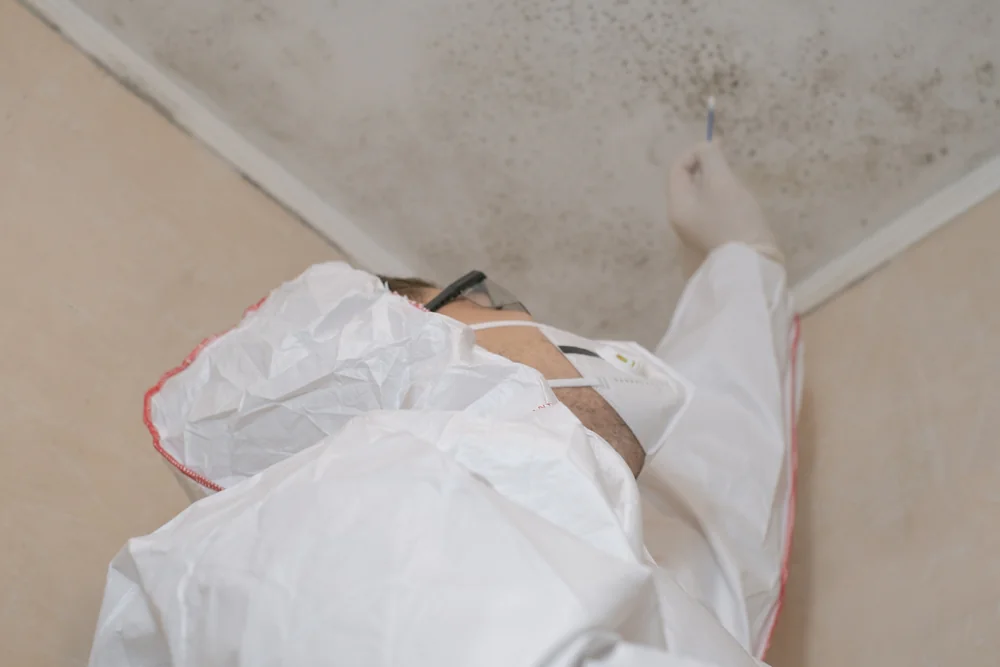
First, we walk through your property and talk about what you’ve noticed—smells, stains, recent water damage, health symptoms. That gives us a starting point.
Next, we inspect every area where mold typically hides. Basements, crawl spaces, attics, bathrooms, behind appliances. We use moisture meters to detect dampness inside walls and thermal imaging to spot temperature differences that signal hidden water problems.
If we find visible mold or conditions that suggest hidden growth, we take air samples and surface samples. Those get sent to a lab for analysis so you know exactly what type of mold you’re dealing with and how concentrated the spore levels are.
You get a detailed report within a few days. It includes photos, lab results, moisture readings, and our recommendations. If remediation is needed, we explain what that involves and give you a clear estimate. If it’s minor, we’ll tell you that too.

Ready to get started?
Every inspection covers visible and hidden areas. We check basements, crawl spaces, attics, bathrooms, kitchens, HVAC systems, and anywhere moisture tends to accumulate. In Milford, that often means paying extra attention to older homes with stone foundations or properties near wooded areas where humidity stays high.
You get moisture mapping to identify problem zones, air quality testing to measure spore concentration, and surface sampling if we find visible growth. Thermal imaging helps us see what’s happening inside walls without tearing anything apart.
The report you receive isn’t vague. It tells you where mold is, what kind it is, how bad the contamination is, and what needs to happen next. If you’re buying or selling a home, that documentation is critical for negotiations and disclosure requirements. Pennsylvania law requires sellers to disclose known mold issues, and buyers need to know what they’re getting into before closing.
We also work with insurance companies if your mold problem stems from water damage. Proper documentation can make the difference between a covered claim and an out-of-pocket expense.

A basic mold inspection in Milford typically runs between $250 and $650. That covers a visual assessment, moisture readings, and a walkthrough of your property.
If you need lab testing—air samples or surface samples sent out for analysis—expect to pay closer to $600 to $1,000. Larger homes, hard-to-reach areas, or properties with multiple suspected problem zones will push costs higher.
We offer free initial inspections to assess the situation. If testing is needed, we’ll explain why and what it involves before moving forward. You won’t get surprised by hidden fees or unnecessary add-ons.
Musty odors are the most common red flag. If a room smells like mildew or damp earth, mold is growing somewhere nearby.
Visible growth is obvious—dark spots on walls, ceilings, or grout. But mold often hides, so you might notice water stains, peeling paint, or warping floors instead. Those signal moisture problems that lead to mold.
Health symptoms matter too. If you or your family experience unexplained respiratory issues, persistent coughing, sneezing, or allergy-like symptoms that improve when you leave the house, mold exposure could be the cause. People with asthma or weakened immune systems are especially vulnerable.
Recent water damage—flooding, leaks, roof damage—creates ideal conditions for mold. Even if you dried everything out, mold can start growing within 24 to 48 hours. An inspection confirms whether remediation is needed.
Most inspections take one to three hours depending on the size of your property and how many areas need checking.
A small home with a single suspected problem area might take an hour. Larger properties, homes with basements and attics, or situations where we’re testing multiple rooms will take longer.
If we collect air or surface samples, lab results usually come back within three to five business days. You’ll receive a full report with findings, photos, and recommendations once the analysis is complete.
We don’t rush. Mold hides, and missing a problem area means you’ll be dealing with it again later. Thoroughness matters more than speed.
You can spot visible mold and check for obvious moisture problems, but a professional inspection finds what you can’t see.
Mold grows inside walls, under flooring, in HVAC ducts, and other hidden spaces. Without thermal imaging and moisture meters, you’re guessing. Air quality testing measures spore concentration throughout your home, not just where you see growth.
DIY mold test kits exist, but they’re not reliable. They often produce false positives or miss contamination entirely. Lab analysis from professionally collected samples gives you accurate information about mold type and severity.
If you’re buying a home, selling a property, or dealing with health symptoms, a certified inspection protects you legally and financially. It’s not worth the risk of missing something that could cost thousands to fix later.
If we find mold, you get a detailed report explaining where it is, what type it is, and how extensive the contamination has become. That report includes photos, lab results if testing was done, and moisture readings.
We’ll walk you through what remediation involves. Small areas—less than 10 square feet—might be manageable with basic cleaning if the mold isn’t toxic. Larger infestations or black mold require professional remediation with containment, air filtration, and proper disposal.
You’ll receive a clear estimate for remediation work. We don’t pressure you into immediate decisions. Some situations are urgent, especially if you’re dealing with toxic mold or severe contamination. Others can wait while you arrange financing or work with your insurance company.
If the mold is related to an ongoing moisture problem—leaky pipes, poor ventilation, foundation issues—we’ll identify that too. Fixing the source prevents mold from coming back after remediation.
Yes. The CDC found that 47% of U.S. homes have mold problems, and Milford’s humid climate makes that number higher locally.
A mold inspection before closing protects you from inheriting someone else’s expensive problem. Remediation can cost $2,000 to $10,000 or more depending on severity. Knowing about mold upfront gives you negotiating power—you can ask the seller to fix it, reduce the price, or walk away if the issue is too big.
Pennsylvania law requires sellers to disclose known mold issues, but many don’t know mold is there. It hides in basements, crawl spaces, and behind walls. A standard home inspection doesn’t always catch it.
Buyers who skip mold inspections often discover problems after closing. At that point, you’re stuck with the cost and the headache. Spending a few hundred dollars on an inspection now can save you thousands later.
Other Services we provide in Milford