
Mold Inspection in Hagersville, PA

Find It Before It Finds Your Family

Professional mold detection that protects your health, your investment, and your peace of mind in Bucks County homes.
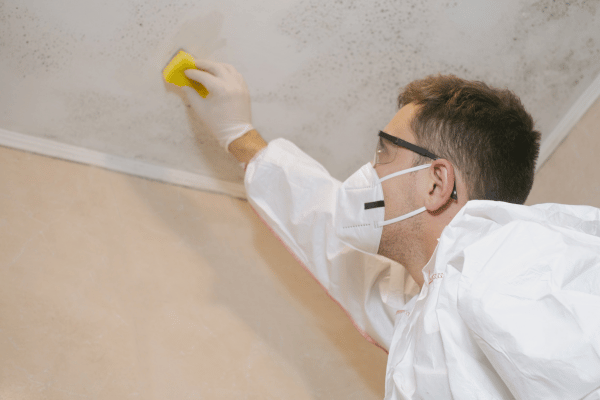
Protective worker in safety suit inspecting or treating mold spots on an indoor ceiling, addressing moisture damage and potential mold growth inside a building.

Hear from Our Customers

Home Mold Inspection Services

Know What You're Dealing With—Exactly

You’re not looking for a sales pitch. You need to know if there’s mold, where it is, what type, and what caused it.

That’s what a real mold inspection gives you. Not a free estimate that turns into a $10,000 surprise. Not a DIY kit that tells you mold exists somewhere in your house—which you already suspected. You get lab-certified results, a written report, and a clear explanation of what happens next.

Most mold hides behind walls, under floors, in attics, and around HVAC systems. A standard home inspection won’t catch it. By the time you see black spots or smell that musty odor, the problem’s been growing for weeks or months. In Hagersville’s wet climate—higher-than-average rain and snow, cold winters, humid summers—mold finds a way. Especially in basements, crawl spaces, and anywhere water sits too long.

A professional inspection stops the guessing. You’ll know if you’re dealing with surface mold or something deeper. You’ll know if it’s cosmetic or toxic. And you’ll have documentation if you’re buying, selling, or filing an insurance claim.

Certified Mold Detection Company

We Test. We Don't Sell Remediation.

We serve Hagersville and the greater Bucks County area with one focus: unbiased mold inspection. We’re not trying to upsell you on removal services. We assess, test, and report—that’s it.

Why does that matter? Because 99% of companies offering “free” mold inspections also do the remediation work. That’s a conflict of interest, and in some states, it’s illegal. We don’t have that problem. Our job is to tell you the truth about what’s in your home, not to inflate the scope of work.

We’ve worked with homeowners, buyers, sellers, and real estate agents throughout East Rockhill Township and surrounding areas. The housing market here is tight—vacancy rates under 2%—so when a deal hinges on a clean inspection, you need results you can trust. We use advanced detection tools and third-party lab analysis to give you exactly that.

Protective worker collecting a mold sample from a stained indoor ceiling using a swab, inspecting moisture damage and potential mold growth inside a building.

Our Mold Inspection Process

Here's What Happens During Your Inspection

First, we walk through your property and identify any visible signs of mold or moisture damage. We check the usual suspects—basements, bathrooms, kitchens, attics—and the less obvious ones, like behind appliances and inside HVAC systems.

Then we take samples. Air samples measure spore counts in different rooms. Surface samples test visible growth. If needed, we’ll use moisture meters and thermal imaging to find hidden water sources feeding the problem. Mold doesn’t grow without moisture, so we trace it back to the root cause.

Samples go to an EPA-certified lab for analysis. You’re not getting a guess. You’re getting species identification, concentration levels, and a comparison to outdoor baseline counts. The lab report tells you if what you’re dealing with is normal environmental mold or something that needs immediate attention, like Stachybotrys (black mold).

Finally, we deliver a detailed written report. It explains what we found, where we found it, what likely caused it, and what your next steps should be. If remediation is needed, you’ll have documentation to get accurate bids from remediation companies. If you’re clear, you’ll have proof for buyers, lenders, or your own peace of mind.

Home interior with mold remediation in progress as a worker sprays treatment on a wall using a ladder, while a resident relaxes on a covered sofa in a renovated living room.

Ready to get started?

Explore More Services

About Mack's Mold Removal

Black Mold Inspection Hagersville

What's Included in Every Inspection

Every mold inspection we perform includes a full visual assessment of your property, moisture detection using professional-grade meters, air and surface sampling in key areas, and lab analysis from an EPA-certified facility. You’ll receive a comprehensive report with photos, lab results, and our findings in plain language.

We also identify the moisture source. Mold is a symptom. Water is the problem. Whether it’s a roof leak, condensation, poor ventilation, or groundwater seeping into your basement, we find it. That’s critical, because removing mold without fixing the moisture issue means it’s coming back.

In Hagersville and Bucks County, we see patterns. Homes here deal with freeze-thaw cycles that crack foundations. Older homes have outdated drainage systems. Humid summers create condensation in attics and crawl spaces. These aren’t just inconveniences—they’re mold invitations. Knowing your local risk factors helps us inspect smarter and give you better recommendations.

If you’re buying a home, this inspection protects you from inheriting someone else’s problem. The CDC says 47% of U.S. homes have mold issues. In a tight market like Hagersville, where inventory is low and competition is high, you can’t afford to skip this step. Remediation can cost $10,000 or more. An inspection costs a fraction of that and might save your deal—or save you from making a terrible investment.

How much does a mold inspection cost in Hagersville, PA?

Cost depends on the size of your home and how many samples we need to collect, but most residential mold inspections in Bucks County range from a few hundred to around $600. That includes the visual assessment, sampling, lab analysis, and written report.

If you’re comparing that to a “free” inspection from a remediation company, remember what you’re actually getting. Free inspections are sales tools. They’re designed to find problems that lead to paid work. Our inspections are designed to give you accurate information, whether that leads to remediation or not.

For buyers, this cost is minimal compared to what you’re risking. If you skip the inspection and find mold after closing, you’re looking at thousands in remediation costs—and possibly a legal battle with the seller if they knew about it and didn’t disclose. Pennsylvania law requires disclosure of known mold issues, and failing to do so can result in lawsuits even after the sale closes.

A standard home inspection covers the structure, systems, and safety of the property. It’s broad by design. Mold inspection is specialized. Most home inspectors aren’t trained in mold detection, and they’re not equipped to test for it. They’ll note visible mold or moisture issues, but they won’t tell you what type of mold it is, how widespread it is, or whether it’s dangerous.

Mold hides. It grows behind drywall, under flooring, in wall cavities, and inside ductwork. You can’t see it during a walkthrough, and a general inspector isn’t pulling apart your walls to check. A mold inspection uses air sampling, surface testing, moisture meters, and sometimes thermal imaging to find what’s hidden.

If you’re buying a home in Hagersville—especially an older home or one with a basement—a separate mold inspection is worth it. The area’s climate creates ideal conditions for mold growth, and the housing stock here includes plenty of properties with aging infrastructure. You’re not questioning the home inspector’s competence. You’re just covering a gap they’re not trained to fill.

You can, but it won’t give you the information you actually need. DIY kits detect the presence of mold, which isn’t useful—mold spores exist in every home. What matters is the type of mold, the concentration, and whether it’s at levels that pose a health risk or indicate a bigger problem.

DIY kits can’t identify species. They can’t tell you if you’re dealing with common environmental mold or toxic black mold. They don’t measure spore counts or compare them to safe baselines. And they don’t help you find the source of the moisture that’s feeding the growth.

If you’re buying or selling a home, a DIY test won’t hold up in a real estate transaction. Lenders, especially FHA, VA, and USDA, require professional documentation if mold is suspected. Buyers won’t accept a $15 hardware store kit as proof that your home is safe. You need lab-certified results and a report from a qualified inspector. If you’re trying to save money, a DIY kit might seem appealing—but if it gives you a false sense of security or causes a deal to fall apart, it’s the most expensive shortcut you’ll take.

For most homes in Hagersville, the on-site inspection takes two to three hours. That includes the walkthrough, moisture testing, air sampling, and surface sampling. Larger homes or properties with multiple problem areas might take longer.

After we collect samples, they go to the lab. You’ll typically have results within a few days—sometimes sooner if you need a faster turnaround for a real estate closing. Once the lab sends us the analysis, we compile everything into a detailed report and walk you through the findings.

If you’re on a tight timeline—say, you’re in the middle of a home sale and the buyer’s lender is asking for mold testing—we can prioritize your inspection. We’ll get back to you within 24 to 48 hours of your initial request, and we can usually schedule the inspection within a few days of that. The key is not to wait until the last minute. Mold issues can delay or kill a deal, and the earlier you address them, the more options you have.

If we find mold, the report will tell you what type it is, where it’s located, how concentrated it is, and what’s causing it. From there, your next steps depend on the severity and your situation.

Minor surface mold—like a small patch in a bathroom from poor ventilation—might be something you can address yourself by improving airflow and cleaning the area. More serious issues, like black mold or widespread contamination, require professional remediation. Our report gives you the documentation you need to get accurate bids from remediation companies. Because we don’t do remediation ourselves, you’re free to choose whoever you want. No pressure, no upsell.

If you’re buying a home and the inspection finds mold, you have leverage. You can ask the seller to remediate before closing, negotiate a credit to cover the cost, or walk away if the problem is too severe. If you’re selling and mold turns up, it’s better to know now than to have a deal fall apart at the last minute—or worse, face a lawsuit after closing because you didn’t disclose it. Pennsylvania law is clear: sellers must disclose known mold problems. Ignorance isn’t a defense if a buyer can prove you should have known.

If you’re buying a home, yes. Visible mold is just the tip of the problem. By the time you see it, there’s usually more growing where you can’t. Mold spreads through spores, and those spores travel through air, ductwork, and wall cavities. You might have a serious issue and not know it until someone gets sick or a pipe bursts and reveals what’s been hiding.

Even if you’re not buying, there are signs that warrant an inspection. Musty odors, unexplained allergies or respiratory issues, water stains, peeling paint, warping floors, or condensation on windows all point to moisture problems—and moisture problems lead to mold. In Hagersville’s climate, with above-average precipitation and humidity, basements and crawl spaces are especially vulnerable.

If you’ve had any water damage—flooding, leaks, roof damage—you should assume mold is growing somewhere, even if it’s been “fixed.” Mold starts growing within 24 to 48 hours of water exposure. If the affected materials weren’t properly dried and treated, the problem didn’t go away. It just moved out of sight. An inspection gives you certainty, and certainty is worth the cost when your health and your home’s value are on the line.

Other Services we provide in Hagersville