
Hear from Our Customers
You’re not imagining that musty smell in your basement. You’re not overreacting when your kids keep coughing at night. And you’re definitely not wrong to worry about what’s growing behind your walls after last spring’s flooding near the Delaware River.
Mold doesn’t announce itself until it’s already a problem. By the time you see visible growth, it’s been spreading for weeks. Our home mold inspection process finds it early—in crawl spaces, behind drywall, under flooring, and in attic insulation where Pennsylvania’s humidity does its worst damage.
You get a full property assessment using thermal imaging and moisture meters that detect what your eyes can’t. You get lab-tested air samples that tell you exactly what type of mold you’re dealing with. You get a written report that insurance companies accept and contractors can work from.
Most importantly, you get clarity. No more wondering if that stain is dangerous. No more lying awake worried about your family’s health. Just real answers from certified technicians who’ve seen every type of mold problem Bucks County homes face.
We’ve been helping Brick Tavern and Bucks County homeowners deal with mold for years. We’re not a national franchise reading from a script. We’re local, and we understand what causes mold problems in this area.
We know that homes near the Delaware River deal with higher humidity. We know that older properties in Bucks County often have ventilation issues that create perfect conditions for black mold. We know that after heavy spring rains, basements flood and crawl spaces stay damp for weeks.
Our team includes certified mold inspectors who use the latest detection equipment and follow Pennsylvania’s strict remediation standards. We offer free initial inspections because we’d rather catch your problem early than wait until you’re facing a $5,000 remediation bill. And we work directly with insurance companies to help you file claims when coverage applies.
We start with a visual assessment of your entire property. That means checking obvious spots like bathrooms and basements, but also looking in places most homeowners never think about—behind appliances, inside HVAC systems, under sinks, and in attic spaces where condensation builds up.
Next, we use moisture meters and thermal imaging cameras to detect hidden water damage. Mold needs moisture to grow, so finding damp areas tells us where problems are developing even if you can’t see growth yet. This technology lets us look inside wall cavities and under flooring without tearing your house apart.
If we find visible mold or detect conditions that suggest hidden growth, we take air samples and surface samples for lab testing. This tells us exactly what species of mold you’re dealing with and how concentrated the spores are in your indoor air. Some molds are more dangerous than others, and the lab results determine how aggressive your remediation needs to be.
You get a detailed written report within a few days. It includes photos, lab results, moisture readings, and our recommendations for remediation. If the problem is small enough, we’ll tell you that too. If it requires professional removal, we’ll give you an upfront estimate before any work begins.
Ready to get started?
Your mold inspection covers every area of your home where moisture problems typically develop. In Brick Tavern and throughout Bucks County, that usually means basements where groundwater seeps through foundation cracks, crawl spaces with poor ventilation, attics where roof leaks go unnoticed, and bathrooms where exhaust fans don’t work properly.
We bring professional-grade equipment that most homeowners don’t have access to. Thermal imaging cameras show temperature differences that indicate moisture behind walls. Hygrometers measure humidity levels in different rooms to identify problem areas. Moisture meters detect dampness in wood, drywall, and concrete that feels dry to the touch.
The inspection also includes air quality testing when needed. Pennsylvania’s climate means that mold spores are always present outdoors, but indoor concentrations shouldn’t be higher than outdoor levels. Our air samples get analyzed by an independent lab that identifies specific mold species and spore counts. This matters because some molds cause more severe health reactions than others.
You also get documentation that satisfies insurance requirements if you need to file a claim. Many homeowners policies cover mold remediation when it results from a covered event like a burst pipe or storm damage. Our detailed reports include everything your insurance company needs to process your claim quickly.
Most professional mold inspections in Bucks County run between $300 and $650 depending on your home’s size and how many areas need testing. A typical single-family home inspection with visual assessment, moisture detection, and air sampling usually falls around $400 to $500.
We offer free initial inspections to assess your situation and give you an honest opinion about whether you need full testing. If you’re seeing visible mold growth or smelling persistent musty odors, we can often tell you during that free visit whether you’re dealing with a minor issue or something that requires lab testing and professional remediation.
The cost of skipping an inspection is usually much higher. Mold problems don’t improve on their own, and what starts as a small patch of growth can spread throughout your HVAC system or into wall cavities within weeks. Catching it early with a professional inspection typically saves you thousands in remediation costs down the road.
A thorough home mold inspection usually takes between two and four hours depending on your property size and how many problem areas we find. Smaller homes with no obvious moisture issues might take closer to two hours. Larger properties or homes with basements, crawl spaces, and attics that show signs of water damage can take most of an afternoon.
We don’t rush the process because hidden mold is easy to miss if you’re not looking carefully. Our technicians check inside closets, behind water heaters, under sinks, around windows, and in other spots where moisture accumulates. We also spend time in your attic and basement since those areas have the highest mold risk in Pennsylvania’s humid climate.
If we need to collect air samples or surface samples for lab testing, that adds another 30 to 45 minutes. The samples themselves get sent to an independent laboratory, and you’ll receive detailed results within three to five business days. We’ll walk you through the findings and explain exactly what they mean for your home and your family’s health.
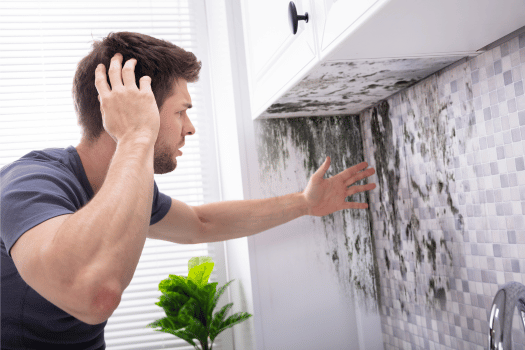
The most obvious sign is visible mold growth—black, green, or white patches on walls, ceilings, or around windows. But you should also call for an inspection if you smell persistent musty or earthy odors that don’t go away even after cleaning. That smell is often the first indicator that mold is growing somewhere you can’t see.
Health symptoms are another red flag. If people in your home are experiencing unexplained respiratory issues, chronic coughing, nasal congestion, throat irritation, or worsening asthma symptoms that improve when they leave the house, mold exposure could be the cause. About 21% of asthma cases in the U.S. are linked to damp, moldy indoor environments.
You should also get an inspection after any water damage—burst pipes, roof leaks, flooding, or even persistent condensation problems. Mold can start growing within 24 to 48 hours after materials get wet. Even if you dried everything quickly, moisture can get trapped inside walls or under flooring where you can’t see it. An inspection with thermal imaging and moisture meters will tell you if you caught it in time or if mold is already developing.
Home mold test kits from hardware stores can tell you if mold spores are present, but they can’t tell you much else that’s actually useful. Every home has some mold spores in the air—they’re everywhere outdoors and they come inside through doors, windows, and ventilation systems. What matters is the type of mold and the concentration levels.
Professional mold detection uses calibrated equipment that measures moisture levels inside building materials, not just on surfaces. We use thermal imaging to find hidden water damage and take samples from specific problem areas rather than just setting out a petri dish in the middle of a room. The samples go to accredited labs that identify exact mold species and compare your indoor spore counts to outdoor baseline levels.
You also need someone who knows where to look. Mold hides in wall cavities, under flooring, in HVAC ducts, and in crawl spaces where most homeowners never go. We’ve done hundreds of inspections in Bucks County homes, and we know the common problem areas based on how properties here are built and what Pennsylvania’s climate does to them. A DIY kit won’t find mold growing on the back side of your drywall or in the insulation above your ceiling.
It depends on what caused the mold. Most homeowners insurance policies in Pennsylvania cover mold remediation if the mold resulted from a covered peril like a burst pipe, storm damage, or a leaking appliance that failed suddenly. They typically don’t cover mold that developed from long-term maintenance issues like chronic roof leaks, poor ventilation, or ongoing humidity problems you didn’t address.
The key is documenting everything properly from the start. Insurance companies want to see professional inspection reports with lab results, moisture readings, and photos showing the extent of the damage. Our detailed reports include all of that documentation, and we work directly with insurance adjusters regularly. We know what they’re looking for and how to present the information so your claim moves forward.
Even if your policy doesn’t cover the full remediation cost, the inspection itself is often worth paying for out of pocket. Mold problems don’t improve with time—they get worse and more expensive to fix. Spending a few hundred dollars on a professional inspection now can save you from a $3,000 to $5,000 remediation bill later. And if the inspection finds that your mold problem does qualify for insurance coverage, that initial cost is usually reimbursable as part of your claim.
First, don’t panic. Finding mold during an inspection is actually better than letting it grow undetected for months or years. You’ll get a clear report that explains what type of mold we found, where it’s located, how extensive the growth is, and what’s causing the moisture problem that’s feeding it.
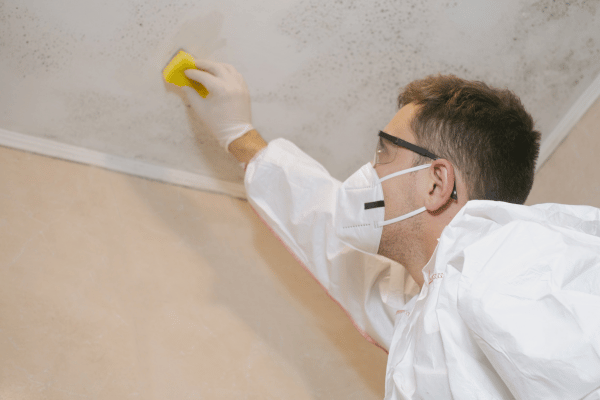
Small mold problems—less than 10 square feet of surface growth from a recent minor leak—can sometimes be cleaned up by homeowners using proper safety equipment and EPA-approved methods. We’ll tell you honestly if that’s the case. But if the growth is extensive, if it’s black mold, if it’s inside your HVAC system, or if it’s hidden inside walls or under flooring, you need professional mold remediation.
We’ll give you an upfront estimate for the remediation work before anything starts. That includes containment to prevent spores from spreading during removal, air filtration, complete removal of contaminated materials, treatment of affected surfaces, and fixing whatever moisture problem caused the mold in the first place. After remediation is complete, we do post-cleanup testing to verify that spore levels are back to normal and your home is safe. The whole process typically takes a few days to a week depending on how much area is affected.
Other Services we provide in Brick Tavern