
Hear from Our Customers
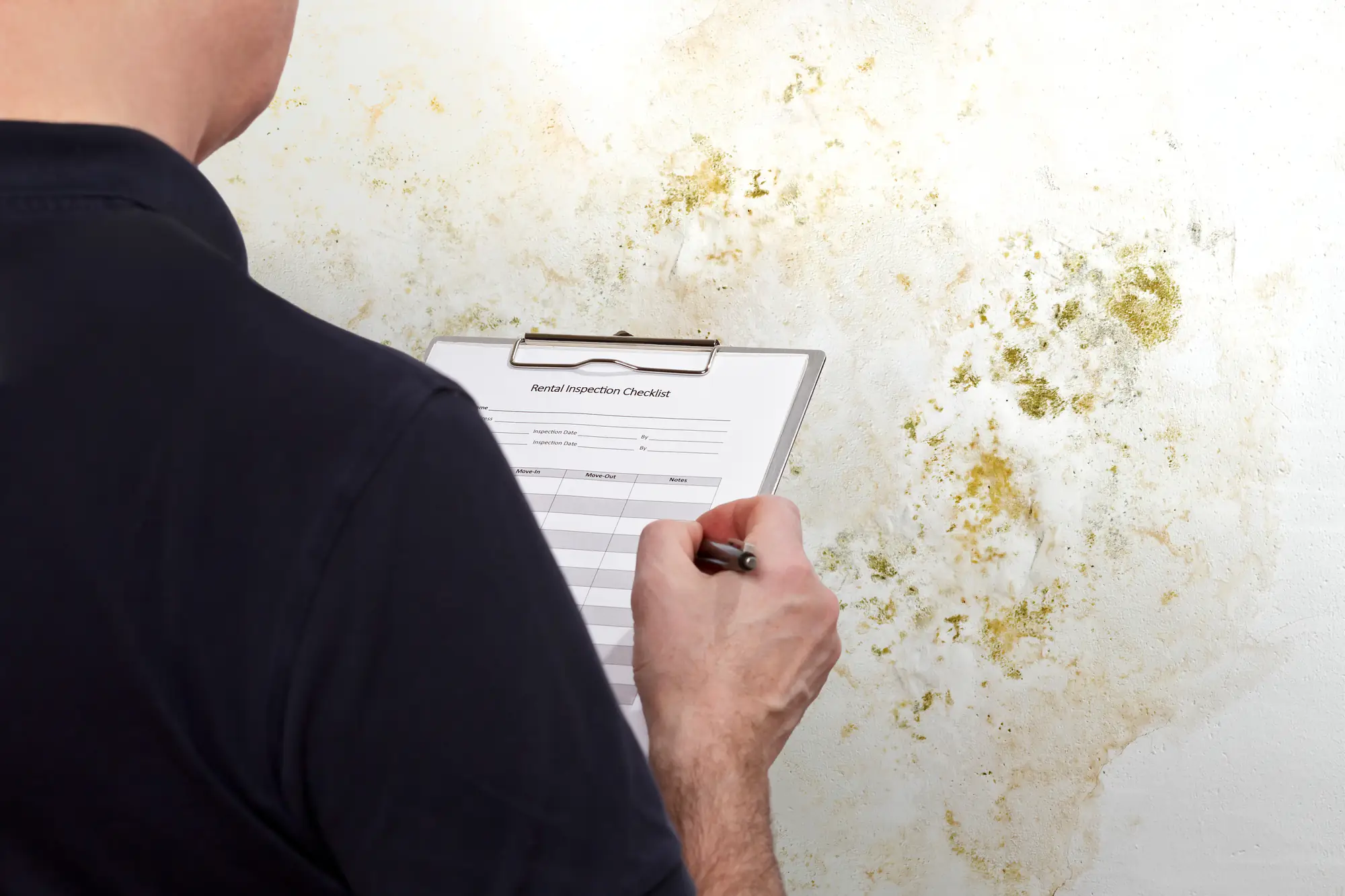
Mold doesn’t announce itself until it’s already a problem. By the time you see it on your walls or smell that musty odor in your basement, it’s been growing for weeks—maybe months. And in Almont’s climate, with Bucks County’s humidity averaging 75-97% year-round, your home is constantly at risk.
A professional mold inspection gives you the full picture. We use thermal imaging and moisture meters to find mold where you can’t see it: behind drywall, under flooring, inside HVAC systems. You get a detailed report that tells you exactly what’s there, where it’s growing, and what needs to happen next.
This isn’t about scaring you into a sale. It’s about giving you the information you need to make a smart decision about your home. Because catching mold early means smaller fixes, lower costs, and no guessing about whether your family is breathing clean air.
We serve homeowners throughout Almont, Sellersville, West Rockhill Township, and the surrounding Bucks County area. We understand the specific challenges local homes face—historic properties with lath and plaster walls that trap moisture differently than modern construction, basements that flood during heavy rains, and attics that turn into humidity traps every summer.
We’re not a national franchise following a script. We’re local professionals who’ve seen what happens when mold goes undetected in Pennsylvania homes. Our inspections are thorough because we know what to look for and where problems typically start in this region.
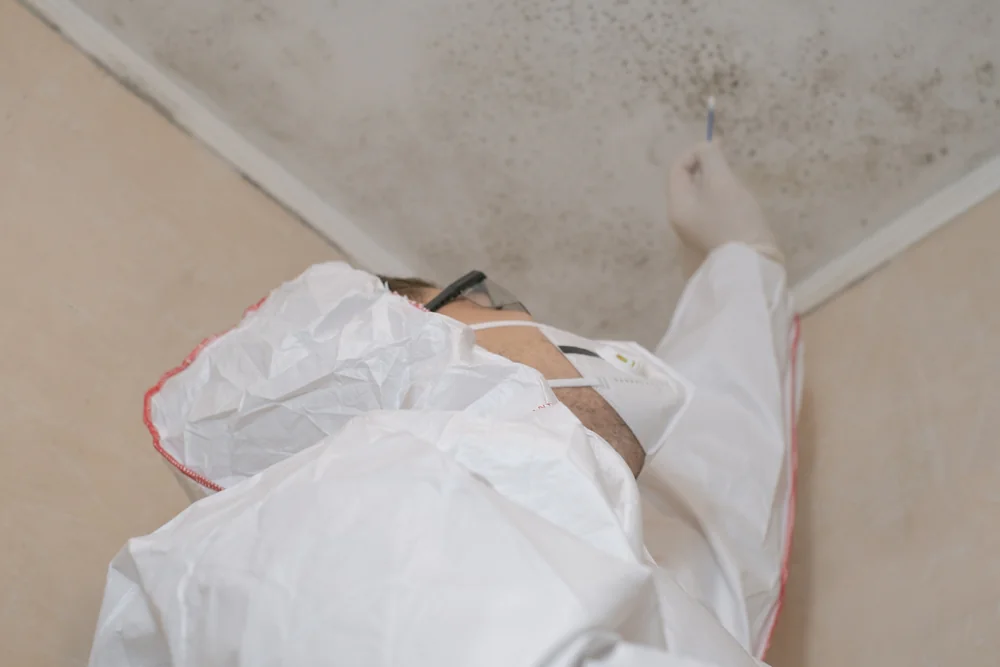
First, we walk through your home and talk about what you’ve noticed—water damage, musty smells, health symptoms, or just concern about what might be hidden. This conversation matters because it tells us where to focus our attention.
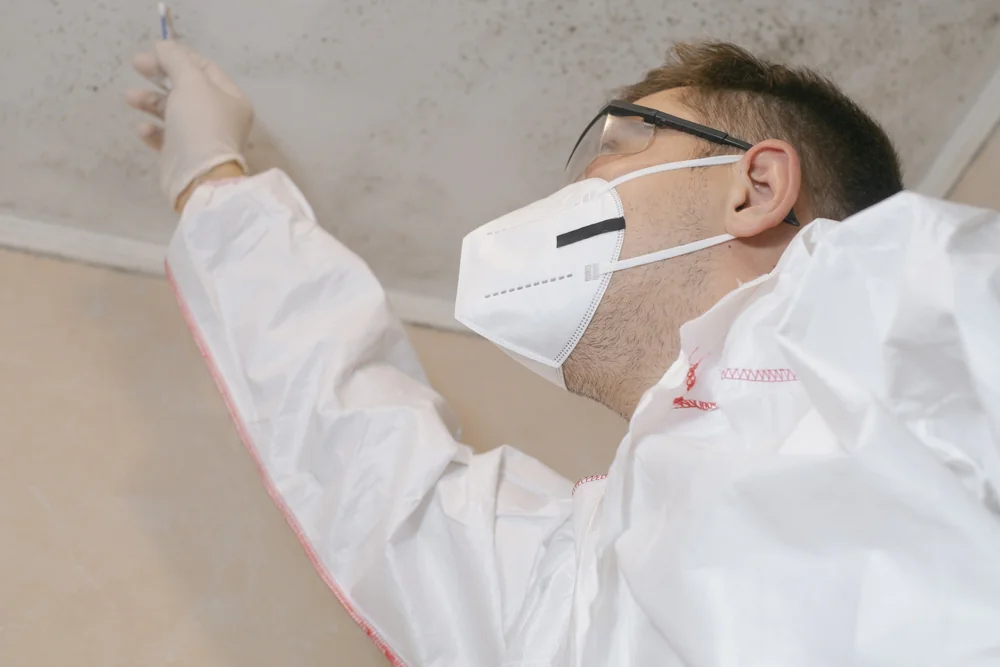
Next, we conduct a visual inspection of your entire property, paying special attention to areas prone to moisture: bathrooms, kitchens, basements, crawl spaces, attics, and anywhere you’ve had leaks or flooding. We use thermal imaging cameras to detect temperature differences that indicate moisture behind walls. We use moisture meters to measure water content in building materials.
When we find suspect areas, we take air samples and surface samples. These get sent to a certified lab for analysis. You’re not relying on our visual assessment alone—you get laboratory results that identify the exact type and concentration of mold present.
Within a few days, you receive a detailed report that breaks down our findings in plain language. If mold is present, we explain what type it is, where it’s located, how serious the problem is, and what your options are for remediation. No pressure, no upselling—just clear information so you can decide what makes sense for your situation.

Ready to get started?
Every inspection includes a comprehensive visual assessment of your property, moisture mapping using professional-grade equipment, air quality testing to measure spore levels throughout your home, and surface sampling from any visible growth or suspected areas. You’re not paying for someone to walk around with a flashlight.
The lab analysis identifies specific mold species—including black mold (Stachybotrys), which gets the most attention but isn’t the only type that causes problems. Aspergillus, Penicillium, and Cladosporium are all common in Bucks County homes, and all can trigger respiratory issues or allergic reactions.
You also get documentation that’s useful beyond just knowing what’s in your house. If you’re buying or selling a home in Almont, professional mold testing provides the proof buyers and sellers need during real estate transactions. If you’re filing an insurance claim after water damage, certified lab results support your case. If you’re a landlord dealing with tenant complaints, an independent inspection protects everyone involved.
The report includes photos, moisture readings, lab results, and our recommendations. It’s thorough enough to satisfy insurance companies and real estate attorneys, but written clearly enough that you don’t need a science degree to understand it.
You need an inspection if you’ve had any water intrusion—flooding, roof leaks, burst pipes, foundation seepage—even if it was months ago. Mold starts growing within 24-48 hours of water exposure, and it doesn’t stop just because the surface dried out.
You also need testing if you’re experiencing unexplained health symptoms that get worse at home: persistent coughing, sinus congestion, headaches, fatigue, itchy eyes, or skin rashes. About 21% of asthma cases in the U.S. are linked to dampness and mold, and Bucks County’s high humidity makes this a real concern for local families.
Beyond that, consider an inspection if you smell musty odors you can’t locate, if you’re buying a home (especially older properties or foreclosures), or if you just want peace of mind. Many homeowners in Almont schedule inspections as preventive maintenance, particularly if they have basements or crawl spaces they don’t check regularly.
A mold inspection is the visual assessment—we physically examine your property, use moisture meters and thermal cameras, and identify areas where mold is likely growing. Testing is the lab analysis—we collect air and surface samples and send them to a certified laboratory to identify specific mold species and measure spore concentrations.
Most professional inspections include both. The visual inspection tells us where to look and what’s happening structurally. The lab testing tells us exactly what type of mold is present and how severe the contamination is.
You can’t skip the inspection and just do testing, because you might miss hidden mold that’s not releasing spores into the air yet. And you shouldn’t skip the testing after an inspection, because not all mold looks the same—some species are more dangerous than others, and treatment approaches vary depending on what you’re dealing with. Both pieces work together to give you the complete picture.
DIY mold test kits from hardware stores will tell you if mold spores are present in your home. But here’s the problem: mold spores are present in every home. They’re in the air outside right now. The question isn’t whether spores exist—it’s whether you have active mold growth, where it’s located, what type it is, and whether the concentration is high enough to cause problems.
Home test kits can’t tell you any of that. They can’t find hidden mold behind your walls or under your floors. They can’t measure moisture levels in building materials. They can’t differentiate between harmless surface mold and toxic black mold. And they can’t give you documentation that holds up with insurance companies or in real estate transactions.
Professional testing uses calibrated equipment, follows specific protocols for sample collection, and provides lab-certified results. If you’re serious about knowing what’s in your home—not just confirming that mold exists somewhere—a professional inspection is worth the investment.
For most homes in Almont, the on-site inspection takes 2-3 hours. Larger properties or homes with extensive water damage history may take longer. We’re not rushing through your house checking boxes—we’re looking in attics, crawl spaces, behind appliances, inside HVAC systems, and anywhere moisture could be hiding.
After we collect samples, the lab analysis typically takes 3-5 business days. Once results come back, we prepare your detailed report and schedule a follow-up call to walk through the findings and answer your questions.
If you need faster results—say you’re in the middle of a real estate transaction with a tight closing deadline—we can request expedited lab processing for an additional fee. But in most cases, the standard timeline gives you thorough, accurate results without cutting corners.
If we find mold, you get a clear explanation of what it is, where it’s growing, and what your options are. Small areas of surface mold—like a little growth around a bathroom window—might be something you can handle yourself with proper cleaning. Larger infestations or mold inside wall cavities require professional remediation.
We’ll walk you through the recommended approach based on the type of mold, the extent of growth, and the underlying moisture problem. Because here’s the thing: removing mold without fixing the moisture source is pointless. It’ll just come back. Any legitimate remediation plan addresses both the mold and whatever’s causing it.
You’re not locked into using us for remediation just because we did your inspection. Our job is to give you accurate information. What you do with that information is your call. Some homeowners get multiple quotes. Some call their insurance company first. Some want to move forward immediately. We’re here to answer questions and provide service when you’re ready—not to pressure you into a decision.
It depends on what caused the mold. If mold grew because of a sudden, accidental event—like a burst pipe or storm damage—most homeowners insurance policies in Pennsylvania will cover both testing and remediation. If mold developed because of long-term neglect, poor maintenance, or chronic humidity issues, insurance typically won’t cover it.
The key is documentation. Insurance companies want proof that the mold resulted from a covered event, and they want professional testing to verify the extent of damage. That’s where a certified mold inspection becomes essential—it provides the evidence your claim needs.
Before you file a claim, read your policy or talk to your agent. Some policies have specific mold coverage limits (often around $10,000). Some exclude certain types of mold entirely. And some require you to report water damage within a specific timeframe. If you’re not sure whether your situation qualifies, we can provide the inspection report and documentation you need to have that conversation with your insurance company.
Other Services we provide in Almont