
Hear from Our Customers
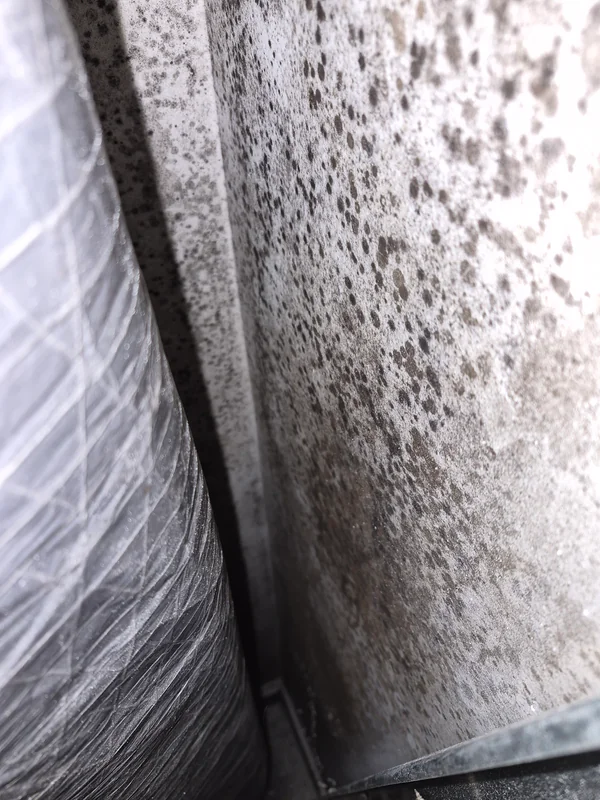
Most Trumbauersville homes were built around 1958 and a lot of that original or early-replacement ductwork has never been professionally inspected, let alone cleaned. Dust is one thing. Mold is another.
When you call a standard HVAC company, you get a duct cleaning. When you call us at Mack’s Mold Removal & Inspections, you get a certified mold inspector who can tell the difference between the two and treat it accordingly.
Trumbauersville sits at 538 feet above sea level, and the summer humidity here is no joke. Average dew points hit 63°F in July and August exactly the range where mold starts growing on cool HVAC surfaces like evaporator coils, drip pans, and the interior walls of your ductwork. By the time fall arrives and you flip the heat on for the first time, anything that grew in there over the summer gets pushed through every room in your house simultaneously.
That’s the seasonal reality for homes in this part of Bucks County. Getting your ducts properly inspected and cleaned before that first heating cycle or after you notice that familiar musty smell when the AC kicks on isn’t overcautious. It’s the right call for a home this age in a climate like this one.
We’re based in Bensalem and have been serving Bucks County for over 15 years. Trumbauersville is squarely in our service area and we understand what older homes in the Milford-Quakertown corridor actually deal with. Stone farmhouses, mid-century ranches, aging ductwork, basements that have seen moisture over the decades. This isn’t unfamiliar territory for us.
When you call, you’re reaching a real person not a dispatch center routing you to whoever’s available. Our customers consistently name Jeff by name in reviews, noting he shows up, honors the quote, and doesn’t leave until the job is done right. That kind of accountability matters in a small borough like Trumbauersville where word travels fast and your neighbors will ask who you used.
We also work directly with insurance companies on mold-related claims, offer free inspections, and provide upfront pricing before any work begins. No surprises. No upsells after the fact.

It starts with a free inspection. Before anything gets cleaned, a certified mold inspector evaluates your HVAC system not just the registers you can see, but the interior duct sections where mold actually grows. If samples are needed, they go to a lab. You get real answers, not a guess.
From there, the scope of work is determined by what’s actually found. If it’s dust and debris with no biological growth, we provide a thorough mechanical cleaning of both supply and return ducts the kind that takes several hours to do correctly, not the kind that’s done in 45 minutes for $99. If mold is confirmed, the process includes proper containment so spores aren’t redistributed through your home during the cleaning. That containment step is what separates a mold specialist from a general duct cleaner, and it’s especially important in older Trumbauersville homes where mold may have had years to establish itself in hidden duct sections.
After the work is complete, we test the affected areas to confirm the mold is actually gone not just disturbed and relocated. You get documentation of the results. Pennsylvania doesn’t require a permit for routine duct cleaning, so there’s no waiting on approvals. The job gets scheduled, completed, and verified.
Ready to get started?
Air duct cleaning and air duct sanitizing are not the same thing, and knowing which one your home needs matters. Cleaning removes the physical debris dust, lint, biological material from the interior of your ductwork. Sanitizing applies an antimicrobial treatment to address any remaining biological contamination after the mechanical cleaning is done. When mold is involved, both steps are typically necessary. We handle both, and the inspection determines which combination is right for your specific system.
Dryer vent cleaning is also part of what we offer and in a borough like Trumbauersville, where many homes have older dryer vent installations with longer runs and more bends than newer construction, this is genuinely a fire safety issue. The NFPA reports nearly 16,000 dryer-related house fires per year nationally, and failure to clean the vent is the leading cause. In a compact community of under 500 housing units, that’s not a risk worth ignoring.
For Trumbauersville homeowners dealing with a mold-related insurance claim, we work directly with your insurance company to help navigate the process. And if financing is something you need, that option is available too. The goal is to make sure the right work gets done not to upsell you on services your home doesn’t require.
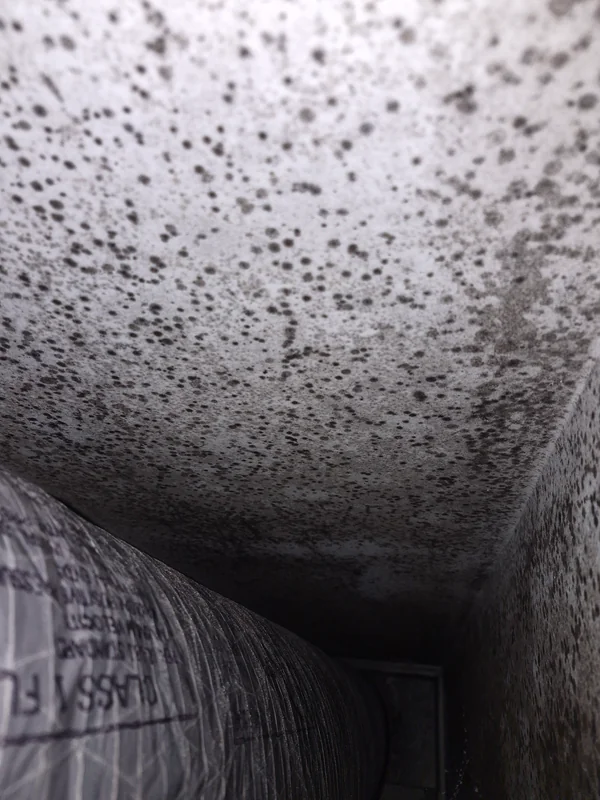
The honest answer is that you usually can’t tell just by looking at the register or sniffing around the vent. Mold in ductwork tends to grow in the interior sections of the system on evaporator coils, inside drip pans, along the walls of duct runs places you can’t see without equipment.
The most common indicator homeowners in Trumbauersville notice is a musty smell that shows up specifically when the HVAC system kicks on. If the smell disappears when the system is off, that’s a strong signal something biological is growing inside the system and getting distributed when air moves through it.
The only way to know for certain is a proper inspection. We start every job with a free inspection, and when there’s any question about what’s present, samples go to a lab for analysis. You get a real answer not a technician’s best guess. In Trumbauersville, where many homes are over 60 years old and have HVAC systems that have been through decades of humid summers, that kind of verification matters more than it does in newer construction.
The EPA’s position on routine duct cleaning is nuanced they acknowledge that for a clean, well-maintained system with no specific problems, the evidence for regular cleaning improving air quality is limited. But that’s not the situation most people in Trumbauersville are dealing with.
When mold is confirmed in ductwork, when there’s been a moisture event, when a home has had pest activity, or when the system hasn’t been touched in decades the EPA explicitly recommends cleaning. Those conditions are common in older Bucks County homes, not edge cases.
The question worth asking isn’t “is duct cleaning worth it in general?” It’s “given the age of my home and what’s likely been happening in my ductwork, is an inspection worth it?” A free inspection that tells you everything is fine costs you nothing. An inspection that finds mold gives you information you actually need. Either way, you’re not going in blind.
Yes and this is exactly why mold in ductwork is treated differently than mold on a basement wall. A basement mold problem stays in the basement until it’s addressed. Mold in your HVAC system gets distributed to every room in the house every time your heating or cooling runs.
Supply vents push air and whatever’s in it into your living spaces, bedrooms, and anywhere else the ductwork reaches. In Trumbauersville, this becomes a specific concern during the seasonal transition from summer to fall. Mold that grew on evaporator coils or inside duct runs during the humid July and August months when dew points average above 62°F here gets mobilized the first time you switch from AC to heat.
That first heating cycle of the season is often when homeowners notice the smell for the first time, because it’s the first time that biological material has been pushed through warm air at full force. Catching it before that happens, or addressing it immediately after, limits how far the problem spreads.
Cleaning and sanitizing are two separate steps that address two different aspects of the problem. Cleaning is the mechanical process using professional equipment to remove physical debris, dust, lint, and biological material from the interior surfaces of your ductwork. This requires proper equipment and takes several hours to do correctly for a typical home.
A job done in under an hour almost certainly wasn’t done thoroughly. Sanitizing comes after the mechanical cleaning and involves applying an antimicrobial treatment to the interior of the duct system. The goal is to address any residual biological contamination mold spores, bacteria that may remain on surfaces after the physical debris has been removed.
When mold is the reason you’re having the ducts cleaned, sanitizing is typically a necessary second step, not an optional add-on. We handle both, and the inspection determines what your specific system actually needs rather than applying the same approach to every job.
Industry guidance generally points to every three to five years for a typical home with no specific issues. But that baseline assumes a relatively modern, well-sealed duct system in a home without a history of moisture problems.
For older homes in Trumbauersville where the median build year is 1958 and many properties have original or early-replacement ductwork the calculus is different. Older sheet metal can develop interior pitting and surface irregularities that give mold more places to anchor. Older insulation around ductwork can degrade and become a mold substrate in its own right.
If you’ve never had your ducts professionally inspected and your home is more than a few decades old, that’s the starting point not a scheduled cleaning interval. Once you know the baseline condition of your system, you can make a more informed decision about how frequently to maintain it. If there’s been any water intrusion, basement flooding, or moisture event in the home’s history, that moves the timeline up considerably.
Your HVAC company is trained to maintain, repair, and replace heating and cooling equipment. That’s a real skill set, and a good HVAC contractor is valuable to have. But when the question is whether what’s inside your ducts is mold and what to do about it if it is that’s a different discipline entirely.
An HVAC technician cleaning ducts without mold remediation training can disturb mold growth and spread spores through the system without realizing it. Proper mold remediation requires containment protocols, lab verification, and post-cleaning testing to confirm the problem is actually resolved.
We bring certified mold inspection and remediation expertise to every air duct cleaning job. That means the inspection looks for biological contamination specifically, not just visible dust. It means any mold found is handled with the right containment procedures. And it means the job ends with lab-verified confirmation that the mold is gone not just a technician’s word that it looks clean. For a Trumbauersville home with decades of history behind it, that level of certainty is worth more than a standard maintenance cleaning.
Other Services we provide in Trumbauersville