

Hear from Our Customers

When your HVAC system runs, it reaches every room in the house simultaneously. If there’s mold growing inside that duct system, every heating and cooling cycle distributes the problem from one room to all of them. That’s not a comfort issue for a household with kids, it’s a health issue that compounds quietly over time.
Stoopville sits in an area where homes built largely between 1986 and 1998 face a specific problem: builder-grade HVAC ductwork was often compressed into finished attics, and synthetic stucco exteriors were standard. Those attic duct systems sweat through Pennsylvania’s humid summers. That moisture doesn’t evaporate it sits inside the ductwork, in the dark, and mold takes it from there. Home inspectors who work regularly in this area have documented this pattern specifically. It’s not hypothetical.
After we clean and inspect your duct system, you know what you’re dealing with not what you’re guessing. If mold is found, it’s contained and removed by our certified mold remediation team, not just disturbed by a vacuum. If the system is clear, you have lab-backed confirmation of that too. Either way, you’re not operating on assumptions anymore.
We’re based in Bensalem about 15 miles south of Stoopville via I-95 and PA-413 and we’ve been working in the Stoopville area and surrounding Bucks County communities for over 15 years. We’ve seen the inside of a lot of homes built during the era when Stoopville’s housing stock was developed. The EIFS moisture problems, the compressed attic ductwork, the basement humidity that climbs after heavy rain events none of that is new information to our team.
What sets us apart from the duct cleaning companies that also show up in Stoopville search results is our mold remediation background. We’re certified inspectors with lab testing capabilities and post-cleaning verification as our standard not add-ons. When you call Mack’s Mold Removal, you’re not getting a carpet cleaning company that also does ducts on the side. You’re getting a mold specialist who understands what’s actually happening inside your home’s air system, and what it takes to fix it properly.
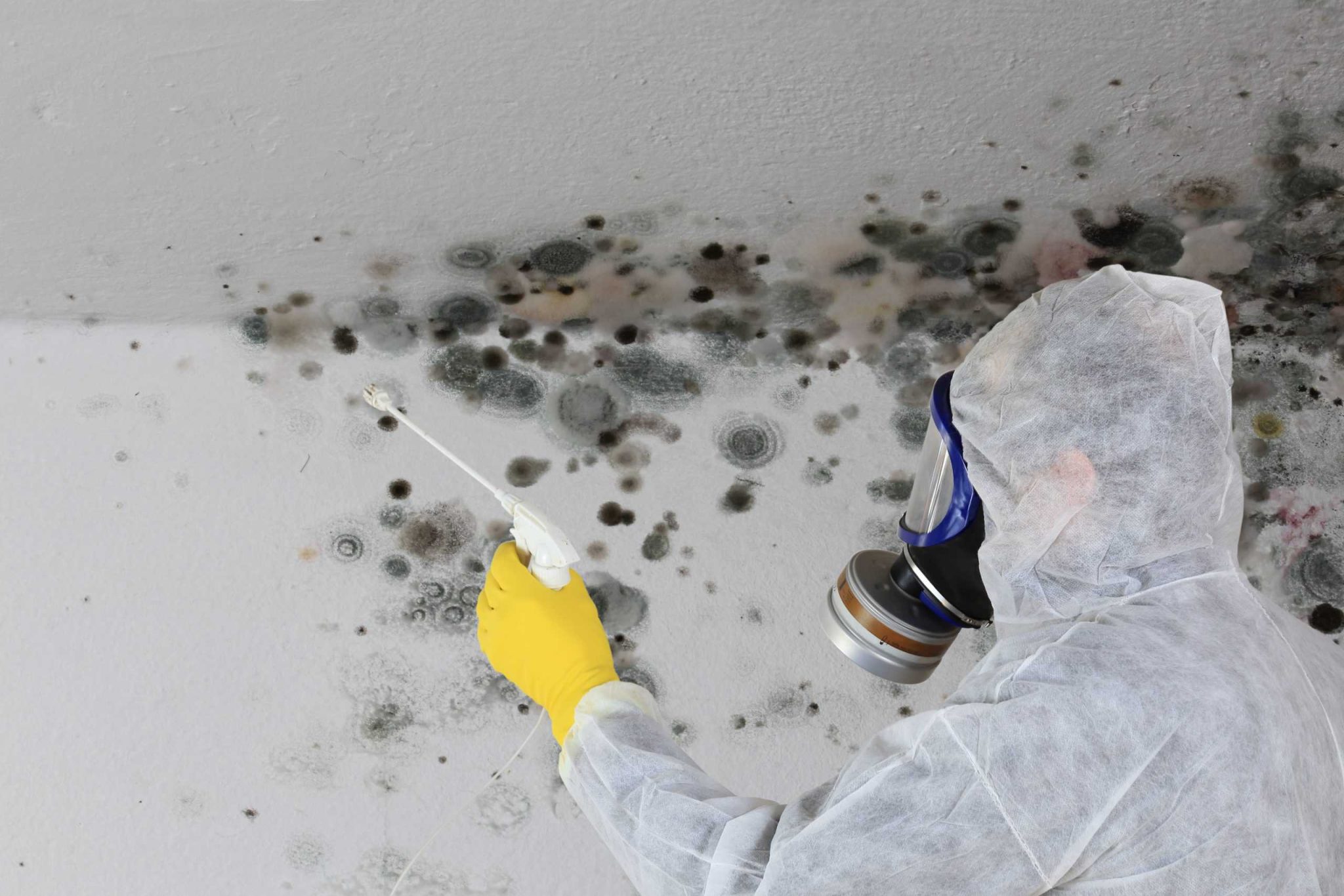
It starts with a free inspection. Before any work is quoted or scheduled, we send a certified inspector to assess your duct system. We’re looking at more than just the registers moisture readings, visible discoloration, airflow patterns, and the condition of the ductwork itself. For Stoopville-area homes built during the 1980s and 1990s, that inspection often includes checking attic duct sections for condensation damage and looking for signs of moisture infiltration that may have worked its way into the system over the years.
Once the inspection is complete, you get an upfront quote. No pressure, no surprises later. If mold is identified, our remediation process includes proper containment before anything is disturbed this is the step that separates a mold specialist from a general duct cleaner. Disturbing mold without containment spreads spores. We don’t do that.
The cleaning itself uses professional-grade equipment designed to pull contaminants out of the system rather than push them around. After the job is done, affected areas are tested to confirm the mold is actually gone not just relocated. You receive documentation of what was found and what was done. For homeowners in Stoopville, where properties routinely approach or exceed $900,000 in value, that paper trail matters.
Ready to get started?
Air duct cleaning addresses the mechanical removal of contaminants from your duct system. Air duct sanitizing goes a step further after the physical cleaning, we apply an antimicrobial treatment to address any remaining biological material. When mold is involved, both steps are typically needed. Cleaning alone doesn’t eliminate mold; it removes the visible colony. Sanitizing addresses what’s left behind at the surface level. We handle both as part of a complete HVAC mold remediation approach.
Dryer vent cleaning is a separate service that Stoopville homeowners particularly those in townhome configurations often overlook. The NFPA reports roughly 15,970 dryer-related house fires per year in the U.S., and failure to clean the dryer vent is the leading cause. In townhome configurations, dryer vent runs are frequently longer and more complex than in detached single-family homes, which means lint accumulates faster and the fire risk is more acute. If your dryer vent hasn’t been professionally cleaned, it’s worth adding to the conversation when we’re already in your home.
We also work directly with homeowner’s insurance companies when mold in ductwork is the result of a covered water event a pipe burst, a roof leak, or flooding from a storm. For Stoopville homeowners carrying comprehensive coverage on a high-value property, that’s a meaningful part of the process, not an afterthought.
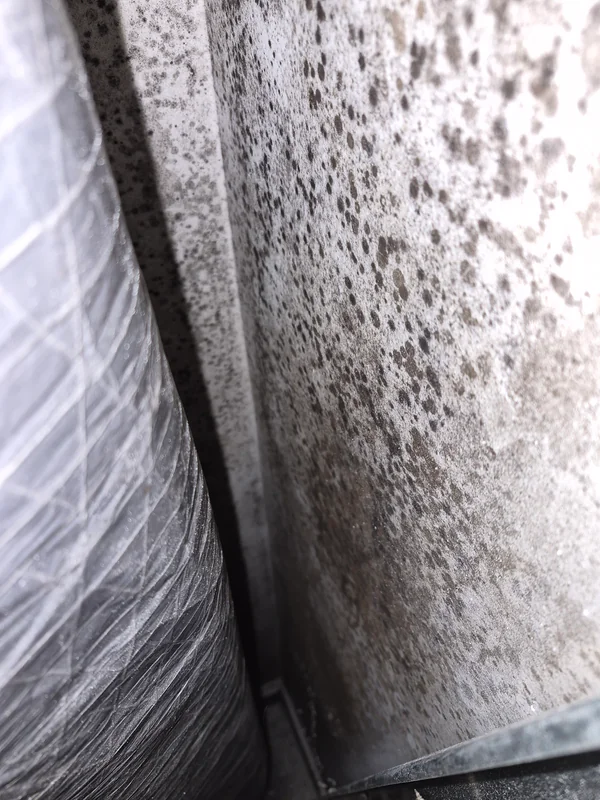
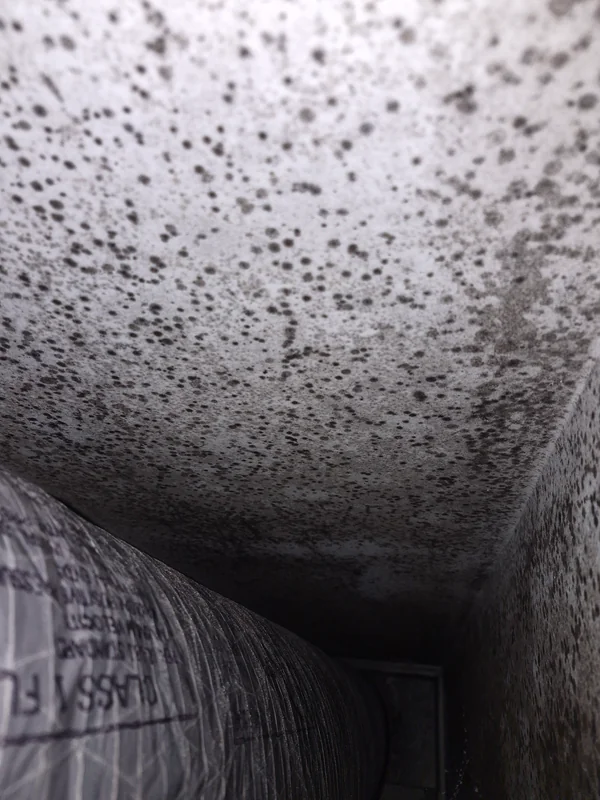
The most common sign is a musty smell that appears specifically when your HVAC system kicks on not a general basement smell, but something that travels through the vents into living spaces. You might also notice worsening allergy or respiratory symptoms that seem to improve when you’re out of the house for extended periods. Visible discoloration around registers or on vent covers can be a sign, but it’s often a late indicator by the time you can see something at the register, the problem deeper in the system has usually been building for a while.
In Stoopville homes built during the 1980s and 1990s, the risk is elevated because of how those homes were constructed. Attic ductwork in builder-grade construction tends to sweat during Pennsylvania’s humid summers, creating interior condensation that mold colonizes from the inside. The only way to know for certain is an inspection by someone who understands what they’re looking at. We offer that inspection at no charge, and we’ll tell you exactly what we find.
The honest answer is that it depends on the situation. The EPA’s position on routine duct cleaning cleaning just because time has passed is nuanced. They don’t recommend it as a blanket maintenance item the way some companies market it. However, the EPA is explicit about when duct cleaning is warranted: when mold is confirmed in the system, when there’s been a pest or rodent infestation in the ductwork, or when substantial debris is blocking airflow.
For most Stoopville homeowners asking this question, the relevant scenario is the first one suspected or confirmed mold, often tied to the moisture issues common in homes built during Stoopville’s main construction period. In that context, cleaning isn’t a maintenance preference, it’s a remediation step. And in that context, skipping it means your HVAC system continues distributing whatever is growing inside it to every room in the house. The cost of not cleaning in terms of ongoing health exposure, potential structural damage from untreated moisture, and the possibility of a more extensive remediation job later typically exceeds the cost of addressing it now.
Air duct cleaning is the mechanical process physically removing dust, debris, and biological material from inside the ductwork using professional vacuums and agitation equipment. It addresses what’s physically present in the system. Air duct sanitizing is a separate step that follows cleaning: an antimicrobial agent is applied to the interior duct surfaces to eliminate any remaining biological contamination at the surface level.
When mold is involved, both steps are typically necessary. Cleaning removes the visible mold colony and the debris it’s attached to. Sanitizing addresses residual spores and surface contamination that cleaning alone doesn’t fully eliminate. If a company offers only one or the other in a mold situation, that’s worth asking about. We approach mold in HVAC systems as a remediation job which means both mechanical cleaning and post-cleaning treatment are part of the process, followed by testing to confirm the results.
For most homes, a thorough professional air duct cleaning takes somewhere between four and six hours. That’s the industry-standard timeframe for a job done correctly both supply and return ducts cleaned, not just the registers you can see. If a company is quoting you a job that sounds like it’ll be done in an hour, that’s a red flag worth paying attention to.
For Stoopville-area homes built in the 1980s and 1990s, the square footage and duct configuration can affect timing. These are generally larger homes many in the 2,500 to 3,500 square foot range with ductwork that runs through finished attic spaces where access can be more involved. If mold is identified during the inspection, the process takes longer because containment has to be established before any disturbing of the mold colony begins. We’ll give you a realistic time estimate before the job starts, based on what the inspection actually reveals not a one-size number pulled from a brochure.
Yes, and that’s what makes HVAC-based mold different from mold in a single room or a basement corner. When mold is growing inside ductwork, every time your heating or cooling system runs, it draws air through the contaminated section and distributes it to every room connected to that system. A mold problem that starts in one section of attic ductwork can effectively become a whole-house exposure issue without the mold physically moving anywhere the air does the work.
This is particularly relevant in Stoopville, where the HVAC system runs heavily through hot, humid Bucks County summers and cold winters because the system is operating frequently and distributing air continuously. Bucks County receives about 49 inches of rain per year, well above the national average, which keeps ambient humidity elevated and gives mold more opportunity to establish and grow. Addressing mold in ductwork early, before it spreads to other surfaces in the home, is consistently less expensive and less disruptive than dealing with a whole-home remediation later.
It depends on what caused the mold in the first place. Homeowner’s insurance policies typically cover mold remediation when it’s the direct result of a covered water event a burst pipe, a roof leak after a storm, or water intrusion from a flooding event. Heavy rain and water intrusion are real scenarios for Stoopville homeowners. If moisture from a covered event worked its way into your HVAC system and caused mold growth, there’s a reasonable basis for an insurance claim.
What insurance typically doesn’t cover is mold that developed gradually due to deferred maintenance or pre-existing conditions like the slow moisture infiltration common in Stoopville’s 1980s and 1990s homes. The distinction matters, and it’s not always obvious from a homeowner’s perspective. We work directly with insurance companies, which means we understand how to document the damage properly and can help you navigate the claim process rather than leaving you to figure it out alone. If there’s any chance your situation involves a covered event, it’s worth having that conversation before you assume you’re paying out of pocket.
Other Services we provide in Stoopville