
Hear from Our Customers

Most Philadelphia County homeowners don’t realize how much their HVAC system is working against them until something forces the issue a musty smell when the heat kicks on, a kid with worsening asthma, or a mold remediation job that raised the question nobody thought to ask: what about the ducts?
Here’s what changes. The air circulating through your home stops redistributing whatever has been sitting in those ducts for years dust, mold spores, biological debris from a system that may have been retrofitted into a row home in the 1970s and never professionally cleaned since. Philadelphia County already earns straight “F” grades from the American Lung Association for outdoor air quality, ranking 17th worst in the nation for particulate pollution. The outdoor air is largely out of your hands. What circulates inside your home is not.
For families in neighborhoods like Holmesburg, Mayfair, or South Philadelphia where older housing stock and Philadelphia County’s humid summers create exactly the conditions mold needs to colonize HVAC components a proper duct cleaning isn’t a comfort upgrade. It’s the difference between a system that’s spreading the problem and one that’s actually doing its job. Philadelphia County’s pediatric asthma rate runs roughly two to three times the national average. Researchers point directly to indoor pollution, mold, and poor ventilation in older housing as key contributors. That context matters when you’re deciding whether this is worth doing.
We’ve been serving Philadelphia County and the surrounding metro area for over 15 years. That’s not a number pulled from a marketing template it means our team has worked inside the cramped basement duct systems of Northeast Philadelphia row homes, navigated the long dryer vent runs that attached housing forces on South Philadelphia and Kensington residents, and handled the kind of HVAC mold situations that show up specifically in homes built before central air was standard.
What separates us from a general duct cleaning company is the certification behind our work. We’re trained mold remediation specialists not HVAC technicians who added duct cleaning to their service list. When mold is present in a duct system, disturbing it without proper containment protocols spreads spores to every room the system reaches. We treat air duct cleaning with the same containment discipline as a full remediation job, because in many Philadelphia County homes, that’s exactly what it is.
We’re based in Bensalem, which puts us right on the border of Northeast Philadelphia meaning Holmesburg, Mayfair, Fox Chase, and Torresdale are practically local calls. We offer free inspections, upfront pricing, and 24/7 availability.
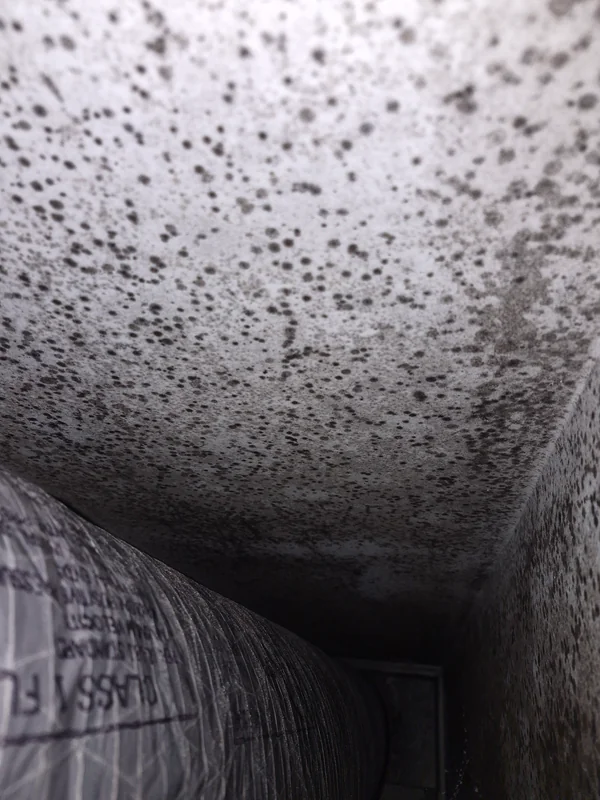
It starts with a free inspection. Before any cleaning begins, we evaluate the system not just a glance at the registers, but an actual assessment of what’s happening inside the ductwork. In Philadelphia County homes, that often means working around non-standard configurations: duct systems retrofitted into basements with limited clearance, flexible duct sections that have kinked or collapsed over decades, or dryer vents that travel long horizontal paths through multiple walls because the home is attached on both sides and has nowhere else to go. That’s not unusual here it’s the norm.
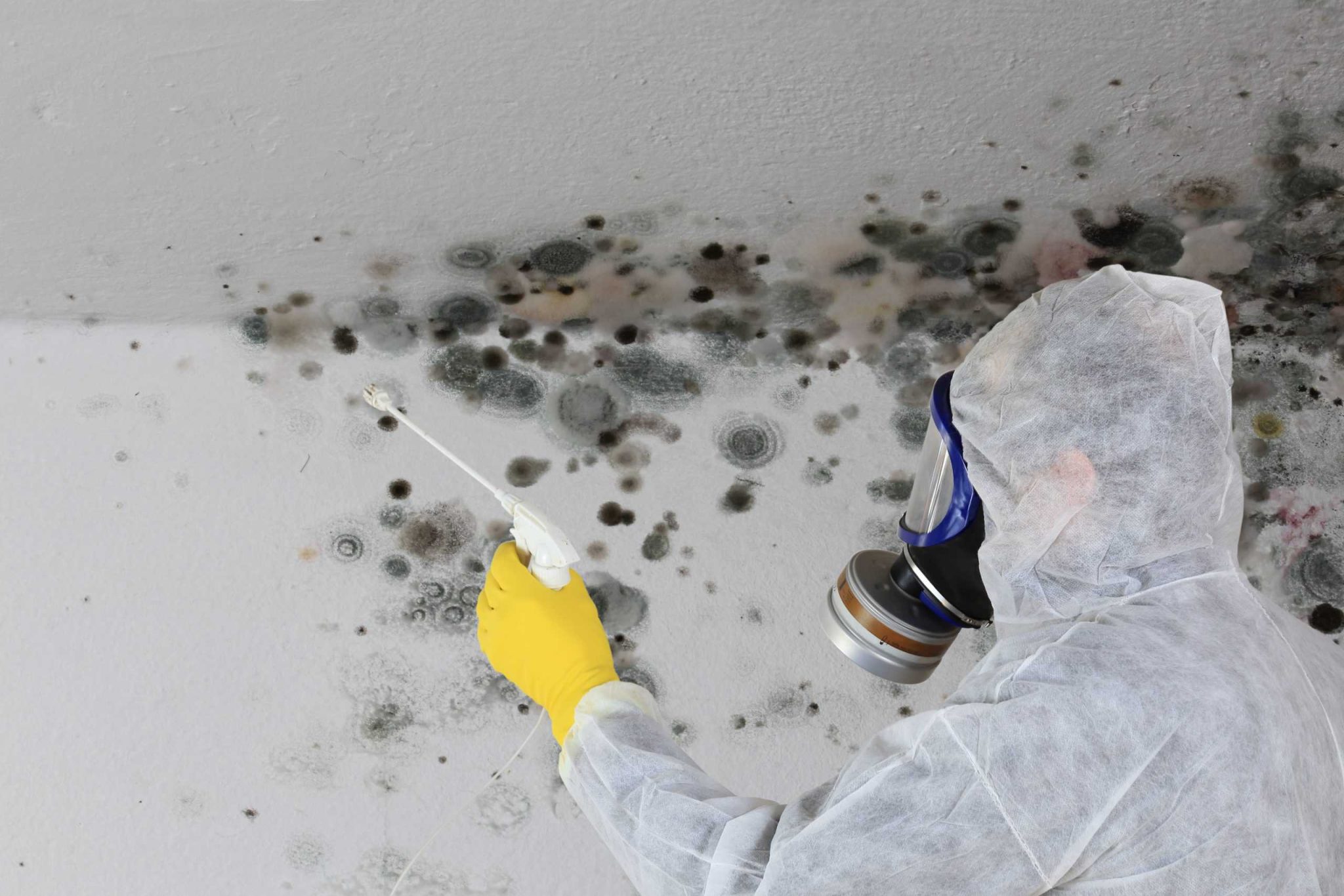
Once the scope is clear, you get a written quote before any work starts. The price you’re given is the price you pay. From there, we use professional-grade equipment negative air pressure systems and HEPA vacuums not the kind of tools a DIY approach or a $99 special can replicate. If mold is present, we establish containment protocols before anything is disturbed, which is the step that separates a mold specialist from a general duct cleaner.
After the work is done, we test to confirm the mold is actually gone not just cleaned around. That post-service verification step is something most Philadelphia County competitors skip entirely. You’ll know the job is finished because there’s documentation to prove it, not just a technician’s word.
Ready to get started?
Air duct cleaning covers the full system both supply and return ducts. Any company that cleans only one side is cutting corners, and in an older Philadelphia County home where both sides of the system have been accumulating debris for decades, that shortcut matters. We address the ductwork itself, but also flag conditions at the source: cooling coils, drain pans, and duct liner surfaces where mold colonization most commonly starts in Philadelphia County’s humid summers, when outdoor dew points regularly exceed 65°F and HVAC systems run at maximum dehumidification capacity for months at a time.
Air duct sanitizing is a separate step from cleaning and is often warranted when mold has been confirmed. Cleaning removes the physical debris; sanitizing applies antimicrobial treatment to address what’s left behind at a biological level. Both steps together are what a mold-contaminated duct system actually needs not one or the other.
We also offer dryer vent cleaning, and in Philadelphia County it carries a specific urgency. Row home configurations force dryer vents through long horizontal runs with multiple bends the exact setup where lint accumulates fastest and where the risk of a dryer fire is highest. The NFPA reports over 15,000 dryer-related house fires annually, with failure to clean vents as the leading cause. If your dryer is taking longer than it used to, that’s not a dryer problem it’s a vent problem. We handle it directly, with financing available if cost is a concern.

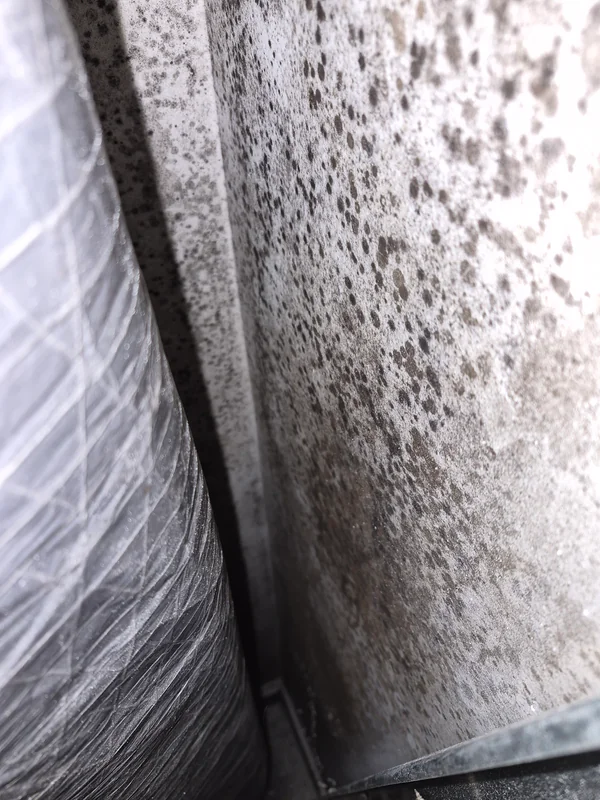
The most common sign is a musty smell that appears specifically when your HVAC system turns on not a general odor in the home, but one that kicks in with the airflow. That’s a strong indicator that something biological is living inside the duct system and getting distributed every time the system runs. Visible discoloration around registers or vents is another sign, though by the time you can see it at the register, the problem inside the ductwork is often more significant than what’s visible.
In Philadelphia County homes particularly those built before 1960, which is the majority of the area’s housing stock mold in HVAC systems is not a rare edge case. Mold colonization in cooling coils, drain pans, and ductwork liners is the most frequently documented indoor air quality failure mode in Philadelphia County buildings. The area’s humid summers push HVAC systems into exactly the temperature and humidity range where mold grows fastest. If you’re uncertain, a free inspection will tell you what you’re actually dealing with before any money changes hands.
For a newer home with modern ductwork, the answer depends on specific conditions. For a Philadelphia County row home built before 1950 which describes the majority of the area’s housing stock the question is almost always yes, and often overdue. Many of these homes were originally heated by radiators or coal furnaces and were retrofitted with forced-air ductwork decades later. That ductwork has been circulating air through the home ever since, in many cases without ever receiving a professional cleaning.
The row home configuration adds another layer. Attached housing means duct systems are often installed in cramped basement spaces with non-standard layouts, and dryer vents have to travel long horizontal runs through multiple walls to reach a legal exterior termination point. These configurations accumulate debris faster than standard suburban systems. Add Philadelphia County’s documented humidity levels and the area’s older housing stock, and you have a combination that makes professional cleaning genuinely useful not a maintenance upsell.
Yes, and this is one of the more serious reasons Philadelphia County families call us. Philadelphia County has a pediatric asthma rate that researchers at the University of Pennsylvania’s Perelman School of Medicine put at roughly two to three times the national average approximately 21% of Philadelphia County children. The research points directly to indoor pollution, including mold, pest allergens, and poor ventilation in older housing, as key contributors. North and West Philadelphia neighborhoods have the highest asthma-related hospitalization rates in the county.
When mold is present inside ductwork, every heating and cooling cycle distributes spores to every room the system reaches simultaneously. It turns a contained problem into a whole-home exposure event. If your child has been diagnosed with asthma or is experiencing unexplained respiratory symptoms, and your home is an older Philadelphia County property, the HVAC system is one of the first places worth investigating. A free inspection costs nothing and gives you a clear answer about what’s actually circulating in your home.
They’re two separate steps that address two different problems. Cleaning is the mechanical process using professional-grade equipment to physically remove dust, debris, mold colonies, and biological material from inside the ductwork. This is the foundational step, and it has to happen first. Sanitizing comes after, and it involves applying an antimicrobial treatment to the interior duct surfaces to address biological contamination that mechanical cleaning alone doesn’t fully eliminate.
In a Philadelphia County home where mold has been confirmed in the duct system, doing only one of these steps leaves the job incomplete. Cleaning without sanitizing leaves viable mold material on duct surfaces. Sanitizing without cleaning first means applying treatment over debris that’s still sitting in the system. When both conditions are present physical contamination and biological growth, which is common in Philadelphia County’s older housing stock given the area’s humidity levels both steps are warranted. We’ll tell you clearly which applies to your specific situation after the inspection, not before.
Slow drying is almost always a dryer vent problem, not a dryer problem. In a Philadelphia County row home, the dryer vent can’t exit through a side wall because both sides of the home are attached to neighbors. That means the vent run has to travel a long horizontal path through multiple walls, up through floors, or across the length of the basement to reach a legal exterior termination point. These extended runs with multiple bends are where lint accumulates fastest, and as the vent narrows with lint buildup, airflow drops, drying times increase, and the dryer runs hotter to compensate.
This is a documented fire risk, not just an inconvenience. The NFPA reports over 15,000 dryer-related house fires annually in the United States, with failure to clean the vent as the leading cause. If your clothes are taking two cycles to dry or your dryer feels unusually hot to the touch, the vent is likely the issue. A professional cleaning clears the full run not just the accessible section near the dryer and restores proper airflow throughout the system.
Yes. We serve Philadelphia County directly, and our Bensalem base puts us right on the border of Northeast Philadelphia. Neighborhoods like Holmesburg, Mayfair, Fox Chase, Rhawnhurst, Torresdale, and Bustleton are among the closest Philadelphia County areas to our home base which translates to faster response times and genuine familiarity with the housing conditions in that part of the county. Northeast Philadelphia has a significant concentration of mid-century detached and semi-detached homes from the 1950s and 1960s, which have their own HVAC characteristics distinct from the older attached row homes that dominate South, North, and West Philadelphia.
We also serve Center City, South Philadelphia, West Philadelphia, Germantown, Roxborough, Kensington, and surrounding neighborhoods throughout Philadelphia County. We’re available 24/7 for urgent situations, and multiple customers have specifically noted same-day or next-day response. If you’re not sure whether your address falls within our service area, a quick call will confirm it and if it’s a mold or HVAC emergency, that call is worth making sooner rather than later.
Other Services we provide in Philadelphia County