
Hear from Our Customers
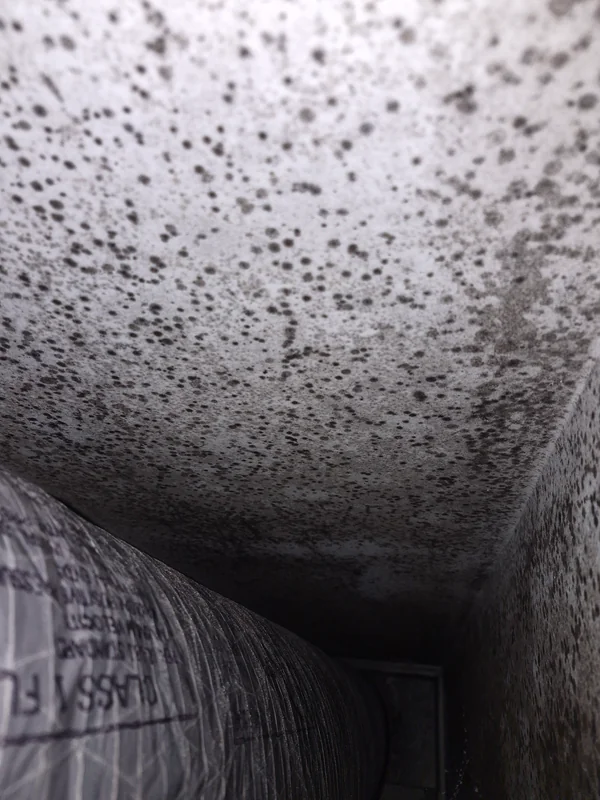
When your heat or AC kicks on and you catch that musty smell, it’s not just old dust burning off. In Olney’s brick rowhouses most built between the 1920s and 1960s ductwork was retrofitted into homes that were originally designed for radiators. That ductwork runs through tight basement cavities, narrow wall chases, and cramped attic spaces where moisture collects and mold grows long before you’d ever notice it at the register.
Philadelphia’s outdoor humidity averages around 65% in summer, and the city sees roughly 60 inches of rain a year. That moisture doesn’t stay outside. In older Olney homes with aging duct materials and connections that have loosened over decades, it finds its way in. When your HVAC system draws return air from a damp basement which is the reality in most pre-war Olney rowhouses it pulls whatever’s growing down there directly into the ductwork and delivers it to every room, every time the system runs.
Getting your ducts cleaned means that cycle stops. You’re not masking the smell or hoping it goes away on its own. You’re finding out what’s actually in there, addressing it properly, and breathing air that isn’t being filtered through decades of accumulated dust, moisture, and potential mold growth. That’s the difference between a quick fix and a real one.
We’ve been doing this work for over 15 years, based in Bensalem and serving Olney and the surrounding North Philadelphia area as part of our regular service territory. We know this neighborhood the age of the housing stock, the moisture challenges in the basements, and the specific way ductwork was retrofitted into homes that were never designed for it.
What sets us apart from a general duct cleaning company is our mold background. Our team includes certified mold remediation specialists who understand how mold grows, where it hides, and what it takes to actually eliminate it not just clean around it. In Olney, where the housing stock is older, the basements are damp, and the ductwork was often added long after the home was built, that expertise matters. A duct cleaner without mold training can disturb mold colonies and spread spores further into your home without even knowing it.
We also offer free inspections and upfront pricing. You’ll know what you’re dealing with and what it costs before any work begins.

It starts with a free inspection. One of our certified technicians comes to your Olney home, takes a real look at your HVAC system and ductwork, and tells you honestly what we find. In older rowhouses throughout the 19120 ZIP code, that inspection often includes checking where your dryer and bathroom exhaust vents actually terminate because in Philadelphia row homes and twins, those vents are frequently routed under the roof deck instead of to the exterior. Every load of laundry then pumps warm, moisture-laden air into your attic rather than outside, and over time that creates exactly the kind of hidden mold conditions that nobody catches until they’re significant.
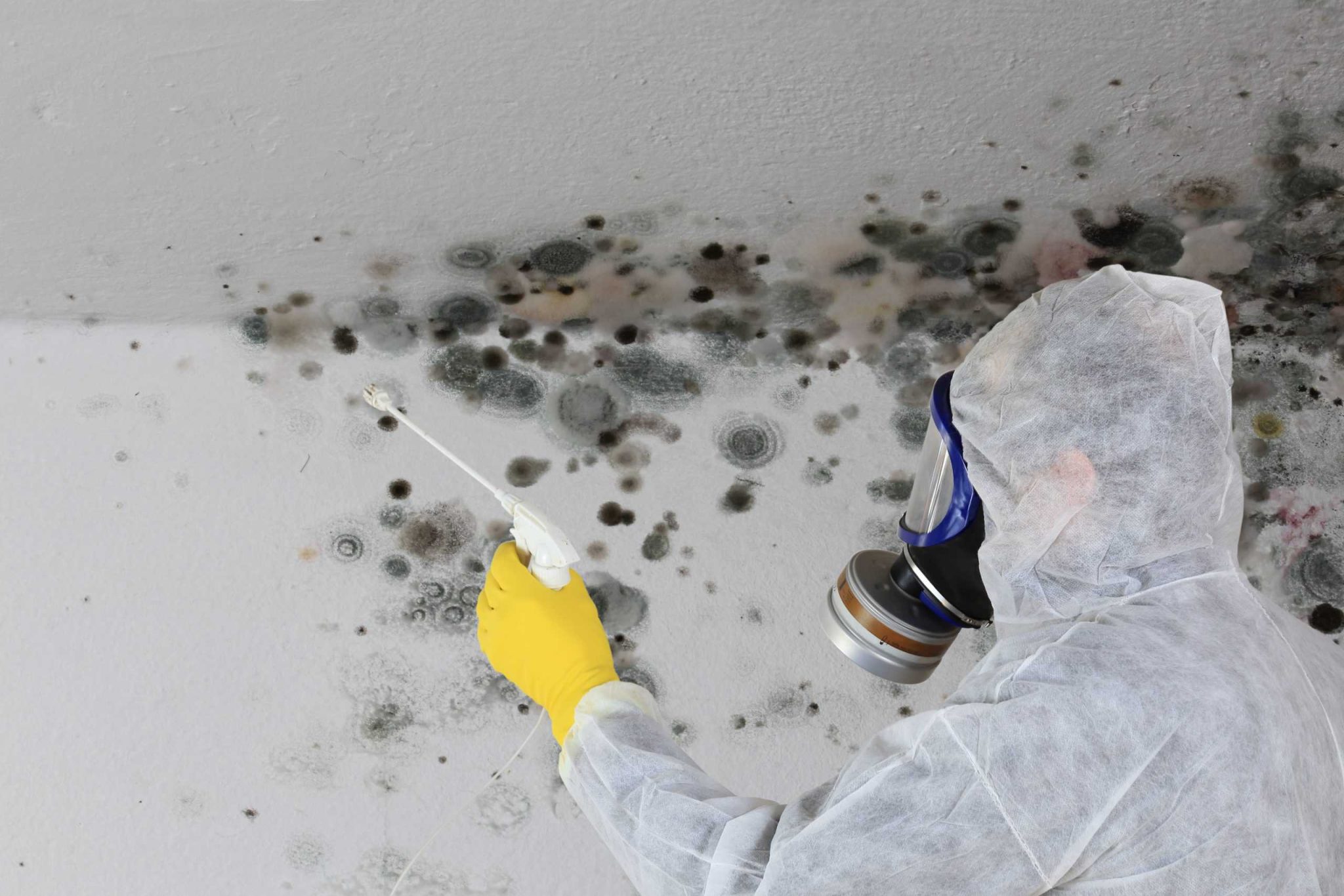
Once the inspection is done, you get a clear picture of what needs to happen and what it will cost. No surprises. If mold is found in the ductwork, our process includes proper containment before any cleaning begins which is what separates a certified mold specialist from a standard duct cleaning crew. Disturbing mold without containment protocols spreads spores. We don’t skip that step.
After the cleaning is complete, we test the affected areas to confirm the mold has actually been eliminated. You get documentation of the results not just a handshake and an invoice. For Olney homeowners dealing with older systems in homes that have seen a lot of Philadelphia weather, that post-cleaning verification is the part that actually lets you breathe easy.
Ready to get started?
Air duct cleaning is the core of what we do here, but it rarely exists in isolation especially in Olney’s older housing stock. Our full scope of services includes mold inspection and testing, HVAC duct cleaning, air duct sanitizing, dryer vent cleaning, and indoor air quality testing. Depending on what the inspection turns up, some or all of these may be relevant to your home.
Dryer vent cleaning is worth calling out specifically for this neighborhood. The NFPA reports roughly 15,970 dryer-related house fires every year, and failure to clean the vent is the leading cause. In Olney’s rowhouses where vents are sometimes routed through interior spaces rather than directly outside the fire risk is compounded by the mold risk. One service addresses both. We inspect where the vent goes, clear any blockage, and confirm it’s terminating correctly.
Air duct sanitizing is a separate step from mechanical cleaning. Cleaning removes the physical debris and mold colonies; sanitizing applies antimicrobial treatment to address what remains at a biological level. When mold has been present in a duct system particularly in a home where basement moisture has been feeding the problem for years sanitizing is the step that closes the loop. We also work directly with insurance companies if mold in your ductwork is connected to a covered water damage event, which takes a significant burden off your plate during an already stressful situation. Flexible financing is available if cost is a concern.
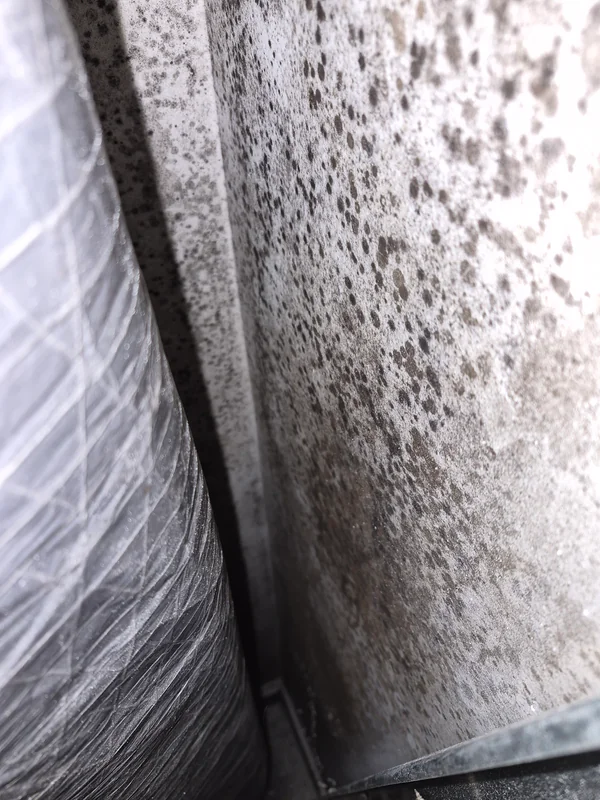
The most common sign is a musty or stale smell that shows up specifically when your heating or cooling system kicks on. If the smell fades after the system runs for a few minutes and then comes back the next time it starts, that pattern points toward something biological in the ductwork not just dust. You might also notice worsening allergy or asthma symptoms indoors that don’t match what’s happening outside, or visible discoloration around vent registers.
In Olney specifically, the age and construction of the housing stock makes this more common than people realize. Homes built between the 1920s and 1960s with retrofitted ductwork running through damp basement cavities are exactly the environment where mold establishes itself in HVAC systems. The only way to know for certain is a proper inspection. We offer free inspections, so you’re not paying to find out whether you have a problem you’re only paying if you do and you choose to address it.
This is a fair question, and the skepticism is earned. The industry has a well-documented problem with low-ball offers the “$99 air duct cleaning” that turns into an aggressive upsell once a technician is in your home. The EPA has also published nuanced guidance noting that routine duct cleaning, absent a specific problem, has unclear benefits. So the skepticism makes sense.
Here’s the distinction that matters: the EPA’s guidance also explicitly recommends cleaning when mold is confirmed in the ductwork, when there’s evidence of pest or rodent activity, or when significant debris is clogging the system. Those aren’t edge cases in Olney’s older housing stock they’re common findings in homes with aging ductwork, damp basements, and systems that haven’t been serviced in years. If a free inspection turns up none of those issues, you’ll be told that honestly. If it does find a real problem, cleaning isn’t optional maintenance it’s the appropriate response to a documented health and safety issue.
Philadelphia’s average outdoor relative humidity sits around 65% in summer, and the city receives approximately 60 inches of precipitation annually well above the national average. In a newer, well-insulated home, modern vapor barriers and sealed ductwork reduce how much of that outdoor humidity gets into the HVAC system. In an older Olney rowhouse, those protections often aren’t there.
Pre-war foundations in this neighborhood stone, brick, or early poured concrete weren’t waterproofed by modern standards. Water wicks through mortar joints and accumulates in basement walls and floors. When the HVAC return air is located in or near that damp basement, the system pulls moisture and mold spores directly into the ductwork with every cycle. Add Philadelphia’s humid summers to a 60-to-100-year-old duct system running through uninsulated cavities, and mold growth isn’t a worst-case scenario it’s a predictable outcome. Addressing it means cutting off the moisture pathway, cleaning what’s already in the ducts, and verifying the results.
They’re two separate steps that address two different parts of the same problem. Air duct cleaning is the mechanical process using professional equipment to physically remove dust, debris, mold colonies, and buildup from inside the ductwork. This is the part that requires negative air pressure systems and HEPA vacuums, not a shop vac and a brush kit. Done correctly, it takes several hours for a typical home.
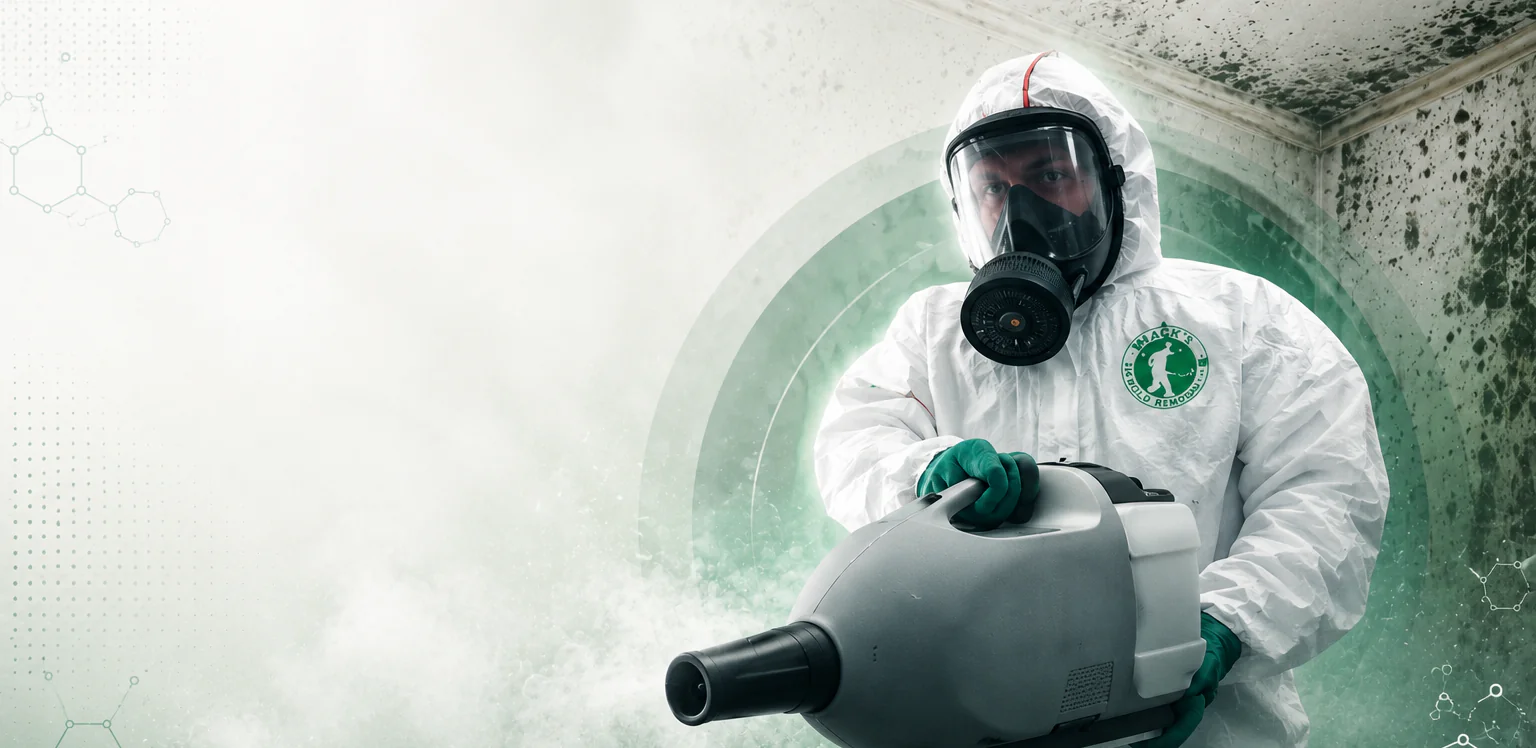
Air duct sanitizing happens after the mechanical cleaning. It involves applying an antimicrobial treatment to the interior surfaces of the ductwork to address biological contamination at a level that physical removal alone can’t reach. When mold has been actively growing in a duct system particularly in a home where basement moisture has been feeding it over a long period sanitizing is what finishes the job. In Olney’s older housing stock, where mold-friendly conditions have often existed for years before anyone looked, skipping the sanitizing step means leaving the door open for the problem to return. We handle both, and the inspection will tell you which steps are actually warranted in your specific situation.
Possibly, and it’s worth finding out before you assume the job is done. The basement and the HVAC system aren’t separate problems if the return air for your system is located in or near the basement which is common in Olney’s rowhouses, where mechanical systems were retrofitted into whatever space was available. If mold was growing in the basement while the HVAC was drawing return air from that space, spores were being pulled into the ductwork and distributed throughout the home every time the system ran.
Remediating the basement source is the right first step. But if the ductwork was never inspected as part of that process, there’s a real possibility that mold is still present in the system and will continue to circulate or recontaminate the remediated space. A post-remediation duct inspection is the check that closes that loop. We can assess the ductwork specifically in the context of a completed remediation job and tell you whether additional cleaning is warranted or whether the system is clear.
The industry standard recommendation is every three to five years for a typical home under normal conditions. For Olney homeowners, “normal conditions” is doing a lot of work. The combination of older housing stock, high ambient humidity, aging ductwork, and the moisture infiltration common in pre-war rowhouse basements means the conditions that drive mold growth in HVAC systems are present year-round not just seasonally.
A few situations should move the timeline up regardless of when the last cleaning happened: if you’ve recently had any water damage or mold remediation done elsewhere in the home, if you’ve noticed a musty smell when the system runs, if allergy or respiratory symptoms have worsened indoors, or if you’ve purchased an older home in the neighborhood and have no record of when the ducts were last serviced. For homes near the eastern edge of Olney along Tacony Creek, where ground-level moisture is elevated year-round due to proximity to the waterway, more frequent inspection makes sense. When in doubt, a free inspection gives you a current, honest picture of what’s actually in the system and from there you can make a call based on real information rather than a general rule.
Other Services we provide in Olney