
Hear from Our Customers
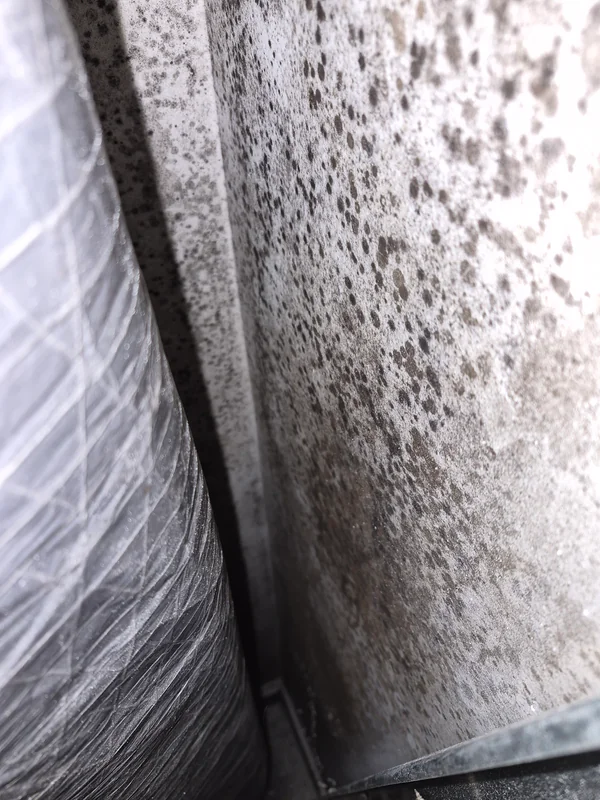
That musty smell when the heat kicks on in October isn’t just old house character. In Oak Tree Hollow, where every home was built between 1952 and 1958 without modern vapor barriers or sealed duct systems, it’s usually a sign that mold has been growing undisturbed in your ductwork quietly circulating through every room every time your HVAC runs.
When that gets addressed properly, the difference is noticeable. The smell goes away. Allergy symptoms that you’ve been chalking up to seasonal changes start to ease. You stop wondering what your kids or grandkids are breathing in when they’re home.
Bucks County sees about 49 inches of rain annually well above the national average of 38 inches. In a Levitt-built ranch with a crawl space that was never fitted with a modern moisture barrier, that rainfall doesn’t just stay outside. It works its way in, and your HVAC system pulls that moisture-laden air through the house on every cycle. Getting the ducts professionally cleaned and sanitized by someone who understands what’s actually causing the problem, not just what’s visible at the register is what breaks that cycle.
We’re based in Bensalem about 8 to 10 miles from Oak Tree Hollow and have been serving Bucks County homeowners for over 15 years. That’s not a coincidence. This area has a specific set of housing challenges that a generalist company isn’t equipped to handle, and Levittown’s 1952-to-1958 construction is at the top of that list.
We are certified mold inspectors and remediation specialists, not general HVAC cleaners. That distinction matters when you’re dealing with a 70-year-old home whose crawl space was built before vapor barriers were standard and whose ductwork has never been professionally inspected. We send mold samples to a lab for analysis, and we test affected areas after the job is done not just to say the work is finished, but to prove it.
Financing is available, and we work directly with insurance companies when mold is tied to a covered event something that comes up more often than you’d expect in a neighborhood full of aging plumbing and original construction.

It starts with a free inspection. Before anything gets cleaned, one of our certified inspectors looks at your system not just the registers you can see, but the interior duct sections where mold actually grows. In Oak Tree Hollow homes, that often means paying close attention to the areas near the crawl space, the basement, and any sections of ductwork that have been modified during the home’s many rounds of renovation over the decades. This is where the problem usually lives, and it’s where we look first.
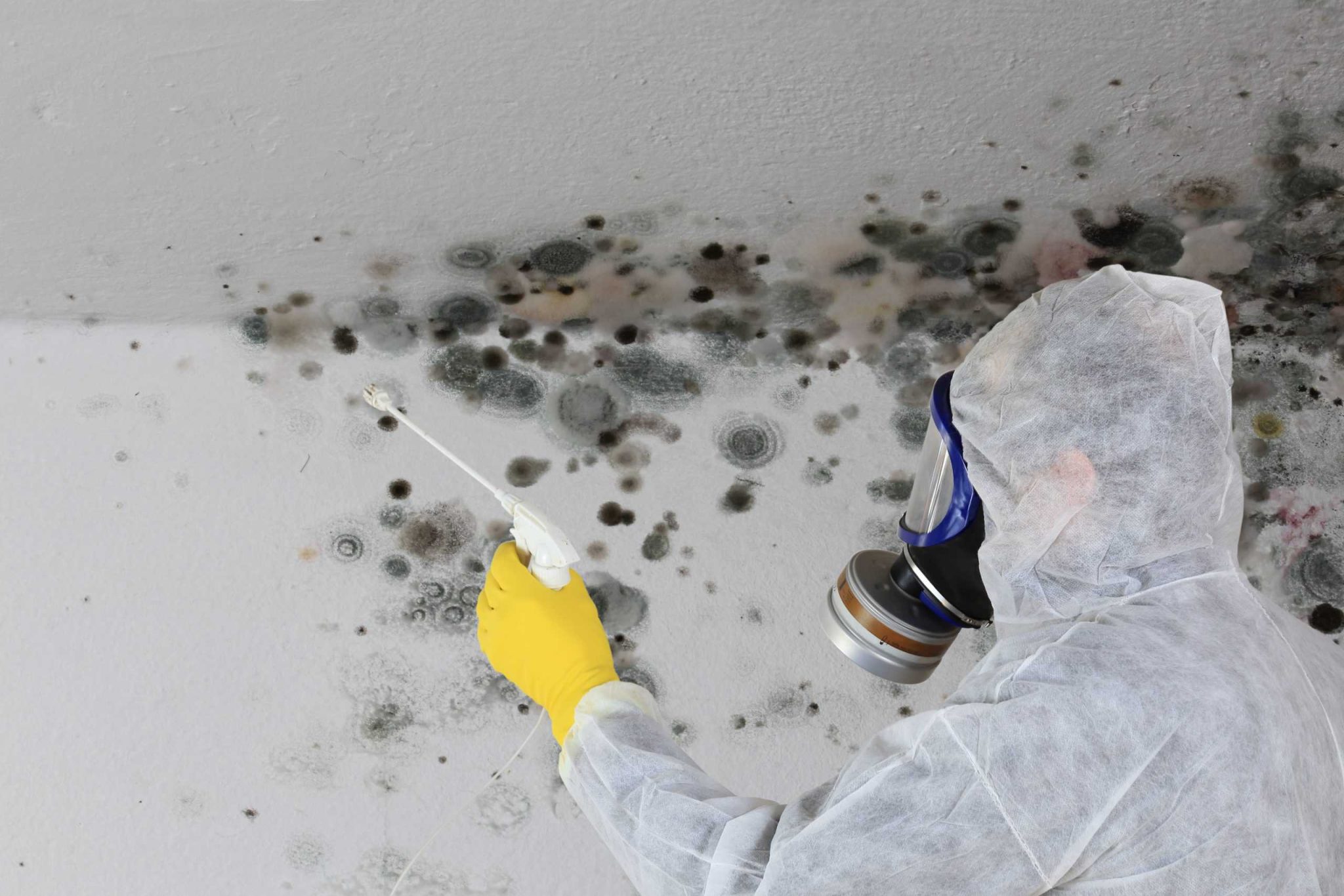
From there, if mold is confirmed, samples go to a lab. That tells us exactly what we’re dealing with and how to address it not just mechanically cleaning the debris, but containing the affected area so spores don’t spread to the rest of the house during the process. A general duct cleaner skips that step. We don’t.
Once the cleaning is done, the work gets verified. We test affected areas again to confirm the mold is actually gone documented, not just assumed. If air duct sanitizing is warranted, we apply antimicrobial treatment to inhibit regrowth, which matters in a home where the moisture source isn’t going away on its own. You’ll know what was found, what was done, and what the results showed.

Ready to get started?
Air duct cleaning covers the full system supply ducts, return ducts, and the interior ductwork that runs through the walls and floors of your home. In a Levittown ranch, that often means navigating duct configurations that have been modified or extended over 70 years of ownership, sometimes by multiple families. We account for that. Our inspection documents what’s there before anything is touched, and our cleaning addresses the full system, not just the accessible sections.
Dryer vent cleaning is also available and worth taking seriously in a neighborhood of homes this age. The NFPA reports that failure to clean dryer vents is the leading cause of dryer-related house fires and in Oak Tree Hollow, where original or modified vent pathways have been accumulating lint for decades, that’s not a theoretical risk. We clear the full vent run and confirm airflow is unobstructed.
Air duct sanitizing is offered as a follow-up step when mold is involved. Mechanical cleaning removes the physical debris, but sanitizing applies an antimicrobial treatment that kills remaining biological contaminants and slows regrowth particularly important in homes where the underlying moisture source, like an aging crawl space or original plumbing, can’t be fully eliminated in a single visit. We build the scope around what your home actually needs, confirmed during the free inspection.
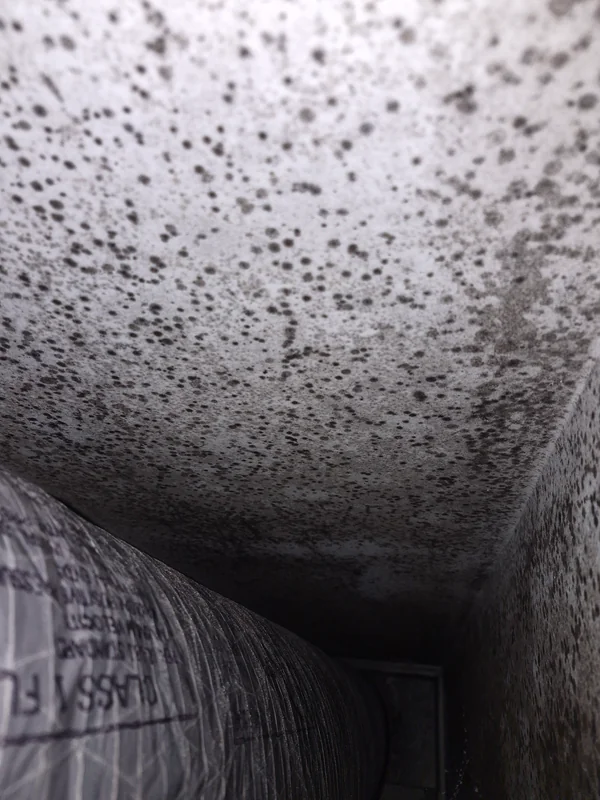
That smell is one of the most common complaints from Oak Tree Hollow homeowners, and it almost always points to the same thing: mold that’s been growing in the duct system during the warmer months and goes unnoticed until the heat activates for the first time in fall. When your air conditioning runs all summer, the evaporator coils collect condensation. In a home without modern vapor barriers under the crawl space which describes nearly every house in Oak Tree Hollow that moisture has nowhere to go, and the duct system becomes a feeding ground for mold.
The reason it smells worse when the heat kicks on is that the system is now pushing warm air through sections of ductwork that have been sitting damp and undisturbed since spring. A lot of homeowners assume it’s just how old houses smell. It’s not. It’s a sign that something is growing in there, and a certified inspection can tell you exactly what and where. That’s the starting point and our inspection is free.
The most common signs are a persistent musty odor when the HVAC system runs, worsening allergy or respiratory symptoms that seem to improve when you’re away from home, and visible discoloration around vent registers. In Oak Tree Hollow specifically, the housing stock makes mold in ductwork more likely than in newer construction the crawl spaces, concrete block foundations, and attic ventilation in 1952-to-1958 Levitt homes were never designed to manage the moisture levels that Bucks County’s humid summers produce.
That said, you can’t confirm mold by looking at the register. Most mold growth in duct systems happens deep inside the ductwork where it’s dark, damp, and out of sight. A professional inspection with lab testing is the only way to know for certain what species is present, how far it’s spread, and what the right course of action is. We offer free inspections so there’s no cost to finding out.
They’re two separate steps, and whether you need both depends on what’s in your system. Cleaning is the mechanical process removing dust, debris, and biological matter from the duct interior using professional equipment. Sanitizing is what comes after, when mold is involved: an antimicrobial treatment is applied to kill remaining biological contaminants and inhibit regrowth in the duct walls.
For most Oak Tree Hollow homes, if mold is confirmed in the duct system, cleaning alone isn’t the complete answer. The moisture conditions that allowed mold to grow in the first place aging crawl spaces, original construction without modern vapor barriers, Bucks County’s above-average rainfall don’t disappear after a cleaning. Sanitizing adds a layer of protection that slows regrowth between cleanings. Whether it’s warranted in your specific situation gets determined during the inspection, not assumed upfront.
Yes, and it happens faster than most people expect. Your HVAC system is essentially a distribution network every time it runs, it’s moving air from one part of the house to every other part. If mold is growing in one section of ductwork, the system is actively circulating spores through every room on every cycle. In a 1,000 to 2,200 square foot Levitt ranch like the ones in Oak Tree Hollow, that means the whole house is being exposed every time the heat or air conditioning runs.
This is also why it matters that the company doing the cleaning has mold remediation training, not just duct cleaning equipment. Disturbing mold inside a duct system without proper containment protocols can dislodge spores and push them further into the home. We use the same containment procedures in duct work that certified remediators use in structural mold jobs because the risk of spreading the problem is real if it’s not handled correctly.
The industry standard recommendation is every three to five years for a typical home, but that baseline assumes reasonably modern construction and no significant moisture issues. Oak Tree Hollow homes don’t fit that baseline. With original or modified ductwork, crawl spaces that were built before vapor barriers were standard, and Bucks County’s consistently high annual rainfall, the conditions that lead to mold and debris buildup in ductwork are more persistent here than in newer suburban construction.
A practical approach for most Oak Tree Hollow homeowners is to start with a professional inspection if the ducts have never been cleaned or if it’s been more than a few years since the last cleaning. From there, we can give you a realistic sense of what your system looks like and how often it should be serviced based on your home’s specific conditions, not a generic schedule. If you’ve recently had mold remediated elsewhere in the home, getting the ducts checked at the same time is worth doing before the system redistributes anything that was disturbed.
Air duct cleaning as a standalone service does not require a permit in Bristol Township, which is the municipality that covers Oak Tree Hollow. The work is performed inside the existing duct system and doesn’t involve structural changes, plumbing, or electrical work that would trigger a permit requirement.
Where permits can come into play is if the inspection uncovers damage that requires significant ductwork repair or replacement, or if mold remediation work extends into structural areas of the home. In those situations, Bristol Township may require a permit depending on the scope. We can help you understand what’s involved after the inspection, and if insurance is part of the picture, we work directly with insurance companies to help navigate the process. That’s something most duct cleaning companies don’t offer, and in a neighborhood full of 70-year-old homes where aging infrastructure surprises are common, it’s worth knowing that support is available.
Other Services we provide in Oaktree Hollow