Hear from Our Customers

When your HVAC system is clean and clear, the difference isn’t subtle. Allergy symptoms that seemed to come out of nowhere start to ease. The musty smell that kicked on every time the AC ran is gone. You stop wondering what your family is breathing and start feeling like your home is actually working for you.
For Neshaminy Falls residents, that outcome matters more than it does in most places. Homes in this area many of them ranches, Cape Cods, and split-levels built between the 1940s and 1970s sit in one of the more moisture-loaded pockets of Bucks County. Neshaminy Creek runs directly through the community, and when it rises during spring rains or a nor’easter, that water doesn’t just stay in your basement. It works its way into wall cavities, crawl spaces, and eventually into the air handling system that circulates air through every room in your house.
Older HVAC systems in these homes compound the problem. A system that’s 30 or 40 years old wasn’t designed to handle the area’s average July humidity of 66%. When it can’t keep up, condensation builds inside the ductwork and that’s exactly the environment where mold takes hold. Getting your ducts properly cleaned and inspected isn’t routine maintenance here. It’s a direct response to the conditions your home is actually dealing with.
We’re based on Neshaminy Valley Drive in Bensalem not a regional franchise dispatching crews from a hub somewhere else, but a locally rooted operation that has been inspecting and remediating mold in Bucks County homes for over 15 years. We’ve worked in thousands of properties across Neshaminy Falls and the surrounding area, which means the conditions here the creek flooding, the aging housing stock, the humidity aren’t abstractions. They’re what the job looks like every week.
What separates us from the other air duct cleaning companies serving this area is the credential behind the work. We’re a certified mold remediation specialist that cleans ducts. Other companies are duct cleaners. That distinction matters when mold is involved, because disturbing mold without proper containment protocols doesn’t clean the problem it spreads it. Every inspection starts with a free walkthrough and ends with a written upfront quote. No surprises on the invoice.
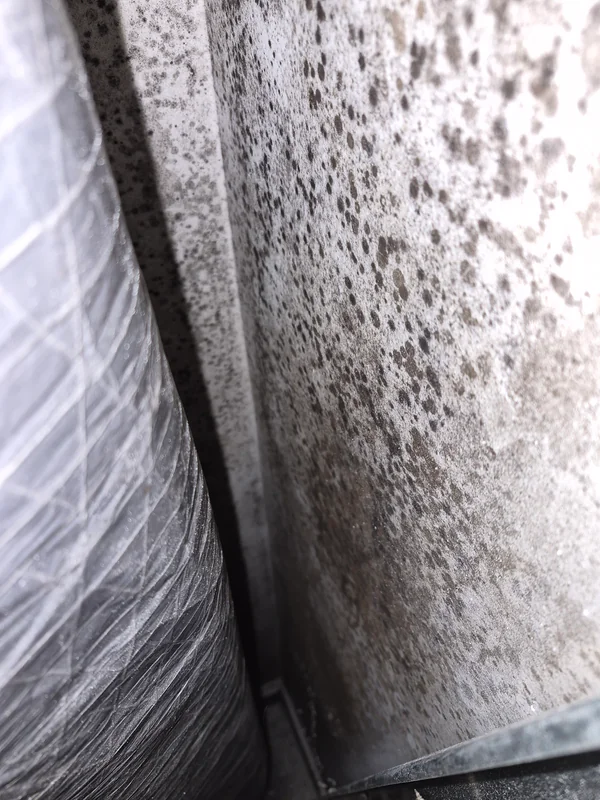
It starts with a free inspection. Before any equipment comes out, a certified inspector walks through your home, checks the ductwork, looks at the air handling unit, and identifies whether mold is present, where it’s concentrated, and how far it may have spread. In Neshaminy Falls homes with a history of basement water intrusion whether from Neshaminy Creek flooding or heavy seasonal rains that inspection often includes a look at moisture conditions in the areas most likely to feed the HVAC system.
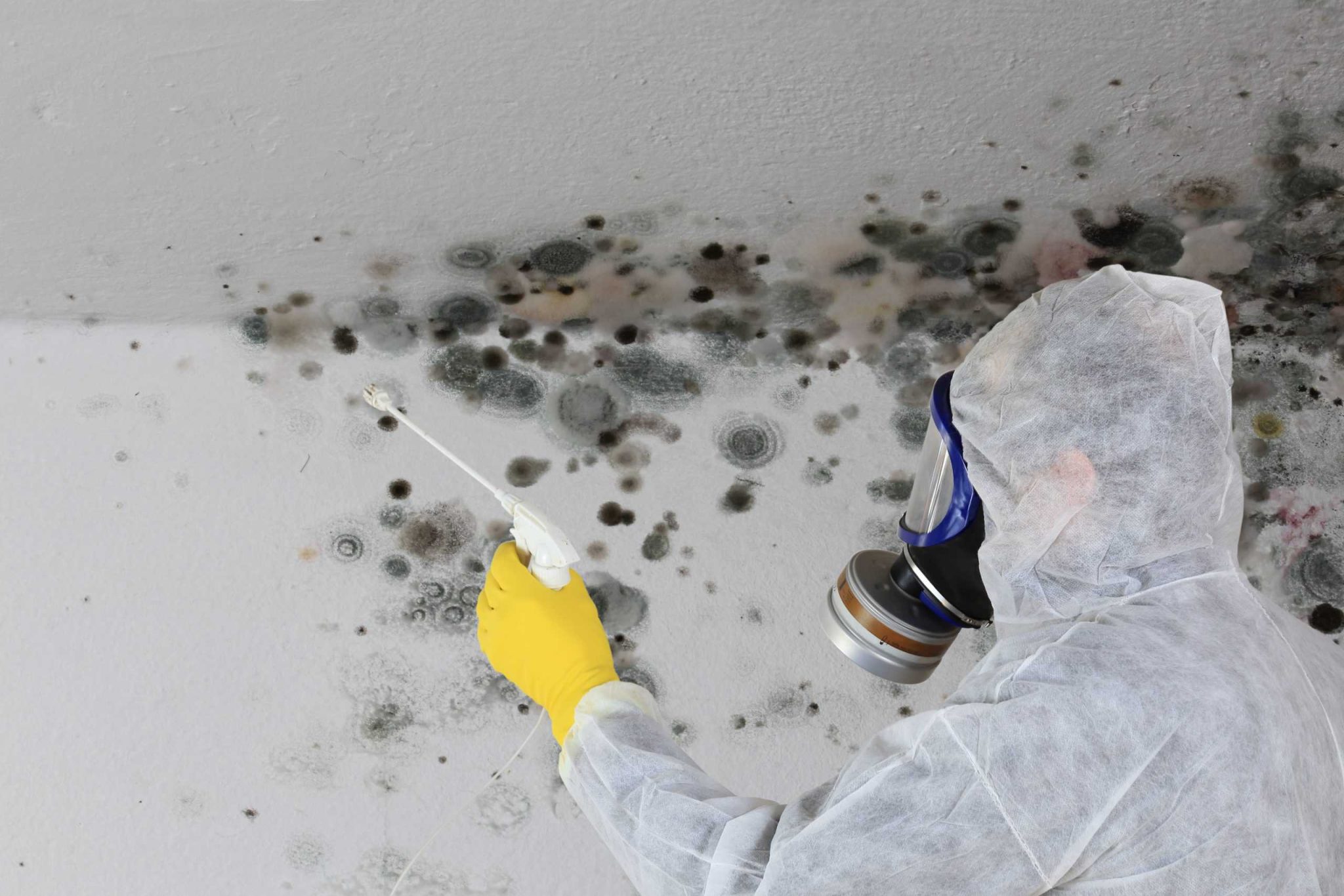
If mold is confirmed in the ductwork, containment comes before cleaning. This is the step general duct cleaners skip, and it’s the most important one. We use proper containment protocols to prevent spores from being redistributed through the rest of the house during the cleaning process. Then the mechanical cleaning begins supply ducts, return ducts, and the air handling components that most single-service cleaners don’t touch.
Air duct sanitizing is applied after the mechanical cleaning is complete to address any remaining biological contamination. The job doesn’t end when the equipment leaves. We test affected areas after the work is done to confirm the mold is actually gone not just cleaned around. You get documentation. For homeowners whose duct contamination stems from a documented water damage event, we also work directly with insurance companies to help navigate the claims process, which is a realistic scenario for many properties in this area given the creek-adjacent flooding history.
Ready to get started?
Air duct cleaning through our service covers the full system not just the registers you can see. Supply ducts, return ducts, and the internal air handling components are all addressed. In older Neshaminy Falls homes where duct runs may pass through moisture-affected wall cavities or crawl spaces, that thoroughness isn’t optional it’s the only way to get a complete picture of what’s happening inside the system.
We also offer dryer vent cleaning, which is worth taking seriously, especially in post-war Cape Cods and split-levels where dryer vent runs are longer and often routed through interior walls before exiting the home. The NFPA tracks roughly 15,970 dryer-related house fires per year nationally, with failure to clean vents as the leading cause. In a home built before 1980 with original or early-replacement ductwork, that’s not a theoretical risk.
Air duct sanitizing applying antimicrobial treatment after the mechanical cleaning is part of the process when mold is involved, not an upsell tacked on at the end. For homeowners dealing with confirmed mold in the HVAC system, we bring certified mold remediation expertise to the job, including lab analysis of samples and post-remediation testing to verify results. We offer flexible financing for homeowners managing multiple repair priorities at once, and we work directly with insurance companies when the mold or water damage is part of a documented claim. Pennsylvania does not require a state license for air duct cleaning, but our certified mold remediation credentials go well beyond what any general duct cleaning company in this area holds.
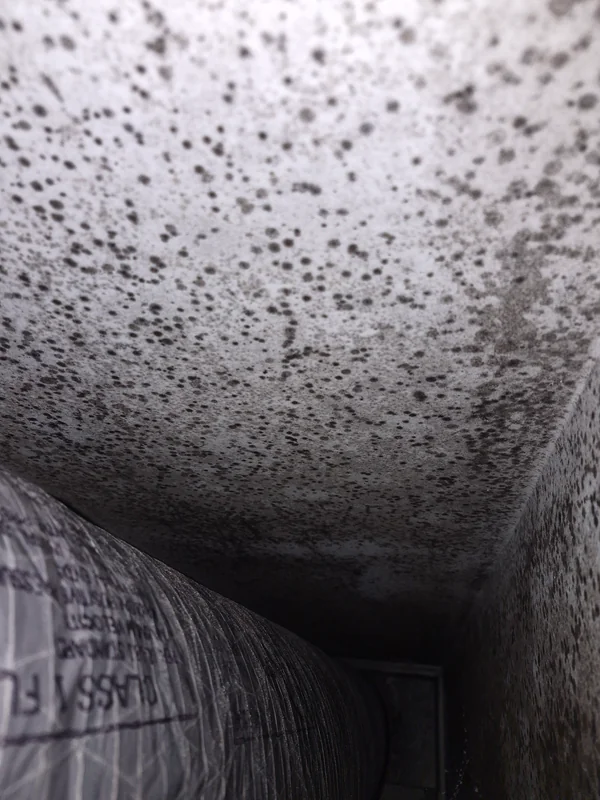
Yes, and it’s more common in Neshaminy Falls than most homeowners realize. When water gets into a basement even a modest amount from seasonal creek flooding or a heavy nor’easter it doesn’t stay contained. Moisture migrates into wall cavities, travels along floor joists, and reaches the spaces where ductwork runs. An air handler pulling return air from a damp basement or a duct run passing through a moisture-affected wall is essentially a mold incubator operating on a timer.
Homes in the Neshaminy Falls area that sit close to Neshaminy Creek are particularly exposed to this cycle. The creek has a documented history of rising during spring rains, and the area’s older housing stock ranches, Cape Cods, and split-levels with minimal original waterproofing doesn’t have much defense against that kind of moisture pressure. If you’ve had any water in your basement in the past two to three years, a professional mold inspection of your HVAC system is worth doing. Waiting until you smell something is usually waiting too long.
The most reliable sign is a musty or earthy smell that appears specifically when your HVAC system kicks on not a general household odor, but something that comes and goes with the airflow. You might also notice worsening allergy or asthma symptoms that seem tied to being inside the house, or visible dark discoloration around vent registers that looks different from ordinary dust.
The problem is that most mold in ductwork grows in sections you can’t see deep inside supply runs, on evaporator coils, or in the air handler cabinet. By the time you notice discoloration at the register, the contamination is often well-established further back in the system. A flashlight check at the register opening tells you almost nothing about what’s happening six feet in. The only way to know for certain is a professional inspection that includes actual sampling and lab analysis which is what we provide as part of the free inspection process.
It does, in a few meaningful ways. Homes built in the 1960s in Neshaminy Falls often have HVAC systems that have been partially updated over the decades but still include original duct runs sometimes in materials or configurations that weren’t designed for modern humidity management. The area averages 66% relative humidity in July and August, and a system that’s several decades old often can’t dehumidify effectively enough to prevent condensation from forming inside the ductwork during those months.
Older homes also tend to have duct runs that pass through unconditioned spaces crawl spaces, uninsulated wall cavities, attic sections where temperature differentials cause condensation even when the system is working as designed. During the inspection, we look specifically at these higher-risk sections rather than treating every home the same way. The cleaning process is the same regardless of home age, but understanding where the moisture pathways are in a 1960s-era home changes what gets inspected and how thoroughly.
They’re two different steps that work together. Air duct cleaning is the mechanical process physically removing dust, debris, and biological material from inside the ductwork using professional equipment. Air duct sanitizing is what comes after: applying an antimicrobial treatment to the cleaned surfaces to address any remaining mold spores, bacteria, or other biological contaminants that the mechanical cleaning alone can’t fully eliminate.
If your ducts have confirmed mold, you need both. Mechanical cleaning removes the visible and accessible contamination, but mold spores are microscopic some will remain on surfaces after cleaning, and without a sanitizing treatment, they can re-establish under the right conditions. In a high-humidity environment like Neshaminy Falls, where 66% summer humidity means those conditions return every year, skipping the sanitizing step is a shortcut that tends to produce the same problem again within a season or two. We include sanitizing as part of the mold remediation process, not as a separate upsell.
That pricing is almost always a bait-and-switch. The documented pattern in this industry is a lowball offer to get a technician into your home, followed by aggressive upselling once they’re inside claims that your ducts are far dirtier than expected, that you need additional treatments, or that the original price only covered part of the system. Consumer Reports and industry watchdogs have flagged this practice repeatedly.
A legitimate professional air duct cleaning one that covers both supply and return ducts, uses proper negative air pressure equipment, and takes four to six hours on a typical home costs significantly more than $99. NADCA, the industry’s professional association, puts the realistic range for a standard home at $450 to $1,000 depending on system size and condition. We provide a free inspection upfront and give you a written quote before any work begins. The price you’re quoted is the price on the invoice.
The general industry guidance is every three to five years for a typical home without specific contamination issues. But that baseline assumes average conditions and Neshaminy Falls isn’t an average-conditions area. Homes that sit close to Neshaminy Creek, that have experienced basement water intrusion, or that have older HVAC systems with limited dehumidification capacity are dealing with elevated mold risk on an ongoing basis, not as a one-time event.
In practical terms, if your home has had any water damage, flooding, or significant moisture intrusion since the last time your ducts were cleaned, that resets the clock you don’t wait out the three-to-five-year window after a water event. The same applies if you’ve had mold remediated anywhere else in the home. Mold remediated in a basement or crawl space but left unaddressed in the ductwork that runs through that space is an incomplete job. Our inspection will tell you definitively where things stand so you’re not guessing based on a calendar date.
Other Services we provide in Neshaminy Falls