
Hear from Our Customers
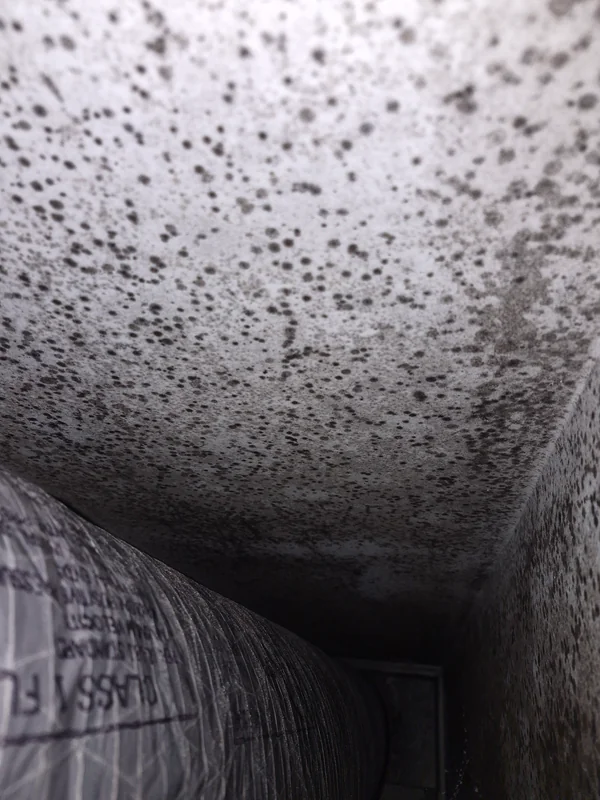
Most people don’t think about their ductwork until something smells wrong. That first time you flip on the heat or AC after a long stretch of dormancy and catch a musty odor that’s your HVAC system telling you something has been growing in the dark.
In Linconia, where homes were built starting in 1923 and ductwork was often retrofitted into spaces that weren’t designed for it, that smell isn’t just inconvenient. It’s a real signal worth taking seriously.
Linconia sits at the edge of Poquessing Valley Park and the Poquessing Creek watershed. The entire township pulls moisture from the Delaware River corridor, which keeps ambient humidity elevated in ways that newer, more inland neighborhoods don’t experience. Moisture plus darkness plus older ductwork is exactly the environment where mold establishes itself quietly, out of sight, until your HVAC system starts circulating it through every room every time it runs.
Getting your ducts properly cleaned and inspected by someone who actually understands mold not just dust means you stop the cycle at the source. You breathe easier, your system runs cleaner, and you’re not left wondering what’s been circulating through your home all winter.
We’re based right here in Bensalem Township the same township Linconia sits in. When you call us to work on a Linconia home, you’re getting someone who knows what Delaware River humidity does to older ductwork, what the Street Road corridor brings in terms of outdoor particulates, and what a century-old home in this neighborhood actually looks like on the inside.
With over 15 years of experience, certified mold inspectors on staff, and a process built around lab-tested results not just visual checks we bring a level of accountability that a general HVAC cleaner can’t match. We work directly with insurance providers, offer flexible financing, and provide free inspections so you know exactly what you’re dealing with before any work begins. No guessing, no pressure, no surprises on the invoice.

It starts with a free inspection. One of our certified inspectors comes to your home, takes a real look at the ductwork, and pulls samples if there’s any reason to suspect biological growth. Those samples go to a lab not just a visual guess in the field.
In Linconia’s older homes, where ductwork was often retrofitted through unconditioned attic spaces and tight crawlspaces, that inspection step matters more than it does in a newer build where everything is accessible and purpose-built.
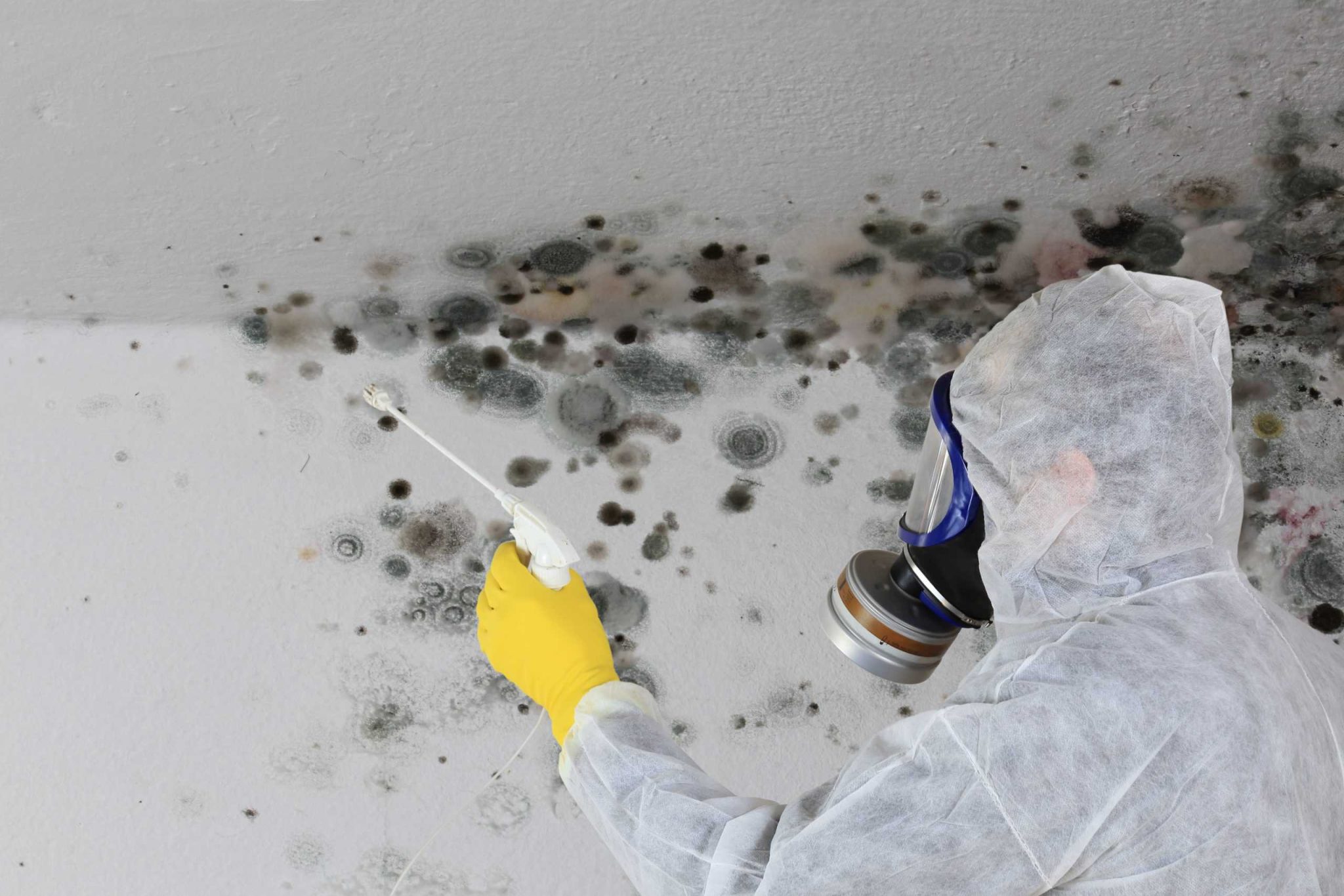
From there, if cleaning is warranted, we use proper containment protocols the same approach we apply to structural mold remediation. This isn’t a shop-vac and a brush. Negative air pressure equipment and HEPA-rated systems pull debris out of the duct system without pushing it back into your living space. Supply and return ducts are both addressed. If mold is present, the treatment goes beyond mechanical cleaning to include antimicrobial application to the interior surfaces.
Once the work is done, we test the affected areas again to confirm the mold is actually gone. That post-cleaning verification step is something most companies skip entirely but it’s the only real way to know the job worked. Given how Bucks County’s humidity can accelerate regrowth if anything is left behind, that final confirmation isn’t optional.

Ready to get started?
Air duct cleaning in the context of a home like those in Linconia covers more ground than the name suggests. The mechanical cleaning of supply and return ductwork is the foundation removing the accumulated debris, biological growth, and particulates that build up over years or decades in older systems.
But in homes where mold is confirmed or suspected, cleaning alone isn’t the finish line. Air duct sanitizing applying an antimicrobial treatment to the interior surfaces after mechanical cleaning is the step that addresses what a vacuum can’t reach. These are distinct services, and both matter when you’re dealing with a moisture-prone environment.
Dryer vent cleaning is another service that comes up frequently in Linconia’s older housing stock. Homes built in the 1920s through mid-century weren’t designed with modern dryer vent routing in mind. When vents were added later, they were sometimes run longer distances or through tighter paths than current standards would allow. The result is more opportunity for lint to accumulate, and lint accumulation is the leading cause of dryer fires the NFPA reports nearly 16,000 dryer-related house fires per year.
That’s not a maintenance preference; it’s a fire safety issue. We also work directly with insurance companies when mold in the HVAC system is part of a larger water damage or remediation claim. If you’ve already had mold removed from a basement or wall cavity and you’re wondering whether the ducts were affected, that’s exactly the kind of question a free inspection is designed to answer.
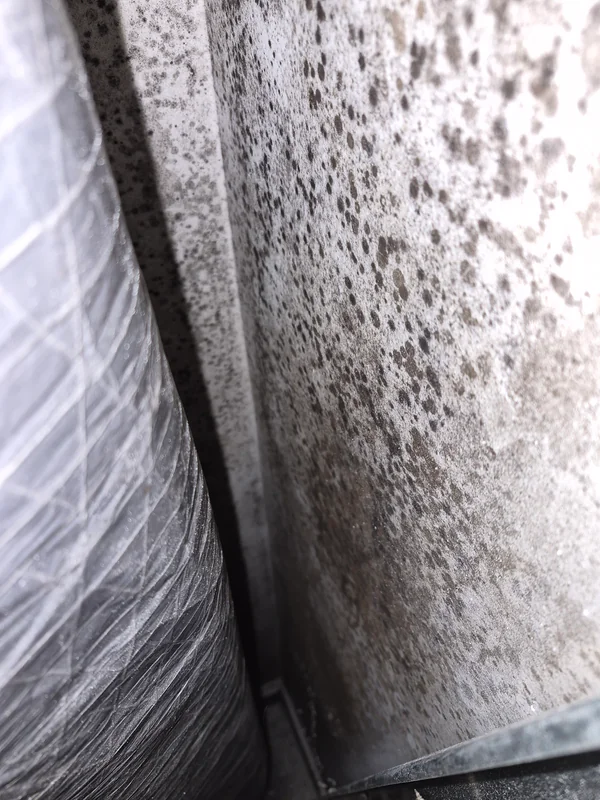
The most common sign is a musty or stale smell that appears when your HVAC system kicks on especially after it’s been sitting dormant through a humid Bucks County summer or a wet spring. You might also notice that allergy or respiratory symptoms seem worse indoors than outside, or that certain rooms feel stuffier than others even when the system is running.
Visible discoloration near registers or on vent covers can be a sign, but by the time you see something at the surface, there’s often more going on deeper in the system. In Linconia specifically, the combination of older retrofitted ductwork and the moisture influence from the Poquessing Creek watershed makes mold in HVAC systems a realistic concern not a hypothetical one.
The best way to know for certain is a professional inspection with lab testing of any samples collected. We offer free inspections for Bucks County homeowners, so you’re not paying to find out whether you have a problem before you decide what to do about it.
This is a fair question, and the honest answer is: it depends on what’s in your ducts. The EPA’s position is nuanced routine cleaning in the absence of any specific problem has unclear benefits. But when mold is confirmed, when there’s been a pest issue, or when significant debris is clogging the system, the EPA explicitly recommends cleaning.
For a home in Linconia that’s been standing since the 1920s or 1930s, with ductwork that’s been in place for decades and a climate that keeps indoor humidity elevated, the odds that something has accumulated in the system are higher than they’d be in a newer build. If you’ve never had the ducts professionally cleaned, or if you noticed a musty smell when the system runs, it’s worth knowing what’s actually there. A free inspection gives you that information without any financial commitment upfront.
Cleaning and sanitizing are two separate steps that address two different problems. Mechanical cleaning using negative air pressure equipment and HEPA-rated vacuums removes the physical debris that has accumulated inside the ductwork: dust, lint, biological material, and anything else that’s built up over time. This is the core of what most people mean when they say “air duct cleaning.”
Sanitizing goes further. After the mechanical cleaning is done, an antimicrobial treatment is applied to the interior surfaces of the ductwork to address any biological contamination that remains after the physical debris is removed. In a mold situation, this step is important because mold spores can adhere to duct surfaces even after visible growth is cleared.
In Bucks County’s humidity where conditions that support mold growth are present for much of the year skipping the sanitizing step after a mold-related cleaning leaves the job incomplete. We perform both steps when the situation calls for it, and the inspection process determines which services are actually needed in your home.
Yes, and this is one of the more important things to understand about mold in HVAC systems. When your heating or cooling system runs, it pulls air through the return ducts, conditions it, and pushes it out through the supply ducts into every room. If mold is growing anywhere along that path on the evaporator coil, in the ductwork, or near the air handler the system actively distributes mold spores throughout the home every time it cycles on.
This is why mold in a duct system is a different problem than mold in a single wall cavity or a corner of a basement. A localized mold issue stays localized until something moves it. An HVAC system moves air constantly. In an older Linconia home where the ductwork runs through unconditioned attic spaces and the ambient humidity is elevated by the Poquessing Creek watershed, this isn’t a slow or theoretical process.
Addressing mold in the duct system with proper containment so that the cleaning process itself doesn’t spread spores is exactly why we handle this differently than a general duct cleaning company.
Industry guidance generally points to every three to five years for a typical home, but that baseline assumes a relatively new, well-sealed duct system in a climate without significant humidity challenges. Linconia’s housing stock doesn’t fit that description.
Homes built in the 1920s through mid-century often have ductwork that was retrofitted into spaces not designed for it routed through tight crawlspaces, uninsulated attic sections, or along exterior walls where temperature swings are more pronounced. In that kind of environment, with Bucks County’s 49 inches of annual rainfall and the moisture influence from the Delaware River and Poquessing Creek, the conditions that accelerate biological growth inside ductwork are present more consistently than in a drier climate or a newer build.
If you’ve owned your home for more than five years and haven’t had the ducts professionally inspected, that’s a reasonable starting point for a conversation. If you’ve noticed musty odors, worsening indoor allergies, or recently had mold remediated elsewhere in the home, move that timeline up and start with a free inspection.
Yes. We provide dryer vent cleaning throughout Linconia and Bucks County. It’s worth understanding why this matters beyond just keeping the dryer running efficiently. The National Fire Protection Association reports close to 16,000 dryer-related house fires per year in the U.S., and the leading cause is failure to clean the vent. Lint is highly flammable, and when it accumulates in a vent that isn’t cleared regularly, the heat from the dryer has nowhere to go and the risk of ignition increases significantly.
In Linconia’s older homes, this risk is compounded by the way dryer vents were installed. Homes built in the early-to-mid 20th century weren’t designed with modern appliance venting in mind. When dryers were added later, vents were sometimes routed through longer, more circuitous paths than current standards recommend which means more surface area for lint to cling to and more restriction for heat to build up against.
If your dryer takes longer than it used to to dry a load, or if the exterior vent flap isn’t opening fully when the dryer runs, those are signs the vent needs attention. A cleaning that takes an hour or two is a straightforward way to address a genuine fire safety concern.
Other Services we provide in Linconia