
Hear from Our Customers

Graduate Hospital rowhouses are beautiful, walkable, and full of character and they were built in an era before vapor barriers, sealed ductwork, or any real consideration for indoor air quality. When you share masonry walls with neighbors on both sides, mold doesn’t respect property lines. It migrates through shared brick, it settles into wall cavities, and it finds its way into the HVAC system that runs through your home every single day.
Once mold gets into your ductwork, every time the heat kicks on or the AC runs, it’s moving through every room simultaneously. That’s not a basement problem anymore that’s a whole-house problem. Getting the ducts cleaned by someone who actually understands mold, not just dust, is what changes that equation.
Graduate Hospital sits right at the western edge of the Schuylkill River. Philadelphia’s humidity is already elevated by its position between two rivers, and that riverfront proximity keeps ambient moisture higher than what inland communities deal with. In summer, when outdoor dew points regularly push past 65°F and your aging rowhouse HVAC is running nonstop, the conditions inside your ductwork are close to ideal for mold growth. Cleaning those ducts and doing it right is how you stop the cycle before it restarts.
We’ve been doing this work for over 15 years, and a significant portion of that work has been inside Philadelphia rowhouses including the South Philadelphia housing stock that Graduate Hospital shares its DNA with. We already know what we’re walking into: 100-year-old foundations that wick moisture through mortar joints, flat-roof rear additions that leak slowly and silently, plaster walls that hold humidity differently than anything built in the last 30 years.
What separates us from a general duct cleaning company is our mold remediation background. A technician who only cleans ducts can disturb mold contamination without containment protocols and spread spores through the home in the process. We bring certified inspection, lab testing, and proper containment to every job and then test the affected areas after the work is done to confirm the mold is actually gone, not just moved around.
We serve Philadelphia County directly and work with insurance companies on claims which matters in Graduate Hospital, where pipe bursts during winter freezes and basement backups from the city’s older combined sewer system are common triggers for the mold that eventually ends up in your ductwork.
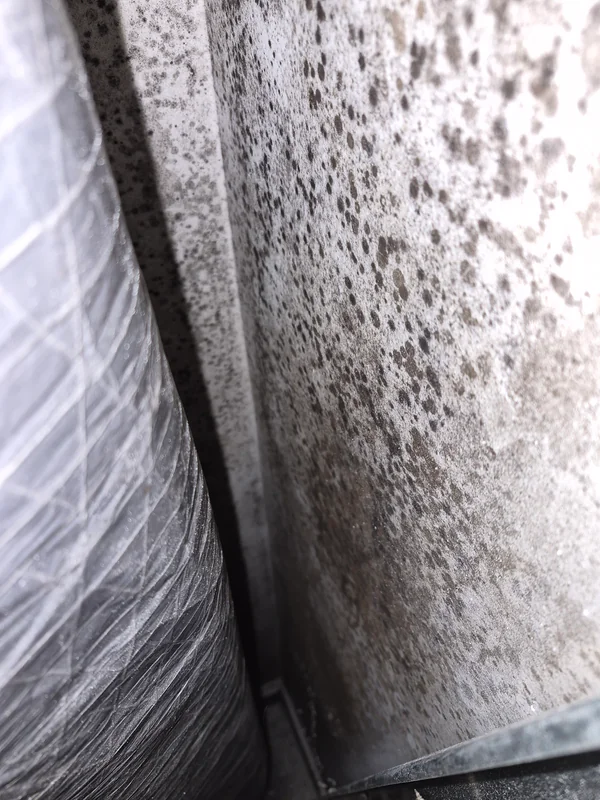
It starts with a free inspection. Before anything is cleaned, we assess the system what’s actually in the ducts, where contamination is coming from, and whether mold is involved or if this is a debris and dust situation. In a Graduate Hospital rowhouse, that inspection often turns up things a general cleaner wouldn’t think to look for: moisture intrusion from a shared party wall, condensation buildup in a duct run that passes through an unventilated interior space, or contamination that traces back to a renovation that happened before you bought the place.
From there, we use professional-grade equipment negative air pressure systems and HEPA vacuums to physically remove what’s inside the ductwork without pushing it into your living space. If mold is present, containment protocols go up before anything is disturbed. This is the step that matters most and the step that most general duct cleaners skip entirely.
After the cleaning is complete, we test the affected areas to verify the results. You get documentation that the mold is gone not a handshake and a promise. For anyone managing a rental property in Graduate Hospital, or dealing with a Philadelphia housing code habitability concern, that post-remediation documentation is exactly what you need. Upfront pricing is provided before the work begins, and the quoted price is what you pay.
Ready to get started?
Air duct cleaning is the core of what we do, but it’s rarely the only thing a Graduate Hospital rowhouse needs. Dryer vent cleaning is one that gets overlooked constantly and in a rowhouse where the dryer vent runs through tight interior walls or up through the roof rather than out a simple exterior wall, lint accumulates faster and the fire risk is real. The NFPA reports over 15,000 dryer-related house fires per year, with failure to clean the vent as the leading cause.
Air duct sanitizing is a separate step from mechanical cleaning and matters specifically when mold has been confirmed. Cleaning removes the physical contamination; sanitizing applies antimicrobial treatment to address what the cleaning alone can’t fully eliminate. For a home that’s been dealing with recurring moisture whether from the Schuylkill-influenced humidity, a basement that’s been wet more than once, or a slow flat-roof leak in the rear addition sanitizing is what keeps the problem from coming back quickly.
We also handle mold inspection and testing, indoor air quality testing, and post-remediation cleanup. If you’ve had mold remediated somewhere else in your home and you’re wondering whether the ducts were ever addressed, that’s a common situation in Graduate Hospital and a straightforward one to assess. The inspection is free, the pricing is upfront, and financing is available if the scope of work turns out to be larger than expected.
It’s a legitimate concern in Graduate Hospital, and the answer is yes it can happen. Rowhouses share party walls, and those shared masonry walls are not airtight. Mold that establishes itself in a neighboring unit’s basement or wall cavity can migrate through the shared brick and mortar into your home’s structure. From there, if the mold reaches a space near your HVAC system a wall cavity adjacent to a duct run, a basement where the air handler sits it can get pulled into your ductwork and distributed through your home every time the system runs.
This is one of the reasons a mold specialist matters more in a rowhouse context than a general duct cleaner. A general cleaner will clean what’s visible inside the duct. We trace where the contamination is actually coming from, address the source, and use containment protocols so the cleaning process itself doesn’t spread spores further. If you’ve noticed a musty smell when your HVAC runs and your own home has no obvious water damage, the shared-wall pathway is worth investigating.
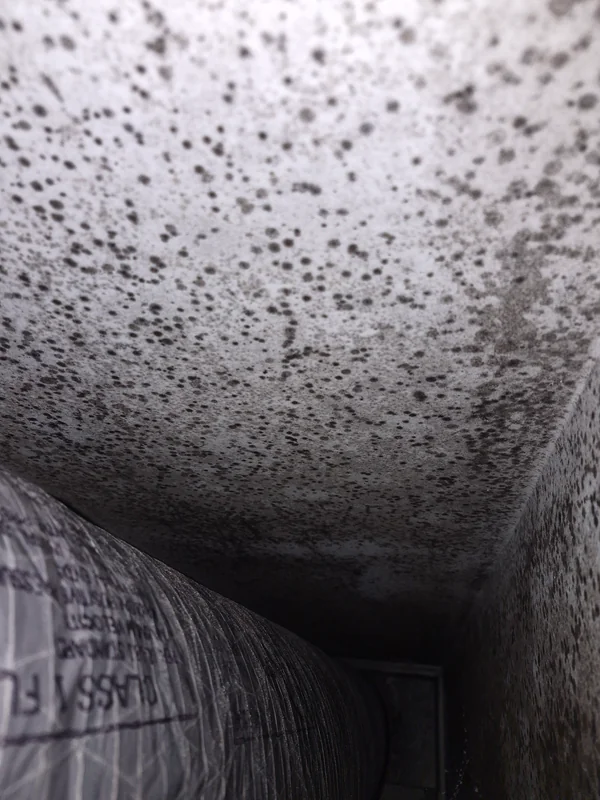
The honest answer is that you usually can’t tell from the outside. Dust at the register is visible mold growing in the interior sections of the ductwork is not. The most common sign that mold is involved rather than ordinary dust is a musty smell that appears specifically when the HVAC system runs and then fades when it shuts off. If that smell is stronger in certain rooms or right at the vents, that’s a meaningful indicator.
Other signs worth paying attention to: worsening allergy or respiratory symptoms that seem to improve when you’re out of the house, visible discoloration around vent covers, or a history of water intrusion in the home a burst pipe during a winter freeze, a basement backup, or a slow leak from a flat-roof rear addition. In Graduate Hospital’s older housing stock, any of those water events can feed mold growth that eventually reaches the HVAC system. The only way to know for certain is an inspection, and we do those at no charge.
Possibly, yes and this is one of the most common situations in Graduate Hospital right now. The 19146 ZIP code is one of the most intensively renovated in the country, and a gut renovation that replaced kitchens, bathrooms, and flooring doesn’t automatically mean the ductwork was touched. Drywall dust, insulation fibers, and construction debris enter HVAC systems during demo and build-out, and they circulate through the home long after the renovation is complete.
If you purchased a renovated rowhouse and no one has specifically told you the ducts were cleaned during or after the renovation, it’s reasonable to assume they weren’t. A pre-purchase inspection typically doesn’t include a detailed duct assessment. The inspection we provide will tell you exactly what’s in there whether it’s construction debris, years of accumulated dust, mold, or some combination. From there, you can make an informed decision rather than guessing.
They’re two different steps, and whether you need both depends on what’s actually in your ducts. Mechanical cleaning is the physical process using negative air pressure equipment and HEPA vacuums to remove debris, dust, and biological material from inside the ductwork. Sanitizing is what comes after: applying an antimicrobial treatment to address residual biological contamination that the mechanical cleaning alone can’t fully eliminate.
If your ducts have confirmed mold, you need both. Cleaning without sanitizing leaves behind the conditions that allowed mold to grow in the first place. In a Graduate Hospital home where summer humidity regularly pushes indoor relative humidity above the 60% threshold the EPA identifies as the primary precondition for mold growth, skipping sanitizing means the environment inside your ductwork is still hospitable to regrowth. If your situation is routine dust and debris with no mold involvement, cleaning alone may be sufficient. The inspection will clarify which applies to your home.
The standard industry recommendation is every three to five years for a typical home, but that baseline assumes a relatively modern, well-sealed structure without recurring moisture issues. For a Graduate Hospital rowhouse built in the late 19th or early 20th century, that interval is worth revisiting based on your specific conditions. Homes with older foundations that allow water seepage, unfinished cellars, flat-roof rear additions, or a history of basement flooding should be assessed more frequently not because of an arbitrary schedule, but because those conditions actively feed contamination between cleanings.
Trigger-based cleaning is often more relevant than calendar-based cleaning for this housing stock. If you’ve had a pipe burst, a sewer backup, or a leak from the rear addition, get the ducts assessed after the water event is resolved don’t wait for your three-year mark. Similarly, if you’re buying a rowhouse in Graduate Hospital and the maintenance history is unknown, a baseline inspection before you move in is worth doing regardless of when the last cleaning supposedly happened.
We serve Philadelphia County directly Graduate Hospital is well within our service area, and our team is already familiar with Philadelphia’s rowhouse housing stock from existing work in South Philadelphia and surrounding neighborhoods. The drive from Bensalem via I-95 or I-76 puts a technician in Graduate Hospital without issue, and our 24/7 availability means scheduling around a demanding work week is manageable.
What’s more relevant than the drive distance is whether the company understands your housing type and we do. The shared-wall construction, the aging foundations, the flat-roof rear additions, the HVAC configurations typical of Philadelphia’s 100-year-old rowhouses these aren’t surprises to our team. If you’re near the Broad Street Line, off Washington Avenue, or anywhere in the 19146 ZIP, you’re in our service area. The inspection is free, so there’s no financial commitment required to find out exactly what you’re dealing with.
Other Services we provide in Graduate Hospital