Hear from Our Customers
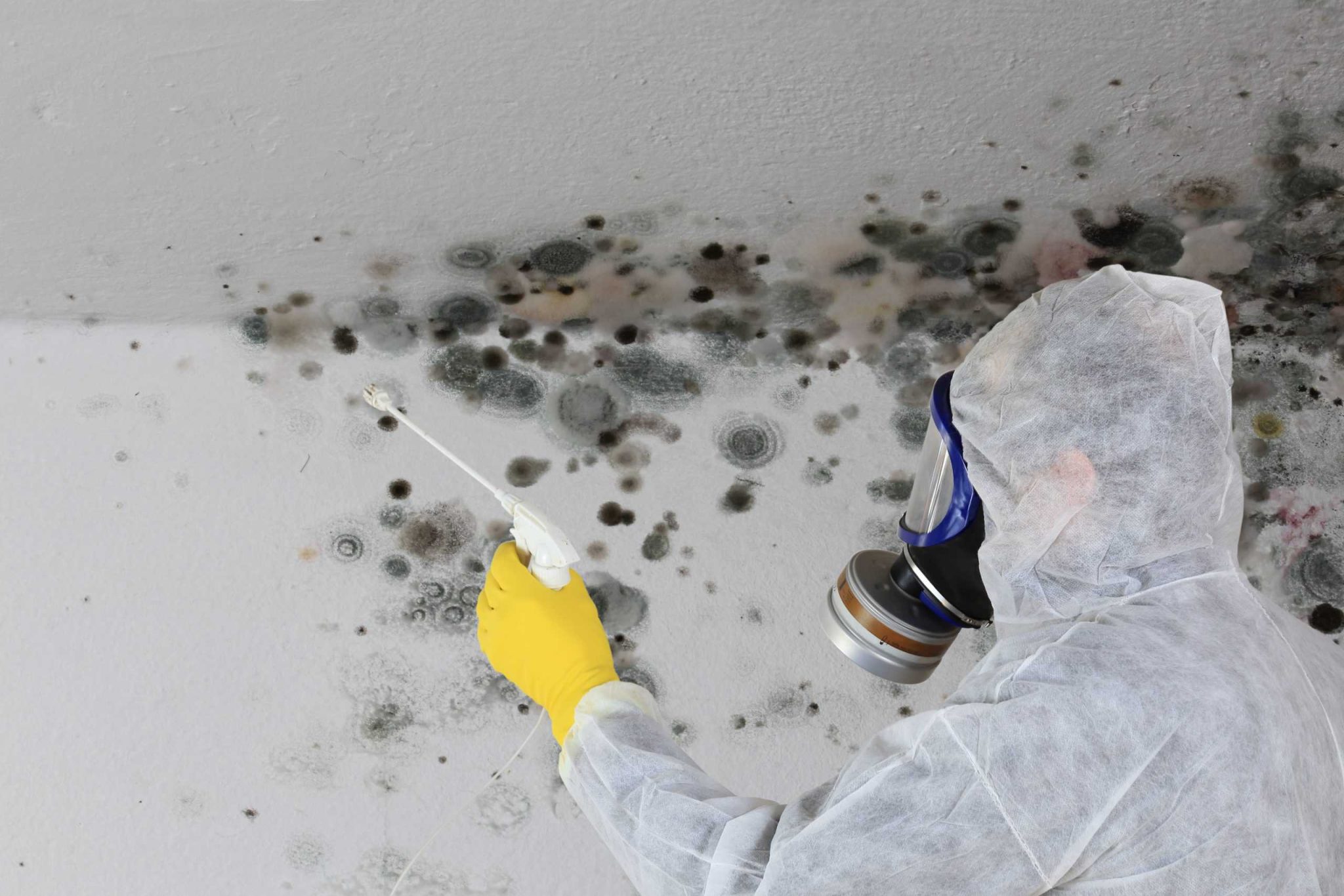
When the heat kicks on for the first time in October and you catch that faint musty smell, that’s not just old house smell. In East Falls, where the Schuylkill River and Wissahickon Creek sit at the neighborhood’s edge, groundwater levels run higher than most of Philadelphia. That elevated moisture presses through older foundation walls, settles into basements, and gets pulled straight into your ductwork every time the system runs.
By the time you notice something’s off, mold has usually been circulating through the home for a while. Getting the ducts professionally cleaned and inspected by someone who actually understands mold changes what you’re breathing every day. Families with young kids stop wondering why allergies flared up after moving into a new place. Renters have documentation they can take to a property manager. Homeowners who just bought an older East Falls rowhome finally know what they’re working with instead of guessing.
The difference between a clean system and a contaminated one isn’t always visible. But it shows up in how the house smells, how everyone in it feels, and whether the problem keeps coming back after the next humid summer.
We’ve been doing this work for over 15 years and serve clients across Philadelphia County, including East Falls, where older rowhomes near Ridge Avenue and Kelly Drive tend to show up with the same recurring pattern basement moisture feeding into compact ductwork that hasn’t been touched in years.
What separates a mold remediation specialist from a general duct cleaner is knowing what to do when the cleaning uncovers something bigger. Our certified inspectors don’t just vacuum out debris and move on. We identify the source, contain what needs to be contained, and test after the job to confirm the mold is actually gone not just disturbed and redistributed.
Insurance navigation, flexible financing, and 24/7 availability are all part of how we work. If you’re a renter trying to build a case for your landlord, or a new homeowner who just inherited an unknown HVAC situation in East Falls, we produce the kind of detailed inspection documentation that holds up when it matters.
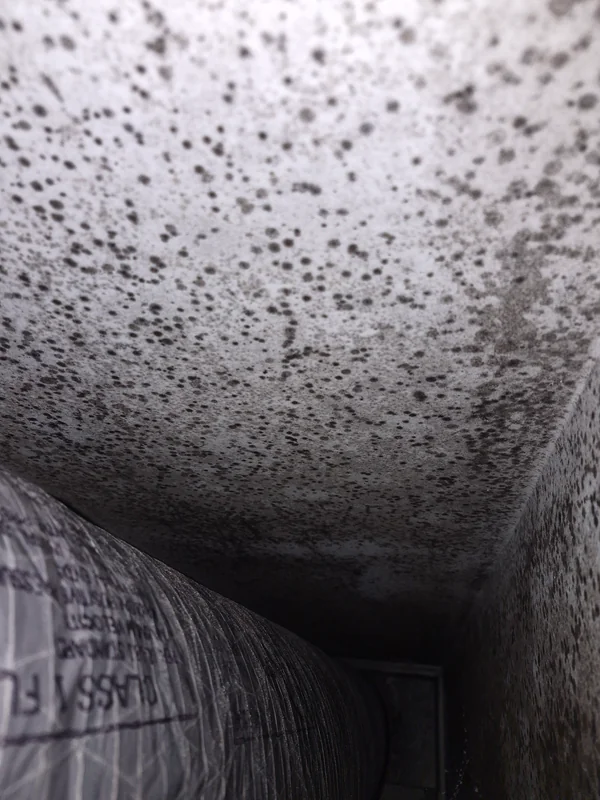
It starts with a free inspection. Before anything gets cleaned, one of our certified inspectors looks at the full system supply ducts, return ducts, the air handler, and the areas around it. In East Falls rowhomes, that usually means paying close attention to the basement, where most furnaces and air handlers sit closest to the foundation moisture that drives mold growth in this neighborhood.
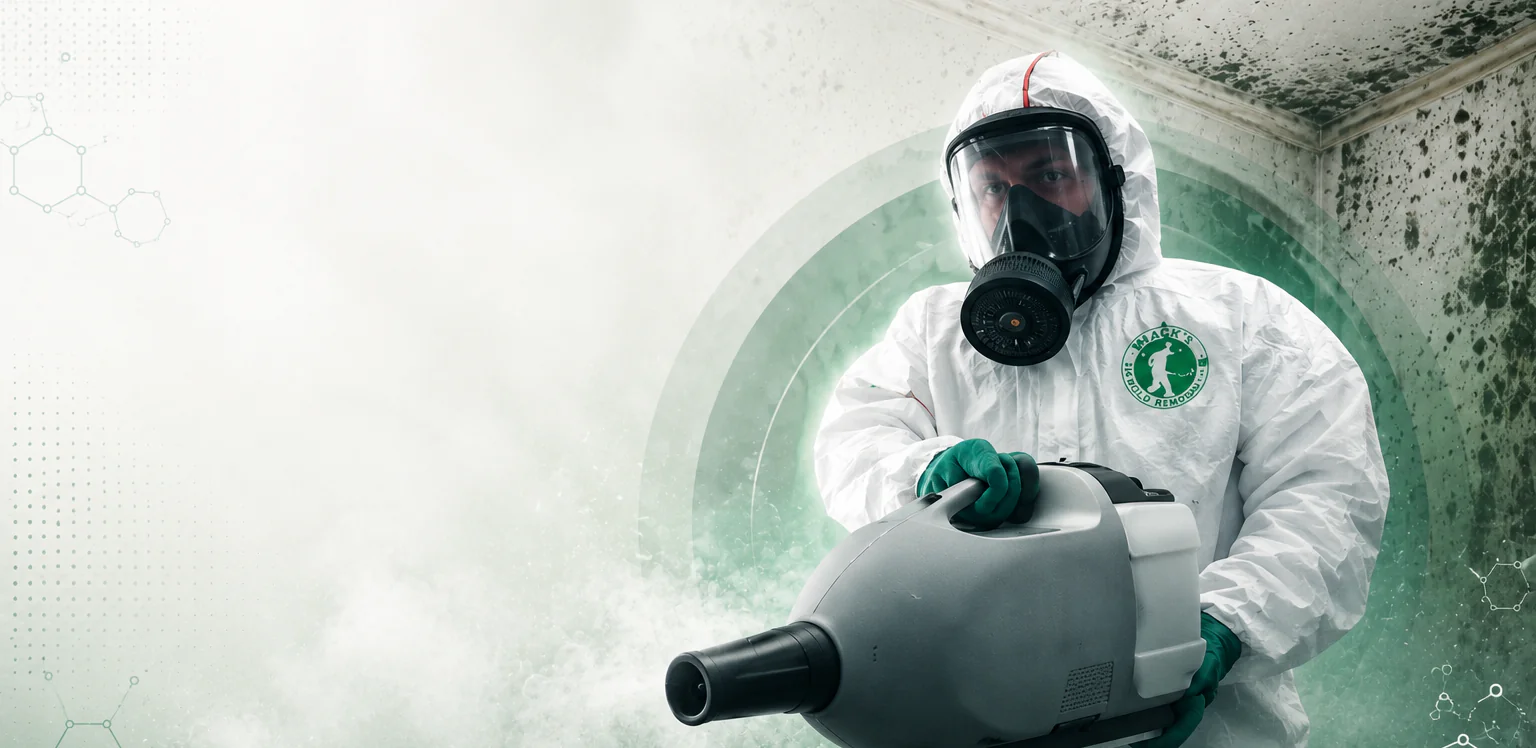
If there’s visible mold, discoloration, or biological material present, that gets documented before the cleaning begins. From there, the mechanical cleaning uses professional-grade equipment negative air pressure systems and HEPA vacuums that physically removes debris from both supply and return ducts. This isn’t a shop vac and a brush. The equipment creates a sealed pressure environment so that dislodged material gets captured rather than redistributed into the living space.
For homes with confirmed or suspected mold, we apply an EPA-registered antimicrobial treatment to duct surfaces where mold spores can otherwise recolonize in East Falls’ year-round humid conditions. After the job, we test the affected areas to confirm the mold is gone. That post-cleaning verification is documented useful for insurance claims, landlord conversations, or simply knowing the work was done right. A thorough job on most homes takes several hours, and you’ll know exactly what was found and what was done before the crew leaves.
Ready to get started?
Air duct cleaning is our core service, but East Falls homes often need more than one thing addressed. Dryer vent cleaning is a serious part of what we offer here, and it’s worth understanding why it matters more in a rowhome than in a detached suburban house. Rowhomes typically have longer, more convoluted dryer vent runs because the exhaust has to navigate through the building’s structure to reach an exterior wall. Longer runs accumulate lint faster and are harder to clear without the right equipment.
The NFPA reports over 15,000 dryer-related house fires per year nationally, with failure to clean vents as the leading cause. In an attached rowhome row, that risk doesn’t stay contained to one unit. Air duct sanitizing is available as a follow-up to mechanical cleaning for homes where mold has been confirmed or where the baseline humidity common throughout the East Falls riverfront corridor keeps conditions favorable for regrowth.
For East Falls residents dealing with mold that extends beyond the ductwork, we also handle full mold inspection, testing, and remediation. Our inspection process produces a detailed lab report with species identification and concentration levels documentation that works for insurance claims, real estate transactions, or landlord conversations. Free inspections and upfront pricing mean you know what you’re looking at before any work begins.

The most common sign is a musty or stale smell that shows up when the HVAC system kicks on particularly in the fall when heating systems activate for the first time after summer. In East Falls, that October startup moment is when a lot of residents first notice something’s off, because Philadelphia’s humidity peaks around that time and any mold that grew in the ductwork during the humid summer gets pushed through the home the moment the heat runs.
Other signs include worsening allergy or asthma symptoms that don’t have an obvious explanation, visible discoloration or dark spots near vent registers, or a general sense that the air quality in the home has declined. Because most of the ductwork in an older East Falls rowhome runs through walls and floors you can’t see into, the problem is usually more advanced than what’s visible at the register. The only reliable way to know what’s actually present is a certified inspection with lab testing which we provide at no cost for the initial inspection.
Yes, and this is one of the dynamics that makes mold in attached rowhomes different from mold in detached suburban houses. East Falls rowhomes share foundation walls, and moisture migrating through one home’s foundation can travel through shared structural elements to adjacent properties. If a neighboring unit has an unaddressed moisture or mold problem, your ductwork isn’t automatically protected from what’s moving through the shared structure.
This is part of why we approach air duct cleaning in East Falls as a mold remediation job, not just a maintenance task. Our certified inspectors can assess whether what’s showing up in your ducts has a source inside your unit or whether it’s being driven by conditions in the building structure including shared walls. Identifying the actual source is the only way to address the problem in a way that doesn’t just come back after the next wet season. If the moisture pathway isn’t dealt with, cleaning the ducts buys time but doesn’t solve the underlying issue.
The EPA’s position on routine duct cleaning is genuinely nuanced they acknowledge that the evidence for cleaning ducts absent a specific problem is limited. That’s a fair and honest read of the research. But the EPA also explicitly recommends cleaning when mold is confirmed in the ductwork, when there’s been a pest or rodent infestation, or when significant debris is blocking airflow.
Those aren’t edge cases in East Falls they’re common findings in older rowhomes that have gone years without any professional attention to the HVAC system. If you’re calling because you noticed a musty smell, because your allergies have gotten worse since moving in, or because you know the home is older and the ductwork has never been inspected, those are exactly the scenarios where cleaning is warranted. Our free inspection is designed to answer that question honestly before any money changes hands. If the ducts are clean, you’ll be told that. If there’s a real problem, you’ll see the documentation.
They address different parts of the same problem. Mechanical air duct cleaning removes physical material dust, lint, debris, and biological matter from the duct surfaces using negative air pressure and HEPA vacuums. It’s the core of the job. Air duct sanitizing is a follow-up step that applies an EPA-registered antimicrobial treatment to the interior duct surfaces after the physical cleaning is done.
In a climate like East Falls, where humidity runs high year-round and never drops to a level that naturally suppresses mold growth, sanitizing matters more than it would in a drier environment. Cleaning removes the mold that’s there. Sanitizing addresses the residual spores on duct surfaces that can recolonize if conditions stay favorable which, near the Schuylkill River corridor, they often do. For homes where mold has been confirmed, skipping the sanitizing step means the mechanical cleaning is doing half the job. We’ll tell you during the inspection whether sanitizing is genuinely warranted based on what we find, not as a default add-on.
This is a situation a lot of East Falls renters end up in, given that the majority of residents here rent rather than own. Philadelphia’s housing code requires landlords to maintain HVAC systems in habitable condition, which means a documented mold problem in the ductwork isn’t just a comfort issue it’s a code compliance issue. The challenge is that “I smell something musty” is easy to dismiss. A certified inspection report with lab results identifying mold species and concentration levels is not.
We produce detailed inspection documentation that holds up when presented to a property manager, a housing authority, or an insurance company. Our free initial inspection removes the financial barrier to getting that documentation in hand. If the inspection confirms a problem, you have something concrete to bring to your landlord and if the landlord still doesn’t act, you have the kind of record that supports a formal housing complaint. Knowing what you’re dealing with is always the right first step, regardless of who ends up paying for the remediation.
Industry guidance generally points to every three to five years for a typical home under normal conditions. But East Falls rowhomes aren’t operating under normal conditions by that standard. Older construction, compact ductwork that was never designed for easy cleaning, basements that run humid against the Schuylkill River corridor’s elevated groundwater, and Philadelphia’s year-round humidity that never drops to mold-suppressing levels all of that accelerates the timeline.
A more practical answer for East Falls is: get an inspection if you’ve never had one done, if you’re moving into an older home, or if you’ve noticed any of the common warning signs. After that, how often you need professional cleaning depends on what the inspection finds and what the ongoing moisture conditions in your specific home look like. Some homes need attention every two to three years. Some need it sooner if there’s an active moisture source that hasn’t been fully addressed. We’ll give you an honest read on that after the inspection including what, if anything, should be done to reduce the conditions that keep driving the problem back.
Other Services we provide in East Falls