
Hear from Our Customers
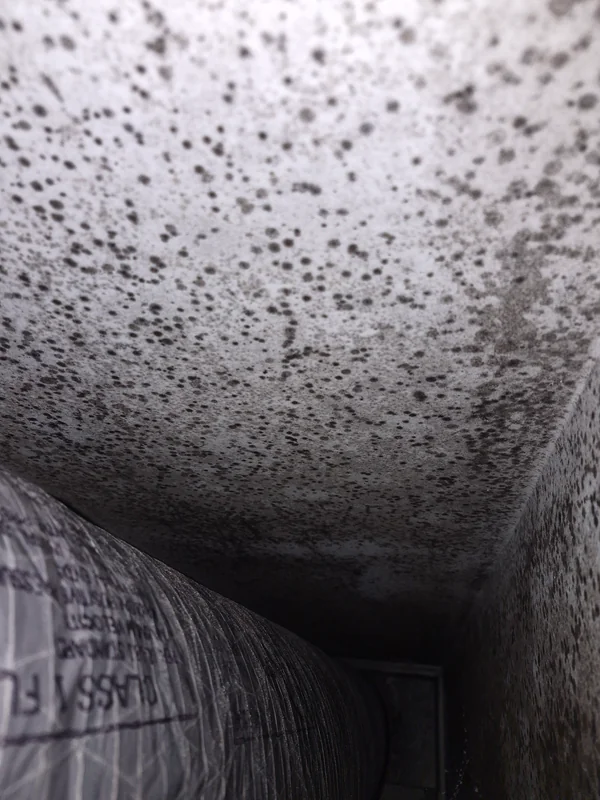
When your HVAC system runs, it pulls air from every corner of your home and pushes it back out through every room. If there’s mold, dust buildup, or biological contamination sitting inside those ducts, that’s what you’re breathing every time the system kicks on.
Durham Township homes face a specific problem most other parts of Bucks County don’t. The homes here are older early 19th-century farmhouses, converted barns, stone colonials and they were never built with modern ductwork in mind. Ducts were retrofitted into crawl spaces and basement chases that have absorbed moisture from stone foundations and dirt floors for decades. That accumulated moisture history doesn’t just disappear. It shows up inside your HVAC system, often long before you notice anything at the register.
Then there’s the waterway exposure. Durham Township sits along the Delaware River and contains a significant portion of the Cooks Creek watershed. In July 2023, flash flooding along Cooks Creek was severe enough that Bucks County Emergency Management ordered evacuations in the township. Even homes that didn’t take on visible water can experience moisture intrusion through saturated soil pressing against foundation walls and when that moisture reaches the base of an air handler, mold can take hold within 24 to 48 hours.
After we complete a proper air duct cleaning and inspection, you get documentation that your system is actually clean not just a receipt and a handshake.
We’ve been serving Bucks County homeowners for more than 15 years, including the rural northern townships like Durham that a lot of providers simply won’t make the drive to. When something’s wrong with your HVAC system in Durham, you’re searching online and hoping someone shows up. We show up.
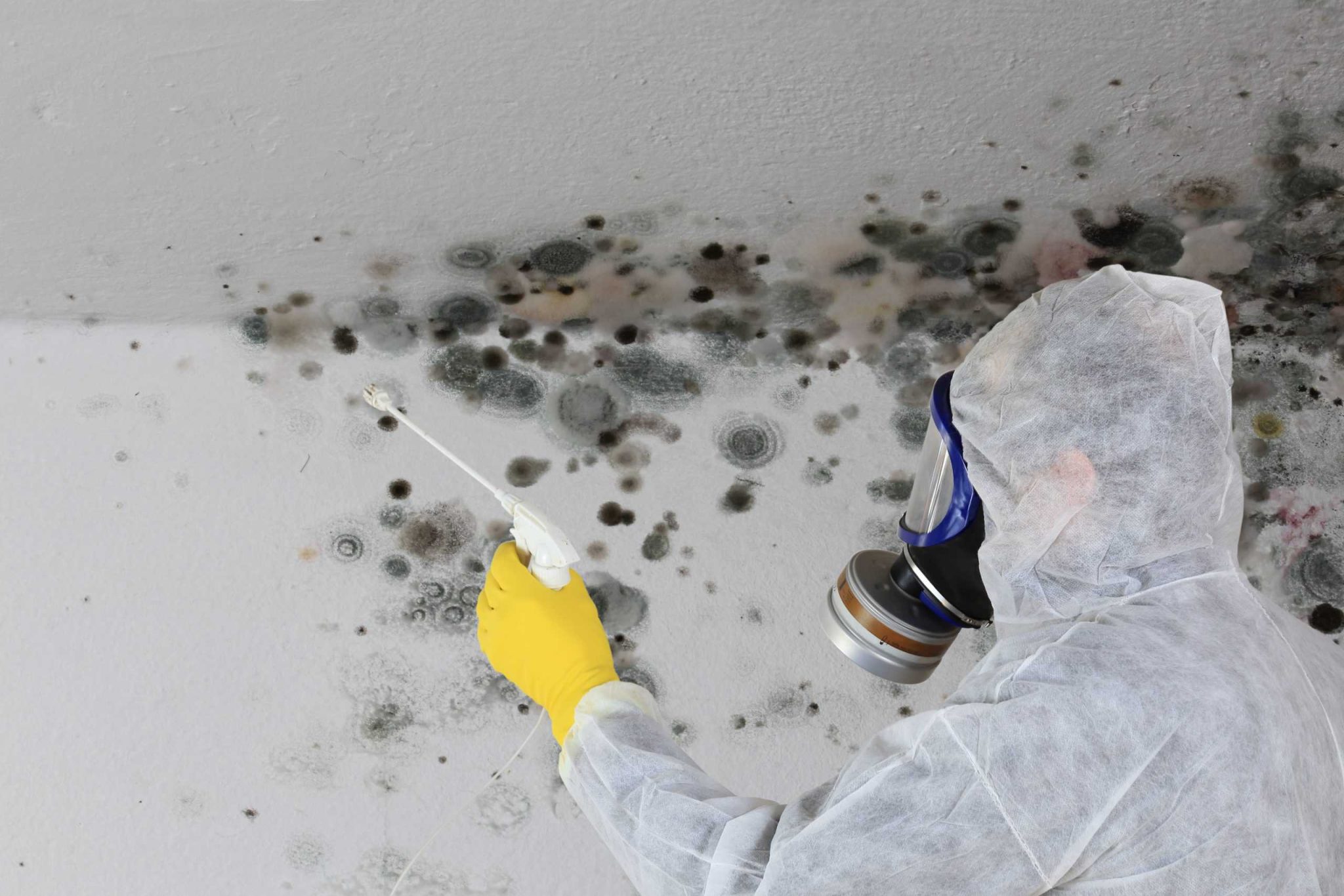
What separates us from a standard duct cleaning operation is our mold remediation background. We’re certified mold inspectors who assess what’s actually inside your system not just what’s visible at the register. For a Durham farmhouse on a private well with a stone basement and a duct system that’s been running for 30 years, that expertise matters. A general duct cleaner who disturbs mold without proper containment can spread spores through the entire home. We don’t do that.
We offer transparent pricing, free inspections, insurance assistance, and 24/7 availability. You’ll know what the job costs before anyone touches anything.

It starts with a free inspection. Before any cleaning begins, a certified inspector assesses the system the air handler, the duct runs, the registers, and any areas where moisture could have entered. In a Durham Township home, that inspection pays particular attention to the basement and crawl space mechanical areas, where Cooks Creek flooding history and stone foundation moisture create the highest risk of contamination near the base of the system. If mold is present, you’ll know exactly where and how extensive it is before any work begins.
From there, our cleaning process uses professional-grade equipment negative air pressure systems and HEPA vacuums to remove debris, biological growth, and accumulated contamination from both supply and return ductwork. This isn’t a one-vent pass. Both sides of the system get cleaned, which is the standard any reputable provider should follow. For older homes in Durham with irregular duct runs retrofitted into timber-framed spaces, the process adapts to the layout of your home rather than assuming a standard configuration.
The final step is post-cleaning verification. We test affected areas after the job to confirm mold is gone not assumed gone, actually confirmed. You get documentation. That’s the part most companies skip, and it’s the part that matters most when you’re dealing with a historic property you’ve invested in and plan to keep.
Ready to get started?
Air duct cleaning is our core service, but it doesn’t always stop there. When mold is confirmed inside a duct system, cleaning removes the physical contamination but air duct sanitizing applies an antimicrobial treatment to address any remaining biological material the mechanical cleaning can’t fully reach. For Durham homes that have experienced moisture events related to Cooks Creek flooding or chronic foundation seepage, this two-step approach is often the appropriate call, not an upsell.
Dryer vent cleaning is a separate service that’s worth addressing on its own. The NFPA reports more than 15,000 dryer-related house fires per year, and the leading cause is failure to clean the vent. In a rural township like Durham where homes sit on large lots along winding state routes and fire station response times are longer than in a dense suburb a dryer vent fire is a more serious event than it would be in Bensalem or Doylestown.
Older homes in Durham often have longer, more convoluted dryer vent runs than modern builds, which means lint accumulates faster and the blockage risk is higher. We also work directly with insurance companies for mold and water damage claims relevant for any Durham homeowner who has dealt with flood-related damage and hasn’t fully resolved the HVAC side of that claim.

It’s a real possibility, and it’s one that a lot of Durham Township homeowners haven’t thought to check. When Cooks Creek flooded in July 2023 and Bucks County Emergency Management ordered evacuations, the focus was on visible water damage flooring, walls, furniture. What often goes unexamined is the HVAC system.
Even if your home didn’t take on standing water, saturated soil pressing against a stone foundation or crawl space wall can introduce moisture into the lowest sections of your home, where air handlers and duct connections typically sit. Mold can begin growing inside an HVAC system within 24 to 48 hours of a moisture event. If that growth went undetected after the 2023 flooding or after any prior storm season it’s been circulating through your home every time the system runs since.
A professional inspection by a certified mold specialist is the only way to know for certain. We offer free inspections, so finding out whether you have a problem costs you nothing upfront.
The most common sign is a musty smell that appears specifically when the HVAC system kicks on not a general house smell, but one that starts and stops with the system. If you’re noticing that, there’s a reasonable chance the source is inside the ductwork rather than on a visible surface somewhere in your home.
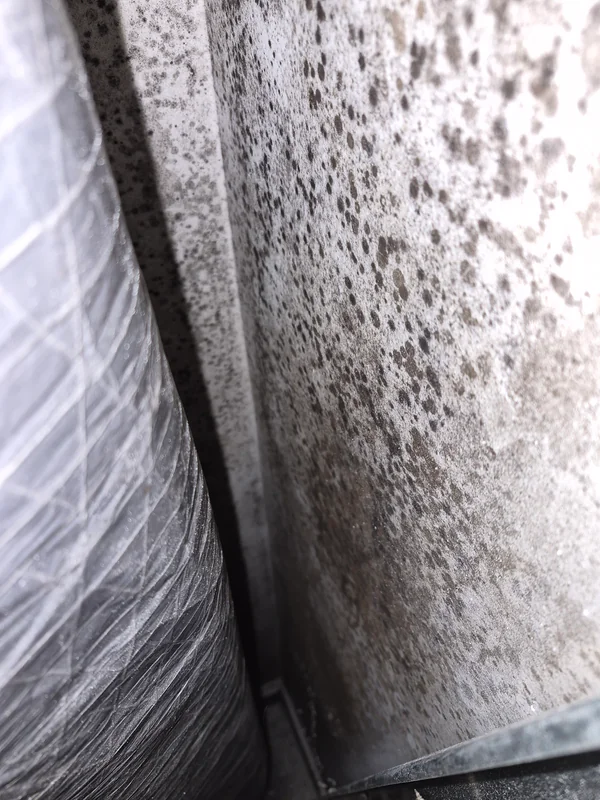
Other signs include worsening allergy or respiratory symptoms that seem tied to being indoors, visible discoloration around registers or vent covers, or a history of moisture events in the basement or crawl space near the air handler. The challenge is that most mold growth inside ductwork isn’t visible from the register. It develops in the interior sections of the duct runs areas you can’t see without professional inspection equipment.
For Durham Township’s older homes, where duct systems were retrofitted into spaces with complex moisture histories, the contamination is often deeper in the system than a flashlight check at the vent cover would reveal. A certified inspection is the only reliable way to assess what’s actually there.
For a typical modern home without specific moisture or mold concerns, professional air duct cleaning every three to five years is a reasonable baseline. For a Durham Township farmhouse particularly one with a stone foundation, a crawl space, a private well, and a duct system that was retrofitted into the structure rather than built in from the start that interval should be shorter, and the inspection criteria should be more thorough.
Older homes in Durham accumulate contamination faster because the duct runs are often less sealed, the surrounding building materials retain more moisture, and the mechanical spaces where the air handler sits are frequently adjacent to stone or masonry that introduces humidity year-round. If your home has never had a professional air duct inspection, or if the last one was more than three years ago and you’ve had any water event in that time including a wet basement after a heavy rain it’s worth having it looked at.
The free inspection we offer is the right starting point.
Air duct cleaning is the mechanical process using negative air pressure equipment and HEPA vacuums to physically remove dust, debris, and biological contamination from inside the ductwork. It addresses what’s physically present in the system. Air duct sanitizing is a follow-up step where an antimicrobial treatment is applied to the interior duct surfaces after cleaning to address any remaining biological material the mechanical process can’t fully reach.
Whether you need both depends on what’s found during the inspection. For a home with routine dust accumulation and no moisture history, cleaning alone may be sufficient. For a Durham Township home that has experienced any flooding, foundation seepage, or confirmed mold growth, sanitizing after the cleaning is the appropriate next step not an optional add-on.
The antimicrobial treatment addresses the residual contamination that lives in the microscopic pores of duct surfaces, which mechanical cleaning alone doesn’t fully eliminate. We’ll tell you clearly which services your system actually needs based on what the inspection finds not based on what generates the highest invoice.
Yes, and this is one of the most important reasons to address mold in ductwork quickly. Your HVAC system is connected to every room in the house. When the system runs, it pulls air through the return ducts and pushes conditioned air out through the supply ducts into every room simultaneously. If mold is growing anywhere in that system in the air handler, on the evaporator coils, or inside the duct runs every cycle distributes spores throughout the entire home.
This is why a mold remediation job that addresses walls or a basement but skips the HVAC system is incomplete. The ductwork can recontaminate a remediated space if it’s left untreated. For Durham Township homes where mold remediation has been done in a basement or crawl space but the HVAC system wasn’t inspected as part of that process, there’s a real risk that the ductwork is still distributing contamination.
We handle both sides of that equation the structural remediation and the HVAC system so the problem is actually resolved rather than partially addressed.
It’s a fire safety issue, not a maintenance preference. The National Fire Protection Association reports more than 15,000 dryer-related house fires per year, and failure to clean the dryer vent is the leading cause. Lint is highly flammable, and it accumulates in the vent duct with every load faster than most homeowners realize, and faster still in older homes where the vent run is longer or has more bends than a modern straight-shot installation.
In Durham Township, where homes are spread across large lots along rural routes and fire station response times are longer than in a closer-in community, the consequences of a dryer vent fire are more serious. Many of Durham’s older homes also have dryer vent configurations that were added or modified over the years, resulting in longer runs with more turns exactly the configuration where lint builds up fastest and blockages are most likely.
If your dryer is taking longer than usual to dry a load, running hotter than it used to, or if you can’t remember the last time the vent was professionally cleaned, those are signs it’s time. We handle dryer vent cleaning as part of the same visit when it makes sense to combine it with an air duct inspection.
Other Services we provide in Durham