

Hear from Our Customers
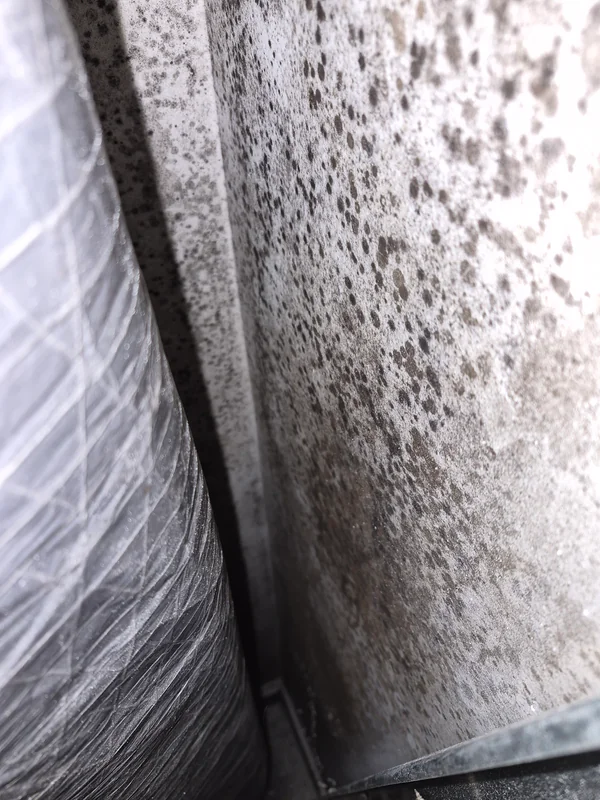
Most homeowners along County Line Road don’t think about their ductwork until something forces them to usually a musty smell the first time the AC kicks on in May. That smell isn’t random. The split-levels and bi-levels that dominate the Bristol Road and County Line Road corridors in Warrington were built in the 1960s and early 1970s, and many have original ductwork that’s never been professionally cleaned. Decades of moisture cycling through aging metal in a region that gets nearly 49 inches of rain per year leaves behind more than dust.
When mold takes hold inside an HVAC system, every time that system runs it pushes contaminated air into every room simultaneously. That’s not a localized problem anymore it’s a whole-house problem. For families with children or anyone dealing with worsening allergy or respiratory symptoms, the HVAC system is often the last place they think to check and the first place they should.
After we clean and inspect your system properly, you’re not just getting cleaner air you’re removing the source. No more musty smell when the system kicks on. No more wondering if what’s circulating through your home is making your family sick. With our post-cleaning verification process, you don’t have to take anyone’s word for it. The results are documented.
We’ve been working in the Philadelphia suburbs for over 15 years, including the Horsham and Warrington communities that frame the County Line corridor. This isn’t a franchise operation routing your call through a regional center. We’re owner-operated, and the person who answers knows the area, knows the housing stock, and shows up personally invested in getting the job done right.
One thing that genuinely sets us apart in this market: we serve both Bucks County and Montgomery County without any territory gaps or complications. If you live on the Warrington side of County Line Road, you’re covered. If you live on the Horsham side, you’re covered. That’s not the case with every provider in this area, and it matters when your neighborhood happens to straddle a county boundary.
We also bring something most duct cleaners simply don’t have certified mold remediation expertise. When we find something in your ducts, we know exactly what it is and exactly what to do about it.
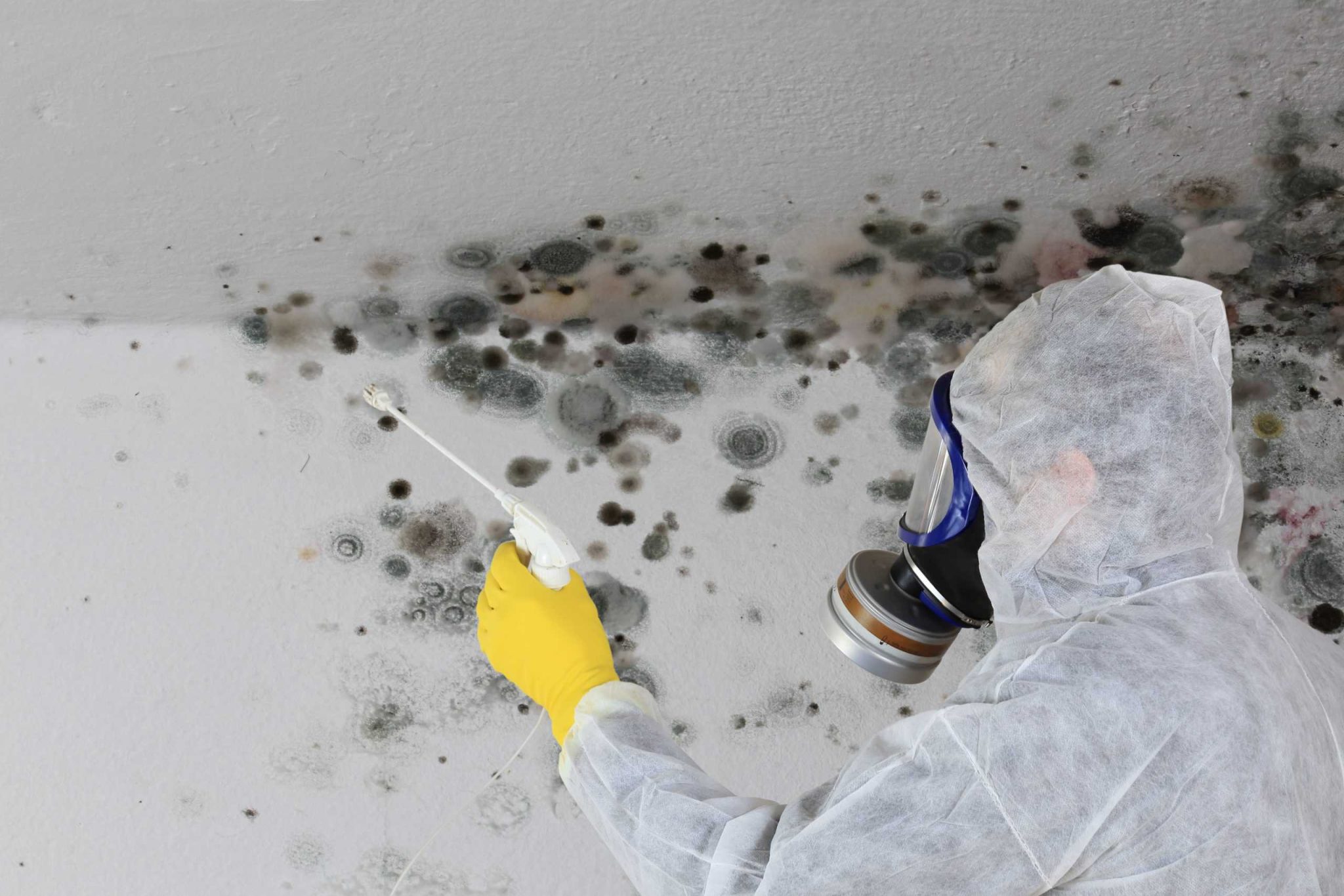
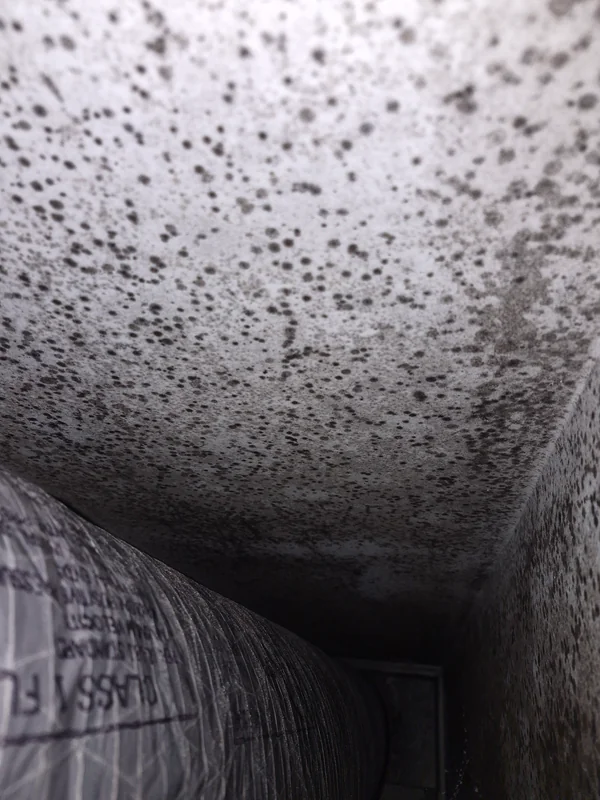
It starts with a free inspection. Before any work begins, we take a look at your system to understand what you’re actually dealing with. In older homes along the County Line Road corridor particularly the split-levels with kneewall attic spaces and partial basements common to Warrington and Horsham that inspection often reveals moisture-related contamination that wouldn’t be visible from the register.
If mold is suspected, we send samples to a lab for analysis so the cleaning strategy is based on what’s actually there, not a guess. Once the scope is clear, the cleaning itself involves mechanical agitation and high-powered extraction that pulls debris from deep within the duct system not just the sections near the registers. We use containment protocols throughout, which matters specifically when mold is involved. Disturbing mold without proper containment spreads spores. A general duct cleaner may not account for that. We do, because mold remediation is our core training.
After the job is finished, we test affected areas to confirm the mold is gone. You get documentation not just a handshake and an invoice. That’s the step most companies skip, and it’s the step that actually tells you whether the work was worth it. Pricing is discussed upfront before anything starts, and financing is available if you need it.
Ready to get started?
Air duct cleaning is our core service, but it doesn’t exist in isolation especially in homes built during the construction era that defines most of the County Line corridor. We also handle air duct sanitizing, which is a separate step from mechanical cleaning. Cleaning removes the physical debris and biological material. Sanitizing applies antimicrobial treatment to address what’s left behind at the surface level. When mold is confirmed in a duct system, both steps are typically necessary not one or the other.
Dryer vent cleaning is another service that gets overlooked in this housing stock specifically. Homes built in the 1960s and 1970s were often constructed with longer dryer vent runs and more bends than current building standards allow, which means lint accumulates faster and in harder-to-reach places. The NFPA reports roughly 15,970 dryer-related house fires annually, with failure to clean vents as the leading cause. In a home where the vent was routed through an exterior wall with two or three turns, that’s not a minor maintenance item.
We also work directly with insurance companies on claims, which is relevant for homeowners dealing with mold in HVAC systems that developed after water damage or a moisture event. If there’s a claim to file, we’ve navigated that process before and can help move it along. Our service area covers both sides of County Line Road Warrington Township in Bucks County and Horsham Township in Montgomery County with no territory restrictions.

That musty smell is one of the most common signs that mold or biological contamination has built up somewhere inside your HVAC system usually on the evaporator coil, in the drip pan, or within the ductwork itself. In the split-level and bi-level homes common along the County Line Road corridor in Warrington and Horsham, condensation-prone kneewall attic spaces sit directly adjacent to return air ducts. Over a winter of inactivity, moisture accumulates in those spaces and creates conditions where mold can grow without any visible sign at the register.
The smell tends to be most noticeable the first time you run the system in spring that’s when air is being pushed through ductwork that’s been sitting dormant through the colder months. If it fades after a few minutes, that doesn’t mean the problem went away. It means your nose adjusted. A professional inspection with lab testing is the only reliable way to determine whether what you’re smelling is surface dust or active mold growth that needs to be addressed properly.
Dust and mold can produce similar symptoms sneezing, congestion, general stuffiness but mold tends to be more persistent and more specifically tied to when the HVAC system is running. If your allergy or respiratory symptoms get noticeably worse when the heat or AC is on, and improve when you spend time outside or in a different building, that pattern is worth taking seriously. Visible discoloration near vents or registers is another indicator, though by the time you can see it, the problem inside the duct is usually more significant than what’s visible at the opening.
The only definitive answer comes from a professional inspection and lab testing. We send samples to a certified lab to identify what’s actually present and what type of mold it is because that determines the appropriate remediation strategy. A visual inspection alone isn’t enough. In older homes in the Horsham and Warrington area, where original ductwork may have decades of moisture history, the contamination is often in sections of the duct system that can’t be seen from the register at all.
The honest answer is: it depends on why you’re getting it done. The EPA’s position on routine air duct cleaning absent any specific problem is that the evidence for broad air quality improvement is limited. That nuanced stance has been used by some to dismiss duct cleaning entirely, which isn’t accurate. When there is confirmed mold in the system, a pest infestation, or significant debris blocking airflow, the EPA explicitly recommends cleaning. Those aren’t edge cases they’re exactly the situations we’re built to handle.
The scam concern is legitimate and worth addressing directly. The “$99 air duct cleaning” offers that show up in your mailbox are well-documented bait-and-switch tactics a low entry price followed by aggressive upselling once a technician is in your home. We offer free inspections and provide upfront pricing before any work begins. The price you’re quoted is the price you pay. In a market where transparency is the baseline expectation, we meet it.
Yes, and this is one of the most commonly overlooked steps after a mold remediation job. When mold grows in a basement or crawl space both of which are common in the older housing stock along the County Line Road corridor the HVAC system often draws air from or near those spaces. If the ductwork was pulling air through or adjacent to a mold-affected area before the remediation, there’s a real possibility that mold spores were distributed through the duct system during that time.
Skipping a duct inspection after basement mold remediation is one of the most common reasons mold comes back. The remediated space gets cleaned, but the HVAC system continues recirculating spores that were already in the ducts recontaminating the area over time. We treat the duct system as part of the overall mold picture, not a separate afterthought. If you’ve had remediation work done elsewhere in your home and haven’t had the ducts inspected, that’s the logical next step.
For most homes in the Horsham and Warrington area, a professional cleaning every three to five years is a reasonable baseline but that assumes no specific triggering conditions. The region receives close to 49 inches of rain annually, which is significantly above the national average, and that persistent moisture pressure affects HVAC systems over time. Homes built in the 1960s and 1970s which make up a large portion of the housing stock along the County Line corridor often have ductwork that was installed without the vapor management standards that exist today.
Beyond age and climate, specific events should prompt an inspection regardless of when the last cleaning was: after any water intrusion or flooding, after discovering mold anywhere in the home, after a renovation that generated significant dust, or after buying a home where the duct cleaning history is unknown. If you’ve moved into a home in Warrington or Horsham and don’t have documentation of the last cleaning, treating it as overdue is the safer assumption especially in a housing stock where original ductwork is a common finding.
They’re two different steps that address two different problems, and when mold is involved, you typically need both. Air duct cleaning is the mechanical process agitating and extracting the physical debris, dust, and biological material that has accumulated inside the duct system. It removes what’s there. Air duct sanitizing comes after, and it involves applying an antimicrobial treatment to the interior duct surfaces to address residual biological contamination that mechanical cleaning alone doesn’t fully eliminate.
Think of it this way: cleaning removes the visible and physical material, sanitizing addresses what remains at the surface level. For a home in the County Line area where the concern is mold not just routine dust doing the cleaning without the sanitizing step leaves the job half-finished. Mold spores are microscopic, and the conditions that allowed them to grow in the first place (aging ductwork, moisture-prone construction, humid summers) don’t disappear after a single cleaning pass. We address both steps when the inspection warrants it, and we’ll tell you upfront which your system actually needs not just what generates the larger invoice.
Other Services we provide in County Line