
Hear from Our Customers

Most air duct cleaning companies vacuum what they can reach and call it done. What you actually need especially in Bucks County, where flooding along the Delaware River corridor and Neshaminy Creek is a recurring reality is someone who understands what happens to an HVAC system after water gets into a basement.
Mold colonizes wet materials within 24 to 48 hours. When your air handler sits in a flooded space, the next time your system kicks on, it pulls those spores in and pushes them to every room in the house. That’s how ductwork works.
After we clean your air ducts, you get more than a receipt. You get lab-tested confirmation that the mold is actually gone not just disturbed and redistributed. Multiple customers throughout Bucks County have specifically called out this post-cleaning verification step as the reason they felt confident the job was done right.
For Bucks County homeowners whether you’re in a 70-year-old Levittown slab-on-grade home with ductwork that’s never been professionally touched, or a stone farmhouse in New Hope where retrofitted HVAC runs through unconditioned spaces that kind of documented result matters. Penn State’s MARISA climate research projects that Bucks County’s annual rainfall will increase by two to four inches by mid-century, with heavy rain events growing more frequent. The moisture risk in your HVAC system isn’t going away. Getting ahead of it is the smarter move.
We’re based in Bensalem Lower Bucks County not a franchise office in another state dispatching crews into your neighborhood. This is where we work and where we’ve been working for over 15 years. That means we’ve seen what Bucks County’s climate actually does to homes: the hydrostatic pressure that pushes groundwater through Levittown crawl spaces after a heavy spring rain, the humidity that settles into Central Bucks HVAC systems running nonstop from June through August, and the moisture that creeps into Upper Bucks stone foundations year-round.
We’re certified mold inspectors with transparent pricing, free inspections, and direct insurance coordination. When you call, you’re reaching a company that has been building its reputation in Bucks County long enough to know the difference between a Levittown basement and a Buckingham Township farmhouse and what each one needs.
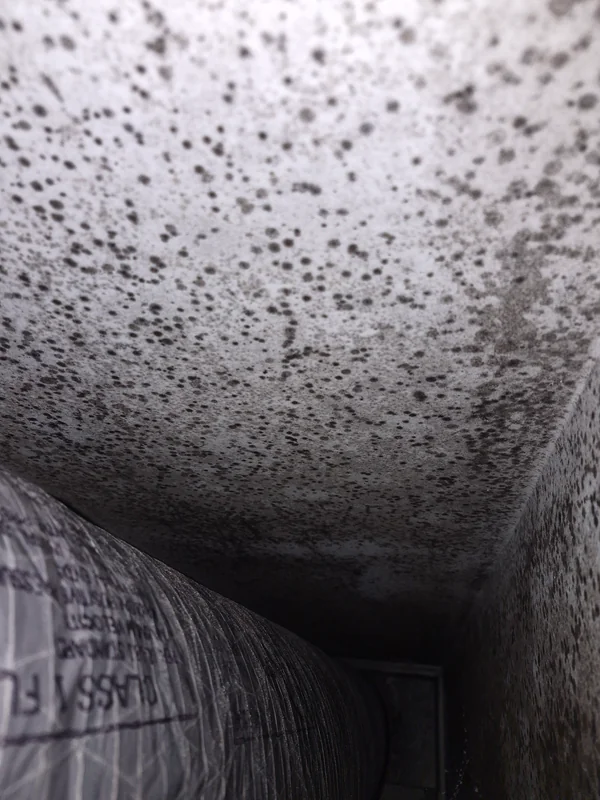
It starts with a free inspection. Before any work is quoted or scheduled, a certified inspector looks at your system not just the registers you can see, but the interior duct sections where mold actually grows. In Bucks County homes, that inspection often turns up conditions that aren’t visible from the outside: condensation buildup in attic ductwork common in newer Central Bucks developments, or biological growth deep in the supply runs of older Lower Bucks homes where humidity has cycled through the same metal for decades.
Once the inspection is complete, you get an upfront quote. The price you’re given is the price you pay no surprise charges added after the crew arrives.
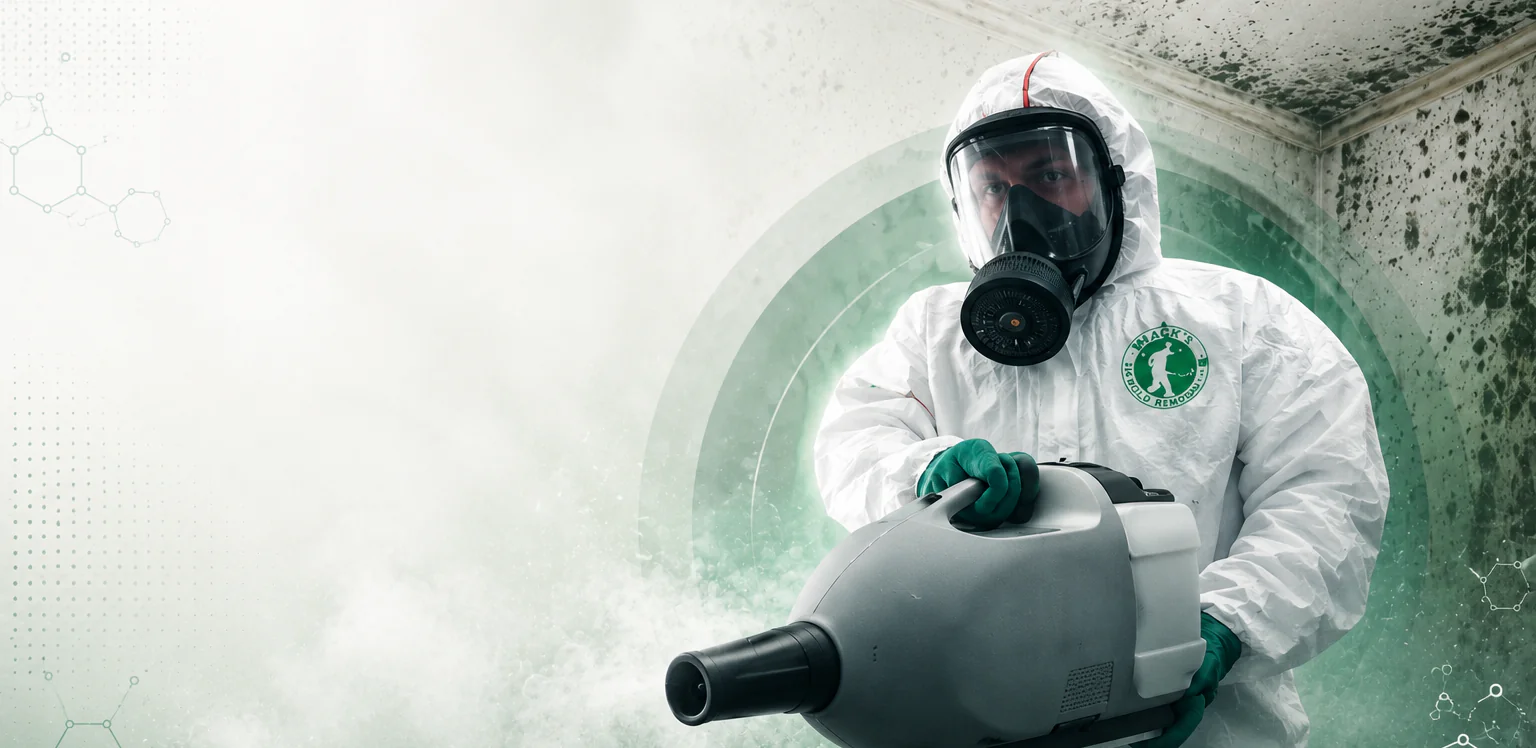
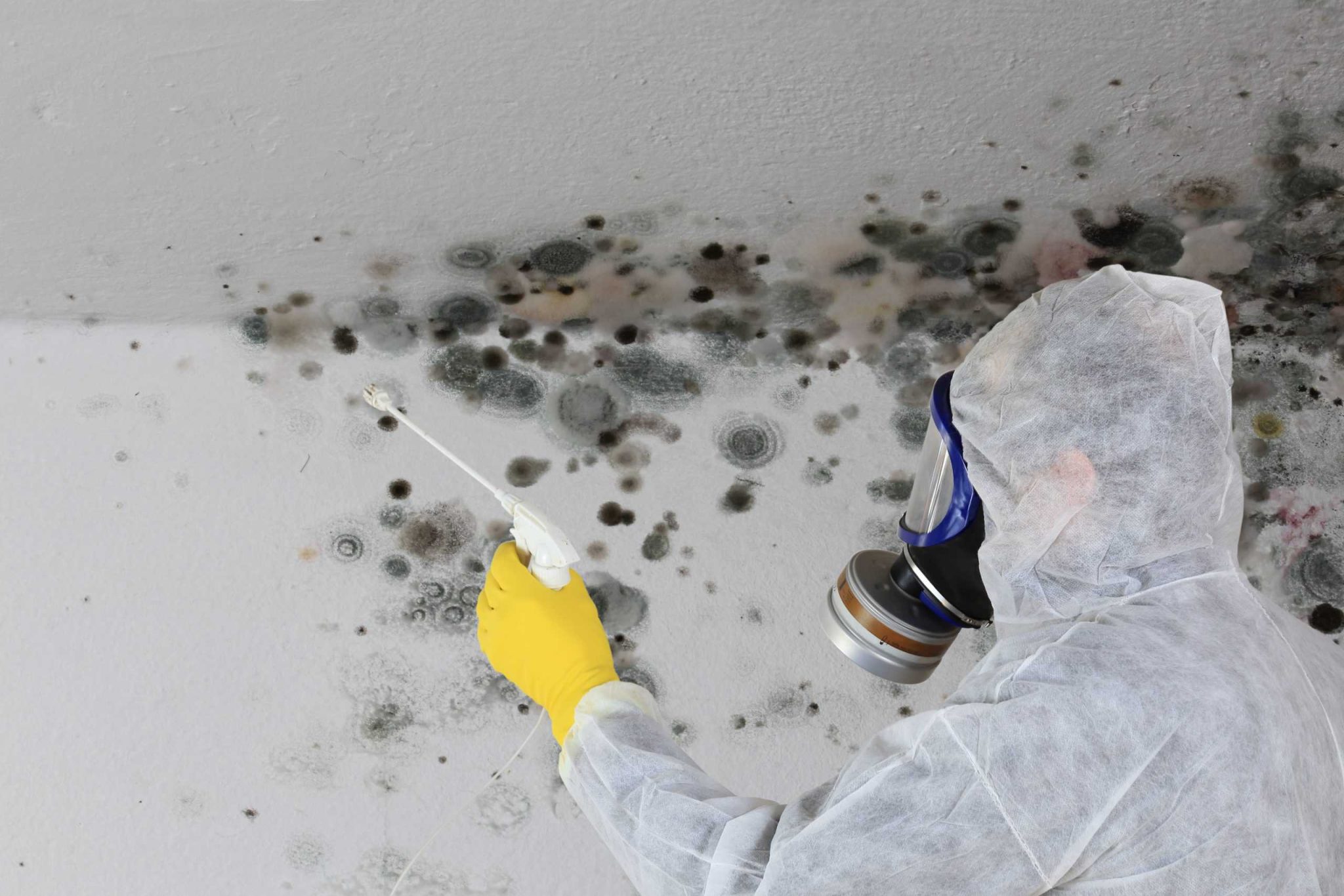
The cleaning itself uses professional-grade equipment that creates negative air pressure inside the duct system, pulling contaminants out rather than pushing them further in. For any job involving confirmed mold, containment protocols are in place before cleaning begins. This is where having a certified mold remediation company do the work makes a real difference a general duct cleaner disturbing mold without containment can spread spores through the entire system.
After the cleaning, affected areas are tested to confirm the mold is gone. You get documentation. If your situation involves an insurance claim which is common for Bucks County homeowners dealing with post-flood HVAC contamination we work directly with your insurer so you’re not managing that process alone.
Ready to get started?
Air duct cleaning removes the physical debris, buildup, and biological contamination from your duct system. Air duct sanitizing goes a step further applying antimicrobial treatments after the mechanical cleaning to address any remaining biological material. When mold is involved, both steps matter. Cleaning alone doesn’t eliminate what’s already embedded in duct surfaces.
In Bucks County’s Mixed-Humid climate, where summer humidity regularly pushes conditions inside ductwork toward the threshold where mold thrives, sanitizing is often the difference between a short-term fix and a lasting one.
We also handle dryer vent cleaning and in Bucks County it’s worth taking seriously. The NFPA reports roughly 15,970 dryer-related house fires per year nationally, with failure to clean vents as the leading cause. In older Levittown homes where dryer venting may run through longer, more convoluted pathways built into 1950s slab construction, lint accumulation happens faster and fire risk is higher than in a newer build.
Every job begins with a free inspection and ends with documented results. Financing is available if you need it. If you’ve recently had mold remediated elsewhere in your home a basement, a crawl space, a wall cavity and no one checked your ductwork, that’s exactly the conversation worth having before your system runs another cycle.
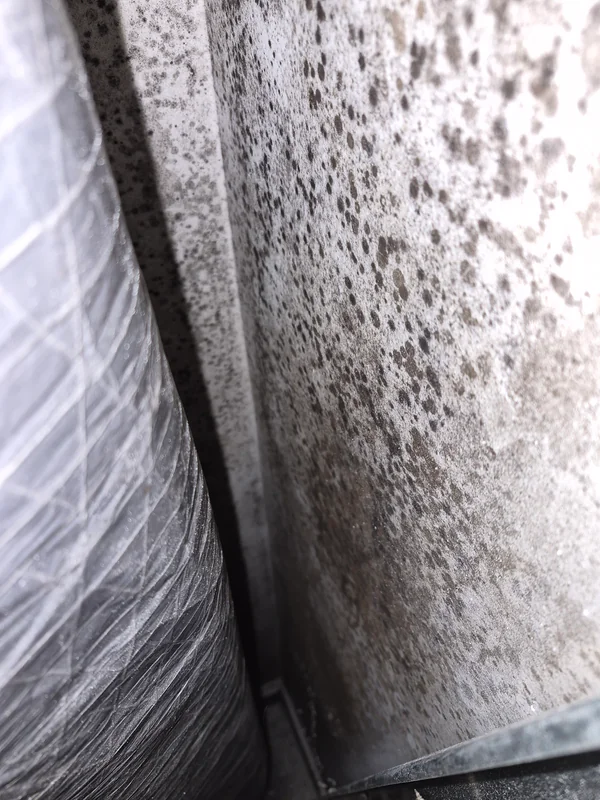
Yes, and it’s one of the more common scenarios we see in Lower and Central Bucks County. When floodwater enters a basement or crawl space whether from Neshaminy Creek overflow, a backed-up sump pump, or groundwater pressure after a heavy storm the HVAC air handler sitting in that space is directly exposed. Mold begins growing on wet materials within 24 to 48 hours. Once it’s on or near the air handler, the system draws spores into the ductwork and distributes them throughout the home every time it runs.
Most homeowners focus on the visible water damage the drywall, the flooring, the stored belongings and the ductwork doesn’t get checked until symptoms show up later. By then, the contamination is often well-established inside the duct system. If your home has experienced any flooding, even a minor one, having your ducts inspected is a straightforward step that either gives you confirmation everything is fine or catches a problem before it gets worse.
The most common sign is a musty smell that appears specifically when your heating or cooling system kicks on not a general odor in the house, but one that comes and goes with the HVAC cycle. You might also notice worsening allergy or asthma symptoms that seem tied to being indoors, or visible discoloration around your supply registers. That discoloration near the vent opening is often just dust, but it can also indicate biological growth further inside the duct where you can’t see it.
The honest answer is that you can’t confirm mold in your ducts without an inspection. The contamination typically lives in the interior sections of the ductwork not at the register where you’d notice it visually. A certified inspection involves looking at the actual duct interior, not just the accessible surfaces. In Bucks County homes specifically, older construction in Levittown and the mid-century ranches throughout Warminster and Warrington can have duct configurations that trap moisture in ways newer builds don’t, making a professional look more valuable than a DIY flashlight check at the register.
The EPA’s position is nuanced routine cleaning in the absence of a specific problem has unclear benefits. But when mold is confirmed in the ductwork, when there’s been a pest infestation, or when significant debris is clogging the system, the EPA explicitly recommends cleaning. The “is it a scam” concern is legitimate, but it’s really about the company, not the service itself.
The well-documented scam in this industry is the $99 offer a low-ball price used to get in the door, followed by aggressive upselling once the crew is on-site. The way to avoid that is straightforward: work with a company that offers a free inspection upfront and gives you a written quote before any work begins. We operate on exactly that model free inspection, upfront pricing, no surprises. For Bucks County homeowners dealing with a confirmed moisture issue or recent flooding, the question usually isn’t whether to clean the ducts. It’s making sure the company doing it actually knows how to handle mold, not just dust.
Cleaning and sanitizing are two separate steps, and when mold is involved, you generally need both. Cleaning is the mechanical process using professional equipment to remove physical debris, dust, and biological buildup from inside the duct system. Done properly, it takes several hours and requires negative air pressure equipment to pull contaminants out rather than spread them further into the system.
Sanitizing happens after the cleaning. It involves applying an antimicrobial treatment to the interior duct surfaces to address any remaining biological material that the mechanical cleaning didn’t fully remove. Think of it as the difference between washing a surface and disinfecting it.
In Bucks County’s climate classified as IECC Zone 4A, Mixed-Humid, with summer design temperatures reaching 91°F and sustained humidity throughout the season the conditions inside ductwork can support mold growth even after a standard cleaning if sanitizing isn’t part of the job. If you’ve had mold in your system, skipping sanitizing is a shortcut that often leads to the same problem coming back within a season or two.
The general industry recommendation is every three to five years for routine maintenance, but that baseline doesn’t account for the specific conditions many Bucks County homes face. If your home has experienced flooding from the Delaware River corridor, Neshaminy Creek, a sump pump failure, or even significant groundwater intrusion through a foundation that’s a reason to have your ducts inspected regardless of when they were last cleaned. The same applies after any mold remediation work done elsewhere in the home.
For owners of older homes particularly the post-war slab-on-grade construction in Levittown, or the historic stone farmhouses throughout New Hope, Buckingham, and Upper Makefield the three-to-five-year guideline is a floor, not a ceiling. These homes have building characteristics that accelerate moisture accumulation in ductwork: pre-vapor-barrier crawl spaces, original duct configurations not designed for modern humidity loads, and in the case of stone farmhouses, chronic moisture from fieldstone foundations.
If you’ve never had your ducts professionally cleaned and your home is more than 20 years old, the starting point is an inspection to understand what’s actually in there before deciding on a schedule.
Yes. We handle dryer vent cleaning, and it’s one that tends to get treated as optional maintenance when it’s really a fire safety issue. The NFPA reports approximately 15,970 dryer-related house fires annually in the U.S., with the leading cause being failure to clean the vent. In Bucks County, this is particularly relevant for homeowners in older Levittown properties, where dryer venting was often routed through long, low-slope pathways built into the original 1950s slab construction. Those configurations trap lint faster than a straight, short vent run in a newer home, and they’re harder to clean thoroughly without professional equipment.
Signs that your dryer vent needs attention include longer drying times, a dryer that runs hot to the touch, a burning smell during a cycle, or visible lint accumulation around the exterior vent cap. If your home is more than 15 or 20 years old and you’ve never had the vent professionally cleaned, it’s worth adding to the list when you schedule an air duct inspection. Both services can typically be handled in the same visit.
Other Services we provide in Bucks County