Summary:
What Happens When Mold Spores Enter Your Indoor Air
Mold exists everywhere—outdoors and indoors. That’s normal. The problem starts when mold finds moisture and begins growing inside your home, releasing spores into your indoor air at concentrations that can trigger health problems.
These spores are microscopic. You can’t see them floating through your living room or bedroom, but when you inhale them, your body reacts. For some people, that reaction is immediate—sneezing, watery eyes, throat irritation. For others, especially those with asthma or existing allergies, the effects can be more serious.
The real issue is that indoor air can contain up to five times more pollutants than outdoor air. When mold is actively growing in your Philadelphia home—whether in your damp basement, behind that leaky window, or in your poorly ventilated bathroom—those spore concentrations build up in enclosed spaces where your family spends most of their time.
How mold exposure affects people with asthma and allergies
If someone in your household has asthma, mold isn’t just an inconvenience—it’s a legitimate health threat. Research shows that people with asthma who are allergic to mold experience reduced lung function, increased hospital visits, and in severe cases, life-threatening complications.
Here’s what actually happens: when mold spores enter the airways of someone with mold sensitivity, their immune system perceives these spores as dangerous invaders. The airways constrict, produce excess mucus, and become inflamed. This triggers the chest tightness, wheezing, shortness of breath, and coughing that characterize an asthma attack.
The statistics are sobering. About 21% of asthma cases in the United States may result from mold exposure. In Philadelphia specifically, where approximately 1 in 9 residents suffers from asthma, poor indoor air quality linked to mold has been associated with increased asthma attacks. Our city’s childhood asthma hospitalization rates have historically been five times higher than Los Angeles County—despite LA’s notorious smog problems.
Even if you don’t have diagnosed asthma, mold exposure can cause allergic reactions. Common symptoms include stuffy nose, sore throat, coughing, burning eyes, and skin rashes. These aren’t just minor annoyances. They’re your body’s way of telling you that something in your environment is wrong.
What makes this particularly challenging in Philadelphia is that our humid coastal climate creates year-round conditions that favor mold growth. Unlike dry climates where mold struggles to establish itself, our Mid-Atlantic weather—with significant rainfall, humid summers, and moisture-prone winters—means mold can thrive in homes throughout all seasons.
For infants and young children, the risks are even more pronounced. Babies exposed to mold in their living environments during their first year of life have nearly three times greater risk of developing asthma compared to those without extensive mold exposure. If you’re a parent noticing persistent cough or wheezing in your child, mold-contaminated indoor air could be the culprit.
Why Philadelphia homes are particularly vulnerable to mold problems
Philadelphia isn’t just any city when it comes to mold challenges. Our specific combination of climate, geography, and housing characteristics creates a perfect storm for indoor air quality issues.
Start with location. We’re in a coastal region that experiences substantial rain and moisture throughout the year. That abundant precipitation would be manageable if it had somewhere to go, but many of our homes weren’t designed with modern moisture control in mind.
Philadelphia is one of America’s oldest cities, and that historic character comes with consequences. Many buildings—especially the iconic rowhomes in South Philadelphia, Fishtown, and other neighborhoods—were constructed before modern building codes addressed moisture barriers, proper drainage, and adequate ventilation. These older structures often have outdated window seals, aging infrastructure prone to leaks, and basement designs that practically invite moisture problems.
The dense urban environment compounds these issues. Rowhomes share walls with neighboring properties, which can transfer moisture problems between units. Limited air circulation around buildings, combined with Philadelphia’s abundant greenery (which increases humidity as moisture evaporates from rain-soaked leaves), creates conditions where mold doesn’t just survive—it thrives.
Basements are particularly problematic in Philadelphia homes. Many were built before waterproofing standards existed. They lack vapor barriers under floors, have inadequate drainage systems, and suffer from groundwater seepage through foundation walls. Add poor ventilation to naturally cooler, more humid conditions, and you’ve created an ideal mold habitat. The porous materials common in basements—wood framing, drywall, insulation, carpeting—provide perfect surfaces for mold to colonize.
Even newer Philadelphia homes aren’t immune. Modern construction focused on energy efficiency has made homes more airtight, which is great for heating and cooling bills but can trap moisture indoors if ventilation isn’t properly managed. Without adequate air exchange, humidity from everyday activities like cooking, showering, and even breathing accumulates inside, creating conditions where mold can establish itself in hidden areas.
The reality is that Philadelphia’s combination of humid climate, aging housing stock, and dense urban construction makes mold and indoor air quality issues more common here than in many other parts of the country. Understanding this isn’t about accepting mold as inevitable—it’s about recognizing why professional assessment and proper remediation matter more in our local context.
Want live answers?
Connect with a Mack's Mold Removal expert for fast, friendly support.
What Professional Air Quality Testing Actually Reveals
You might be wondering: if I can see mold growing in my bathroom or smell mustiness in my basement, why would I need professional air quality testing? Can’t I just clean what’s visible and call it done?
Here’s the problem with that approach. What you can see represents only part of the story. Mold growing on visible surfaces is releasing spores into your air constantly, and those spores travel throughout your home via your HVAC system, air currents, and simple movement. Professional air quality testing identifies both the mold you can see and the contamination you can’t—including elevated spore concentrations in the air and hidden growth behind walls, under flooring, or in ductwork.
Testing provides specific, measurable data about what’s actually in your indoor air. It identifies which mold species are present, measures their concentration levels, and compares indoor readings to outdoor baseline levels. This information matters because not all mold situations require the same response, and knowing exactly what you’re dealing with helps determine the appropriate remediation approach.
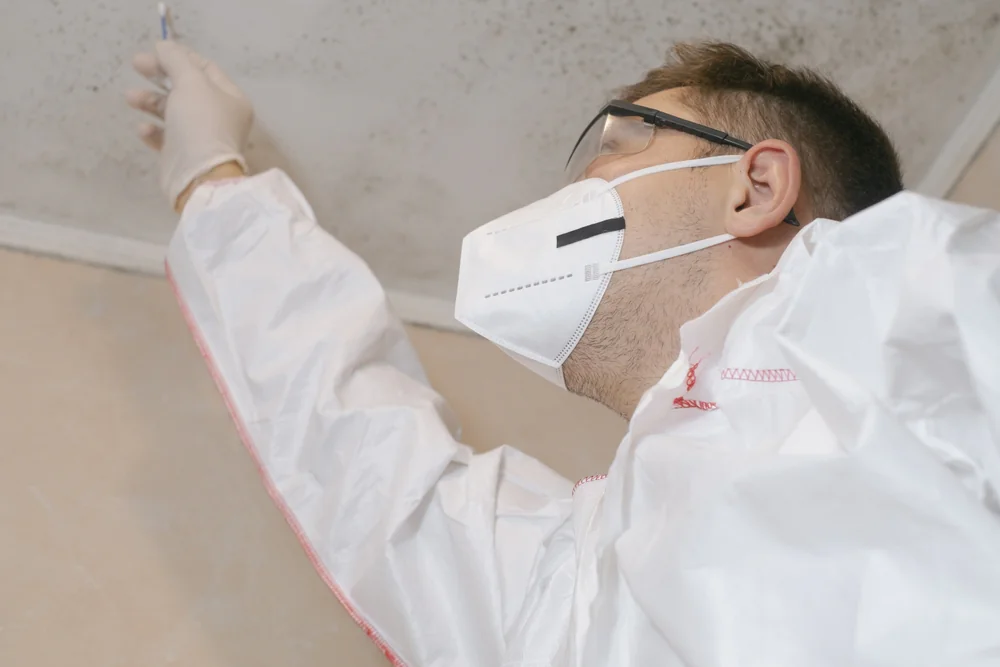
The air quality testing process and what it measures
Professional air quality testing in Philadelphia typically involves several components working together to give you a complete picture of your indoor environment.
The process usually starts with a visual inspection. Trained specialists examine your property for obvious mold growth, water damage, moisture problems, and conditions that support mold development. They’re looking at areas you might not think to check—behind appliances, inside HVAC systems, in crawl spaces, around plumbing penetrations.
Moisture detection comes next. Using specialized meters and sometimes infrared cameras, technicians identify areas with elevated moisture levels that could be supporting hidden mold growth or creating conditions for future problems. This step is crucial because mold control fundamentally comes down to moisture control. If you don’t identify and address the moisture source, mold will return no matter how thoroughly you clean visible growth.
Air sampling measures the concentration and types of mold spores actually floating in your indoor air. Technicians collect samples from multiple locations—typically from areas where you’ve noticed problems, from spaces where you spend significant time, and from outdoors for comparison. These samples get sent to certified laboratories for analysis.
Surface sampling tests specific materials or areas where mold growth is suspected but not clearly visible. This might involve tape lifts, swab samples, or bulk material samples, depending on the situation and accessibility.
The laboratory analysis identifies specific mold species present and quantifies their concentration levels. This scientific approach provides much more useful information than simply knowing “there’s mold.” Different mold species have different health implications, growth patterns, and remediation requirements. Some are common outdoor molds that accidentally made their way inside. Others indicate serious moisture problems that need immediate attention.
What makes professional testing valuable is that it gives you documentation. If you’re dealing with insurance claims, real estate transactions, or simply want to verify that remediation was successful, professional testing reports provide the evidence you need. In Pennsylvania, where indoor mold isn’t regulated by state or local health departments, having proper documentation becomes even more important for protecting your interests.
The testing also reveals whether your indoor air quality issues stem solely from mold or involve other factors. Comprehensive indoor air quality assessments can identify problems with radon (a serious concern in Pennsylvania), volatile organic compounds, inadequate ventilation, and other pollutants affecting your home’s air.
When you should consider professional air quality testing
Not every situation requires professional testing, but certain circumstances make it the smart choice rather than guessing or attempting DIY solutions.
Consider testing if you or family members are experiencing unexplained respiratory symptoms, allergies, or asthma that seem worse at home than elsewhere. This pattern—feeling sick in your house but better when you leave—is sometimes called “sick building syndrome,” and it’s relatively common in the Philadelphia area. Symptoms might include persistent coughing, wheezing, nasal congestion, headaches, fatigue, burning eyes, or throat irritation that you can’t attribute to other causes.
If you’ve had water damage—from flooding, plumbing leaks, roof leaks, or HVAC condensation issues—testing makes sense even if you don’t see visible mold. Mold can begin growing within 24 to 48 hours of water exposure, and it often establishes itself in hidden areas before becoming visible. Early detection through testing can prevent minor moisture problems from becoming major mold infestations.
Testing is valuable before purchasing a home in Philadelphia, especially older properties or those with basements. Given our city’s aging housing stock and prevalence of moisture issues, knowing what you’re buying into helps you make informed decisions and potentially negotiate repairs or remediation as part of the sale.
After mold remediation, testing confirms the work was completed successfully. It’s not enough for a contractor to say they removed the mold—you want scientific verification that spore levels have returned to normal and that the moisture problem has been properly addressed. This post-remediation testing provides peace of mind and documentation that the issue has been resolved.
If you notice musty or earthy odors but can’t locate the source, testing can identify hidden mold growth. That characteristic moldy smell comes from microbial volatile organic compounds that mold releases as it grows. The odor often indicates active mold growth somewhere in your home, even if you haven’t found it visually.
For homes with vulnerable occupants—infants, elderly family members, people with compromised immune systems, or anyone with asthma or chronic respiratory conditions—testing provides important information about whether your indoor air quality poses health risks. These populations are more susceptible to mold’s health effects, making proactive assessment worthwhile.
Real estate transactions often benefit from air quality testing. Sellers can address issues before listing, potentially avoiding complications during inspections. Buyers gain assurance about the property they’re purchasing. Either way, professional testing provides objective data rather than subjective opinions.
One situation where testing may not be necessary: if you can clearly see mold growth and know you need remediation. The CDC notes that in most cases where visible mold exists, you don’t need testing before removal—you need action. Sampling won’t tell you whether the mold affects your health (that varies by individual), and it won’t change the fact that visible mold needs to be removed and the moisture source addressed.
The key is understanding what testing can and can’t do. It provides valuable data about what’s in your air, where problems exist, and whether remediation efforts succeeded. What it doesn’t do is tell you whether specific mold will make you sick—health effects vary too much between individuals for that kind of prediction. Testing identifies problems; remediation solves them.
Taking Control of Your Indoor Air Quality in Philadelphia
Mold and indoor air quality issues aren’t something you have to accept as inevitable in Philadelphia, despite our challenging climate and aging homes. Understanding how mold affects the air you breathe, recognizing the specific vulnerabilities our local housing presents, and knowing when professional testing makes sense puts you in position to protect your family’s health.
The most important takeaway is this: moisture control is mold control. Whether you’re dealing with basement seepage, poor ventilation, plumbing leaks, or humidity problems, addressing the underlying moisture issue is what prevents mold from returning. Surface cleaning might temporarily remove visible growth, but without fixing the root cause, you’re just delaying the inevitable.
Professional air quality testing provides the information you need to make informed decisions. It reveals hidden problems, quantifies contamination levels, identifies specific mold species, and documents conditions for insurance or real estate purposes. In a city where indoor mold isn’t regulated by health departments, having scientific data about your home’s air quality gives you the evidence needed to take appropriate action.
If you’re experiencing unexplained health symptoms, dealing with moisture problems, or simply want peace of mind about the air your family breathes, we offer professional air quality testing and remediation services throughout Philadelphia County. We understand the unique challenges Philadelphia homes face, and we’re equipped to identify problems and implement solutions that actually work for our local conditions.