That musty smell when your heat kicks on isn’t normal. Neither are the allergy symptoms that seem worse at home than anywhere else. If you’re dealing with mold in your air ducts, you already know something’s wrong. What you might not know is how quickly it spreads or why standard cleaning methods usually fail. Professional air duct mold removal isn’t just about scrubbing vents. It’s about stopping contamination at the source, addressing the moisture problem that caused it, and making sure it doesn’t come back. Here’s what actually works.
Why Air Duct Mold Removal Requires Specialized Equipment
You can’t treat mold in your ductwork the same way you’d handle a patch on your bathroom wall. The moment you start cleaning without proper containment, you’re launching thousands of microscopic spores into the air. Your HVAC system then distributes them throughout your entire home.
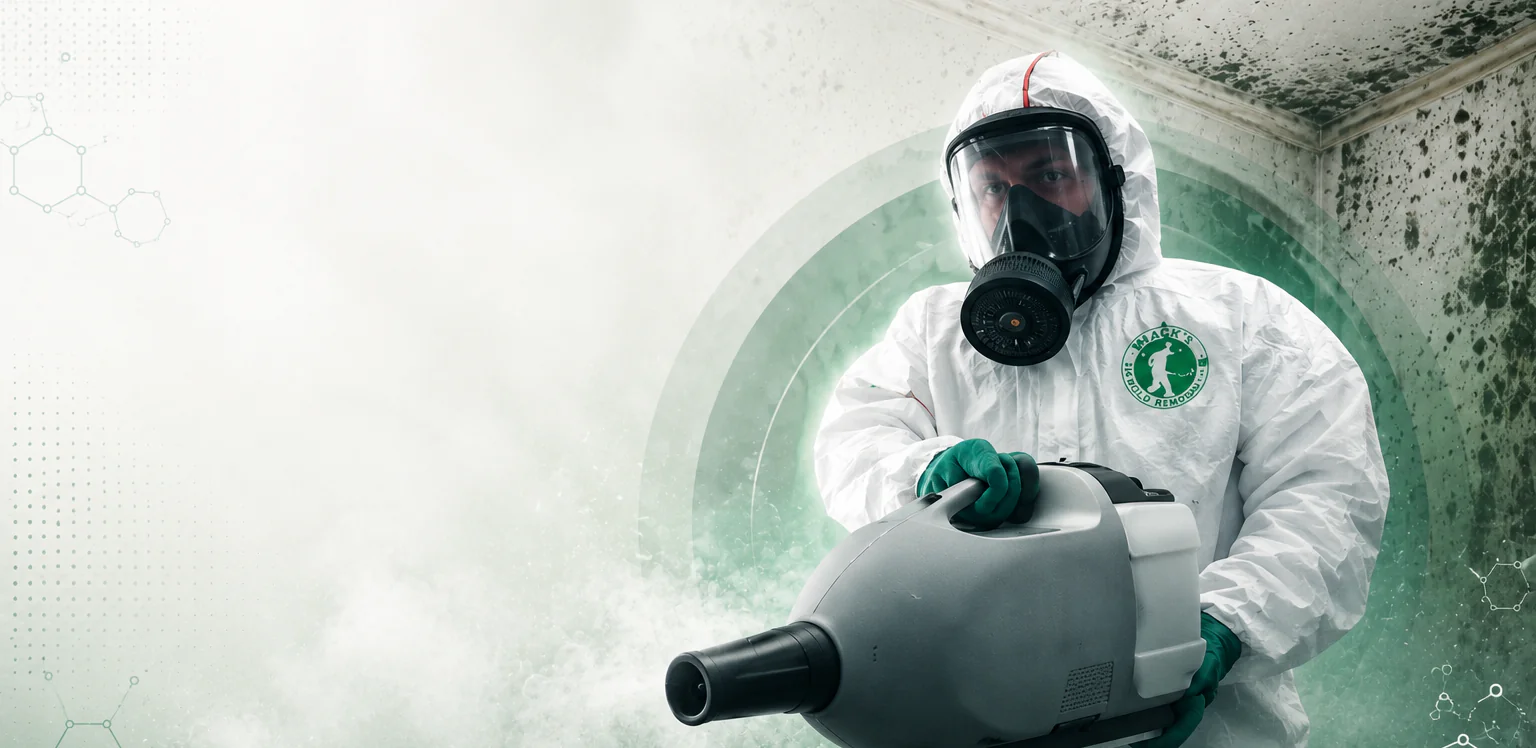
Professional air duct mold removal uses HEPA filtration systems and negative air pressure to contain the work area. This prevents cross-contamination while our technicians remove growth from surfaces you can’t even see. Standard household cleaners and shop vacs don’t have the filtration capacity to capture mold spores, which measure just a few microns in diameter.
The equipment matters, but so does the approach. We inspect your entire HVAC system, including the air handler, evaporator coils, condensate pans, and ductwork. Mold rarely limits itself to one area. If it’s visible at your vents, there’s usually more hiding where moisture accumulates inside the system.
How HVAC Systems Spread Mold Throughout Your Home
Your heating and cooling system recirculates air five to seven times per day. That’s constant circulation through every room in your house. When mold establishes itself in your ductwork, each cycle sends spores into bedrooms, living areas, and anywhere else with a vent.
This is why homeowners often notice symptoms that seem unrelated to a specific room. You might feel fine at work, then develop headaches or congestion within an hour of being home. Your kids’ nighttime coughing might stop when they sleep at a friend’s house. These patterns point to an indoor air quality problem that follows you from room to room because your HVAC system connects every space.
Bucks County’s climate makes this worse. The area receives about 49 inches of rain annually, well above the national average of 38 inches. Humid summers and moisture-retaining soil in areas like Levittown create perfect conditions for mold growth. Older HVAC systems, common throughout Doylestown, Newtown, and Bensalem, often struggle with humidity control. When condensation forms inside ductwork, mold finds everything it needs to thrive.
The cooling process itself contributes to the problem. During warmer months, cool air moving through ducts causes moisture to condense on interior surfaces. If your system has leaks, poor insulation, or drainage issues, that moisture doesn’t evaporate. It pools in low spots and creates breeding grounds for mold colonies.
Once established, mold doesn’t need much to survive. It feeds on dust, pollen, and organic debris that accumulates in ductwork over time. Regular filter changes help, but they don’t address growth that’s already taken hold inside the system. That requires professional intervention with specialized tools designed for HVAC environments.
What Makes Professional Air Duct Mold Removal Different
The difference between professional remediation and DIY attempts comes down to thoroughness and safety. We don’t just clean what we can see. We use inspection cameras to identify hidden growth, moisture meters to find the source of the problem, and thermal imaging to detect temperature variations that indicate water intrusion behind walls or in ceiling cavities.
Containment is the first critical step. Before any cleaning begins, we seal off the work area with plastic barriers and establish negative air pressure using HEPA air scrubbers. This creates a controlled environment where airborne spores are captured rather than released into your living space. The exhaust from these machines vents directly outdoors, removing contaminated air from your home entirely.
The actual removal process varies based on your duct material. Sheet metal ducts can be cleaned thoroughly using specialized brushes, HEPA vacuums, and EPA-approved antimicrobial treatments. Fiberglass-lined or flexible ducts present a different challenge. These porous materials absorb moisture and trap spores deep within their structure. In most cases, they can’t be effectively cleaned and require replacement instead.
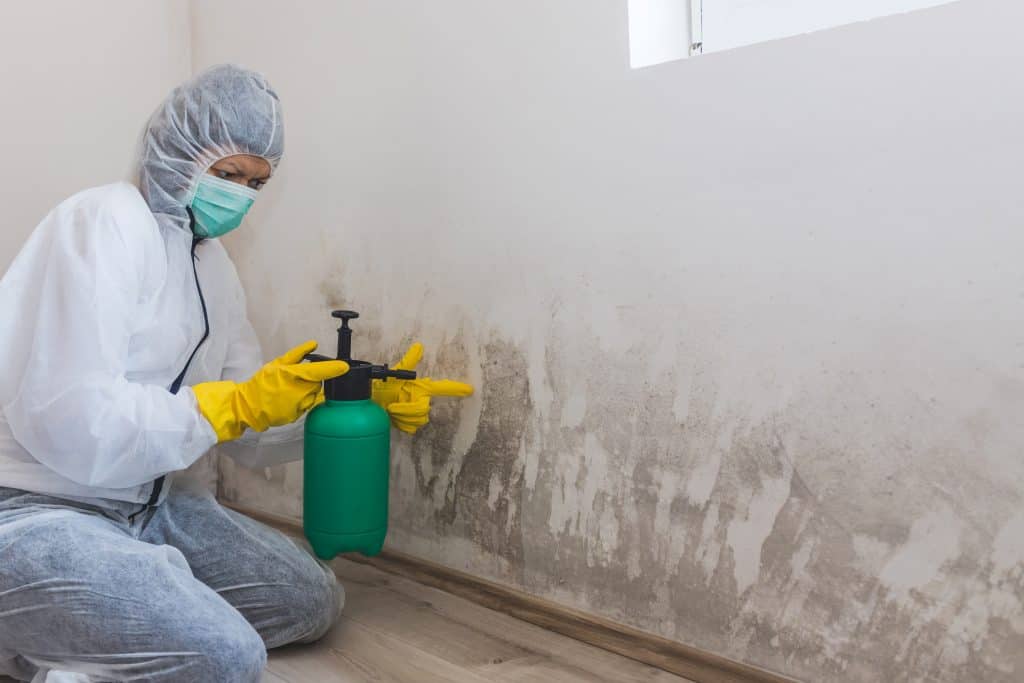
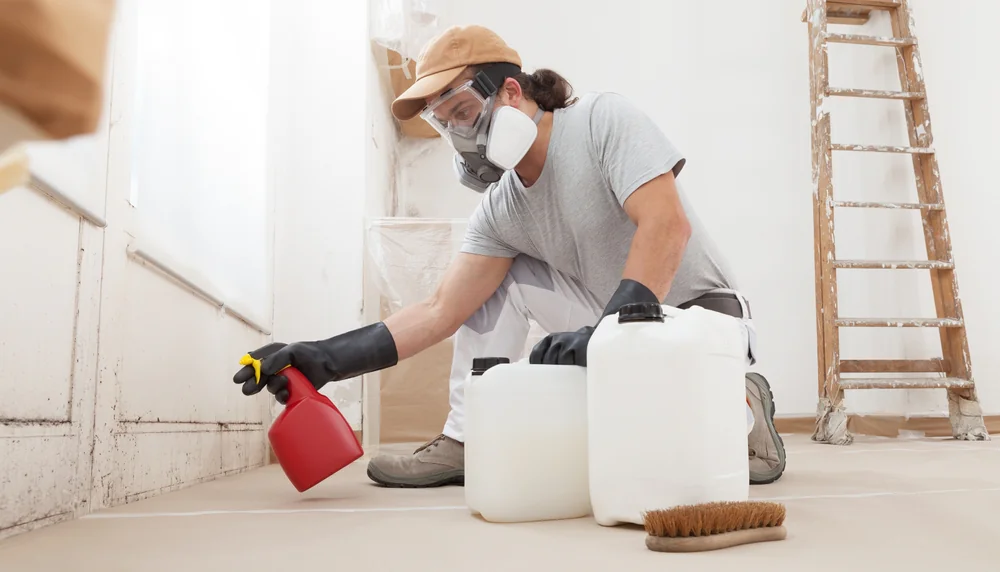
Professional-grade antimicrobial solutions do more than kill surface mold. They’re formulated to penetrate porous surfaces and prevent regrowth. Products like Sporicidin, commonly used in medical facilities, provide protection that lasts for months. These aren’t available at hardware stores, and they’re not the same as household bleach or vinegar, which can actually damage ductwork and fail to eliminate spores completely.
After cleaning, proper remediation includes addressing why mold grew in the first place. This might mean repairing leaky ducts, fixing condensate drain issues, improving ventilation, or installing dehumidifiers to keep indoor humidity below 50 percent. Without correcting the moisture source, you’re just setting yourself up for the same problem in a few months. We identify and repair these underlying issues as part of comprehensive service.
Mold Air Duct Cleaning vs. Complete HVAC Remediation
There’s a significant difference between basic duct cleaning and full mold remediation. Standard air duct cleaning removes dust, debris, and surface contaminants to improve airflow and efficiency. Mold remediation is a specialized process that requires containment, antimicrobial treatment, moisture source correction, and verification that contamination has been eliminated.
If you’re seeing black spots around vents, smelling musty odors when your system runs, or experiencing unexplained respiratory symptoms at home, you need more than a routine cleaning. You need professionals who understand mold biology, follow EPA protocols, and have the equipment to handle hazardous materials safely. The National Air Duct Cleaners Association sets strict standards for this work, and we follow those guidelines carefully.
Cost reflects the difference in complexity. Basic duct cleaning might run a few hundred dollars. Professional air duct mold removal typically costs between $600 and $2,000 for ductwork, or $3,000 to $10,000 if contamination has spread throughout your entire HVAC system. That range depends on the extent of growth, your system size, and whether porous materials need replacement.
Best Mold Removal Companies Provide Independent Verification
Here’s something most homeowners don’t know: the best mold removal companies don’t test their own work. We bring in independent third-party inspectors to verify that remediation was successful. This eliminates conflict of interest and ensures you’re getting unbiased results.
Post-remediation verification, also called clearance testing, happens before containment barriers come down. An independent inspector performs a visual examination, checks moisture levels, and collects air samples for laboratory analysis. These samples are compared against baseline readings from unaffected areas and outdoor air. If mold spore counts have returned to normal levels, you receive a clearance certificate documenting successful remediation.
This step matters for several reasons. First, it confirms the work was actually completed properly. Studies show that about 50 percent of remediation projects miss something during the first attempt. That might be a small area of overlooked growth or slightly elevated airborne spore levels. Catching these issues before containment is removed prevents you from paying for the same work twice.
Second, independent verification provides documentation that’s valuable if you ever sell your home. When you disclose a past mold problem to potential buyers, you can also show them certified proof that it was professionally remediated and independently verified. This transparency builds confidence and protects you legally.
Third, it holds us accountable. When we know an independent inspector will examine our work, we’re motivated to be thorough. Companies that test their own work have an inherent incentive to pass themselves, even if issues remain. Third-party testing removes that temptation entirely.
The verification process typically includes visual inspection to confirm no visible mold remains, moisture assessment to ensure the source has been corrected, odor detection to check for musty smells, and laboratory analysis of air samples collected from remediated areas. If any part of this testing fails, we must address the issues before clearance is granted. This protects you from incomplete work and ensures your investment actually solved the problem.
Understanding Local Mold Removal Companies in Bucks County
When you’re searching for local mold removal companies, proximity matters less than expertise and proper certification. What you really need is a company that understands Bucks County’s specific challenges: the heavy rainfall, humid summers, groundwater patterns in areas like Levittown, and soil conditions that contribute to moisture problems throughout the region.
As a local company familiar with the area, we know where to look for issues. We understand that basements near the Delaware River often deal with seasonal groundwater infiltration, that older homes in Doylestown and Newtown may have aging HVAC systems with humidity control problems, and that moisture shifts affect homes differently depending on construction era and foundation type.
Pennsylvania has specific regulations for mold remediation that professional companies must follow. This includes proper containment procedures, approved disposal methods for contaminated materials, and documentation requirements. We’re familiar with these state-level requirements in addition to EPA guidelines and NADCA standards.
Experience with local insurance companies also makes a difference. If your mold problem resulted from covered water damage, you’ll want a remediation company that can document the work properly and communicate effectively with your insurance provider. We provide detailed reports, photographs, and clearance certificates that meet insurance requirements for claims processing.
We offer free consultations before you commit to anything. This gives you a chance to get a professional assessment of the situation, understand what remediation will involve, and receive a detailed quote. During this consultation, ask about our process for containment, what equipment we use, whether we provide independent third-party testing, and how we address moisture sources. We’ll answer these questions clearly and show you examples of past projects.
Also ask about availability. Mold situations can escalate quickly, especially if water damage is involved. We offer 24/7 emergency service so we can respond when you need us most, preventing a manageable problem from becoming a major remediation project. In Bucks County’s humid climate, fast response times can make the difference between cleaning a section of ductwork and replacing an entire system.
Getting Professional Air Duct Mold Removal in Bucks County
Mold in your HVAC system won’t resolve itself. The longer it remains, the more it spreads, and the more expensive remediation becomes. Professional air duct mold removal addresses contamination thoroughly, fixes the underlying moisture problem, and provides verification that the work was done correctly.
The key is choosing a company that uses proper containment, follows EPA and Pennsylvania regulations, and provides independent third-party clearance testing. This ensures you’re getting comprehensive service that actually solves the problem instead of temporarily masking it.
If you’re dealing with musty odors, visible growth around vents, or health symptoms that worsen at home, don’t wait. We provide professional air duct mold removal throughout Bucks County with free consultations, transparent pricing, and the expertise needed to eliminate contamination permanently.