

Hear from Our Customers
You’ve spotted the mold. Maybe it’s in your basement, maybe behind a wall, maybe you just smell it. Either way, you know it’s not going away on its own.
Here’s what happens when it’s actually handled right. The air in your home clears up—no more musty smell that hits you when you walk downstairs. Your family stops dealing with the coughing, the headaches, the allergy symptoms that won’t quit. You’re not wondering if there’s something growing behind your drywall that you can’t see.
And most importantly, the problem doesn’t come back. Because we don’t just wipe down surfaces and call it done. We find where the moisture is coming from, eliminate it, and treat the affected areas so mold can’t take hold again. That’s the difference between a quick fix and actually solving the problem.
If you’re selling your home, you pass inspection without surprises. If you’re staying, you’re protecting your investment and your health. You get your space back without the constant worry.
We work exclusively in Bucks County, and we’ve seen what happens to homes here when moisture goes unchecked. West Bristol’s humidity, the older construction, the basements that were never meant to stay dry year-round—we deal with it every day.
We’re not a national franchise with a call center in another state. When you call us, you’re talking to someone who knows your neighborhood and has probably worked on a house just like yours. Our team is IICRC-certified, which means we follow the actual standards for mold remediation—not just surface cleaning.
We’ve been doing this long enough to know what works and what’s a waste of your money. And we’re not interested in selling you services you don’t need just to pad a bill.

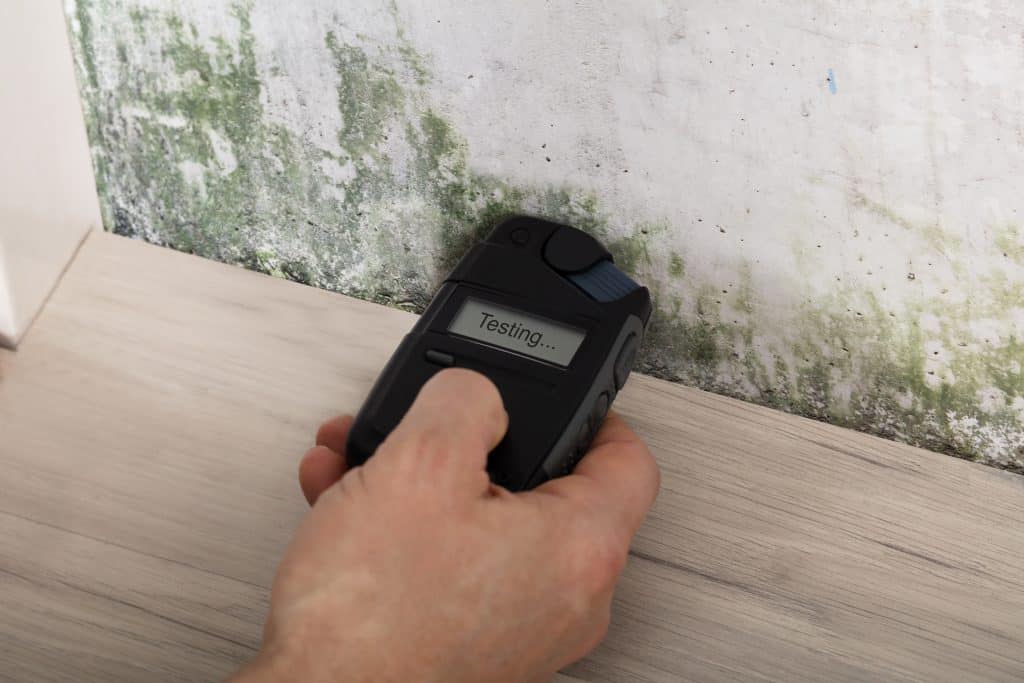
First, we inspect your property to find all the mold—including what’s hidden. We use moisture meters and thermal imaging to locate problem areas behind walls, under floors, and in spaces you can’t easily access. This usually happens the same day you call.
Once we know what we’re dealing with, we contain the affected area. This keeps mold spores from spreading to clean parts of your home during removal. We set up physical barriers and negative air pressure systems—it’s not optional, and it’s not something you can skip if you want the job done right.
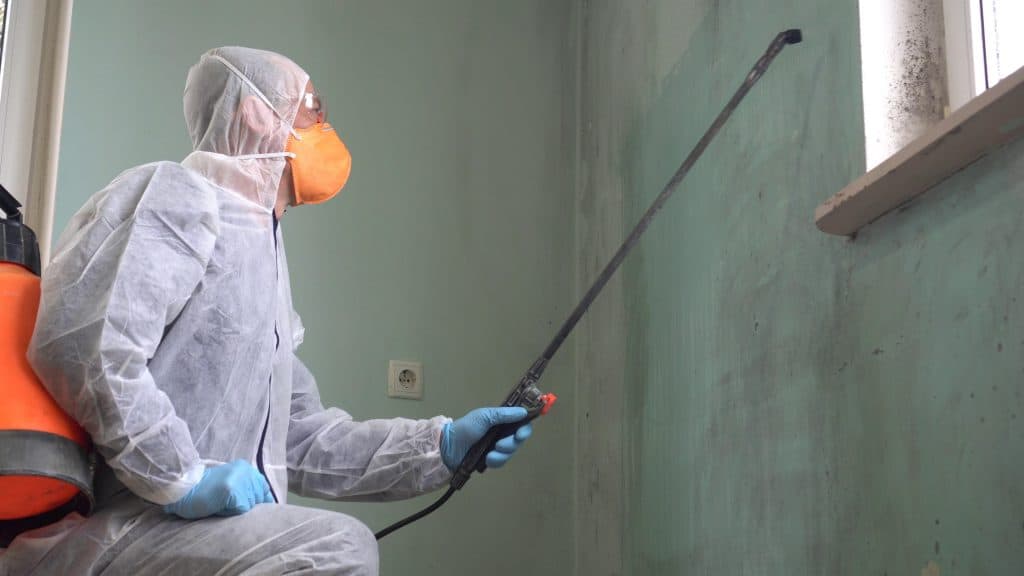
Then we remove the contaminated materials. Drywall, insulation, carpet—whatever can’t be salvaged gets pulled out and disposed of properly. For surfaces that can be saved, we treat them with antimicrobial solutions that kill mold at the root.
After removal, we dry everything out completely and address the moisture source. That might mean fixing a leak, improving ventilation, or recommending a dehumidifier for your basement. Without this step, you’re just waiting for mold to grow back.
Finally, we test the air quality to confirm the mold is gone. You get documentation showing the job was completed to industry standards—helpful if you’re selling, refinancing, or dealing with insurance.
Most jobs take three to five days from start to finish, depending on the size of the affected area. We’ll give you a clear timeline upfront so you know what to expect.
Ready to get started?
Every mold removal job includes a full inspection with moisture detection and air quality testing. We don’t guess where the problem is—we find it. That includes checking your basement, crawl spaces, attics, and anywhere else moisture tends to hide in West Bristol homes.
You get containment and safe removal using HEPA filtration and proper disposal methods. We’re not tracking mold spores through your house or cutting corners to save time. The affected area stays sealed off until the job is done.
We also give you a detailed report with photos, moisture readings, and our findings. If you’re filing an insurance claim, this documentation is what adjusters need to process it. We work with insurance companies regularly and know how to present the information they require.
And because West Bristol’s climate creates ongoing moisture challenges, we’ll walk you through what caused the problem and how to prevent it. Sometimes it’s as simple as fixing a gutter. Sometimes it’s a bigger issue with your foundation or ventilation. Either way, you’ll know what you’re dealing with before we leave.
You also get a final air quality test that confirms the mold is gone. No guessing, no assumptions—just proof that your home is safe again.
Most mold removal projects in West Bristol run between $1,500 and $6,000, depending on the size of the affected area and how much material needs to be removed. A small bathroom with surface mold might cost $1,000 to $2,000. A finished basement with mold behind drywall and in insulation could run $4,000 to $8,000 or more.
The price depends on square footage, what materials are contaminated, and whether there’s structural damage. If we need to remove drywall, insulation, and flooring, that costs more than treating surface mold on a concrete wall.
We give you a written estimate after the inspection so you know exactly what you’re paying for. No surprises, no upselling. If your insurance covers it, we’ll help you document everything properly so your claim goes through.
It depends on what caused the mold. If it’s from sudden water damage—like a burst pipe or a roof leak during a storm—most policies will cover remediation. If it’s from long-term neglect, poor maintenance, or flooding, they usually won’t.
Insurance companies want to see that the mold resulted from a covered event and that you took reasonable steps to address it quickly. That’s why documentation matters. We provide detailed reports with photos, moisture readings, and a timeline that shows what happened and when.
We work with insurance adjusters regularly and know what they need to approve a claim. We can’t guarantee your policy will cover it, but we’ll give you the paperwork that gives you the best chance. And if insurance doesn’t cover it, we’ll work with you on a plan that fits your budget.
Most residential mold removal projects take three to five days from inspection to final testing. Small jobs—like a bathroom or closet—might be done in two days. Larger projects involving multiple rooms or extensive contamination can take a week or more.
The timeline depends on how much material we need to remove, how long it takes to dry everything out, and whether we’re waiting on test results. We can’t rush the drying process—if moisture is still present, mold will just come back.
We’ll give you a clear timeline after the inspection so you know what to expect. And if something changes during the job—like finding more mold than we initially saw—we’ll let you know right away. You won’t be left guessing when your home will be safe again.
If it’s a very small area—less than 10 square feet—and it’s on a hard, non-porous surface like tile, you can try cleaning it yourself with the right products. But if it’s on drywall, insulation, carpet, or wood, DIY cleaning usually doesn’t work. Mold grows into porous materials, and surface cleaning just removes what you can see.
The bigger issue is that most visible mold is a symptom of a larger moisture problem. If you don’t fix the source, it’ll keep coming back. And if you disturb mold without proper containment, you can spread spores throughout your home and make the problem worse.
Black mold and other toxic varieties also pose serious health risks if handled incorrectly. Professional mold removal includes containment, HEPA filtration, proper disposal, and moisture elimination—not just scrubbing with bleach. If the affected area is larger than a few square feet, or if you’re dealing with health symptoms, it’s worth calling someone who knows how to do it right.
Moisture. That’s it. Mold needs water to grow, and West Bristol’s humid climate gives it plenty of opportunities. Basements are the most common problem area because they’re naturally damp and often poorly ventilated. Add in an old foundation with minor cracks, and you’ve got the perfect environment.
Roof leaks, plumbing leaks, and poor drainage around your foundation are other common causes. Sometimes it’s a slow drip behind a wall that you don’t notice until the mold smell starts. Other times it’s a finished basement that looks fine but has moisture trapped behind the drywall.
Older homes in West Bristol are especially vulnerable because they weren’t built with modern moisture barriers and ventilation systems. Crawl spaces, attics, and bathrooms without exhaust fans all create conditions where mold thrives. The key is controlling humidity and fixing leaks as soon as they happen—before mold has a chance to take hold.
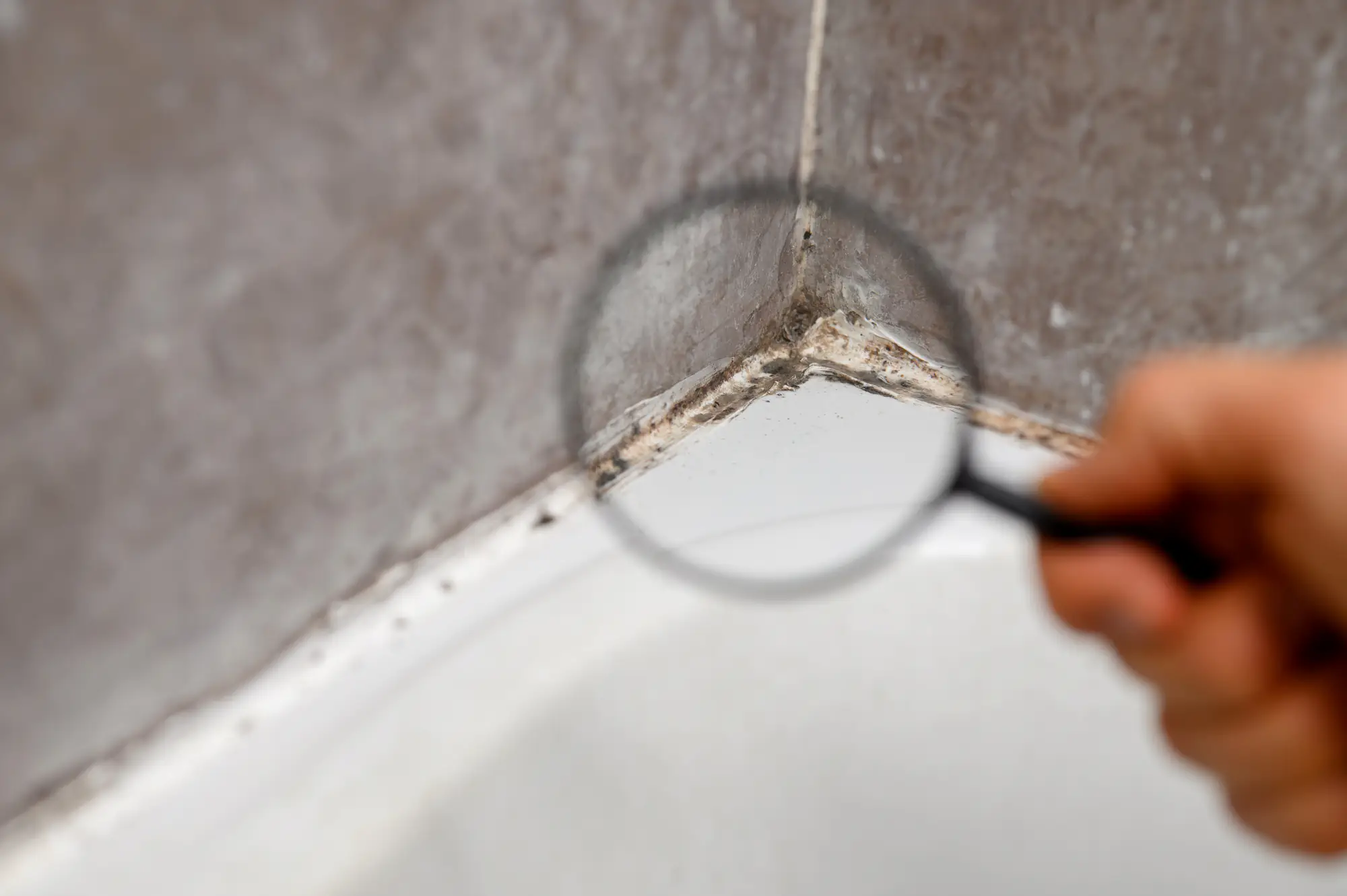
The most obvious sign is visible growth—black, green, or white patches on walls, ceilings, or floors. But mold often grows in places you can’t see, like behind drywall, under carpet, or in your HVAC system. That’s when the smell gives it away. If you notice a musty, earthy odor that won’t go away, there’s a good chance mold is growing somewhere.
Health symptoms are another clue. If you or your family members are dealing with persistent allergies, respiratory issues, headaches, or sinus problems that get worse at home, mold exposure could be the cause. It’s especially common in basements and poorly ventilated spaces.
Water damage is a red flag. If you’ve had a leak, flooding, or even high humidity for an extended period, mold can start growing within 24 to 48 hours. Even if you don’t see it yet, it’s worth getting an inspection. We use moisture meters and air quality testing to find hidden mold before it becomes a bigger problem.
Other Services we provide in West Bristol