Summary:
Understanding Basement Humidity and Why It Matters
Humidity in your basement isn’t the same as humidity upstairs. Cool underground temperatures change how moisture behaves, and that difference matters more than most homeowners realize.
When warm, humid air meets your cool basement surfaces, condensation forms. That moisture doesn’t just sit there—it creates the perfect environment for mold spores that are already floating in your air. Once those spores find moisture, organic material to feed on, and the right temperature range, they start growing. In Bucks County, where we see 49 inches of rain annually compared to the national average of 38 inches, your basement is constantly under pressure from outside moisture trying to work its way in.
The magic number you need to remember is 50%. Keep your basement’s relative humidity below that threshold, and you make it nearly impossible for mold to establish itself. Let it creep above 60%, and you’re rolling out the welcome mat for problems that go beyond just a musty smell.

What's the ideal humidity level for a basement
Your basement should maintain a relative humidity between 30% and 50%. That range isn’t arbitrary—it’s based on what mold needs to survive and what keeps your space comfortable without over-drying the air.
Below 30%, you might start seeing issues with wood drying out or static electricity becoming annoying. Above 50%, you’re in the danger zone where mold can begin establishing colonies. Once humidity hits 55% or higher, mold finds conditions comfortable enough to thrive. By the time you reach 60% to 65%, you’re not preventing mold anymore—you’re just waiting to discover where it’s growing.
Bucks County’s humid continental climate makes hitting that sweet spot challenging. Our summers bring warm, moisture-laden air that naturally wants to condense on your cooler basement surfaces. Winter isn’t much easier, with snow melt and freeze-thaw cycles pushing groundwater toward your foundation. That’s why monitoring isn’t optional—it’s essential.
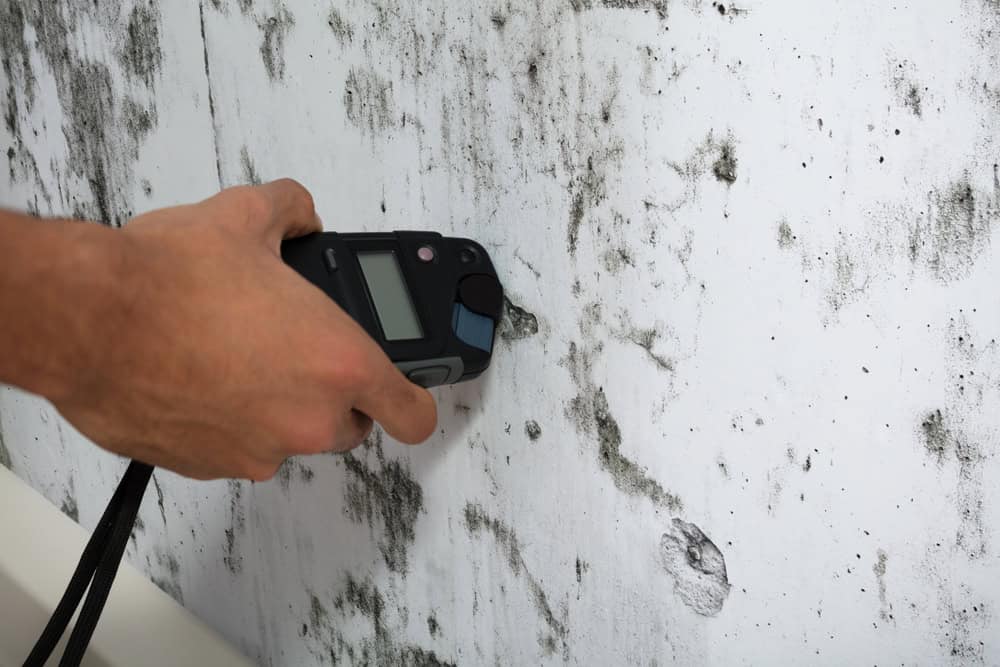
A simple hygrometer costs less than dinner out and tells you exactly what’s happening in your space. Place it in your basement and check it weekly. If you’re consistently seeing readings above 50%, you’ve got work to do. If you’re hovering around 60% or higher, you need to act now, not later. Those numbers represent the difference between a dry, usable basement and one that’s quietly developing problems you won’t see until they’re expensive to fix.
The good news is that once you understand your baseline, controlling humidity becomes manageable. You’re not trying to create a desert down there—just a space where moisture can’t accumulate faster than it leaves. That balance is achievable, even in our climate, with the right approach and tools.
How Bucks County climate affects basement moisture problems
Living in Bucks County, PA means your basement faces challenges that homeowners in drier climates never deal with. Our humid summers combined with clay-rich soil create a one-two punch that keeps moisture constantly pressing against your foundation.
That clay soil acts like a sponge. After it rains, water doesn’t drain away quickly—it sits there, held in the soil right against your foundation walls. This creates hydrostatic pressure, essentially pushing moisture through any tiny crack or porous section of concrete. Even without visible leaks, that pressure forces water vapor into your basement, raising humidity levels day after day.
Summer makes everything worse. When outside temperatures climb and humidity soars, opening your basement windows seems logical. It’s not. That warm, moisture-heavy air rushes into your cool basement and immediately starts condensing on every surface. Walls get damp. Floors feel clammy. What looks like a leak is often just physics working against you.
Winter and spring present different problems but with the same result. Snow accumulates, then melts when temperatures rise. All that water has to go somewhere, and gravity pulls it straight down to your foundation. If your gutters aren’t directing water away properly, if your yard slopes toward your house instead of away from it, or if your drainage systems can’t keep up, that water finds its way into your basement—either as liquid or as vapor.
The freeze-thaw cycle adds another layer of complexity. Water seeps into tiny foundation cracks, freezes and expands, then thaws and seeps deeper. Over time, those microscopic cracks become pathways for moisture. You might not see water pooling, but you’ll definitely notice the humidity climbing and that characteristic musty smell developing.
Understanding these local factors helps you realize that basement moisture in Bucks County isn’t a sign that your home is poorly built—it’s a sign that you’re living in an area where moisture management requires active attention. Your neighbors are dealing with the same issues. The difference between a dry basement and a problem basement often comes down to who’s taking proactive steps and who’s hoping the problem solves itself.
Want live answers?
Connect with a Mack's Mold Removal expert for fast, friendly support.
Choosing and Using a Dehumidifier for Mold Prevention
A dehumidifier doesn’t kill mold, but it does something better—it prevents mold from growing in the first place by removing the moisture it needs to survive.
Not all dehumidifiers are created equal, and the one you need for your basement is different from the small unit you might use in a bedroom. Basement dehumidifiers need to handle larger spaces, work efficiently in cooler temperatures, and run continuously without constant maintenance. Look for units rated for at least your basement’s square footage, preferably more. A unit designed for 1,500 square feet will work harder and less efficiently in a 1,400 square foot space than one rated for 2,000 square feet.
Auto-drain features matter more than you think. If you’re emptying a bucket every day, you’ll eventually forget, go on vacation, or just get tired of the chore. Units that drain directly into a floor drain or sump pump keep working whether you’re paying attention or not.
How to select the right dehumidifier for your basement size
Basement dehumidifier capacity used to be measured in 70-pint or 50-pint ratings, but new Department of Energy standards changed how these are tested. What used to be called a 70-pint unit might now be rated at 50 pints under the new standards. Don’t let that confuse you—newer models aren’t worse, they’re just measured differently to reflect actual basement conditions more accurately.
Start by measuring your basement’s square footage. Multiply length times width for the total area. If you have a finished basement with multiple rooms, include all of it. For basements with moderate dampness, you’ll want a unit that can handle about 10 pints per 500 square feet. For very damp basements where you can see moisture on walls or smell that musty odor, bump that up to 12 to 14 pints per 500 square feet.
Here’s where most homeowners make a mistake—they buy based on their current humidity levels, not their basement’s potential. Your basement might feel fine in October but turn into a swamp every July. Size your dehumidifier for your worst-case scenario, not your average day. A unit that’s too small will run constantly, wear out faster, and never quite get humidity under control. One that’s properly sized will cycle on and off, lasting longer and using less energy over time.
Placement matters as much as size. Put your dehumidifier in the dampest area, usually the center of your basement or near the area where you notice the most moisture. Keep it away from walls and furniture—it needs airflow on all sides to work efficiently. If your basement has multiple rooms or areas separated by walls, one dehumidifier might not be enough. Humidity doesn’t move around corners well.
Temperature capability is crucial for Bucks County, PA basements. Some dehumidifiers struggle or stop working when temperatures drop below 65 degrees. Basement temperatures often hover in the 60s, especially in winter. Look for models specifically designed for low-temperature operation or those with automatic defrost features. Without this, frost builds up on the coils, efficiency drops, and you’re back to high humidity.
Energy Star ratings save you money over the unit’s lifetime. These models use 15% to 20% less energy than standard models. When you’re running a dehumidifier for months at a time, those savings add up. Built-in humidistats let you set your target humidity level—usually between 40% and 50%—and the unit automatically maintains it without you adjusting anything.
Best practices for running your dehumidifier year-round
Your dehumidifier works best when you treat it like a system, not an appliance you turn on when you remember. Consistency prevents mold better than occasional use ever will.
Run your unit year-round, not just in summer. Bucks County’s humidity doesn’t take a vacation, and neither should your moisture control. Winter might seem like an odd time to dehumidify, but your basement can still hit problematic humidity levels from snow melt, ground moisture, and the stack effect pulling damp air up from below your foundation. Set your target humidity to 40% to 45% and let the unit maintain it automatically.
Empty the reservoir if you don’t have auto-drain, but honestly, you should have auto-drain. If your unit fills up and shuts off while you’re at work or away for a weekend, humidity spikes right back up. Most modern units can connect to a garden hose that drains into a floor drain, utility sink, or sump pump basin. This one-time setup saves you from playing bucket brigade all summer.
Clean the filter monthly, maybe more often if your basement is dusty. A clogged filter forces the unit to work harder, uses more energy, and removes less moisture. Most filters pop out easily and can be vacuumed or rinsed with water. Let them dry completely before putting them back. Some units have washable filters that last for years, while others need replacement filters annually. Check your manual and add filter maintenance to your calendar.
Check the coils every few months for dust buildup. Dirty coils reduce efficiency just like dirty filters. You can usually vacuum them gently with a soft brush attachment. If you see ice forming on the coils, your basement might be too cold for that particular unit, or you might have a refrigerant issue that needs professional attention.
Position matters for efficiency. Keep the unit at least six inches from walls and avoid corners where air circulation is poor. If you store items in your basement, don’t crowd the dehumidifier—it needs space to pull in humid air and expel drier air. Some homeowners put their units on a small platform or shelf to protect them from potential floor flooding, which is smart thinking in any basement.
Monitor the humidity with a separate hygrometer, not just the built-in display. Units can drift out of calibration over time. A $15 hygrometer placed across the room gives you a reality check on whether your dehumidifier is actually maintaining the levels you want. If your unit says 45% but your hygrometer reads 58%, something’s not working right.
Know when to call for service. If your unit runs constantly without lowering humidity, if it’s making new noises, if ice keeps forming, or if it’s just not keeping up anymore, don’t assume you need a bigger unit. Sometimes a repair or a professional assessment of your overall moisture situation is what’s actually needed.
Taking Control of Basement Humidity in Bucks County
Keeping your basement dry in Bucks County, PA isn’t about fighting an impossible battle—it’s about understanding what you’re up against and using the right tools consistently. Humidity control starts with knowledge, continues with the right equipment, and succeeds through regular attention.
Your basement doesn’t have to smell musty. Your family doesn’t have to deal with allergy symptoms that mysteriously get worse at home. Your home’s value doesn’t have to take a hit because of moisture damage you could have prevented. The strategies in this guide work, but only if you actually implement them.
If you’re already seeing mold growth, if your humidity levels won’t drop no matter what you try, or if you’re just not sure where to start, that’s when professional help makes sense. We know exactly what Bucks County basements need because we’ve been solving these problems for local homeowners for years. Sometimes the best DIY decision is knowing when to call someone who can identify what you’re missing and fix it right the first time.