

Hear from Our Customers

When your air duct system is contaminated whether it’s mold, decades of accumulated debris, or both every time your HVAC kicks on, it’s distributing whatever’s in those ducts to every room in your home. Cleaning the system doesn’t just remove what’s visible. It stops the cycle.
For homes in Revere and along the Route 611 corridor, that cycle runs hard. Bucks County gets roughly 49 inches of rain annually, and Revere’s position in the Delaware River watershed means ground moisture here is persistent. Older homes on private well and septic systems sit on land where groundwater levels stay elevated, and that moisture finds its way into HVAC systems through aging duct joints and condensation on cooling coils. The result is a mold growth environment that runs from May through October and then distributes spores through heating season.
Getting your ducts cleaned and sanitized breaks that loop. After a proper cleaning, you’re not just breathing cleaner air you’re also removing the conditions that let biological growth restart. For a 1940s home in Revere that may never have had its ductwork professionally inspected, that’s not a minor upgrade. It’s a meaningful change in what your family is actually exposed to every day.
We’ve been working in Bucks County for over 15 years including the older, rural properties along the Route 611 corridor that most suburban-focused companies aren’t as familiar with. The conditions in upper Bucks County, from the Delaware River watershed humidity to the aging housing stock in communities like Revere, are different from what you find in lower Bucks. We understand that distinction and work accordingly.
This is an owner-operated business. The people you talk to when you call are the same people accountable for the work. Multiple customers have specifically mentioned how quickly they heard back and how clearly the process was explained before anything started. That’s not an accident it’s how a small, experienced operation earns repeat business and referrals in tight-knit communities like Revere.
We also work directly with insurance companies when claims are involved, and offer flexible financing for homeowners who want to move forward without waiting for the perfect budget moment.
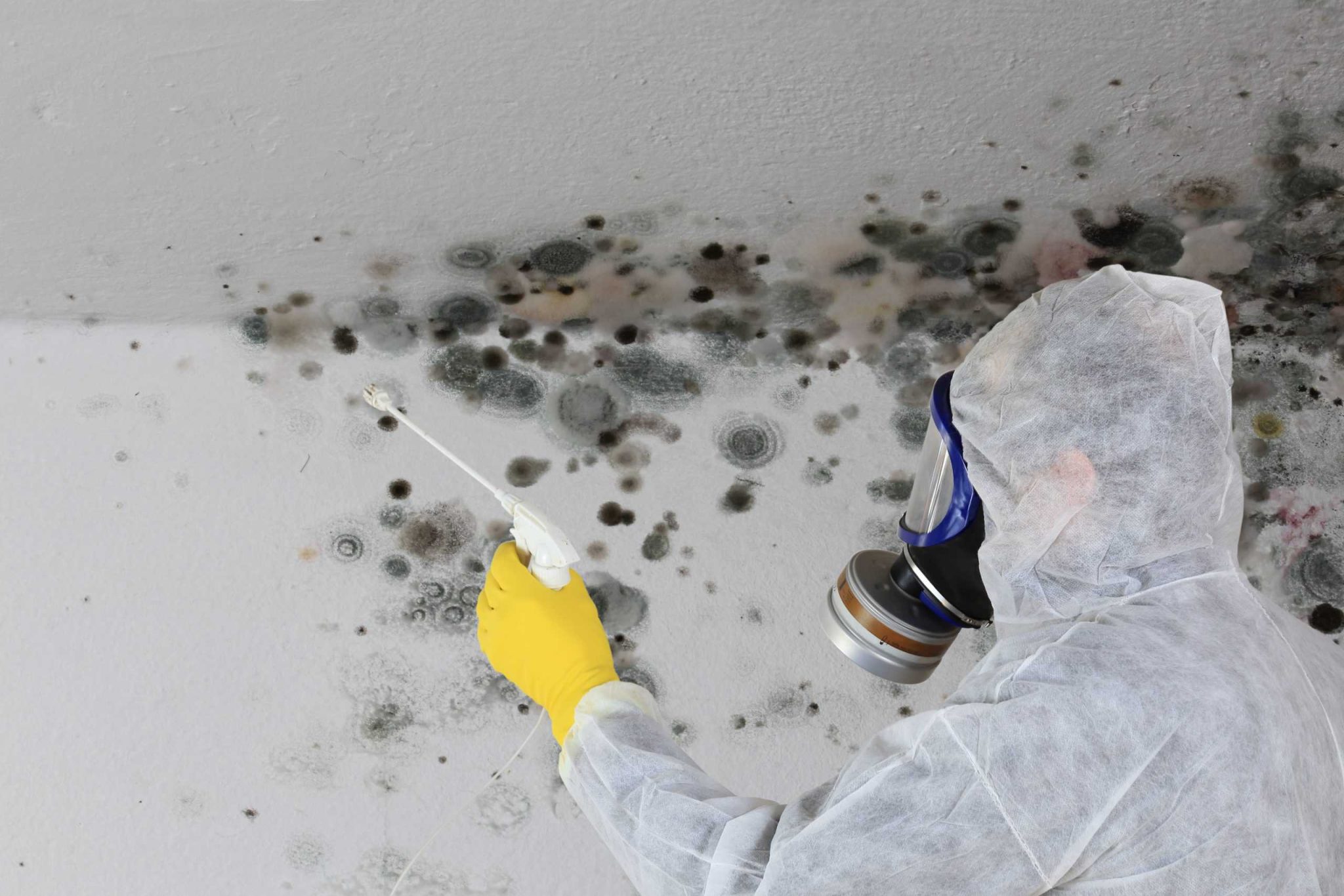
It starts with a free inspection. Before any work begins, a certified inspector evaluates your duct system, identifies what’s actually present mold, debris, biological buildup and gives you an upfront quote. The price you’re given is the price you pay. No surprises after the fact.
The cleaning itself uses professional-grade equipment that creates negative air pressure inside the duct system, pulling contaminants out rather than pushing them around. This matters especially in older homes like those in Revere, where ductwork was often retrofitted into a structure that wasn’t originally designed for forced-air HVAC. Disturbing mold in aging ducts without proper containment can spread spores throughout the home which is exactly what a general duct cleaner without mold remediation training might inadvertently do.
Our approach is containment first, then mechanical cleaning, then removal of the source. When mold is involved, the job doesn’t end with cleaning. We apply antimicrobial treatment to duct surfaces after the mechanical cleaning addressing biological contamination at the surface level. In a high-humidity environment like the Nockamixon and Delaware River corridor, sanitizing is what makes the result last. After the work is complete, affected areas are tested to confirm the mold is gone. That’s documented proof, not just a verbal assurance.
Ready to get started?
Air duct cleaning is our core service, but we also handle dryer vent cleaning and air duct sanitizing two services that matter more than most homeowners realize, and both of which are particularly relevant for Revere’s housing stock.
On the dryer vent side: the NFPA reports roughly 15,970 home dryer fires per year, with failure to clean vents as the leading cause. In a 1940s home where the dryer vent run may be longer, more convoluted, or routed through non-standard paths that weren’t part of the original construction, lint accumulation is a genuine fire risk not a maintenance preference. Our dryer vent cleaning addresses that risk directly.
For Revere residents who are already thinking about indoor air quality in the context of the active Nockamixon TCE contamination site added to Pennsylvania’s Priority List of Hazardous Sites in January 2025 we also offer indoor air quality testing as part of a broader assessment. If you want a complete picture of what’s in your home’s air, not just what’s in the ducts, that option is available. Everything is scoped before the work starts, pricing is given upfront, and financing is available if you need it.
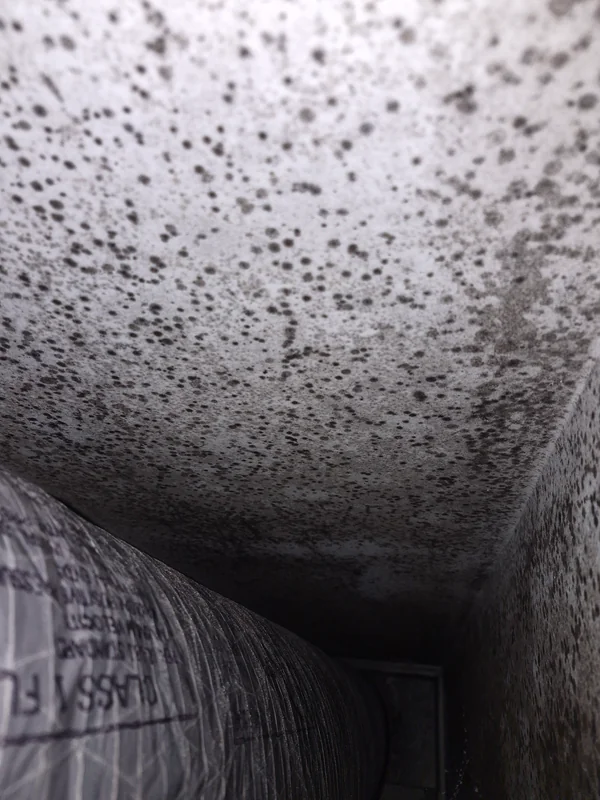
The most common sign is a musty smell that appears specifically when your HVAC system runs not a general basement smell, but one that comes through the vents when the heat or AC kicks on. You might also notice worsening allergy or respiratory symptoms indoors that ease up when you’re outside, or visible discoloration around vent registers. In Revere’s older homes, these signs are worth taking seriously rather than dismissing, because ductwork from the 1940s era was never designed with modern moisture management in mind. The interior sections of those ducts have never been seen by most homeowners.
The only way to know for certain is a professional inspection. We offer free inspections, which means there’s no financial risk to finding out what’s actually in your system. A certified inspector will document what we find, and you’ll have a clear picture before any work is proposed or priced.
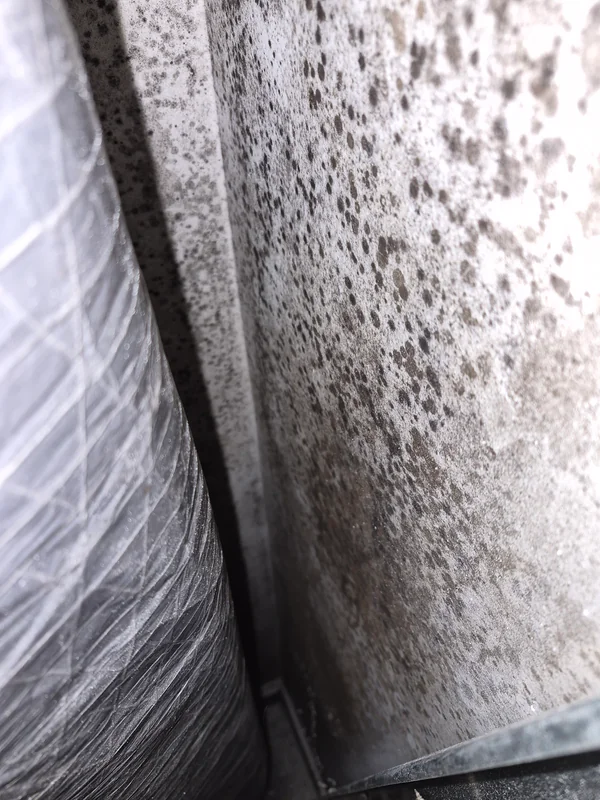
Mold can grow in any section of the duct system where moisture accumulates and in Revere’s climate, that’s not a hypothetical. The most common locations are around the evaporator coil and drip pan inside the air handler, where condensation collects during cooling cycles, and in the ductwork itself wherever joints aren’t fully sealed and allow humid air to infiltrate. In a home built in the 1940s, duct joints that have shifted or degraded over decades create exactly those infiltration points.
Once mold establishes in the duct system, the HVAC becomes a distribution mechanism. Every heating or cooling cycle moves air through the contaminated sections and carries spores to every room the system serves. That’s why addressing mold in ducts is different from addressing mold in a single room the reach of the problem is the entire square footage your HVAC covers. Our containment protocols are designed specifically to prevent that spread during the cleaning process.
Cleaning and sanitizing are two separate steps that serve different purposes, and both matter when mold is involved. Mechanical cleaning using professional-grade equipment under negative air pressure removes the physical debris, dust, and biological material from inside the duct system. It’s the process of physically extracting what’s in there.
Sanitizing is what happens after cleaning. We apply an antimicrobial treatment to duct surfaces to address biological contamination at the surface level killing mold spores that have penetrated the duct material itself, not just the loose material that was extracted. In a high-humidity environment like Nockamixon Township, where moisture conditions that support mold growth are present for much of the year, sanitizing is what makes the result durable rather than temporary. Without it, you’ve cleaned the duct but left behind the conditions for regrowth. For Revere homeowners dealing with aging ductwork in a wet climate, doing both steps is the standard we work to.
For a typical home, a thorough professional air duct cleaning takes between four and six hours. That timeframe accounts for the inspection, setup of containment and equipment, the cleaning of both supply and return ducts, and the post-cleaning walkthrough. Jobs that are rushed significantly under that window are worth questioning a proper cleaning requires time to work through the full system, not just the registers you can see.
For older homes in Revere, the timeline can vary based on the complexity of the duct layout. Homes built in the 1940s sometimes have ductwork that was modified, extended, or partially replaced over the decades as heating systems were upgraded from coal or oil to modern forced-air equipment. That kind of layered duct history takes more time to assess and clean properly than a straightforward modern system. The free inspection at the start of the job gives you a realistic timeframe before any work begins.
The Pennsylvania DEP added the Nockamixon TCE Site to the state’s Priority List of Hazardous Sites in January 2025, and the agency has confirmed that routes of exposure to trichloroethylene include inhalation. The contamination originated from a former farm on Brennan Road and has been found in groundwater and wells serving local homes and businesses. DEP has been investigating since 2009 and has installed carbon filter systems on affected properties.
What the TCE contamination doesn’t address is the separate question of biological air quality inside your home specifically, whether your HVAC duct system has its own mold or contamination issue that’s circulating independently of the groundwater situation. The two concerns are distinct but both real. If you’re already thinking about what your family is breathing, a duct inspection and indoor air quality assessment from us gives you a complete picture of the indoor side of that question. Knowing the state of your duct system is a reasonable step for any Nockamixon Township homeowner right now.
It’s a fire safety issue, not optional maintenance. The National Fire Protection Association reports approximately 15,970 home structural fires per year involving dryers, and failure to clean the dryer vent is the leading cause. That’s not a remote risk it’s a documented, recurring cause of residential fires across the country.
In Revere’s 1940s-era homes specifically, dryer vent runs are often longer or more complex than in newer construction, because the homes were not originally designed with dryer venting in mind. When dryers were added or upgraded over the decades, the vent path was routed through whatever space was available sometimes with multiple bends, longer horizontal runs, or non-standard configurations that accumulate lint faster than a straight, short run would. Those configurations require more frequent cleaning and are more likely to be overlooked. If you don’t know when your dryer vent was last cleaned, or if it’s never been professionally serviced, it’s worth addressing.
Other Services we provide in Revere